6 Best Link Building Services for Logistics Companies for 2026, Vetted and Compared
A practical comparison of link building services for logistics companies, covering outreach, digital PR and managed link options for freight and supply chain firms.
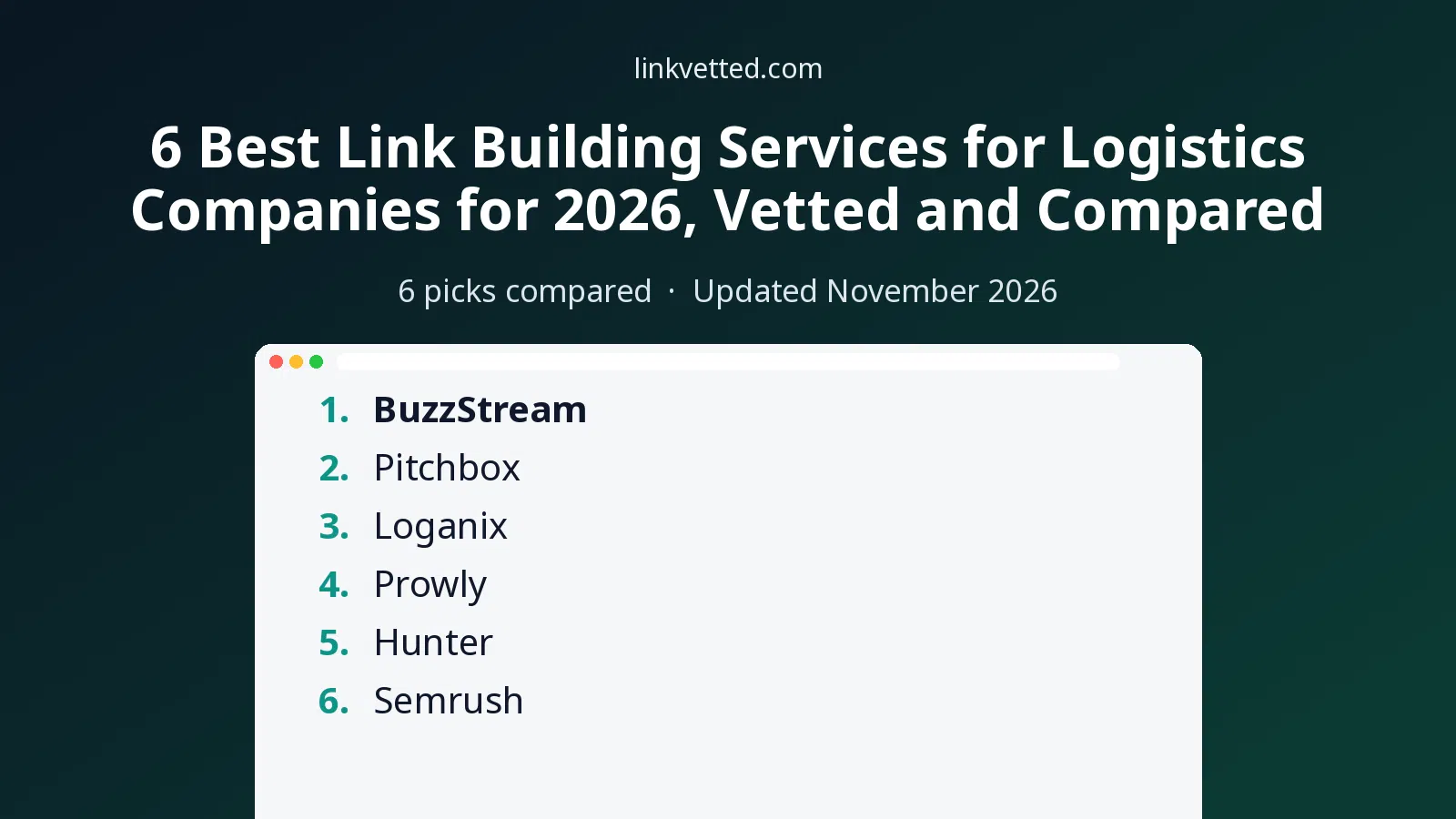
- Editor's choice
 BuzzStream
In-house outreach and relationship tracking
Starts atSee websiteVisit buzzstream.comFull review - Great alternative
 Pitchbox
Agencies managing outreach at scale
Starts atSee websiteVisit pitchbox.comFull review - Also consider
 Loganix
Outsourcing link building to a managed service
Starts atSee websiteVisit loganix.comFull review
Direct answer
My top pick for most logistics companies is BuzzStream, because its outreach and relationship tracking suits freight firms that want to run their own campaigns with a repeatable process. For teams that would rather hand the work to an agency, Loganix is the safer managed option. If your goal is digital PR coverage in trade and business media, Prowly gives you the newsroom and media database to support it.
TL;DR:
- Logistics link building is mostly about trade press, industry directories and business media, so outreach tooling matters more than raw link volume.
- BuzzStream fits companies that want to keep outreach in-house and build long-term relationships with freight journalists and editors.
- Managed services like Loganix remove the operational load but give you less control over which sites you appear on.
- Digital PR platforms such as Prowly help you pitch supply chain stories that earn editorial links rather than paid placements.
- Check every vendor's link sources and approval process before you buy, because logistics is a niche where irrelevant links do little for you.
Last checked November 2026. Plan prices are not quoted in this guide because they change often; see each vendor's own pricing page for current figures before you buy.
Quick comparison
| Tool | Best for | Starts at | Free plan? | |
|---|---|---|---|---|
| BuzzStream | In-house outreach and relationship tracking | See website | Free trial | Visit |
| Pitchbox | Agencies managing outreach at scale | See website | Not stated | Visit |
| Loganix | Outsourcing link building to a managed service | See website | Not stated | Visit |
 Prowly | Digital PR and media relationships | See website | Free trial | Visit |
 Hunter | Finding contact emails for outreach | See website | Free plan | Visit |
 Semrush | SEO data plus link analysis and outreach | See website | Free plan | Visit |
The best link building services for logistics companies compared
I compared these tools from vendor documentation and public sources rather than running hands-on tests. My focus was on how each one fits the realities of logistics marketing: trade publications, freight directories, business media and the slow relationship building that earns editorial links in a niche industry.
BuzzStream is an outreach and relationship management tool for link building and digital PR. It fits logistics companies that have someone who can research prospects, write pitches and follow up consistently. Instead of selling links, it gives you a place to organise contacts, track conversations and keep a record of who you have approached and when.
For logistics link building, the workflow is straightforward. You build lists of freight publications, supply chain blogs, trade associations and business journalists, then run personalised pitches from the tool. Because it remembers past conversations, you can return to the same editors with new data, such as a warehouse trends report or a route efficiency study, which is how trade links usually get earned.
The limit is that BuzzStream does not find prospects or write content for you. If nobody on your team can run outreach, it will sit unused. Skip it if you want a fully managed service.
- Strong contact and relationship history
- built-in outreach sequences
- works well for small teams
- You supply your own prospect lists
- no link database included
Pitchbox combines prospect search, outreach automation and reporting. It is aimed at agencies and in-house teams running several campaigns at once. For a logistics company working with an SEO agency, this is often the tool the agency will use, so it helps to understand what it does when you review their process.
In practice, Pitchbox helps you find relevant sites, manage email sequences and track replies across campaigns. A logistics brand with several service lines, such as freight forwarding, warehousing and last-mile delivery, can run separate campaigns for each and keep the reporting apart. That structure is useful when you want to see which topics earn coverage.
The drawback is complexity. A single marketer at a mid-sized logistics firm may find it heavy for a modest outreach programme. It also assumes you have content worth pitching.
- Prospect discovery and outreach in one place
- campaign reporting
- suits multiple client accounts
- More complex than a small team needs
- pricing is aimed at agencies
Loganix is a managed SEO service that includes link building and content creation. It suits logistics companies that want links without hiring an outreach specialist. You describe your site and goals, and the vendor handles prospecting, outreach and placement.
For a freight or supply chain business, the practical benefit is time. Logistics marketing teams are usually stretched, and running outreach alongside operations is hard. A managed service can keep a steady flow of placements going while you focus on content and site improvements. You should still ask which types of sites they target and how they vet them.
The trade-off is control. You will not personally approve every site, and the links may come from general business or marketing sites rather than logistics trade press. Skip it if you want to build relationships with specific industry editors yourself.
- Managed link building and content
- clear order process
- useful for teams without outreach staff
- Less control over individual placements
- you rely on the vendor's site vetting
Prowly is a PR platform with a media database, pitch tools and an online newsroom. It fits logistics companies with stories worth telling, such as new distribution centres, sustainability programmes or supply chain research. Those stories are what earn editorial links from trade and business media.
The link building value comes from the coverage. When a freight publication writes about your new warehouse or your commentary on port delays, you usually get a link. Prowly helps you find the right journalists, send targeted pitches and host press materials in one place. It is a slower route than buying placements, but the links tend to be more relevant.
The limit is that Prowly does not measure links or SEO metrics. You need a separate way to track what coverage you earned. Skip it if you have no news or data to pitch.
- Media database and newsroom features
- good for pitching trade stories
- keeps PR contacts organised
- Not a link building tool by design
- requires newsworthy content
Hunter is an email discovery tool. You enter a company domain and it suggests likely email addresses and formats. For logistics link building, it is a small but useful part of the workflow: finding the right editor or marketing contact at a freight publication or industry association.
It works best alongside an outreach tool rather than on its own. You might use Hunter to find contacts at trade magazines, then load them into BuzzStream or Pitchbox for pitching. It also helps when you want to reach out to logistics companies for partnership or guest content discussions.
Hunter does not manage campaigns, track replies or measure links. Treat it as a contact-finding utility. If you already have a media database through a PR tool, you may not need it.
- Simple email discovery
- domain search shows related contacts
- connects to other outreach tools
- No campaign management
- accuracy varies by company
Semrush is an SEO platform with backlink analysis, keyword research, content tools and an outreach add-on. It fits logistics companies that want to understand their link profile and competitors before deciding on a link building approach. You can see which freight and supply chain sites link to rivals and use that as a prospect list.
The outreach features let you find prospects, manage email campaigns and track results, though many teams use Semrush mainly for research and pair it with a dedicated outreach tool. For a logistics marketer, the competitor backlink view is often the most valuable part, because it shows which industry publications and directories actually link to businesses like yours.
The drawback is breadth. You pay for a large suite when you may only need link data and outreach. Smaller teams can find it overwhelming at first.
- Backlink analysis and competitor research
- content and keyword data in one place
- outreach add-on available
- Large suite with a learning curve
- link building is one feature among many
How I chose
I selected these tools by reading vendor documentation, help centres and public product pages, and by checking how each one maps to the way logistics companies actually earn links. I did not run hands-on tests, and I have not used every tool on a live logistics campaign. The comparison is based on documented features and public information.
My criteria were fit, workflow and limits. I looked for tools that support outreach to trade media, help organise contacts, or provide managed link building when a team has no outreach capacity. I also noted what each tool does not do, because the biggest mistakes in this niche come from buying a platform that does not match how you plan to work.
What to check before you buy
- Ask which types of sites the service targets and whether logistics, freight and supply chain publications are included.
- Confirm whether links are editorial placements or paid sponsored posts, and how each is labelled.
- Check the vendor's site vetting process and whether you can approve or reject placements.
- Ask how they handle content: do they write it, do you, or is it a mix?
- Request example placements from comparable B2B or industrial clients, not consumer brands.
- Clarify reporting: which link metrics you receive and how often.
FAQ
What kind of links help a logistics company most?
Trade publication coverage, industry association pages, business media mentions and relevant supplier or partner pages tend to help most. These are the sites your customers and search engines associate with the freight and supply chain sector. General directory links and unrelated guest posts add little.
Should I run outreach in-house or hire a service?
It depends on capacity. If you have a marketer who can research prospects and pitch consistently, an outreach tool like BuzzStream keeps costs lower and relationships stronger. If nobody has the time, a managed service such as Loganix is more realistic, though you give up some control over placements.
Can digital PR work for a freight or warehousing business?
Yes, if you have something to say. New facilities, route data, sustainability initiatives and commentary on port or supply chain disruption are all pitchable. PR platforms like Prowly help you find journalists and organise pitches, and the resulting coverage often includes links.
How long does link building take in this industry?
Trade outreach usually moves slowly because editors are busy and publish on their own schedules. Expect a campaign to take months before you see a steady pattern of coverage. Managed services can be faster, but quality and relevance still take time to build.
Do I need a big SEO suite to start?
No. A contact finder like Hunter plus an outreach tool covers the basics for many small logistics firms. A full suite like Semrush is useful when you also want keyword research, competitor backlink data and content planning in one place.
Sources
- https://www.buzzstream.com
- https://www.pitchbox.com
- https://loganix.com
- https://prowly.com
- https://hunter.io
- https://www.semrush.com