Best 3rd Party Logistics Companies in 2026: 9 Providers Compared
Compare the best 3rd party logistics companies in 2026, from ecommerce fulfillment to enterprise freight, with strengths, limits, and best fit for each.
- Editor's choice
 ShipBob
Ecommerce fulfillment at national scale
Starts atSee websiteVisit shipbob.comFull review - Great alternative
 ShipMonk
Subscription boxes and kitting
Starts atSee websiteVisit shipmonk.comFull review - Also consider
 Red Stag Fulfillment
Heavy, fragile and high-value goods
Starts atSee websiteVisit redstagfulfillment.comFull review
TL;DR:
- The right 3PL depends on your order profile: ecommerce parcel fulfillment and heavy freight are different businesses.
- ShipBob and ShipMonk suit growing ecommerce brands, while DHL Supply Chain, GXO and Ryder suit enterprise scale.
- Check pick accuracy, cutoff times, returns handling and systems integrations before you sign, not just the per-order rate.
- Most 3PL pricing is custom, so request a full quote that includes receiving, storage, pick and pack, and shipping.
Quick comparison
| Tool | Best for | Starts at | Free plan? | |
|---|---|---|---|---|
| ShipBob | Ecommerce fulfillment at national scale | See website | No | Visit |
| ShipMonk | Subscription boxes and kitting | See website | No | Visit |
| Red Stag Fulfillment | Heavy, fragile and high-value goods | See website | No | Visit |
 Flexport | Global freight and fulfillment in one platform | See website | No | Visit |
 DHL Supply Chain | Enterprise contract logistics | See website | No | Visit |
 Ryder | Retail and ecommerce supply chain scale | See website | No | Visit |
 C.H. Robinson | Freight brokerage and managed transport | See website | No | Visit |
 GXO Logistics | Large-scale warehousing and automation | See website | No | Visit |
 ShipNetwork | Marketplace and omnichannel fulfillment | See website | No | Visit |
The best 3rd party logistics companies
We compared providers that serve US businesses in 2026, covering parcel fulfillment, freight and enterprise contract logistics. Here are nine that cover the main use cases.
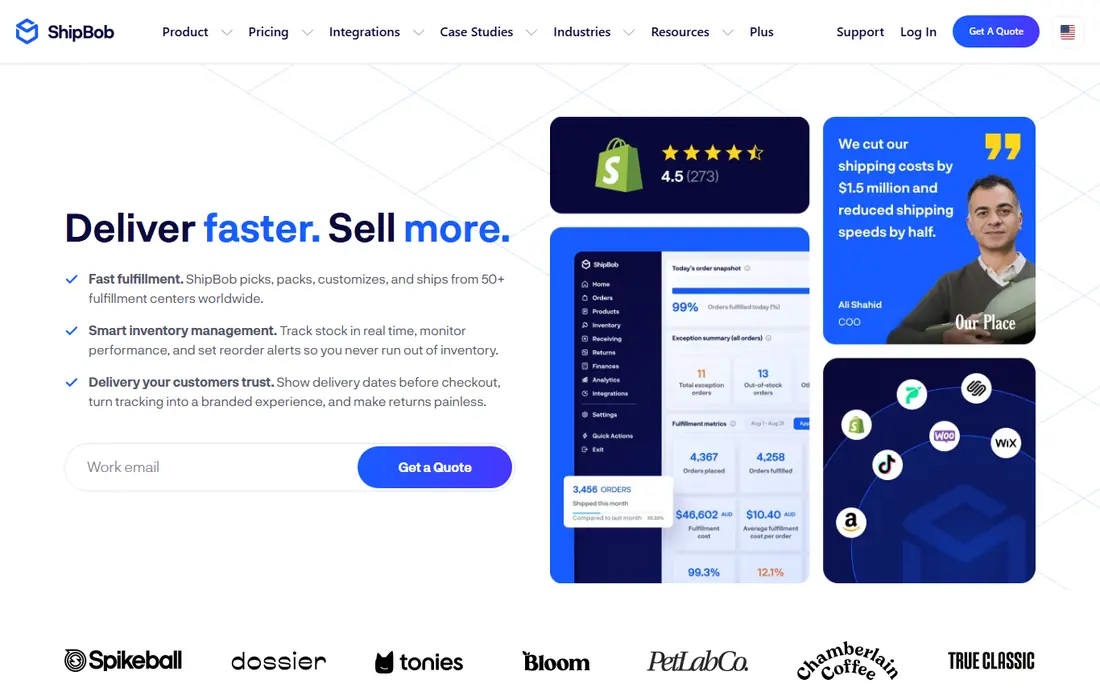
ShipBob is the default shortlist pick for ecommerce brands that have outgrown shipping from a garage or a small office. Its network of fulfillment centers lets brands place stock near customers, which cuts transit times and shipping costs. It integrates with major store platforms and marketplaces, and its dashboard shows inventory levels across locations in one place.
The catch is that pricing depends on order volume, product size and storage needs, so you will need a quote to compare it fairly. Brands shipping only a handful of orders per week may be better served by a smaller fulfillment partner. For brands doing steady daily volume, ShipBob's scale and systems are hard to beat.
- Wide US fulfillment network
- Strong ecommerce integrations
- Real-time inventory visibility
- Pricing is quote-based
- Very small brands may find minimums a stretch
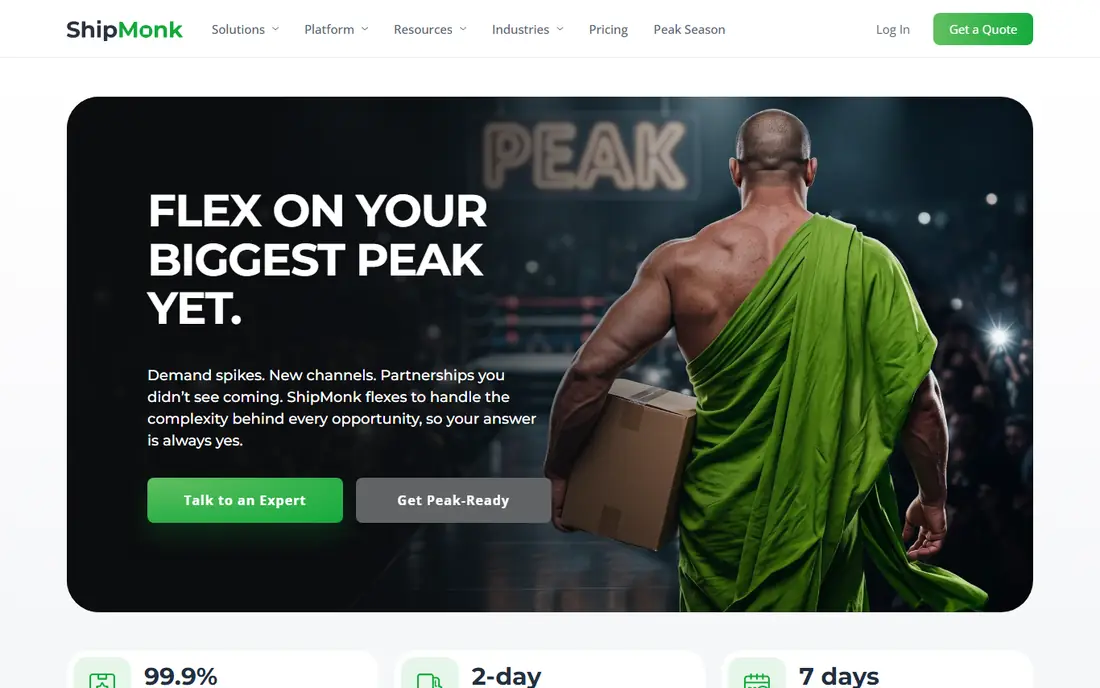
ShipMonk stands out when your product is not a simple pick-and-ship item. Subscription boxes, bundles, kits and limited drops all need assembly work that many 3PLs handle poorly. ShipMonk built its operations around that complexity, and its software lets brands track orders, inventory and special projects without constant emails to an account manager.
The trade is onboarding effort. Complex kits need clear instructions, packaging specs and quality checks, and rushing that setup leads to errors. Take time on the first project, and test with a small batch before a big launch. Brands that do that tend to stay, since switching a kitted operation is painful.
- Strong at kitting, bundling and subscription work
- Good software
- Handles crowdfunding surges
- Custom pricing
- Complex projects need careful onboarding
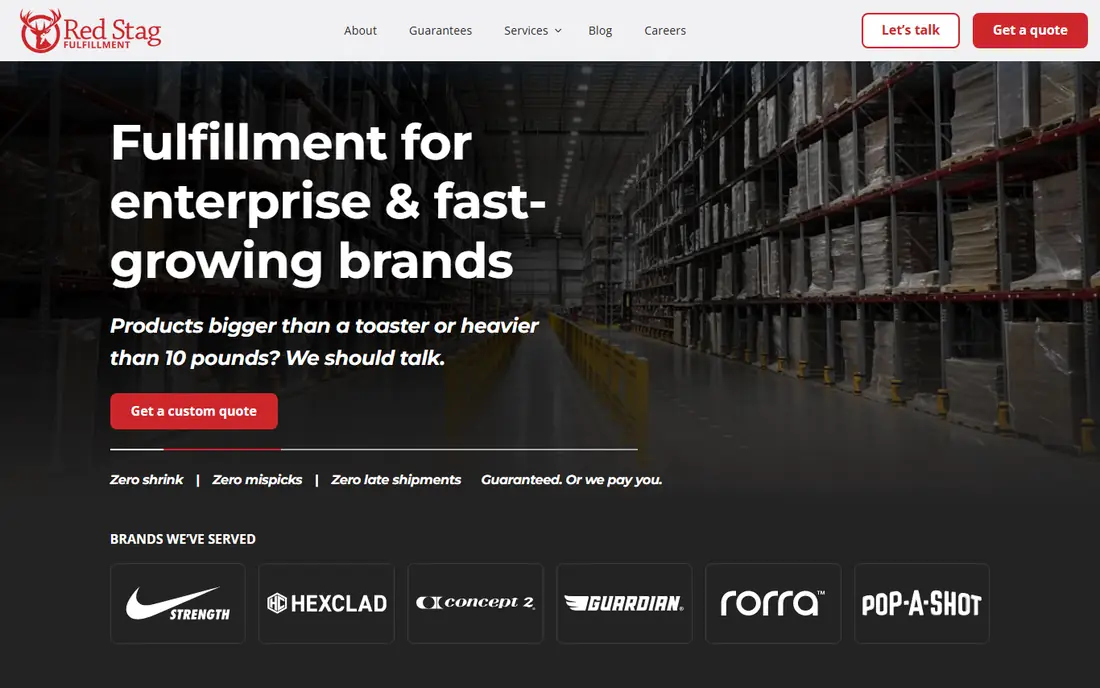
Red Stag Fulfillment is the pick when your product does not fit a standard parcel flow. Heavy, oversized, fragile or high-value items need different racking, packing and handling, and Red Stag built its warehouses for that work. It publishes accuracy and damage-related guarantees that give brands a clear remedy when something goes wrong.
The limit is fit. If you sell light apparel in standard poly mailers, a general ecommerce 3PL may be cheaper. If you sell furniture, fitness equipment, large electronics or fragile goods, Red Stag's specialization pays for itself in fewer damaged shipments and fewer support tickets.
- Specializes in oversized and fragile items
- Strong accuracy guarantees
- Experienced with high-value goods
- Not the cheapest for light, simple parcels
- Network is smaller than the giants
Flexport suits brands that import goods and need freight, customs and delivery managed together. Its platform tracks shipments across ocean and air legs, and it gives teams a single view of where stock is, rather than a pile of carrier emails. That visibility helps with planning, especially when lead times shift.
The honest catch is that freight rates move with the market, so budgeting needs a buffer. Flexport is also strongest as a freight and supply chain platform, not as a low-cost parcel pick-and-pack shop. Brands that import at volume and sell through multiple channels will get the most value from it.
- Combines ocean, air and customs in one platform
- Good shipment visibility
- Useful for importers
- Better for freight than for small parcel fulfillment
- Pricing varies with freight markets
DHL Supply Chain is the enterprise end of this list. It runs large contract logistics operations, including dedicated warehouses, transport management and value-added services for major brands. Its scale means it can handle seasonal peaks, multi-channel distribution and complex compliance needs that smaller 3PLs cannot.
The limit is access. DHL Supply Chain works through custom enterprise contracts, and it is not a self-serve option for a startup shipping 50 orders a day. Larger companies that need a long-term logistics partner, with service levels written into a contract, should put it on the shortlist.
- Huge global network
- Deep experience in retail, life sciences and technology
- Strong automation
- Enterprise focus
- Small brands will find it out of reach
Ryder combines fleet, warehousing and ecommerce fulfillment, which appeals to brands that need both storage and transport managed together. Its ecommerce arm serves retail and direct-to-consumer brands, and its transport network helps with inbound freight and outbound distribution. That breadth matters when a brand grows from one channel to several.
The catch is pace. Ryder is a large operator, and implementation takes planning, systems work and volume commitments. It is not a quick sign-up for a brand that needs fulfillment next week. Brands with steady volume and a multi-year horizon will find the effort worthwhile.
- Large US ecommerce fulfillment footprint
- Transport and warehousing under one roof
- Retail experience
- Enterprise-oriented
- Onboarding can be slow for small teams
C.H. Robinson is the freight-first pick. It connects shippers with a vast carrier network for truckload, less-than-truckload and intermodal freight, and it offers managed transportation for companies that want one partner to run their freight program. Its technology gives shippers rate visibility and shipment tracking across modes.
The trade is model. As a largely non-asset broker, C.H. Robinson arranges capacity rather than owning every truck, so service quality depends on carrier management. That is normal in freight, but brands should check service levels for their specific lanes. For freight-heavy businesses, its scale and lane coverage are a real advantage.
- One of the largest freight networks in North America
- Managed transportation services
- Useful for truckload and less-than-truckload freight
- A broker model, so capacity depends on carrier partners
- Not a parcel fulfillment house
GXO Logistics is one of the largest pure-play contract logistics providers, running warehouses for major brands across retail, consumer goods and technology. Its pitch is automation: robotics, smart warehousing and data tools that handle high volumes with tight accuracy. For a large brand, that technology can cut cost per order over time.
The limit is size. GXO works through enterprise agreements, and its onboarding is a project, not a signup form. Smaller brands should not waste time here. Larger companies planning a multi-year warehousing strategy, especially with omnichannel distribution, should compare GXO against DHL Supply Chain and Ryder.
- Very large contract logistics network
- Strong automation and technology
- Serves major retail and consumer brands
- Enterprise contracts only
- Not suited to small ecommerce brands
ShipNetwork, formerly Rakuten Super Logistics, focuses on brands selling across marketplaces and retail channels. That omnichannel angle matters, since retail orders often carry strict compliance rules on labeling, packing and delivery windows. ShipNetwork handles direct-to-consumer and business-to-business orders from the same inventory pool, which reduces split-stock problems.
The catch is name confusion. Older guides and reviews still call it Rakuten Super Logistics, so check that you are reading current material. Pricing is custom, and retail compliance work can add fees. For marketplace-heavy brands, though, the channel experience is a genuine advantage over a pure direct-to-consumer 3PL.
- Experience with Walmart and marketplace sellers
- Omnichannel distribution
- Retail compliance support
- Formerly Rakuten Super Logistics, so older reviews use the old name
- Pricing is custom
How we picked these
We compared official service pages, industry rankings, fulfillment network details and public client guidance for providers active in 2026. We favored providers with a clear specialty, a current US footprint and systems that integrate with common store platforms. We excluded providers that only serve one narrow region, and we treated freight brokers and parcel fulfillment houses as different categories, since comparing them on price alone would mislead readers. Most 3PL pricing is custom, so we show See website and advise readers to request an all-in quote.
How to compare 3PL quotes fairly
A low per-order rate can hide expensive receiving, storage and account fees, so always compare the total landed cost for a typical month. Build a sample month from your real data: order count, average items per order, product dimensions, storage volume and return rate. Send the same sample to every provider, and ask for receiving fees, storage rates, pick and pack fees, packaging costs, shipping markups and returns fees in writing.
Test before you commit fully
Run a pilot with a slice of your catalog or one sales channel before moving all stock. A pilot reveals pick accuracy, packing quality, support responsiveness and dashboard reliability in a way that a sales call cannot. Check how the provider handles a damaged shipment, a wrong item and a surge week. If support is slow during a pilot, it will not improve when you are fully dependent on them.
FAQ
What is a 3rd party logistics company?
A 3PL is an outside company that handles warehousing, order fulfillment, shipping or freight on your behalf. You keep selling and marketing, while the 3PL stores stock, picks and packs orders, and ships them to customers.
How much does a 3PL cost?
Costs vary widely by order volume, product size and service level. Expect receiving fees, monthly storage, per-order pick and pack fees, packaging, and shipping costs. Always request an all-in quote based on your actual order profile rather than comparing headline rates alone.
When should a small business switch to a 3PL?
The usual trigger is when packing and shipping takes time away from growth, or when order volume makes errors and late shipments common. Many brands switch when they pass 50 to 100 orders per week, though the right point depends on product complexity and available space.
What is the difference between a 3PL and a 4PL?
A 3PL runs logistics operations such as warehousing and transport. A 4PL manages the whole supply chain, often coordinating several 3PLs and technology providers on your behalf. Most growing brands start with a 3PL and only need a 4PL at much larger scale.
Should I use one 3PL or several?
One 3PL keeps inventory and reporting simple, which suits most brands. Splitting across regions or channels can cut shipping times, but it adds inventory complexity and minimums. Start with one provider, and split only when shipping data shows a clear regional case.