Choosing Java World Frameworks in 2026: 5 Options Compared
Compare 5 best java world frameworks, with prices, free plans and who each fits. We put Vert.x first for reactive applications on the JVM. Pick with confidence.
- Editor's choiceVert.x
Reactive applications on the JVM
Starts atPricing on requestVisit vertx.ioFull review - Great alternativeJakarta EE
Standards-based enterprise Java
Starts atPricing on requestVisit jakarta.eeFull review - Also considerQuarkus
Kubernetes-native cloud applications
Starts atPricing on requestVisit quarkus.ioFull review
Direct answer
If you need reactive applications on the JVM, Vert.x is the first tool to look at here. Jakarta EE is the stronger choice for standards-based enterprise Java, while Quarkus suits Kubernetes-native cloud applications. Details and limits for the rest of the 5 tools are below. None of these vendors publish plan prices, so pricing is on request for every option.
TL;DR:
- Number one here is Vert.x, a fit for reactive applications on the JVM.
- For modular microservices and serverless, Micronaut is worth a look.
- Vert.x, Micronaut and the 3 others all sell by quote; expect sales conversations before you see a price.
- Before buying Spring Boot, weigh this: can feel heavy for very small services.
- Vert.x, Micronaut and the 3 others all need a premium plan or a trial, since no free plan is listed.
Last checked November 2026. Pricing on request: vendors did not publish plan prices when this guide was last checked (November 2026), so ask each vendor for a written quote.
Quick comparison
| Tool | Best for | Starts at | Free plan? | |
|---|---|---|---|---|
| Vert.x | Reactive applications on the JVM | Pricing on request | Not stated | Visit |
| Jakarta EE | Standards-based enterprise Java | Pricing on request | Not stated | Visit |
| Quarkus | Kubernetes-native cloud applications | Pricing on request | Not stated | Visit |
| Spring Boot | Wide ecosystem and rapid application setup | Pricing on request | Not stated | Visit |
| Micronaut | Modular microservices and serverless | Pricing on request | Not stated | Visit |
Our 5 java world frameworks
Choosing java world frameworks usually comes down to price, fit and limits. This LinkVetted guide sets 5 tools side by side on those three points, with the facts kept short and checkable.
Vert.x
Best for: Reactive applications on the JVM
Vert.x makes the most sense for reactive applications on the JVM. Eclipse Vert.x is a toolkit for building reactive applications on the JVM. It uses an event-driven, non-blocking model and supports several languages, making it right for high-concurrency services and live systems.
On top of that, confirm library support for your specific use case. The reactive model can be harder to learn and debug than traditional imperative frameworks, and Vert.x gives you fewer high-level abstractions from day one. No starting price is listed for Vert.x here; confirm pricing on the vendor site. Free options: Not stated.
Where it is weaker: Fewer high-level abstractions.
- Polyglot support
- Event-driven
- Reactive paradigm has a ramp-up time
Jakarta EE
Best for: Standards-based enterprise Java
For standards-based enterprise Java, Jakarta EE is a natural candidate. Jakarta Enterprise Edition is the open source, standards-based future of enterprise Java, maintained by the Eclipse Foundation.
Downsides: Needs a compatible runtime.
On top of that, for teams wanting rapid access to the latest features or a more straightforward getting-started experience, Spring Boot or Quarkus may be more appealing. On top of that, evaluate your runtime choices and support needs before committing. This comparison lists no price for Jakarta EE; ask the vendor. Free plan details: Not stated.
- Capable enterprise feature set
- Backed by the Eclipse Foundation
- Slower release cadence
Quarkus
Best for: Kubernetes-native cloud applications
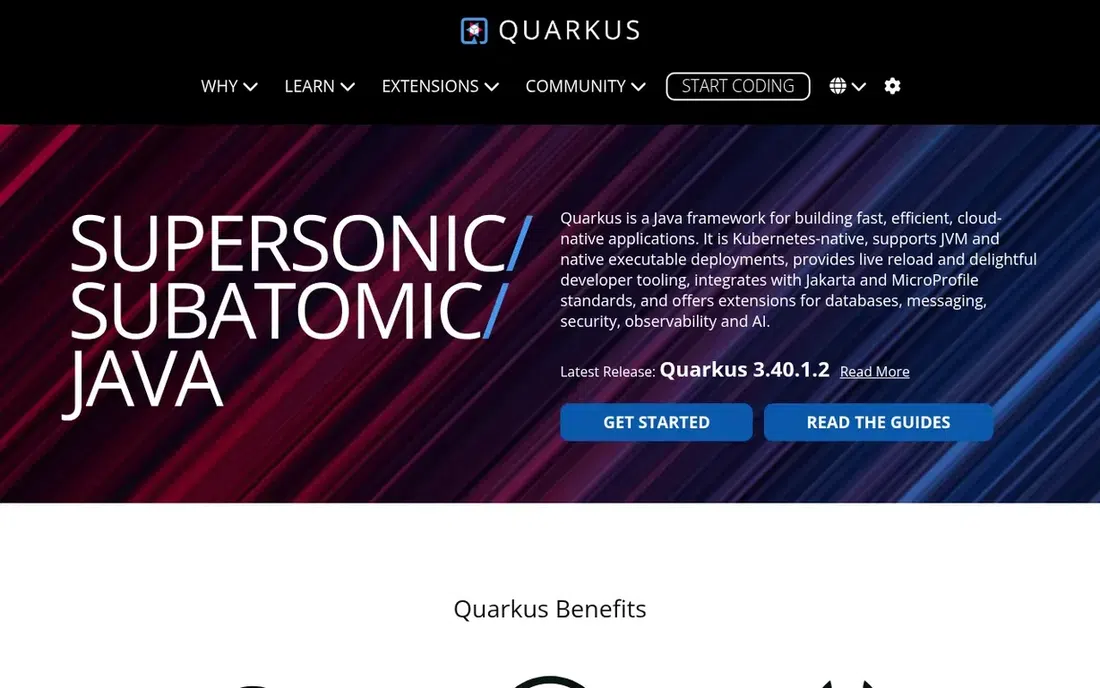
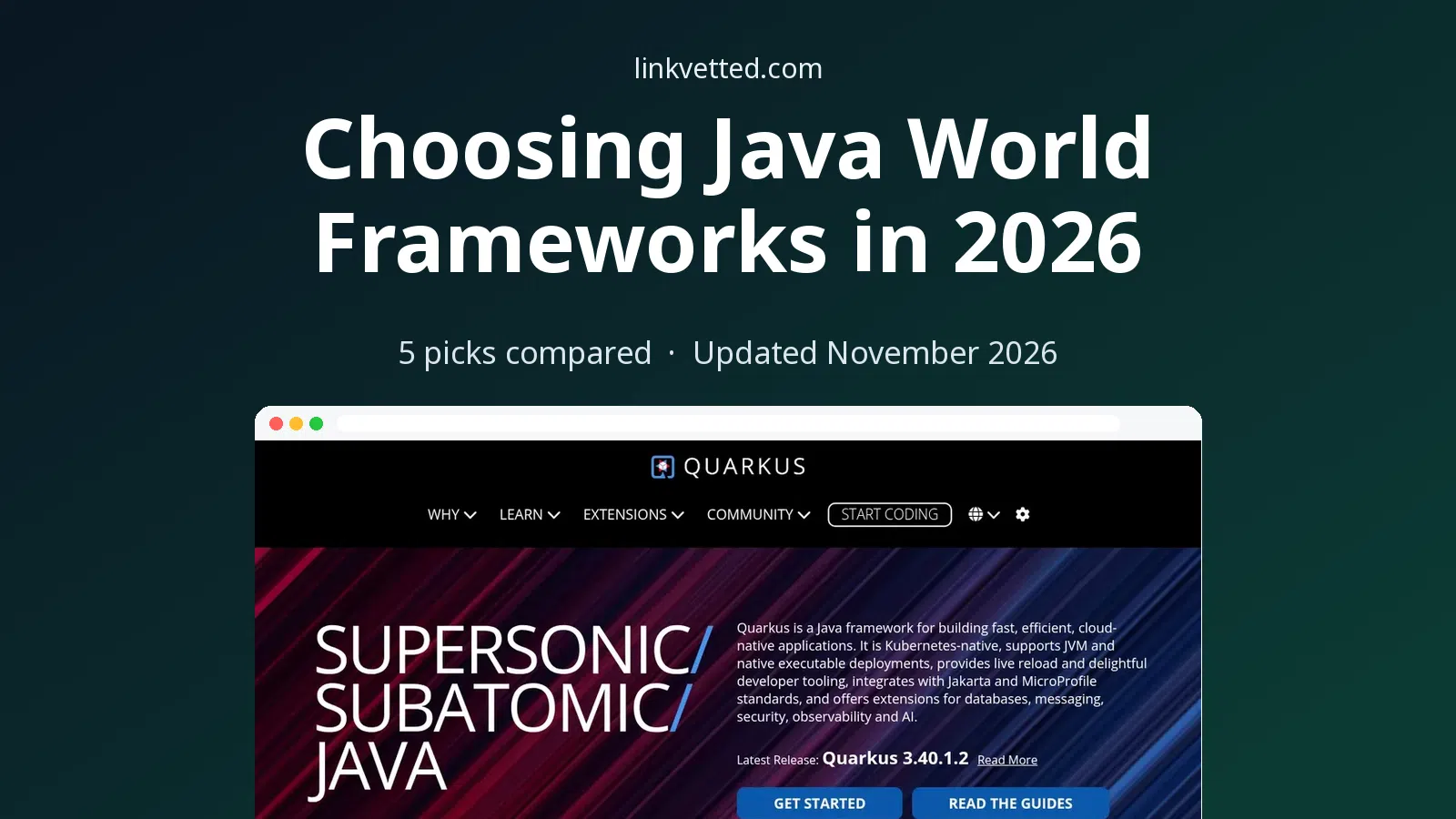
Quarkus is a good fit for Kubernetes-native cloud applications. Quarkus is a Kubernetes-native Java framework aimed at quick, efficient, cloud-native applications.
It supports both JVM and native executable deployments, gives you live reload, and plugs into widely used libraries and standards. As for the details, if you depend on a very wide set of external integrations or prefer a more established community, Spring Boot may be a safer choice, though Quarkus continues to expand. Quarkus shows no starting price here, so confirm the cost on the vendor site. Free plan details: Not stated.
Trade-offs to know: Native builds add complexity.
- Live reload for developer productivity
- Supports JVM and native executable deployments
- Smaller ecosystem than Spring
Spring Boot
Best for: Wide ecosystem and rapid application setup
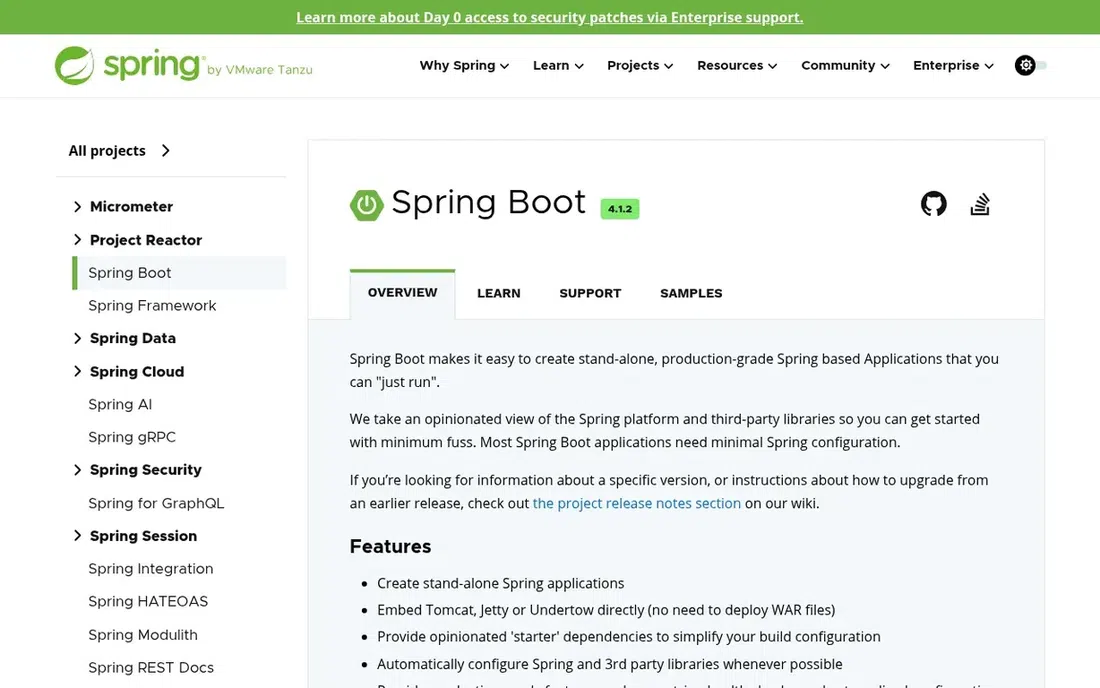
For wide ecosystem and rapid application setup, Spring Boot is a natural candidate. Spring Boot is a widely used framework for building stand-alone, production-grade Spring applications. It favors convention over configuration, letting teams start with minimal setup and add components as needed.
Its adaptability includes a ramp-up time, and smaller services may carry more overhead than necessary. More specifically, if your priority is minimal footprint or native compilation, consider Quarkus or Micronaut instead, but confirm current capabilities on their vendor pages. In daily use, startup times and memory use can be higher than some light alternatives. Spring Boot does not show a starting price in this comparison, so check the vendor site for current pricing. Free plan details: Not stated.
Points against: Numerous choices can overwhelm newcomers.
- Deep documentation and community knowledge
- Convention over configuration cuts boilerplate
- Can feel heavy for very small services
Micronaut
Best for: Modular microservices and serverless
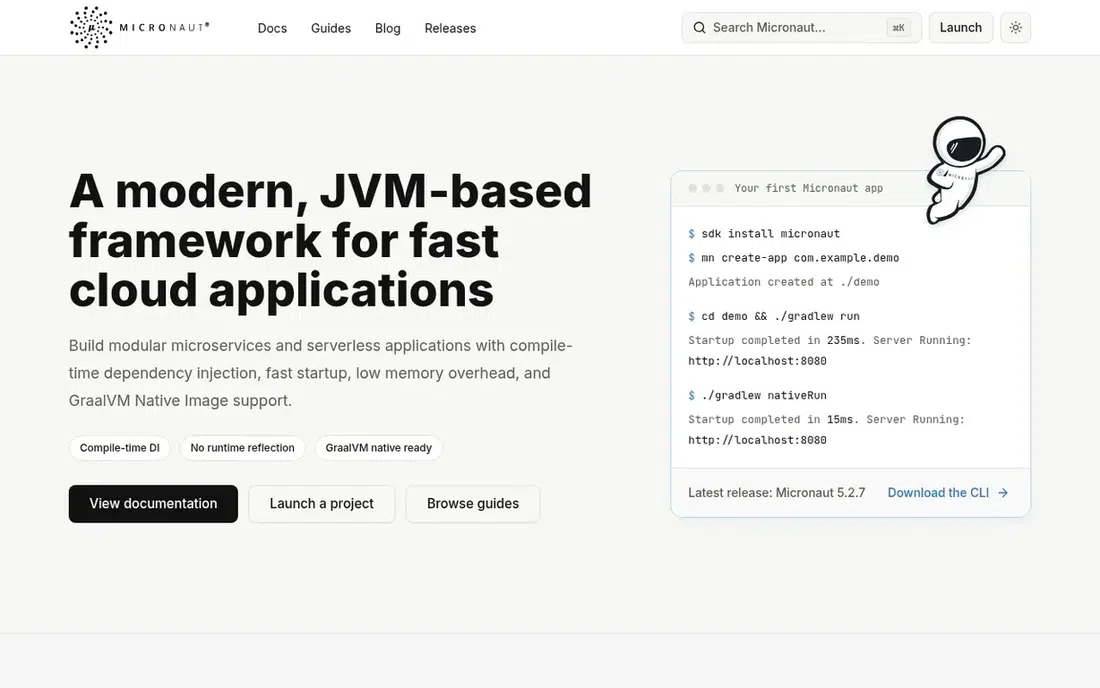
Choose Micronaut for modular microservices and serverless. Micronaut is a modern, JVM-based, full-stack framework for building modular, easily testable microservice and serverless applications. It emphasizes low overhead through ahead-of-time processing and supports a set of languages and deployment targets.
As for the details, documentation, whereas solid, may not handle every edge case. The community and ecosystem are smaller than Spring's, so some integrations may need more custom work. No starting price is listed for Micronaut here; confirm pricing on the vendor site. Free plan details: Not stated.
What to check first: Smaller community than Spring.
- Ahead-of-time compilation support
- Low overhead and fast startup
- Fewer ready-made integrations
How these tools were picked
LinkVetted looked at what each vendor publishes: pricing, plan limits, feature coverage for java world frameworks and stated drawbacks. No hands-on testing is claimed. Plan names, prices and limits change often. Treat the figures here as a starting point and verify them with the vendor. The order reflects how well each tool fits the most common buying scenario for java world frameworks, then price clarity, then free plan access. It is a starting point, not a verdict.
Before you commit
- Ask each vendor, from Vert.x to Micronaut, for a written quote; none of them publishes a starting price.
- Before choosing Vert.x, weigh its main limit: reactive paradigm has a ramp-up time.
- Ask Vert.x how an export works before you move any records in; an easy exit lowers the risk.
- Confirm the exact Quarkus plan that includes your must-have features.
- The entry price of Jakarta EE is only the starting point; model the full cost with seats and extras.
FAQ
What is the difference between Vert.x and Spring Boot?
Vert.x is a reactive, event-driven toolkit for high-concurrency applications, whereas Spring Boot is a broader framework favoring convention over configuration. Vert.x gives you fine-grained control but needs familiarity with asynchronous programming. Spring Boot gives you more ready-made integrations and a larger community.
Is Jakarta EE still relevant for new projects?
It is maintained by the Eclipse Foundation and continues to evolve for cloud-native use. Teams needing rapid access to modern features may prefer single-vendor frameworks.
How are the tools for java world frameworks ordered?
The order follows typical fit for java world frameworks, with Vert.x first and Micronaut last, then price clarity and free access. It is editorial judgement, not a score, so another team could rank the tools differently.
Do these tools publish their prices?
No. None of the tools, from Vert.x to Micronaut, shows a fixed starting price here, so budget time for quotes.
Can I try these tools before paying?
Not by default. None of the tools, from Vert.x to Micronaut, lists a free plan or a free trial here, so ask each vendor for a demo before committing.
Is Vert.x the right pick for everyone comparing java world frameworks?
No single tool suits every team. Vert.x comes first because it fits reactive applications on the JVM, while Jakarta EE suits standards-based enterprise Java and Quarkus suits Kubernetes-native cloud applications. Match the tool to your own size, budget and workflow before deciding.
Sources
- https://vertx.io
- https://jakarta.ee
- https://quarkus.io
- https://spring.io/projects/spring-boot
- https://micronaut.io