Best Zoho Inventory Alternatives in 2026: 8 Tools Compared
Looking for Zoho Inventory alternatives? We compare 8 inventory tools for online sellers, wholesalers, and makers, with current prices and free tiers in 2026.
- Editor's choice
 Cin7 Core
High-volume multichannel sellers
Starts at$349 per monthVisit cin7.comFull review - Great alternative
 inFlow
Wholesale and B2B sellers
Starts at$99 per monthVisit inflowinventory.comFull review - Also consider
 Katana
Small manufacturers
Starts at$299 per monthVisit katanamrp.comFull review
TL;DR:
- Cin7 Core is the best pick for high-volume multichannel sellers who need purchasing, warehouse, and manufacturing depth in one system.
- inFlow suits wholesalers and B2B sellers, with a showroom portal and invoicing built in.
- Katana suits small manufacturers, with visual production planning and raw material tracking.
- Fishbowl suits QuickBooks-centric firms that need warehouse and manufacturing tools tied to their accounts.
- Sortly, Odoo Inventory, and Square for Retail suit smaller firms that need simple tracking, a full ERP path, or POS plus stock in one place.
Quick comparison
| Tool | Best for | Starts at | Free plan? | |
|---|---|---|---|---|
| Cin7 Core | High-volume multichannel sellers | $349 per month | Free trial | Visit |
| inFlow | Wholesale and B2B sellers | $99 per month | Free trial | Visit |
| Katana | Small manufacturers | $299 per month | Yes | Visit |
 Fishbowl | QuickBooks-based warehouses | $229 per month | Free trial | Visit |
 Odoo Inventory | Businesses wanting one ERP system | Free | Yes | Visit |
 Sortly | Simple visual stock tracking | Free | Yes | Visit |
 Ordoro | Ecommerce shipping and stock | $349 per month | Free trial | Visit |
 Square for Retail | Shops with POS and stock together | Free | Yes | Visit |
The best Zoho Inventory alternatives
These alternatives to Zoho Inventory include TradeGecko-style multichannel tools and simpler trackers, so you can match the system to your sales channels and stock complexity. Note that TradeGecko itself became QuickBooks Commerce, so buyers looking for TradeGecko alternatives should compare the tools below rather than searching for the old TradeGecko product.
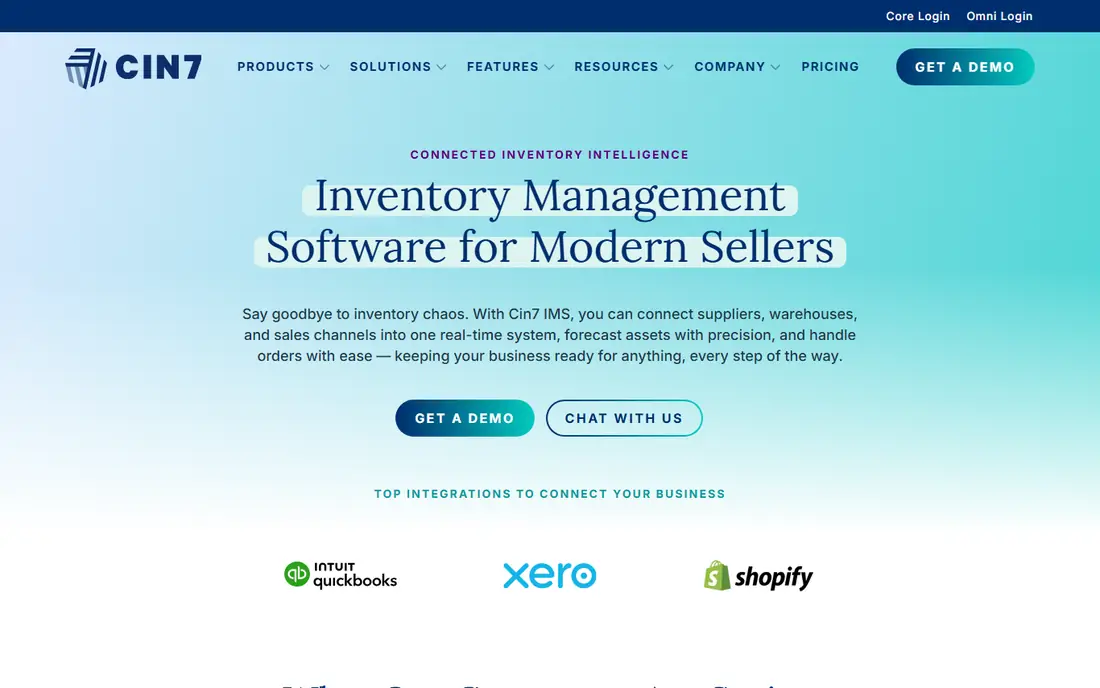
Cin7 Core is our pick for growing brands that sell on several channels at once. It syncs stock across Shopify, Amazon, and other marketplaces, handles purchasing and supplier orders, and adds warehouse and manufacturing features as you grow. For a firm that has outgrown Zoho Inventory order limits, Cin7 Core removes that ceiling.
The cost and setup are real. At $349 per month, Cin7 Core is an investment, and complex warehouses need careful onboarding. Smaller sellers should start with a cheaper tool and move to Cin7 when order volume and channel count justify it. For high-volume sellers, the time saved on manual stock updates pays for the plan.
- Real-time multichannel sync
- Purchasing, warehouse, and manufacturing tools
- Wide integration list
- Price starts at $349 per month
- Implementation takes time for complex setups
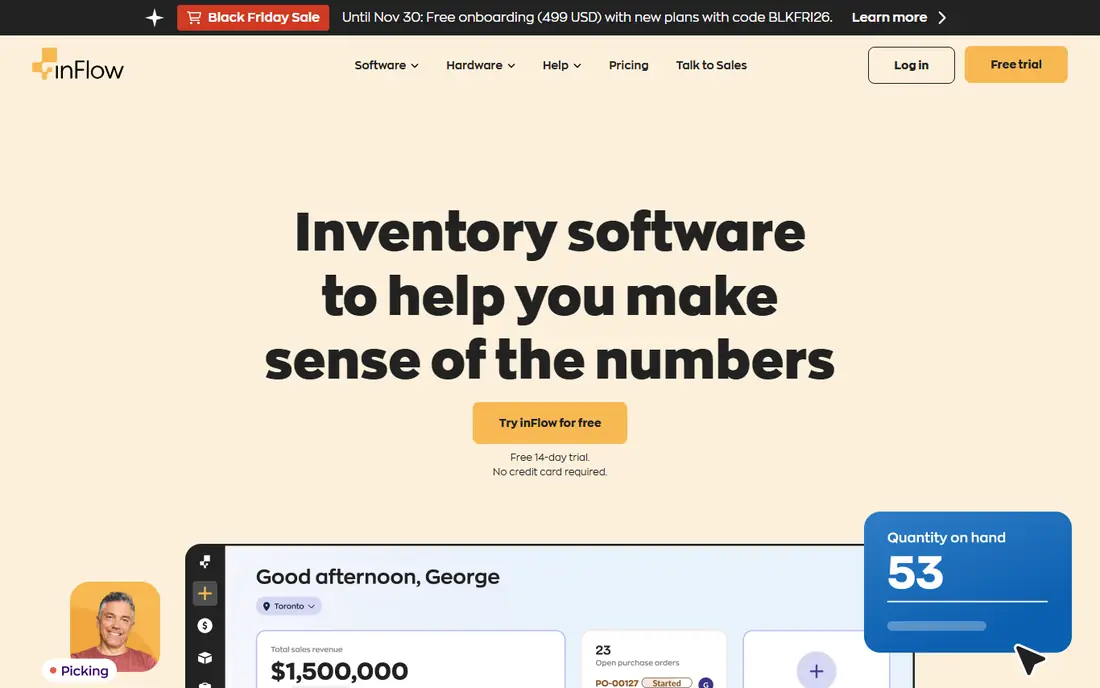
inFlow suits wholesalers, distributors, and field service firms that sell to other businesses. The B2B showroom lets trade customers browse and order on their own, while invoicing, purchase orders, and stock control stay in one system. That combination is rare at this price, and it fits firms that still take phone and email orders.
The entry price is $99 per month when billed annually, with higher monthly billing available. Manufacturing features sit in add-ons or higher tiers, so makers should price the full setup. If your main job is B2B ordering and stock control, inFlow is one of the best Zoho Inventory alternatives at a mid-range price.
- B2B showroom portal
- Invoicing and sales orders built in
- Multi-level bills of materials
- Manufacturing is an add-on
- Price rises with higher tiers and users
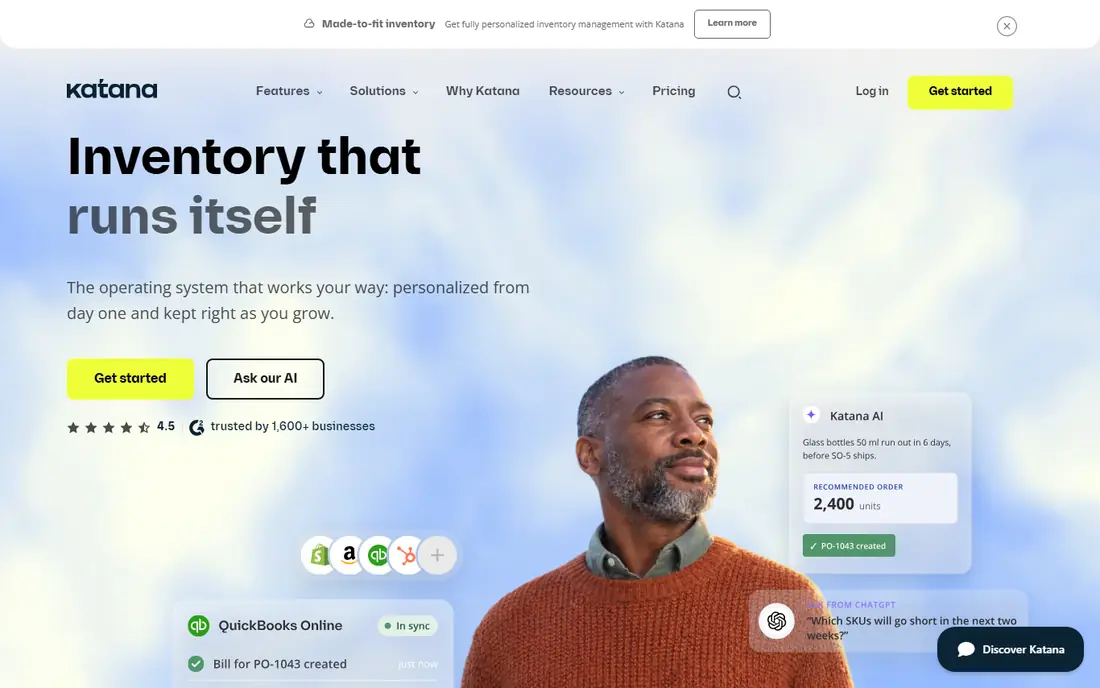
Katana is built for makers who assemble or manufacture products. It shows raw materials, work in progress, and finished goods on a visual plan, so you can see what you can make before you promise a delivery date. Sales orders pull stock automatically, and integrations cover Shopify, QuickBooks, and Xero.
The free tier covers up to 30 SKUs, which suits a test or a very small range, but most makers will need the paid plan at $299 per month. That price is steep for a hobby maker, but fair for a brand with real production volume. If manufacturing is your core job, Katana fits better than a general inventory tool.
- Visual production planning
- Raw material and finished goods tracking
- Shopify and accounting links
- Paid plans start at $299 per month
- Free tier caps at 30 SKUs
Fishbowl is the pick for firms that run QuickBooks and need warehouse depth. It adds barcode scanning, pick and pack workflows, and inventory control that syncs with QuickBooks, so stock movements and accounts stay in step. Manufacturing features sit in Fishbowl Advanced, which costs more.
The entry Essentials plan starts at $229 per month billed annually for two users, so small firms should check user counts and plan costs first. Fishbowl also rewards careful setup, since warehouse locations and workflows need to match your real floor. For QuickBooks firms with real warehouse needs, it is a strong, proven option.
- Deep QuickBooks and Xero integration
- Barcode scanning and warehouse tools
- Manufacturing in Advanced
- Essentials starts at $229 per month billed annually
- Setup needs care for large warehouses
Odoo Inventory appeals to firms that want one system for everything. The single inventory app is free, with barcode scanning, forecasting, and automatic purchase orders, and you can add sales, CRM, accounting, and manufacturing as paid modules. That modular path suits firms that plan to grow into a full ERP.
The trade-off is complexity. Full-suite pricing is per user, and customising Odoo to match your workflows takes time or partner help. If you only need simple stock tracking, a lighter tool like Sortly is faster. If you want one system that can grow with you for years, Odoo Inventory is a smart starting point.
- Free single-app option
- Barcode and forecasting tools
- Path to full ERP with sales, CRM, and accounting
- Per-user pricing for the full suite
- Setup and customisation take time
Sortly is the simplest tool in this list, and that is its strength. You track items with photos, QR codes, and barcodes, check stock in and out from a phone, and see what is where without learning an ERP. Teams that track tools, supplies, or equipment will find it faster than a full inventory system.
Sortly does not try to match Cin7 or Fishbowl on order management, purchasing, or accounting. The free plan caps items at 100, and paid plans start at $49 per month. If you need to know where stock is rather than run a full order pipeline, Sortly is the easiest pick here.
- Visual, mobile-first tracking
- QR and barcode scanning on free plan
- Easy check-in and check-out
- No full order management or accounting depth
- Item caps on free and low plans
Ordoro suits ecommerce brands where shipping is half the job. It combines inventory sync across channels with shipping label printing, discounted carrier rates, and dropshipping tools, so orders move from sale to shipment in one system. That focus helps small teams that ship dozens of parcels a day.
The inventory plan starts at $349 per month, with a free trial of 15 days, so it is priced for established sellers rather than new shops. Ordoro also lacks the manufacturing depth of Katana or Fishbowl. If shipping speed and stock accuracy matter most, Ordoro is a strong pick.
- Shipping discounts and label printing
- Multichannel stock sync
- Dropshipping support
- Inventory app starts at $349 per month
- No manufacturing depth
Square for Retail suits physical shops that need point of sale and stock in one place. You ring up sales, track stock by location, and see low-stock alerts without a separate inventory system. The free tier covers basic retail needs, and paid plans add vendor management, purchase orders, and analytics.
Per-location pricing matters. Paid plans start at $49 per month per location, so a multi-shop firm should model the total. Square also lacks deep manufacturing or B2B wholesale tools. For a retail shop that sells in store and online through Square, it is the simplest Zoho Inventory alternative here.
- Free tier with POS and stock
- Multi-location counts
- Easy checkout and payments
- Paid plans start at $49 per month per location
- Less suited to complex manufacturing or B2B
How we picked these
We compared official pricing pages, feature lists, and channel support for inventory tools that serve online sellers, wholesalers, retailers, and makers in 2026. We kept tools with a free tier, trial, or published entry price, and we noted where manufacturing, shipping, or POS features sit behind higher plans. We did not claim hands-on testing, and we treated vendor pages as the source for prices and limits.
How to choose inventory software
Start with how you sell. Online multichannel sellers need channel sync first. Wholesalers need B2B ordering and invoicing. Makers need bills of materials and production planning. Retailers need POS and location stock. A tool that fits your sales model will beat a tool with a longer feature list that misses your core job.
Then check limits that bite later: order caps, SKU caps, user counts, warehouse counts, and accounting integrations. Import a sample of your real products, with variants and barcodes, and run a full order cycle from sale to shipment to invoice. If that cycle works cleanly, the tool will hold up at higher volume. If it needs workarounds on day one, it will need more later.
FAQ
What is the best alternative to Zoho Inventory?
Cin7 Core is the best overall alternative for growing multichannel sellers, while inFlow suits wholesalers and Katana suits makers. Sortly and Square for Retail suit smaller firms that need simpler tracking.
Are there free Zoho Inventory alternatives?
Yes. Odoo Inventory offers a free single app, Sortly offers a free tier for up to 100 items, and Square for Retail offers a free tier for basic retail stock. Free tiers cap items, orders, or features, so check them against your volume.
What happened to TradeGecko?
TradeGecko became QuickBooks Commerce after Intuit acquired it, and the old TradeGecko product is no longer sold as a standalone tool. Sellers looking for TradeGecko alternatives should compare Cin7 Core, inFlow, and Ordoro, which cover similar multichannel needs.
Does inventory software integrate with QuickBooks or Xero?
Most tools here do. Fishbowl and inFlow link closely with QuickBooks Online, while Katana, Cin7 Core, and Odoo link with QuickBooks and Xero. Check the exact sync direction for stock, invoices, and cost of goods before you buy.
How much does inventory software cost?
Small business tools run from free to about $99 per month, while multichannel and manufacturing tools run from $229 to $349 per month. Enterprise ERP pricing is custom, so get a quote if you need multiple warehouses or entities.
Can I migrate from Zoho Inventory?
Yes, most tools offer CSV import for products, stock levels, and customers, and some offer assisted migration. Export a full product and stock file from Zoho first, test the import on a sample, and reconcile counts before you switch off Zoho.