Best E-Commerce Software for Multi-Channel Sales for 2026: Our 5 Vetted Picks
Searching for the best E-commerce software for Multi-Channel sales? Here are 5 options with prices and free plans. Short verdicts, no fluff. Plain facts.

- Editor's choice
 Adobe Commerce
Enterprise B2B and B2C experiences
Starts atSee websiteVisit business.adobe.comFull review - Great alternative
 Squarespace
Design-led small business keeps
Starts at$12 per monthVisit squarespace.comFull review - Also consider
 Shopify
All-in-one multi-channel commerce
Starts at$19 per monthVisit shopify.comFull review
Direct answer
Adobe Commerce leads the list, best for enterprise B2B and B2C experiences. Listed starting prices: Squarespace from $12 per month, Shopify from $19 per month and WooCommerce from $29 per month. For a different need, Squarespace covers design-led small business keeps and Shopify covers all-in-one multi-channel commerce. The other 2 tools in the list cover narrower or pricier cases.
TL;DR:
- Adobe Commerce takes the first slot, best suited to enterprise B2B and B2C experiences.
- Shopify comes with a trade-off: less control over the underlying codebase.
- Squarespace is the lowest-priced starter here at $12 per month.
- BigCommerce fits scalable multi-region commerce.
- None of the 5 tools, from Adobe Commerce to BigCommerce, has a free plan, so budget for a subscription or use a trial.
Last checked November 2026. Prices and plan details were read from the vendors' own pages in November 2026; vendors change plans often, so confirm the current price on the vendor site before you buy.
Quick comparison
| Tool | Best for | Starts at | Free plan? | |
|---|---|---|---|---|
| Adobe Commerce | Enterprise B2B and B2C experiences | See website | Not stated | Visit |
| Squarespace | Design-led small business keeps | $12 per month | Free trial | Visit |
| Shopify | All-in-one multi-channel commerce | $19 per month | Free trial | Visit |
 WooCommerce | Open-source adaptability and control | $29 per month | Not stated | Visit |
 BigCommerce | Scalable multi-region commerce | See website | Not stated | Visit |
E-Commerce Software for Multi-Channel Sales compared in detail
This LinkVetted guide covers 5 E-commerce software for Multi-Channel sales. Each profile lists a starting price, free plan details, strengths and drawbacks, so you can drop poor fits quickly.
Adobe Commerce is designed for enterprise B2B and B2C experiences. Adobe Commerce, formerly Magento, is described as an AI-powered composable e-commerce system for B2B and B2C that provides personalized experiences at global scale. Its composable approach lets bigger organizations assemble services around a commerce core.
Limits to weigh: Better suited to large organizations.
Where it shines: Built for B2B and B2C at global scale.
From a buyer's view, smaller merchants may find it heavy for their needs. For everyday use, choose Adobe Commerce when composability, B2B and B2C support, and global personalization are central requirements. Adobe Commerce shows no starting price here, so confirm the cost on the vendor site. Free access: Not stated.
- AI-powered system
- Personalization focus
- Complicated implementation
Think of Squarespace for design-led small business keeps. Squarespace is a website builder with configurable templates, AI website builder tools, and domain choices, and it contains commerce features for selling online.
For merchants whose multi-channel needs are modest, it can be a practical starting point. In daily use, Squarespace is not positioned for complicated, high-volume multi-channel operations or deep B2B requirements. Entry price for Squarespace: $12 per month. Free plan details: Free trial.
Where it is weaker: Less depth for complicated multi-channel operations.
- AI website builder tools
- Domain and site tools in one place
- Fewer enterprise commerce features

Pick Shopify if this describes you: all-in-one multi-channel commerce. Its homepage flags AI-assisted building and growth, plus more than e-commerce software.
Points against: Advanced customization may need apps or experts.
Also, choose Shopify when speed of setup and a unified toolset matter more than low-level customization. Beyond that, firms with complicated B2B requirements or existing enterprise systems may prefer a composable or open-source choice. Entry price for Shopify: $19 per month. As for free access: Free trial.
- Wide channel and business management tools
- AI features for building and expanding
- Less control over the underlying codebase
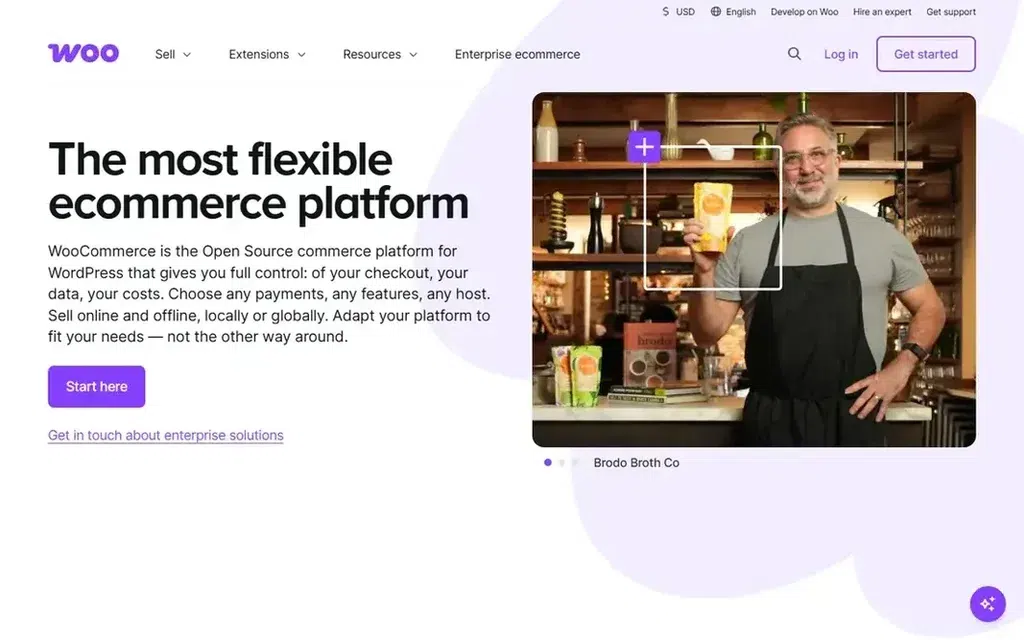
Pick WooCommerce if this describes you: open-source adaptability and control. Since it is open source, teams can adapt the stack and keep control over hosting and extensions.
What to check first: Depends on extras for some channel features.
Worth adding: open source also means more responsibility: updates, hosting, and integration choices fall to the merchant. Starting cost for WooCommerce: $29 per month. Trial and free access: Not stated.
- Built for merchants and developers
- Open-source system
- Needs more technical upkeep

BigCommerce is designed for scalable multi-region commerce. BigCommerce describes commerce designed for momentum, powering buying experiences across brands, regions, and channels from a single, scalable foundation. It is a reasonable fit for mid-market and expanding brands that prioritize scalability and multi-channel reach.
In daily use, merchants with very straightforward single-channel needs may find the system more than required. In practice, consider BigCommerce when scale and channel breadth are the priority. BigCommerce shows no starting price here, so confirm the cost on the vendor site. Free options: Not stated.
Points against: May need extras for some channel needs.
- Scalable positioning for expanding merchants
- Single foundation across brands and regions
- Less emphasis on built-in business management tools
What went into this list
Selection started from tools commonly considered for E-commerce software for Multi-Channel sales, then narrowed to 5 that have clear pricing information or a clear quote process. Where a price is missing, the vendor does not list one publicly or ties it to a quote. Always confirm before budgeting. The order reflects how well each tool fits the most common buying scenario for E-commerce software for Multi-Channel sales, then price clarity, then free plan access. It is a starting point, not a verdict.
What to confirm before you sign up
- Confirm the entry price on the vendor page. For Adobe Commerce and BigCommerce that means a quote rather than a fixed price.
- Take the trial from Squarespace and Shopify and push a live task through it before you pay.
- Read the limits listed for Adobe Commerce first: complicated implementation.
- Make sure Squarespace lets you export your data in a format another tool can read.
- Add up seats, add-ons and usage charges for WooCommerce before comparing it with cheaper entries.
FAQ
Is open-source better for multi-channel sales?
Open-source systems like WooCommerce offer adaptability and control, which can help with custom channel integrations. They also need more technical upkeep. Hosted products cut maintenance but offer less low-level control.
Can I try these tools before paying?
Often, yes. Squarespace and Shopify offer a free trial. Use your own data and a real task during the test, and check what the free tier or trial limits before you rely on it. Each of the 5 options in this E-Commerce software for Multi-Channel sales guide has its own card above with the price, free plan and limits.
Which platform is best for selling on several channels?
For most readers this guide would start with Adobe Commerce, built for enterprise B2B and B2C experiences. Squarespace is the alternative for design-led small business keeps, and Shopify for all-in-one multi-channel commerce. The right answer depends on budget and workflow.
How are the tools for E-commerce software for Multi-Channel sales ordered?
The order follows typical fit for E-commerce software for Multi-Channel sales, with Adobe Commerce first and BigCommerce last, then price clarity and free access. It is editorial judgement, not a score, so another team could rank the tools differently.
Does any tool for E-commerce software for Multi-Channel sales here have a free plan?
A permanent free plan is not offered by Adobe Commerce, BigCommerce or the other tools here. Squarespace, Shopify offer a trial. Plan a short evaluation period instead.
Is Adobe Commerce the right pick for everyone comparing E-commerce software for Multi-Channel sales?
No single tool suits every team. Adobe Commerce comes first because it fits enterprise B2B and B2C experiences, while Squarespace suits design-led small business stores and Shopify suits all-in-one multi-channel commerce. Match the tool to your own size, budget and workflow before deciding.
Sources
- https://business.adobe.com/products/magento/magento-commerce.html
- https://www.squarespace.com
- https://www.shopify.com
- https://woocommerce.com
- https://www.bigcommerce.com