Best Shopify Apps to Boost Sales in 2026: 9 Apps Compared
We compare the best shopify apps to boost sales, from email and reviews to upsells and loyalty, with current pricing, free plans and honest trade-offs.

- Editor's choice
 Klaviyo
Email and SMS automation
Starts atFreeVisit klaviyo.comFull review - Great alternative
 Judge.me
Product reviews on a budget
Starts atFreeVisit judge.meFull review - Also consider
 Smile
Loyalty points and referrals
Starts atFreeVisit smile.ioFull review
TL;DR:
- Email and SMS automation usually delivers the largest repeat revenue, and Klaviyo remains the strongest starting point for most stores.
- Reviews on product pages build trust before a visitor buys, and Judge.me offers a genuinely useful free plan for new stores.
- Upsells work best after the main purchase, which is why post-purchase offers and bundles deserve a place in the stack.
- Loyalty and popups only help once traffic and repeat orders exist, so add them after the basics are running.
- Every app here adds cost or page code, so install one at a time and check conversion before adding the next.
Quick comparison
| Tool | Best for | Starts at | Free plan? | |
|---|---|---|---|---|
| Klaviyo | Email and SMS automation | Free | Yes | Visit |
| Judge.me | Product reviews on a budget | Free | Yes | Visit |
| Smile | Loyalty points and referrals | Free | Yes | Visit |
 ReConvert | Post-purchase upsells | See website | Free trial | Visit |
 Bold Bundles | Bundle recommendations on product pages | See website | Free trial | Visit |
 Privy | Popups and list growth | Free | Yes | Visit |
 Yotpo | Reviews plus loyalty in one platform | Free | Yes | Visit |
 Loox | Photo and video reviews | See website | Free trial | Visit |
 PushOwl | Web push notifications | Free | Yes | Visit |
The best shopify apps to boost sales
These nine apps cover the full path from first visit to repeat order. We compared official feature pages, pricing pages and Shopify App Store listings, and we favored apps with clear free plans, strong Shopify integration and a track record with real stores.
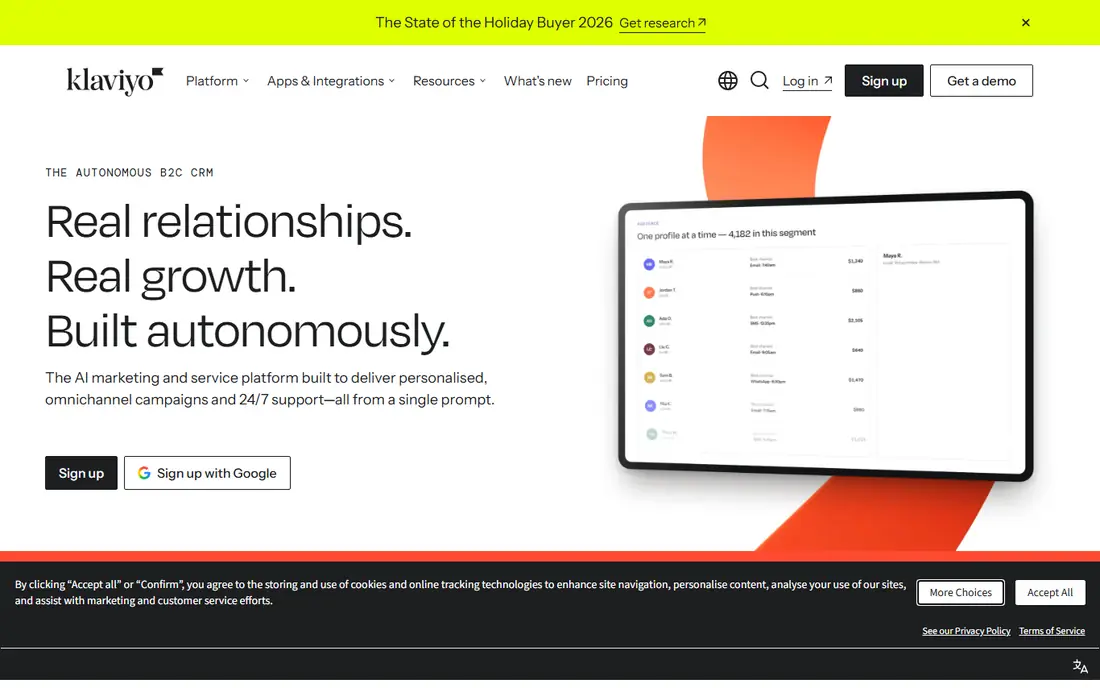
Klaviyo earns the top spot because it turns store data into automated messages that run without daily attention. A welcome flow, an abandoned cart flow and a post-purchase flow cover most of the revenue a new store can recover, and segmentation lets a store send different offers to first-time buyers and repeat customers. The reporting ties each flow to revenue, which makes it easier to judge whether the app pays for itself.
The catch is cost as the list grows. Klaviyo bills by active profiles, so a store that collects contacts without cleaning them will see the bill climb even if it rarely emails them. SMS is billed separately and can surprise a small store. Start on the free plan, prove the email flows first, and add SMS only after email is working.
- Deep Shopify data sync
- Strong flows for welcome, abandoned cart and post-purchase
- Detailed revenue reporting per campaign
- Pricing rises with active profiles
- SMS costs add up quickly
- Setup takes time to do well
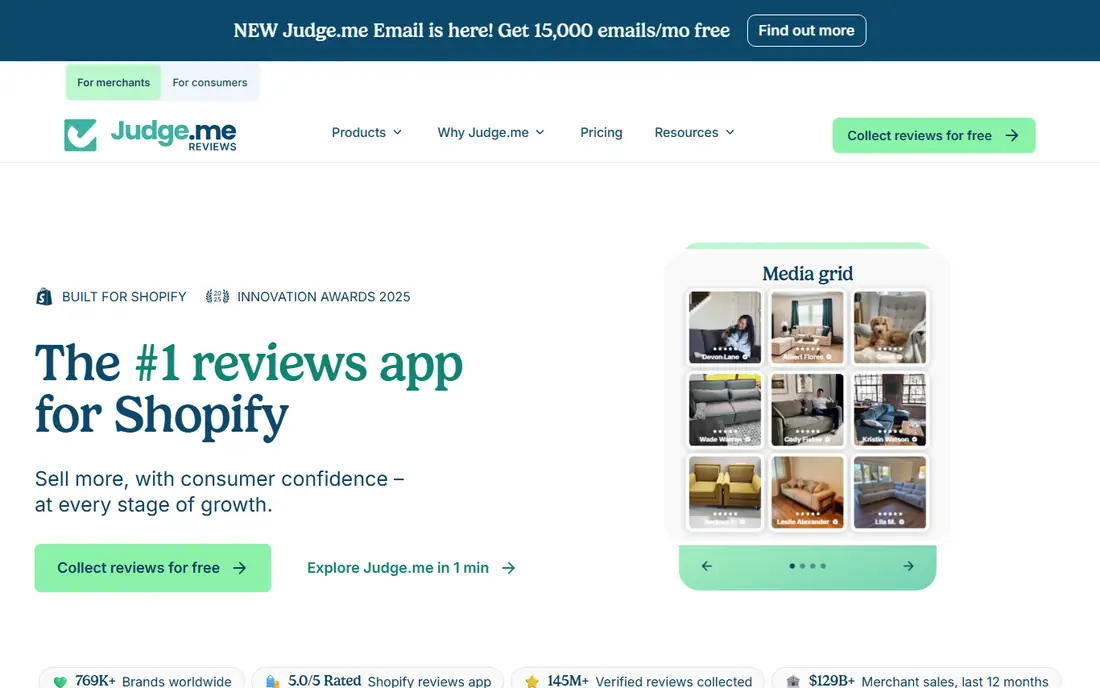
Judge.me is the review app we point new stores to first, mainly because the free plan is not a stripped demo. It collects unlimited product and store reviews, accepts photo and video reviews, and can show review widgets and star ratings on product pages. That social proof matters most on pages where a visitor is deciding whether to trust an unfamiliar brand.
The paid Awesome plan adds AI summaries, social syndication and wider integrations, including Klaviyo, for a modest monthly fee. Stores that want heavy design control or a combined reviews and loyalty suite may prefer Yotpo, but for pure reviews at low cost Judge.me is hard to beat. Import tools also make it practical to switch from another review app without losing past reviews.
- Unlimited reviews on the free plan
- Photo and video reviews included
- Google review snippets supported
- Advanced integrations sit on the paid plan
- Design options are simpler than some rivals

Smile suits stores that already get repeat orders and want to give those customers a reason to return. Points for purchases, referrals and account creation are simple to set up, and shoppers can see their balance in a rewards panel without leaving the store. Referral links turn happy customers into a low-cost acquisition channel, which is useful once paid ads get expensive.
The free plan covers the basics, but the limits show up fast. Integrations with email tools, a branded loyalty page and removal of Smile branding all need paid plans, and store credit rewards sit higher still. For a small store, that means testing the free plan first and upgrading only when redemptions prove that customers actually use the program.
- Easy points and referral setup
- Works with Shopify POS
- Familiar rewards panel for shoppers
- Integrations and branding removal need paid plans
- Store credit rewards sit on higher tiers
ReConvert focuses on the page most stores ignore: the thank-you page right after checkout. At that moment a customer has already decided to trust the store, so a relevant add-on or bundle can lift average order value without any new traffic. One-click upsells keep friction low, and offers can be matched to what the customer just bought rather than shown at random.
Restraint matters here. Too many offers, or offers unrelated to the order, can cheapen the experience and push a customer toward regret. We suggest one or two relevant offers, tested against a plain thank-you page, and a close watch on refund rates. Used that way, ReConvert is one of the cheapest ways to raise revenue per order.
- One-click upsells on the thank-you page
- No extra ad spend needed
- Personalized offers based on the order
- Upsell fatigue is a real risk if offers are too aggressive
- Pricing varies by plan and order volume
Bold Bundles does one job and does it plainly: it shows shoppers which items go with the product they are viewing, often as a discounted bundle. That works best for stores selling accessories, sets, refills or parts, where the pairing is obvious and genuinely useful. A shopper buying a camera, a bottle or a skincare set often wants the companion item anyway.
The risk is margin. Bundling with a discount on every product page can quietly eat profit if the discount stacks with other offers. Set bundle discounts deliberately, exclude already discounted items where needed, and check average order value and margin together rather than order value alone. Stores with single-product catalogs or unrelated items will get little from this app.
- Classic bundle widget shoppers already understand
- Manual bundle control
- Works well for accessories and sets
- Needs a catalog with natural pairings
- Discount settings take care to avoid margin loss
Privy is a practical pick for stores that need to grow an email list from existing traffic. Popups, flyouts and signup bars can offer a first-order discount in exchange for an email address, and that list then feeds Klaviyo flows. Exit-intent popups are the gentlest version of this, since they appear only when a visitor is about to leave.
Popup discipline decides whether Privy helps or hurts. A popup on every page, on first load, with no easy close, will drive visitors away and can hurt the brand more than the extra signups are worth. We recommend one well-timed offer, a clear close button, and a delay so visitors can see the product first. Used with restraint, it converts traffic a store already paid for.
- Fast popup and form builder
- Exit-intent and discount offers
- Direct Klaviyo and email sync
- Aggressive popups can annoy visitors
- Advanced targeting sits on paid plans
Yotpo appeals to stores that would rather manage reviews and loyalty in one place than juggle two apps. Photo and video reviews, review request emails, loyalty points and referral rewards can share the same customer data, which keeps messaging consistent. Google Shopping syndication also helps product ratings show up beyond the store itself.
Cost is the honest drawback. Yotpo pricing scales with monthly orders, and the tiers that include the Klaviyo integration, custom questions and AI summaries cost far more than Judge.me. Small stores should start with the free tier and compare the total cost against running Judge.me plus Smile separately before committing to a combined platform.
- Reviews, loyalty and referrals under one roof
- Strong Google Shopping syndication
- Photo and video review collection
- Paid plans get expensive as order volume grows
- Some features sit behind higher tiers
Loox stands out when the product needs to be seen in real life. Fashion, beauty, home goods and food products all benefit from customer photos, and Loox widgets put those photos front and center on product pages. Automated review requests with a discount incentive for photo reviews help stores collect visual proof without chasing customers manually.
The tradeoff is scope. Loox is a visual review tool first, so stores that need deep text reviews, question and answer sections or a loyalty program will still need another app. It also works best when customers are willing to share photos, which varies by product type. For visual categories, though, a wall of real customer photos can do more for conversion than another paragraph of marketing copy.
- Review widgets built around customer photos
- Automated review request emails
- Discount-for-photo incentives
- Focused on visual reviews rather than text depth
- Paid plans needed for full features
PushOwl gives stores a channel that does not depend on email delivery. A visitor who allows browser notifications can later receive an abandoned cart reminder, a back-in-stock alert or a sale announcement, even if they never shared an email address. That makes it a useful safety net for stores with high mobile traffic and low email signup rates.
Permission is the bottleneck. Many visitors dismiss browser notification prompts, and browsers limit how push can be used, so the reachable audience will always be smaller than the email list. Timing and frequency also matter: a few relevant alerts help, while daily blasts train subscribers to turn notifications off. Treat PushOwl as a complement to email, not a replacement for it.
- Reaches visitors without an email address
- Abandoned cart and back-in-stock alerts
- Quick setup
- Push permission prompts can be ignored or blocked
- Overuse leads to unsubscribes
How we picked these
We compared official feature pages, pricing pages and Shopify App Store listings for apps in the categories that most directly affect sales: email and SMS, reviews, upsells, bundles, loyalty, list growth and push. We favored apps with a usable free plan or trial, clear Shopify integration and a history of use by real stores, and we left out apps that duplicated a stronger pick or that charged enterprise prices without a small-store path.
We did not claim hands-on testing. Prices change, and Shopify app pricing often depends on orders, contacts or plan tier, so check the pricing page before installing. The right stack is usually small: email, reviews and one upsell or bundle tool cover most of the lift, and everything else should earn its place with measured results.
Choosing the right stack for your store
Start with traffic you already have
A store with little traffic should fix product pages and offers before buying apps. Reviews and email capture only help if visitors arrive, and upsells only help if orders exist. For a new store, Klaviyo on its free plan plus Judge.me on its free plan is a sensible, low-cost start.
Add one revenue lever at a time
Install one app, run it for a few weeks, and compare conversion rate, average order value and repeat purchase rate against the period before it. If an app shows no lift, remove it rather than stacking another app on top. Each app adds page code, and a slow storefront costs sales on its own.
Watch total app cost against margin
App bills creep up as contacts, orders and features grow. Add up the monthly total across all apps and compare it with the extra gross profit the apps generate, not just extra revenue. A bundle discount or loyalty reward that raises order value while cutting margin may look like growth and still lose money.
Keep the customer experience in view
Popups, push prompts, upsell offers and review request emails all compete for a customer's attention. A store that fires all of them at once feels pushy, even if each tool is good on its own. Space the messages out, give every prompt an easy way to decline, and remember that a clean checkout often beats another widget.
FAQ
How many Shopify apps should a store install?
Most healthy stores run fewer than 15 apps, and many do well with far fewer. Every app adds code and cost, so audit the list each quarter and remove anything unused for 60 days. Start with email, reviews and one upsell tool, then add only where a clear gap remains.
Do Shopify sales apps work for a brand-new store?
They help most once a store has steady traffic and some orders. Email capture and reviews still matter early, since they build assets for later, but upsell and loyalty tools need existing orders to show results. Focus first on product pages, pricing and traffic, then add revenue tools.
Is Klaviyo worth it for a small store?
Klaviyo is worth testing on its free plan, which covers up to 250 active profiles, because its flows recover abandoned carts and welcome new subscribers automatically. The bill grows with active profiles, so clean unengaged contacts regularly. If the list stays small and email revenue stays low, a simpler email tool may cost less.
What is the difference between Judge.me and Yotpo?
Judge.me focuses on reviews at a low price, with a strong free plan that includes photo and video reviews. Yotpo combines reviews with loyalty and referrals in one platform, with wider syndication, but its paid plans cost more as order volume grows. Stores that want one combined platform may prefer Yotpo, while stores that want the lowest review cost usually prefer Judge.me.
Can upsell apps hurt conversion?
Upsells shown before checkout can distract a shopper and lower completion, which is why post-purchase upsells are usually safer. Keep offers relevant to the order, limit them to one or two, and watch refund rates alongside average order value. If refunds rise, the offers are too aggressive or poorly matched.
Should a store use popups?
Popups can grow an email list from traffic a store already paid for, especially exit-intent offers with a clear discount. They hurt when they appear too early, cover the product or lack an easy close. One delayed, dismissible offer is a reasonable test, and the signup rate should be weighed against bounce rate.