5 Best Catalog Software for Multi-Channel Selling for 2026, Vetted and Compared
Best catalog software for Multi-Channel selling, compared. 5 tools with published prices, free plans and limits. Short verdicts, no fluff. Pick by budget.
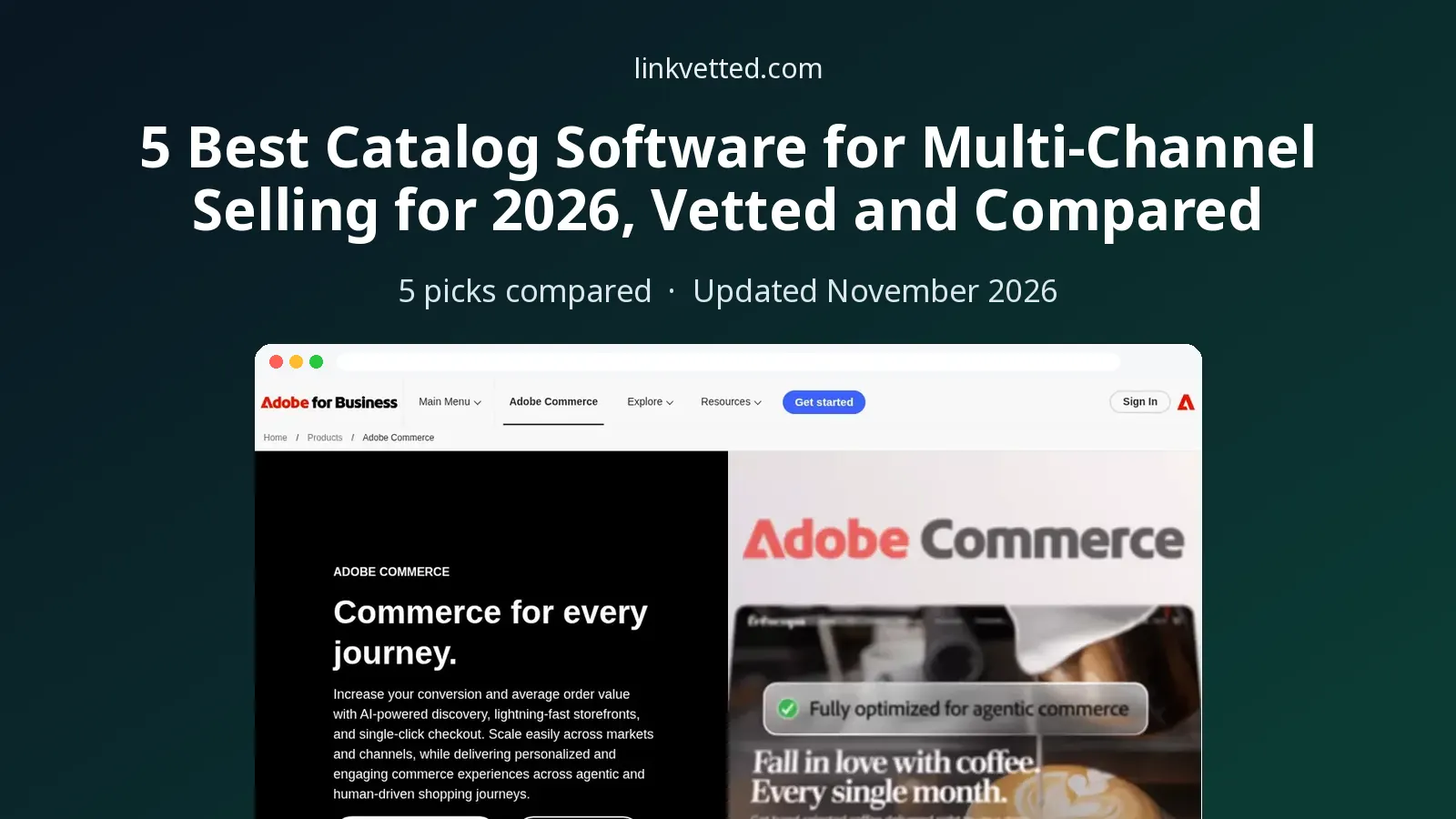
- Editor's choice
 Adobe Commerce
Enterprise B2B and B2C catalogs
Starts atSee websiteVisit business.adobe.comFull review - Great alternativeAkeneo PIM
Centralized product data enrichment
Starts atSee websiteVisit akeneo.comFull review - Also consider
 BigCommerce
Scalable commerce across brands and channels
Starts atSee websiteVisit bigcommerce.comFull review
Direct answer
Adobe Commerce is the first pick on this list for enterprise B2B and B2C catalogs. Listed starting prices: Shopify from $19 a month. For a different need, Akeneo PIM covers centralized product data enrichment and BigCommerce covers scalable commerce across brands and channels. All 5 tools are compared below on price, free plan and limits.
TL;DR:
- Number one here is Adobe Commerce, a fit for enterprise B2B and B2C catalogs.
- A fair warning about Adobe Commerce: enterprise focus can mean complexity.
- For all-in-one commerce and catalog management, Shopify is worth a look.
- Shopify is the lowest-priced starter here at $19 per month.
Last checked November 2026. Prices and plan details were read from the vendors' own pages in November 2026; vendors change plans often, so confirm the current price on the vendor site before you buy.
Quick comparison
| Tool | Best for | Starts at | Free plan? | |
|---|---|---|---|---|
| Adobe Commerce | Enterprise B2B and B2C catalogs | See website | Not stated | Visit |
| Akeneo PIM | Centralized product data enrichment | See website | Free trial | Visit |
| BigCommerce | Scalable commerce across brands and channels | See website | Not stated | Visit |
 Salesforce Commerce Cloud | Commerce connected to customer data | See website | Not stated | Visit |
 Shopify | All-in-one commerce and catalog management | $19 a month | Free trial | Visit |
Our 5 picks for catalog software for Multi-Channel selling
LinkVetted put together this guide to catalog software for Multi-Channel selling for readers who want a clear shortlist without reading every vendor page. It compares 5 tools on starting price, free plans, who each one suits and where each one falls short.

In short, Adobe Commerce is for enterprise B2B and B2C catalogs. Adobe Commerce, also known as Magento, is an AI-powered composable ecommerce system for B2B and B2C that provides personalized experiences at global scale. In practice, the system is oriented toward enterprise needs, so smaller teams may find it heavier than necessary.
It generally calls for technical resources to implement and maintain. On top of that, multi-channel sellers with large catalogs and complicated requirements can use its composable approach to link commerce with other systems. Adobe Commerce does not show a starting price in this comparison, so check the vendor site for current pricing. Trial and free access: Not stated.
Downsides: Enterprise focus can mean complexity.
- Serves B2B and B2C use cases
- Personalization at global scale
- Needs dedicated technical resources
Akeneo PIM
Best for: Centralized product data enrichment
Akeneo PIM is built with centralized product data enrichment in mind. Akeneo PIM concentrates on product data that powers commerce, centralizing, enriching, and syndicating product information to deliver consistent omnichannel experiences. As for the details, teams looking for an all-in-one commerce solution may prefer a commerce-first product.
Honest limits: Needs integration with commerce systems.
For everyday use, for multi-channel sellers, it acts as the catalog backbone that feeds storefronts and marketplaces with dependable product content. Choose Akeneo when product data quality and syndication are the central problems to solve. Pricing for Akeneo PIM is not stated here, so ask the vendor for current figures. On free options: Free trial.
- Aims at consistent omnichannel experiences
- Centralizes product data
- Not a storefront or checkout product

Think of BigCommerce for scalable commerce across brands and channels. BigCommerce describes commerce aimed at momentum, powering buying experiences across brands, regions, and channels from a single foundation. On top of that, teams with heavy PIM requirements may prefer a dedicated data platform alongside it.
For multi-channel sellers, that means catalog and storefront operations can scale as new channels are added. In daily use, BigCommerce is a commerce system first, so deep product data enrichment normally comes from connected tools. Pricing for BigCommerce is not stated here, so ask the vendor for current figures. Free access: Not stated.
Drawbacks to consider: Catalog depth relies on integrations.
- Aimed at modern buying experiences
- Single scalable foundation
- May need technical setup for complicated needs
Salesforce Commerce Cloud was built for Commerce connected to customer data. Salesforce Commerce Cloud is a commerce platform from Salesforce, positioned to support shopping experiences tied to customer data and engagement. Beyond that, for multi-channel sellers already working within the Salesforce ecosystem, it can link catalog and commerce operations with customer information.
What to check first: Catalog specifics rely on configuration.
Consider it when commerce and customer data should run together, and look to dedicated PIM tools if product data enrichment is the core need. Teams without Salesforce experience may face a steeper setup path. This comparison lists no price for Salesforce Commerce Cloud; ask the vendor. Trial and free access: Not stated.
- Part of a wide customer product
- Suits teams already using Salesforce
- Implementation can be resource intensive

Pick Shopify if this describes you: all-in-one commerce and catalog management. Shopify presents itself as an all-in-one commerce system with tools to handle numerous parts of a business. Choose Shopify when commerce and catalog management should live in one place.
Trade-offs to know: Commerce-first.
In daily use, since Shopify is built around commerce, teams with complicated product data enrichment needs may find it lighter than a dedicated PIM. More specifically, for multi-channel sellers, it brings catalog and storefront management together. So teams can list products and expand to new channels without stitching together separate systems. If your priority is deep data modeling and syndication across numerous systems, a specialized product information tool may be a better fit. Price to start with Shopify: $19 per month. As for free access: Free trial.
- AI-assisted setup and business management
- Merges catalog tools with commerce features
- Not a dedicated PIM
What went into this list
Each tool was reviewed on what its vendor publishes: price, plan limits, core features and stated drawbacks. We did not run hands-on tests. Plan names, prices and limits change often. Treat the figures here as a starting point and verify them with the vendor. The order reflects how well each tool fits the most common buying scenario for catalog software for Multi-Channel selling, then price clarity, then free plan access. It is a starting point, not a verdict.
Things to verify first
- Ask Adobe Commerce, Akeneo PIM, BigCommerce and Salesforce Commerce Cloud for a written quote, since no starting price is shown.
- Use real work to test the free trial from Akeneo PIM and Shopify, rather than a demo project.
- Read the limits listed for Adobe Commerce first: enterprise focus can mean complexity.
- Look at the renewal terms for Salesforce Commerce Cloud: auto-renewal, notice periods and price changes can matter more than the first-year price.
- Test how quickly Shopify answers a pre-sales question; it hints at how support will feel later.
FAQ
What is the cheapest option for catalog software for Multi-Channel selling in this list?
On published monthly entry prices, Shopify is the lowest here at $19 per month. Entry price is only part of the cost, because seats, add-ons and billing terms can change the total.
Can I handle catalogs and sell in the same product?
Yes, commerce-first systems for example Shopify, BigCommerce, Adobe Commerce, and Salesforce Commerce Cloud combine catalog management with selling capabilities. Dedicated PIM tools usually connect with these products instead of replacing them.
Can I try these tools before paying?
Often, yes. Akeneo PIM and Shopify offer a free trial. Use your own data and a real task during the test, and check what the free tier or trial limits before you rely on it.
Which tool is a good match for centralizing product data across numerous channels?
Start with Adobe Commerce if you need enterprise B2B and B2C catalogs. Akeneo PIM is the better match for centralized product data enrichment, and BigCommerce for scalable commerce across brands and channels. The best choice depends on budget, team size and workflow.
Do these tools publish their prices?
Not all of them. Adobe Commerce, Akeneo PIM, BigCommerce and Salesforce Commerce Cloud publish no starting price, so expect a quote request for those. The rest, Shopify included, show a starting price, though seats and billing terms still change the final cost.
How are the tools for catalog software for Multi-Channel selling ordered?
The order follows typical fit for catalog software for Multi-Channel selling, with Adobe Commerce first and Shopify last, then price clarity and free access. It is editorial judgement, not a score, so another team could rank the tools differently.
Sources
- https://business.adobe.com/products/magento/magento-commerce.html
- https://www.akeneo.com
- https://www.bigcommerce.com
- https://www.salesforce.com/commerce
- https://www.shopify.com