The 5 Best Multi-Channel E-Commerce Platforms in 2026, Ranked
Best Multi-Channel E-Commerce platforms: 5 contenders ranked by fit, with entry costs and free tiers. Caveats come with every verdict. Pick by budget.
- Editor's choice
 Salesforce Commerce Cloud
Commerce inside the Salesforce ecosystem
Starts atSee websiteVisit salesforce.comFull review - Great alternative
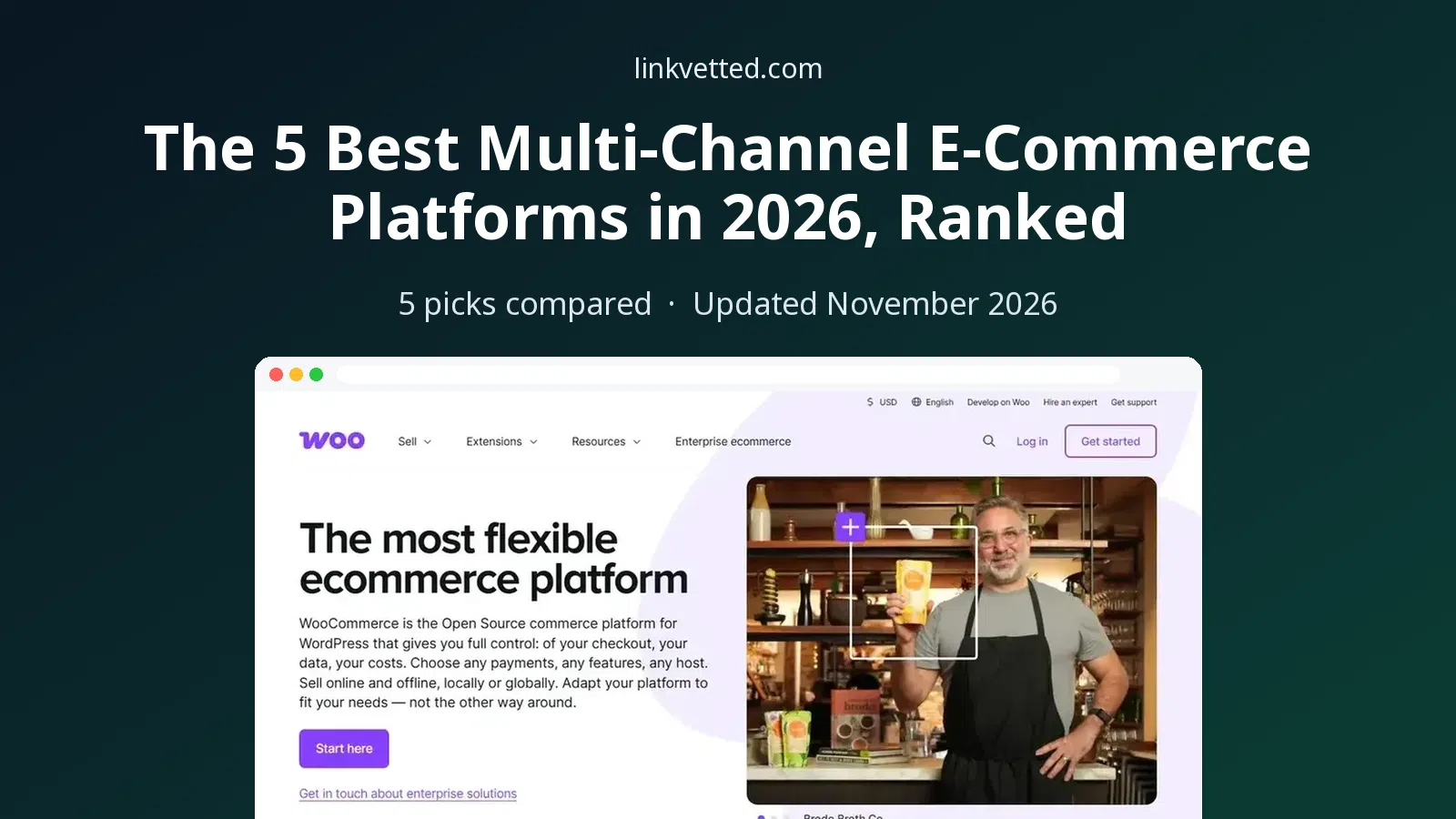
 WooCommerce
Open-source control and long-term builds
Starts at$29 a monthVisit woocommerce.comFull review - Also consider
 Shopify
All-in-one commerce across channels
Starts at$19 a monthVisit shopify.comFull review
Direct answer
This list puts Salesforce Commerce Cloud first for Commerce inside the Salesforce ecosystem. Listed starting prices: WooCommerce from $29 a month, Shopify from $19 a month and Squarespace from $12 per month. If your case is different, WooCommerce suits open-source control and long-term builds and Shopify suits all-in-one commerce across channels. The remaining 2 options are covered below with prices and limits.
TL;DR:
- This list starts with Salesforce Commerce Cloud, which is built for Commerce inside the Salesforce ecosystem.
- Before buying Squarespace, weigh this: Commerce depth is modest.
- Salesforce Commerce Cloud, Wix and the 3 others all need a premium plan or a trial, since no free plan is listed.
- Squarespace has the lowest monthly starting price in this list: $12 per month.
- Wix fits small firms building a first store.
Last checked November 2026. Prices and plan details were read from the vendors' own pages in November 2026; vendors change plans often, so confirm the current price on the vendor site before you buy.
Quick comparison
| Tool | Best for | Starts at | Free plan? | |
|---|---|---|---|---|
| Salesforce Commerce Cloud | Commerce inside the Salesforce ecosystem | See website | Not stated | Visit |
| WooCommerce | Open-source control and long-term builds | $29 a month | Not stated | Visit |
| Shopify | All-in-one commerce across channels | $19 a month | Free trial | Visit |
 Squarespace | Design-led sites with straightforward selling | $12 per month | Free trial | Visit |
 Wix | Small firms building a first store | See website | Not stated | Visit |
The 5 tools in detail
LinkVetted put together this guide to Multi-Channel E-Commerce platforms for readers who want a clear shortlist without reading every vendor page. It compares 5 tools on starting price, free plans, who each one suits and where each one falls short.
Salesforce Commerce Cloud was built for Commerce inside the Salesforce ecosystem. Commerce Cloud is Salesforce's commerce offering, aimed at organizations that want shopping experiences connected to the wider Salesforce system.
Where it falls short: Enterprise-oriented setup.
For those teams, the integration story is the central reason to shortlist it. The value depends heavily on being part of the Salesforce ecosystem, and the product is oriented toward bigger organizations instead of small shops. Salesforce Commerce Cloud does not show a starting price in this comparison, so check the vendor site for current pricing. Trial and free access: Not stated.
- Fits organizations already on Salesforce
- Designed for connected commerce operations
- Best value inside the Salesforce stack
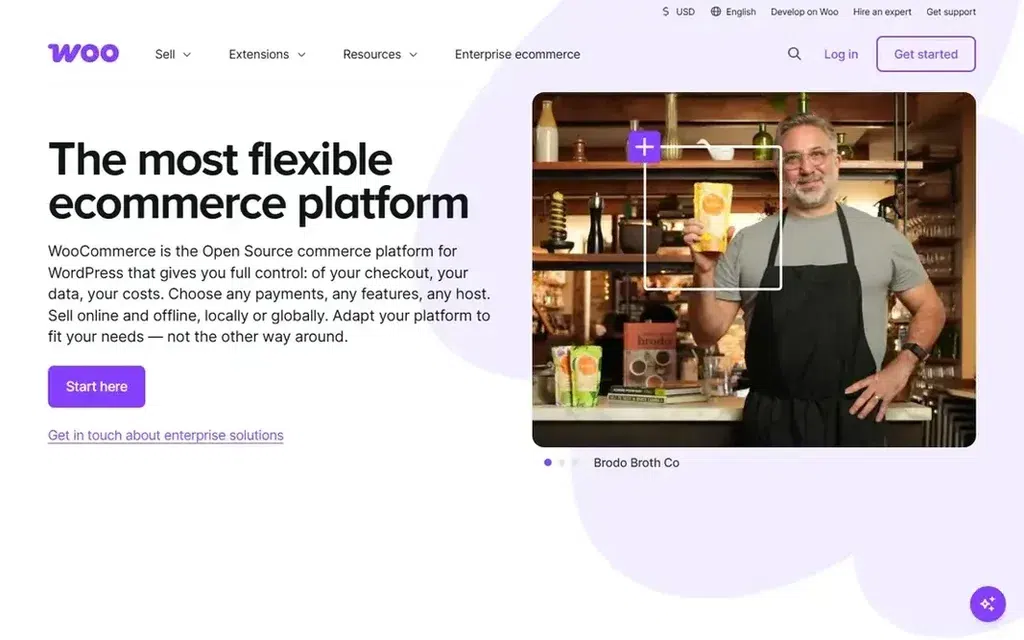
WooCommerce is designed for open-source control and long-term builds. WooCommerce is the open-source e-commerce system that helps merchants and developers build businesses for the long term.
As for the details, for sellers who treat the storefront as a long-lived technical asset, the open model is the primary draw. The trade-off is responsibility: security, performance and maintenance sit with you instead of a hosted provider, and complicated setups need technical skill. On cost, WooCommerce starts like this: $29 per month. Free plan details: Not stated.
Trade-offs to know: Needs more technical upkeep.
- Pitched at merchants and developers
- Open-source foundation
- Hosting and maintenance are your responsibility

For all-in-one commerce across channels, Shopify is a natural candidate. Shopify presents itself as an all-in-one commerce system for companies, going beyond e-commerce software with tools to handle plenty of parts of an operation.
Where it is weaker: Less control over core code.
The AI-assisted setup and built-in business tooling make it a natural first stop for sellers who value speed and a single dashboard over deep customization. In practice, since the product is hosted and opinionated, teams that require to modify core behavior or run unusual technical setups may find it restrictive, and heavy reliance on apps can complicate administration. The starting price for Shopify: $19 per month. Free options: Free trial.
- Wide built-in business tools
- Handles many parts of a business
- App needs can add complexity
Choose Squarespace for design-led sites with straightforward selling. Squarespace is a website builder centred on creating a site and expanding a business, with configurable templates, AI building tools and domain choices.
Watch-outs: Commerce depth is modest.
As for the details, for high-volume or complicated multi-channel operations, the commerce tooling is less deep than dedicated products. The template-first approach keeps setup manageable for non-technical owners. Entry price for Squarespace: $12 per month. As for free access: Free trial.
- AI website builder tools
- Configurable templates
- Best for content-led brands
Think of Wix for small firms building a first store. Templates and AI building tools lower the starting effort.
As commerce needs grow more complicated, like multi-region catalogs or deep B2B workflows, the system can feel restricted compared to dedicated commerce systems. Wix does not show a starting price in this comparison, so check the vendor site for current pricing. Free access: Not stated.
Watch-outs: Less suited to complicated commerce.
- Template-driven site building
- Hosting and domains built in
- Platform-bound site structure
How these tools were picked
The comparison looks at four things: starting price, free access, how well the feature set matches Multi-Channel E-Commerce platforms, and the main limit of each tool. Treat prices as a snapshot: vendors change plans often, so check the vendor site for the figure that applies today. Tools are placed by general fit for Multi-Channel E-Commerce platforms, with price clarity and free access as tie-breakers. A different team can reasonably rank them differently.
What to confirm before you sign up
- Get a written quote from Salesforce Commerce Cloud and Wix; the list shows no starting price for them.
- Take the trial from Shopify and Squarespace and push a live task through it before you pay.
- Read the limits listed for Salesforce Commerce Cloud first: best value inside the Salesforce stack.
- Check whether the features you need in Wix sit on the entry plan or only on higher tiers.
- Look at the help docs and support options for Squarespace before you commit.
FAQ
Should small businesses choose Shopify or Wix?
Shopify leans toward commerce-first operations with wide business tooling, whereas Wix fits owners who want a straightforward site and store combined with hosting and marketing built in. Consider how complicated your catalog and channel mix will become.
Can I try these options before paying?
Often, yes. Shopify and Squarespace offer a free trial. Use your own data and a real task during the test, and check what the free tier or trial limits before you rely on it. Each of the 5 options in this Multi-Channel E-Commerce platforms guide has its own card above with the price, free plan and limits.
Does any tool for Multi-Channel E-Commerce platforms here have a free plan?
No tool in this list, Salesforce Commerce Cloud and Wix included, has a permanent free plan. Shopify, Squarespace offer a trial. Trials and quotes are the usual route, so plan a short evaluation period.
Is Salesforce Commerce Cloud the right pick for everyone comparing Multi-Channel E-Commerce platforms?
No single tool suits every team. Salesforce Commerce Cloud comes first because it fits Commerce inside the Salesforce ecosystem, while WooCommerce suits open-source control and long-term builds and Shopify suits all-in-one commerce across channels. Match the tool to your own size, budget and workflow before deciding.
Do these tools publish their prices?
Not all of them. Salesforce Commerce Cloud and Wix publish no starting price, so expect a quote request for those. The rest, WooCommerce included, show a starting price, though seats and billing terms still change the final cost. All 5 picks in this Multi-Channel E-Commerce platforms comparison list a starting price, free plan details and the main limits on their cards above.
Sources
- https://www.salesforce.com/commerce
- https://woocommerce.com
- https://www.shopify.com
- https://www.squarespace.com
- https://www.wix.com