Best Multi Vendor Marketplace Platforms in 2026: 8 Platforms Compared
We compared the best multi vendor marketplace platform options on fees, vendor tools, payouts and scale, so you can pick the right marketplace software.
- Editor's choice
 Sharetribe
Fast no-code marketplace launch
Starts at$39 per monthVisit sharetribe.comFull review - Great alternative
 CS-Cart Multi-Vendor
Self-hosted control and depth
Starts at$725 per yearVisit cs-cart.comFull review - Also consider
 Mirakl
Enterprise marketplace scale
Starts atSee websiteVisit mirakl.comFull review
TL;DR:
- Sharetribe is the fastest way to launch a simple marketplace, while CS-Cart and YoKart suit owners who want code control.
- Mirakl and Marketplacer are enterprise platforms for large operators, not low-cost starter tools.
- Vendor payouts, commissions and shipping rules matter more than a long feature list, so test them with real vendor accounts.
- One-time licenses look cheaper at first, but hosting, support and development still add ongoing costs.
- Pick a platform that fits your vendor count and order volume today, with a clear path if that volume grows.
Quick comparison
| Tool | Best for | Starts at | Free plan? | |
|---|---|---|---|---|
| Sharetribe | Fast no-code marketplace launch | $39 per month | Free trial | Visit |
| CS-Cart Multi-Vendor | Self-hosted control and depth | $725 per year | Free trial | Visit |
| Mirakl | Enterprise marketplace scale | See website | No | Visit |
 Arcadier | API-first marketplace projects | See website | No | Visit |
 YoKart | Owned code and one-time license | See website | No | Visit |
 Marketplacer | Enterprise retail marketplaces | See website | No | Visit |
 Dokan | WordPress and WooCommerce marketplaces | Free | Yes | Visit |
 X-Cart Multi-Vendor | Self-hosted marketplace stores | $199 per month | No | Visit |
The best multi vendor marketplace platforms
We compared multi vendor marketplace software on vendor management, commissions, payouts, storefronts, shipping, payments and total cost. The best multi vendor ecommerce platform for you depends on how many vendors you expect, how much custom work you need, and how much of the system you want to own.
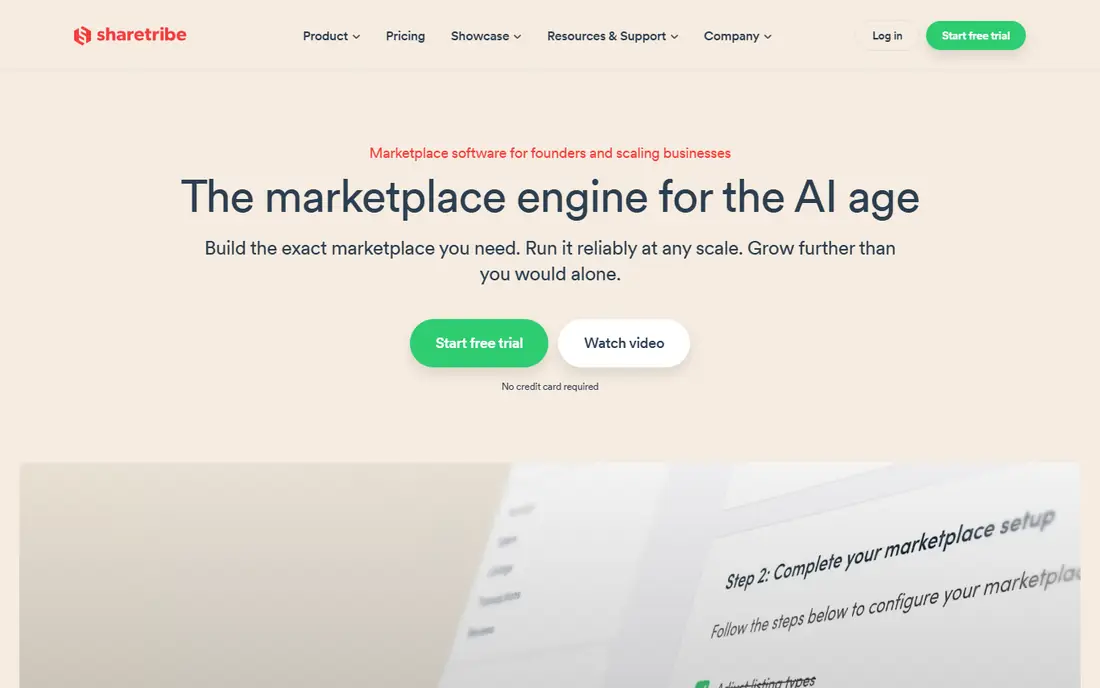
Sharetribe is the easiest way to test a marketplace idea without hiring developers first. You can set up listings, vendor profiles, messaging and payments through its console, and the hosted service handles updates, backups and performance. A Build plan at $39 per month lets you work on the marketplace before launch, which is useful for founders who want to validate demand first.
The limit is customization depth. Template-based design and platform rules can constrain unusual workflows, and transaction overages can raise costs as volume grows. For a niche rental, services or product marketplace with a standard flow, that trade-off is often worth it. For a highly custom enterprise build, a code-owned platform will fit better.
- Fast setup without coding
- Hosted service with maintenance included
- Clear Build and Live plans
- Template limits for deep custom work
- Costs rise with transaction volume
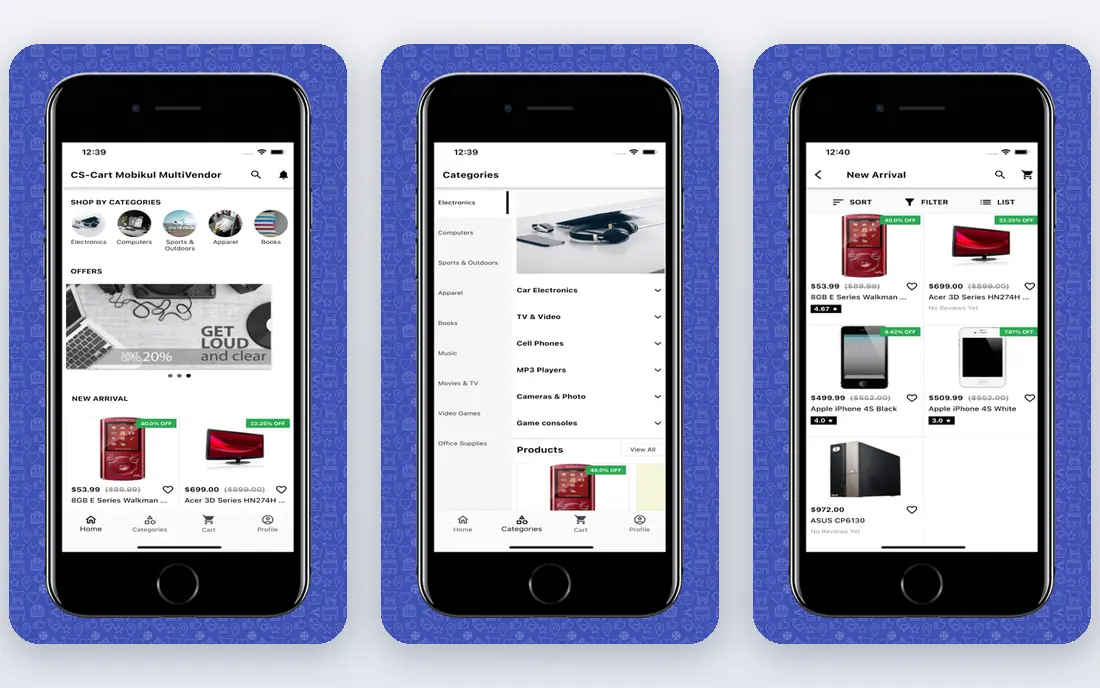
CS-Cart Multi-Vendor is a long-running choice for owners who want a full marketplace system they can host and shape. It includes vendor storefronts, commissions, payouts, product management and order tools, with annual software pricing starting at $725 for the Standard edition in recent published comparisons. There is no platform transaction fee on the software itself, though payment processing still costs money.
The catch is responsibility. You arrange hosting, updates and security, or pay someone to do it, and that work grows with scale. For a team with technical help or an agency, that control is a benefit. For a solo founder with no technical support, a hosted platform will be easier to run day to day.
- Deep marketplace features
- No platform transaction fee on its software plans
- Vendor, product and order controls
- You handle hosting and maintenance
- Setup needs more technical skill than a hosted builder

Mirakl powers marketplaces for large retailers and brands that need to add third-party sellers at scale. Its strengths are seller onboarding, catalog management, order routing and integrations with existing commerce systems. If you already run a large store and want to add a marketplace layer, Mirakl is designed for that job.
It is not a starter tool. Pricing is custom, implementation takes planning and internal resources, and a small marketplace will not use most of its depth. Choose Mirakl when seller volume, catalog size and enterprise controls are the main problem, and when you have the team to run a large marketplace operation.
- Built for large catalogs and many sellers
- Seller onboarding and catalog tools
- Enterprise integrations
- Quote-based enterprise pricing
- Too much platform for a small startup marketplace
Arcadier has moved toward an API-first model, where the marketplace engine can sit behind a custom front end or an existing portal. That suits companies that already have an app or website and want to add marketplace capability, rather than founders who want a simple drag-and-drop builder. Its admin tools cover listings, sellers and orders, with solution support for larger projects.
The trade-off is that a project-based platform needs developers and a clear scope. Costs and timelines depend on what you build, so a demo alone will not give you a full budget. Pick Arcadier when you have development resources and a specific marketplace workflow that a template builder cannot handle well.
- API-first approach for custom front ends
- Marketplace templates and admin tools
- Delivery support for projects
- Self-service simplicity has reduced as the product moved toward projects
- Pricing needs a conversation
YoKart appeals to founders who want to own their marketplace code outright. Its one-time license model, with packages reported from around $999 upward, avoids an ongoing subscription for the software itself, and packages include ready-made buyer and seller apps. Unlimited vendors and products in the model also help founders who dislike volume-based fees.
Ownership still has running costs. You pay for hosting, updates, support renewals and any custom development, so the total first-year cost is higher than the license alone. YoKart fits best when you plan to run the marketplace for years, want code control, and have technical support in place. For a short test, a monthly hosted tool is cheaper to abandon.
- Full source code ownership
- One-time license model
- Buyer and seller apps in packages
- Upfront license cost
- Self-hosting and maintenance are your responsibility
Marketplacer helps retailers expand their range by bringing third-party sellers onto their existing store. It focuses on seller onboarding, product data, orders and the operational work that makes a retail marketplace run without breaking the main store experience. That retail focus is its main advantage over general builders.
Like Mirakl, it is an enterprise product with custom pricing and a demo-led sales process. A new marketplace with a handful of sellers will find it costly and complex. It earns its place here for established retailers who need a reliable, supported way to grow assortment through sellers.
- Built for retailers adding third-party ranges
- Seller and product onboarding tools
- Enterprise support
- Custom enterprise pricing
- Needs a mature retail operation to justify it
Dokan turns a WordPress site with WooCommerce into a multi-vendor marketplace, with vendor storefronts, dashboards, commissions and order handling. The free Lite version lets you test the basic flow, while paid plans start at $149 per year for Starter in recent listings, with higher plans adding payout and advanced features. That WordPress fit is a real advantage if you already run a WordPress site.
The cost trap is add-ons. Stripe payouts and other advanced modules sit on higher plans, so the cheapest plan is not always the realistic plan. Check which payout method your vendors need before budgeting. For WordPress owners who want a familiar system and a large plugin ecosystem, Dokan is still the most direct route to a marketplace.
- Free Lite version
- Vendor dashboards and commissions
- Works with WooCommerce and WordPress themes
- Key payout features sit on paid plans
- Add-on costs can rise
X-Cart Multi-Vendor offers a marketplace edition for stores that want vendors, products and orders under one self-hosted system. Its Marketplace plan has been listed from $199 per month, with higher tiers for automation and larger operations. That structure suits established stores that want a PHP-based system they can host and extend.
Small founders may find the monthly cost hard to justify before vendor revenue exists. Setup, hosting and maintenance also add work. Choose X-Cart when you already run an X-Cart store or need a self-hosted marketplace with a clear upgrade path, not when you are testing an idea on a tight budget.
- Marketplace edition for multi-seller stores
- Self-hosted control
- Product and vendor management
- Monthly platform pricing is high for small stores
- Setup needs technical help
How we picked these
We compared vendor pricing pages, feature documentation and public marketplace comparisons. We required each platform to support multiple independent sellers with their own storefronts or accounts, commissions or payout handling, and product or listing management. We excluded single-store tools and plugins that only add a storefront without vendor management.
We also weighed ownership against ease of use. Hosted builders win for speed, while self-hosted and licensed platforms win for control and long-term cost predictability. That mix is deliberate, because marketplace founders range from solo testers to large retailers, and no single model fits all of them.
What to decide before you buy marketplace software
Start with your vendor model, not with design templates. Decide how vendors join, who approves products, how commissions work, when vendors get paid, and who handles returns and refunds. Those rules shape your platform choice more than colors or homepage layouts, and changing them later is painful once vendors are live.
Next, test payouts with real accounts. Create two vendor accounts, place test orders, refund one, and check how money moves, what fees appear, and how long payouts take. Payment rules vary by country and processor, and a platform that looks simple in a demo can hide extra steps in real payouts. Also check tax handling, since marketplace tax duties vary and some platforms help more than others.
Then plan for vendor support. Vendors will ask about listings, shipping, payouts and account issues, and slow answers will cost you sellers. Check the vendor dashboard from a seller's view, not only the admin view, and make sure shipping, inventory and messaging tools are clear for non-technical sellers. A platform that is easy for you but confusing for vendors will struggle to grow.
Finally, compare total cost over two years, not only the first month. Add hosting, support, payment fees, add-ons and any development you will need. A cheap monthly plan with volume fees can pass a one-time license once you grow, while a license with paid support can cost more than a hosted plan at low volume. Run both totals before you sign.
FAQ
What is the best multi vendor marketplace platform for a startup?
Sharetribe is a strong startup pick because it launches fast without coding and handles hosting for you. Dokan is also worth a look if you already use WordPress and WooCommerce. Start with the simplest platform that supports your vendor and payout model, and move only when growth forces a change.
What is the best marketplace software for a large retailer?
Mirakl and Marketplacer are built for large retailers adding third-party sellers at scale. They offer seller onboarding, catalog tools and enterprise integrations that small builders lack. Expect custom pricing and a longer implementation, and involve your commerce and operations teams early.
Is it better to own marketplace code or use a hosted platform?
Owning code, as with YoKart or CS-Cart, gives control and long-term cost predictability, but adds hosting and maintenance work. A hosted platform, such as Sharetribe, is faster and simpler, but costs rise with volume and custom work is limited. Choose ownership when you plan to run the marketplace for years and have technical help.
How do marketplace platforms handle vendor payouts?
Most platforms use payment processors such as Stripe Connect or PayPal to split payments between you and vendors, after deducting your commission. Payout timing, fees and supported countries vary, so test the full flow before launch. Confirm refund handling too, since refunds can change who owes what after a payout.
Can I build a multi vendor marketplace on WordPress?
Yes, Dokan is the most direct WordPress route, since it adds vendor storefronts, dashboards and commissions to WooCommerce. WordPress also has other marketplace plugins, but Dokan has the widest vendor feature set for most stores. Budget for paid plans if you need automated payouts and advanced vendor tools.