Best Multi Channel Ecommerce Platforms in 2026: 8 Platforms Compared
Compare the best multi channel ecommerce platforms in 2026, from Shopify and BigCommerce to WooCommerce, with pricing and channel fit. See our top pick.

- Editor's choice
 Shopify
Most stores, widest channels
Starts at$39 per monthVisit shopify.comFull review - Great alternative
 BigCommerce
Growing brands, built-in features
Starts at$39 per monthVisit bigcommerce.comFull review - Also consider
 WooCommerce
WordPress stores, full control
Starts atFreeVisit woocommerce.comFull review
TL;DR:
- Multi channel selling means one catalogue, one stock count, and orders from your site, marketplaces, and social channels in one place.
- Shopify is our pick for most stores because its app range and channel links are the widest.
- BigCommerce suits growing brands that want more built-in features and no transaction fees on its own plans.
- WooCommerce suits WordPress sites and teams that want full control and lower platform fees.
- Watch transaction fees, app costs, and sales caps, since they change the true monthly cost.
Quick comparison
| Tool | Best for | Starts at | Free plan? | |
|---|---|---|---|---|
| Shopify | Most stores, widest channels | $39 per month | Free trial | Visit |
| BigCommerce | Growing brands, built-in features | $39 per month | Free trial | Visit |
| WooCommerce | WordPress stores, full control | Free | Yes | Visit |
 Wix | Beginners and small stores | $29 per month | No | Visit |
 Squarespace | Design-led brands | $29 per month | Free trial | Visit |
 Adobe Commerce | Large enterprise stores | See website | No | Visit |
 Salesforce Commerce Cloud | Enterprise B2B and B2C | See website | No | Visit |
 Ecwid | Adding a store to an existing site | $5 per month | Yes | Visit |
The best multi channel ecommerce platforms
A multi channel platform should sell on your website and also push products to marketplaces and social channels, while keeping stock and orders in sync. The eight below cover small stores through to enterprise.

Shopify is the safest default for multi channel selling. You can list on your own store, then connect marketplaces and social channels from the same catalogue, with orders flowing back into one admin. The checkout is fast and familiar to shoppers, and the app store covers subscriptions, bundles, loyalty, and print on demand.
Costs need care. The Basic plan starts at $39 per month, or $29 per month billed yearly, and outside payment providers add a fee on top of gateway fees. Paid apps can also push the monthly total well above the plan price. For most stores, the time saved and the channel reach still make Shopify the best starting point.
- Links to Amazon, eBay, TikTok, Instagram, and more
- Huge app store
- Fast, reliable checkout
- Transaction fee if you use an outside payment provider
- Paid apps add up
- Plus pricing is high for small teams

BigCommerce suits brands that want a strong core without buying an app for every feature. Discounts, customer groups, product options, and SEO tools are built in, and the platform charges no transaction fee of its own. That can make total cost lower than Shopify at higher volumes, even when plan prices look similar.
Sales caps are the catch. Plans cover a set annual sales volume, and crossing it moves you to a higher plan. The app and theme range is also smaller than Shopify, so niche needs may need custom work. For growing brands that value built-in depth, BigCommerce is a strong rival to Shopify.
- More features built in, so fewer apps needed
- No BigCommerce transaction fees
- Multi-currency and B2B tools
- Sales caps trigger plan upgrades
- Theme and app range smaller than Shopify
- Learning curve for advanced features
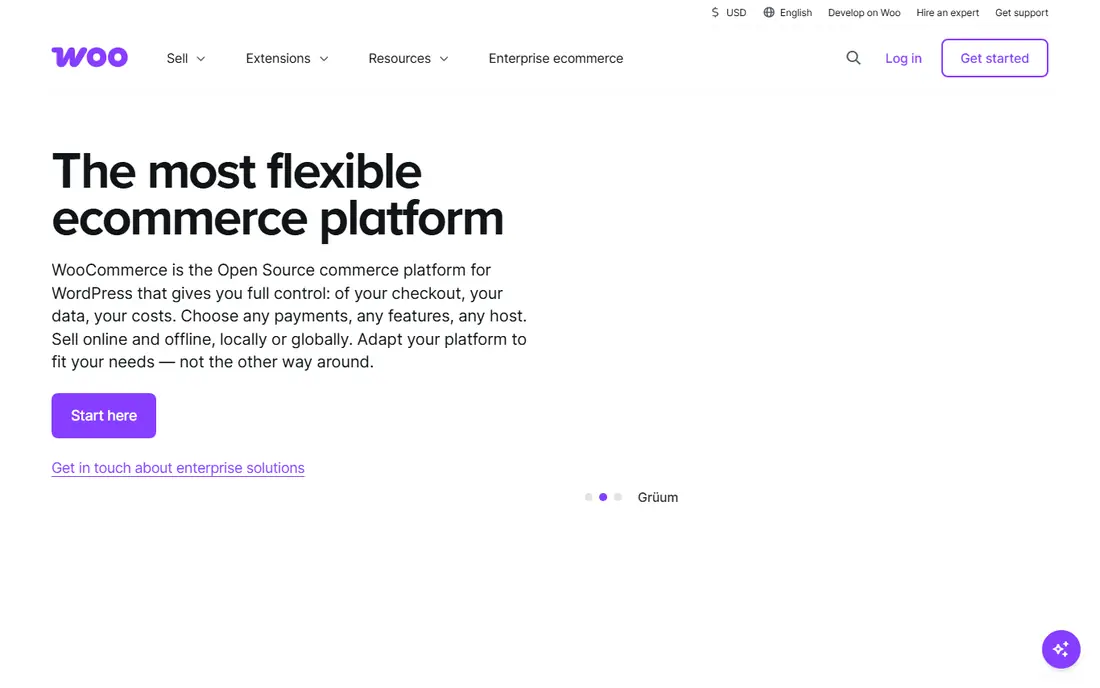
WooCommerce turns a WordPress site into a store, and it is the best pick if you already run WordPress or want full control. The core plugin is free, you own your data, and thousands of plugins cover marketplaces, social selling, subscriptions, and bookings. SEO control is also stronger than on many hosted platforms.
Control brings work. You pay for hosting, keep WordPress and plugins updated, and handle security yourself. Managed hosting often costs $25 to $100 per month or more, and premium plugins add yearly fees. For teams with WordPress skill, WooCommerce offers the lowest platform fee and the most freedom.
- Free core plugin
- Full control over data and design
- Huge plugin range
- Strong SEO with WordPress
- You pay for hosting and manage updates
- Plugin costs and upkeep add up
- Multi channel links need plugins
Wix is the easiest start for a small store. The builder is visual, templates look clean, and you can connect social channels and sell online without code. For a new brand with a small catalogue, it gets you selling fast and keeps monthly costs clear.
Scale is the limit. Large catalogues, complex variants, and advanced B2B needs stretch Wix more than Shopify or BigCommerce. Moving to another platform later also takes work. If you want a simple store and a good-looking site in one place, Wix is a fair pick. If you plan rapid multi channel growth, start with Shopify or BigCommerce.
- Easy drag-and-drop builder
- Good templates
- Social and marketplace links for small catalogues
- Less scalable for large catalogues
- Fewer advanced ecommerce features
- Switching platforms later is harder
Squarespace suits brands where design and content lead the sale. Templates are polished, blogging is built in, and the store tools cover a small to mid-size catalogue well. Social selling and basic marketplace links are available, and the whole site feels cohesive.
The app range is smaller, and multi channel depth is less than Shopify, especially for complex marketplace feeds. The Basic commerce plan also carries a transaction fee, which drops on higher plans. For design-led stores with a focused catalogue, Squarespace is a good fit. For marketplace-heavy selling, look elsewhere.
- Beautiful templates
- Blogging and content built in
- Clean checkout for small stores
- Smaller app range
- Marketplace links less deep than Shopify
- Transaction fee on the lowest commerce plan
Adobe Commerce, formerly Magento, is built for large, complex stores. It handles multiple stores, languages, and currencies, deep B2B pricing, and custom workflows that hosted platforms cannot match. The open-source version is free to download, but the paid Commerce version and the hosting, development, and upkeep around it cost far more.
This is not a small-store tool. You need specialist developers, and total yearly costs can run into tens of thousands or more. For enterprises with complex catalogues and global selling, that control is worth it. For most small and mid-size stores, Shopify or BigCommerce will be faster and cheaper.
- Deep customisation and multi-store control
- Strong B2B features
- Huge extension range
- High total cost
- Needs specialist developers
- Hosting and upkeep are heavy
Salesforce Commerce Cloud suits enterprises already running Salesforce for CRM, service, or marketing. Orders, customer data, and service can share one system, and B2B features such as negotiated pricing and complex accounts are strong. Global brands also get scale and AI-assisted merchandising.
Pricing is quote based and often tied to gross merchandise volume, so small stores should not start here. Implementation is a project, not a weekend setup, and it needs Salesforce expertise. For large firms that want commerce inside the Salesforce estate, it is a powerful pick. For everyone else, it is too much platform.
- Deep Salesforce integration
- Strong B2B and enterprise features
- Global scale and AI tools
- Quote-based pricing tied to sales volume
- Implementation is large
- Overkill for small stores
Ecwid is different from the rest of this list: it adds a store to a site you already have, rather than asking you to rebuild. You can embed it in WordPress, Wix, Squarespace, or a plain site, and sell on social channels and marketplaces from the same catalogue. The free plan covers up to 10 products, and paid plans start low.
Depth is the trade. It lacks the full app range, theme control, and advanced features of Shopify or BigCommerce. Larger stores will outgrow it. For a small business, creator, or restaurant that wants to add selling to an existing site fast, Ecwid is a smart, low-cost start.
- Free plan for up to 10 products
- Embeds into any website
- Links to social and marketplaces
- Smaller feature set than full platforms
- Design control is limited
- Larger stores outgrow it
How we picked these
We compared official pricing pages, channel documentation, and public reviews for platforms active in October 2026. We required real multi channel support, meaning selling beyond a single website through marketplaces, social channels, or both, plus synced stock and orders. We favoured platforms with current US pricing, a working channel catalogue, and a clear fit for a store size.
We did not invent fees. Where pricing was quote based or tied to sales volume, we marked it as See website. Platform fees, transaction fees, and app costs were treated as separate lines, since they drive the true total.
How to choose without paying for channels you will not use
List the channels you will actually sell on in the next year, not every channel that sounds good. A store that sells mainly on its own site and Instagram needs less than a store that also sells on Amazon, eBay, and Walmart. Check that each channel link syncs stock in both directions, so a marketplace sale does not oversell your site.
Price the full stack: plan, payment fees, marketplace fees, and the apps you need for shipping, tax, and subscriptions. Test one channel end to end before you connect them all, and watch how returns and refunds flow back. A platform that syncs orders cleanly will save more time than a cheaper plan with manual fixes.
FAQ
What is a multi channel ecommerce platform?
It is a platform that lets you sell on your website, marketplaces, and social channels from one catalogue and one stock count. Orders from each channel flow into one admin, so you can fulfil, refund, and report without juggling separate systems.
Is Shopify or BigCommerce better for multi channel selling?
Shopify has the wider app and channel range, and it is easier for most stores to start. BigCommerce offers more built-in features and no platform transaction fee, which can lower total cost at higher volumes. If you need a niche marketplace app, Shopify usually wins. If you want built-in depth, BigCommerce is strong.
Can WooCommerce sell on Amazon and social channels?
Yes, through plugins and channel extensions that sync products, stock, and orders. The core plugin is free, but you will pay for hosting and for the plugins you need. It suits WordPress teams that want control, and it can match hosted platforms with the right extensions.
Do multi channel platforms charge extra for marketplace sales?
Marketplaces charge their own referral and fulfilment fees on top of platform costs, and some platforms add a transaction fee if you use an outside payment provider. Check both sets of fees before you price a product, since a sale that looks profitable on your site may be tight on a marketplace.
What is the best multi channel platform for a small store?
Shopify is the safest small-store pick for channel reach, while Ecwid is the cheapest way to add selling to an existing site. Wix and Squarespace suit small, design-led stores with fewer channels. Start with the channels you will use, and upgrade only when sales demand it.