Database Management Systems for Enterprise in 2026: The 6 Best Options Side by Side
Best database management systems for enterprise: 6 contenders ranked by fit, with entry costs and free tiers. Limits and pricing notes included. Numbers first.
- Editor's choice
 Google Cloud Spanner
Always-on globally scaled cloud applications
Starts atPricing on requestVisit cloud.google.comFull review - Great alternative
 Microsoft SQL Server
Microsoft-centric analytics and AI integration
Starts atPricing on requestVisit microsoft.comFull review - Also consider
 Oracle Database
Mature AI-ready enterprise relational workloads
Starts atPricing on requestVisit oracle.comFull review
Direct answer
For always-on globally scaled cloud applications, Google Cloud Spanner is where this list starts. For a different need, Microsoft SQL Server covers Microsoft-centric analytics and AI integration and Oracle Database covers mature AI-ready enterprise relational workloads. The full list of 6 tools follows, with free plan facts. None of these vendors publish plan prices, so pricing is on request for every option.
TL;DR:
- Number one here is Google Cloud Spanner, a fit for always-on globally scaled cloud applications.
- IBM Db2 suits autonomous operations in hybrid cloud.
- Every tool from Google Cloud Spanner to IBM Db2 works by quote, with no list price shown.
- Google Cloud Spanner, IBM Db2 and the 4 others all need a premium plan or a trial, since no free plan is listed.
- The main caution on Oracle Database: wide feature set can be complex to operate.
Last checked November 2026. Pricing on request: vendors did not publish plan prices when this guide was last checked (November 2026), so ask each vendor for a written quote.
Quick comparison
| Tool | Best for | Starts at | Free plan? | |
|---|---|---|---|---|
| Google Cloud Spanner | Always-on globally scaled cloud applications | Pricing on request | Not stated | Visit |
| Microsoft SQL Server | Microsoft-centric analytics and AI integration | Pricing on request | Not stated | Visit |
| Oracle Database | Mature AI-ready enterprise relational workloads | Pricing on request | Not stated | Visit |
| PostgreSQL (EDB) | Open-source Postgres with enterprise support | Pricing on request | Not stated | Visit |
 CockroachDB | Resilient globally distributed SQL deployments | Pricing on request | Free trial | Visit |
 IBM Db2 | Autonomous operations in hybrid cloud | Pricing on request | Not stated | Visit |
Tool-by-tool breakdown
Choosing database management systems for enterprise usually comes down to price, fit and limits. This LinkVetted guide sets 6 tools side by side on those three points, with the facts kept short and checkable.
In short, Google Cloud Spanner is for always-on globally scaled cloud applications. Organizations wanting self-managed or hybrid deployments may prefer Db2 or EDB Postgres.
Pricing for Google Cloud Spanner is not stated here, so ask the vendor for current figures. Free plan details: Not stated.
What works well: No maintenance windows. Drawbacks to consider: Global design can exceed straightforward workload needs.
- Key value and search
- Virtually unlimited scale
- Cloud-first model may not suit on-premises mandates
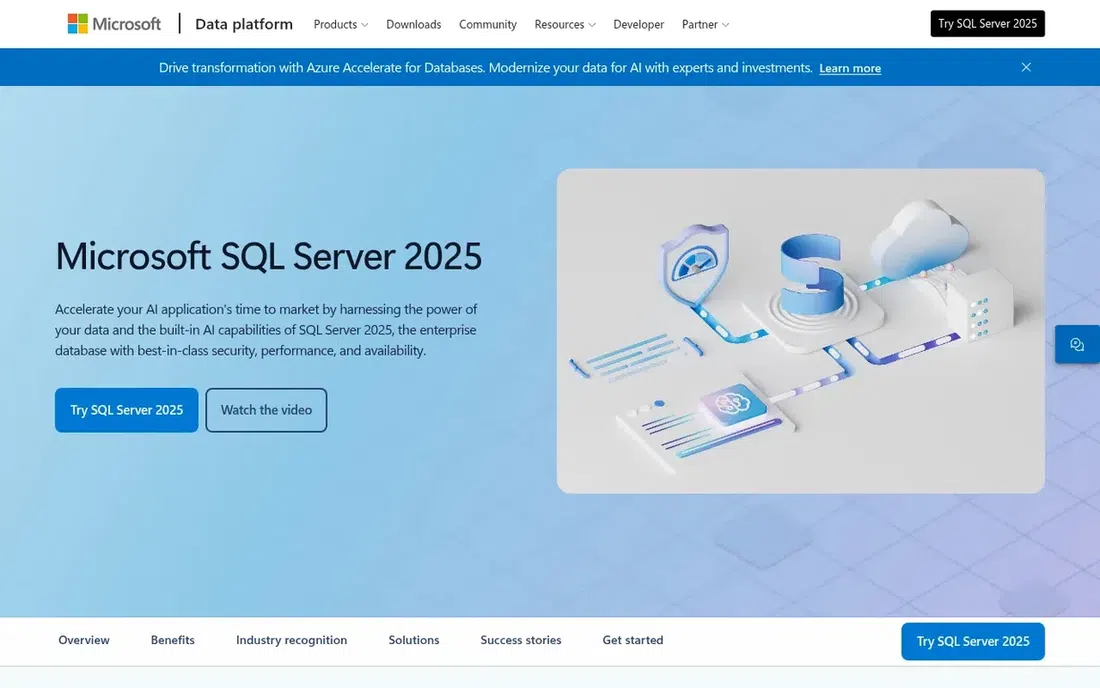
Microsoft SQL Server is aimed squarely at Microsoft-centric analytics and AI integration. Microsoft SQL Server is a relational database positioned for enterprise data with developer-first features and integration with analytics and AI models. Its vendor frames the current release as accelerating AI innovation using data organizations already hold.
Its advantages concentrate inside the Microsoft ecosystem, so mixed-platform estates may prefer a more neutral engine. More specifically, organizations needing globally distributed, always-on scale beyond a single regional deployment may look to Spanner or CockroachDB instead. No starting price is listed for Microsoft SQL Server here; confirm pricing on the vendor site. Trial and free access: Not stated.
Watch-outs: Most solid value inside the Microsoft ecosystem.
- Developer-first features
- Integration with analytics and AI models
- Cross-platform estates may prefer alternatives
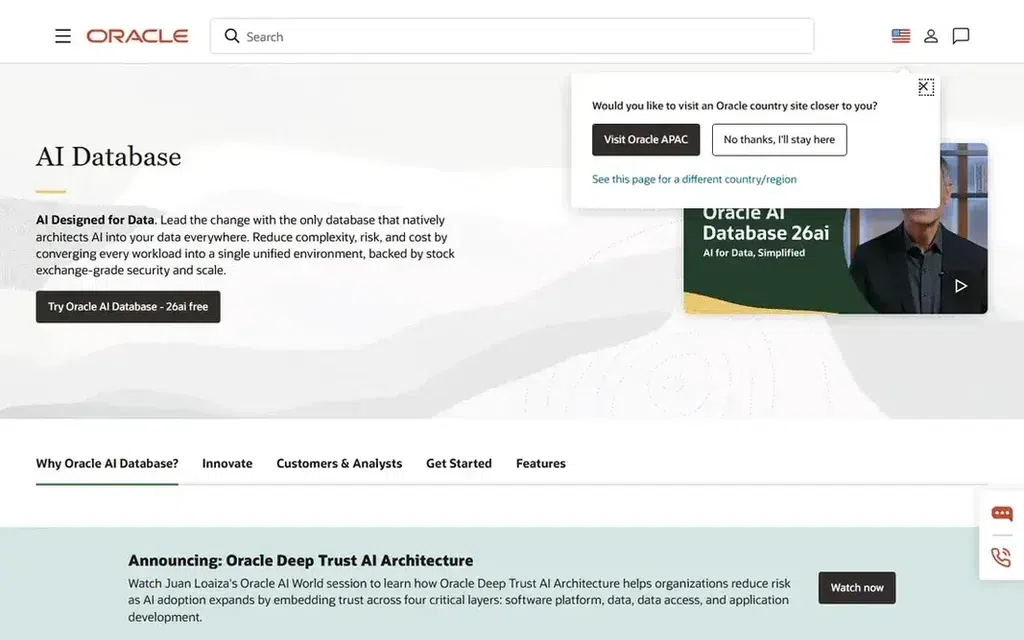
In short, Oracle Database is for mature AI-ready enterprise relational workloads. Oracle Database is a long-established relational system positioned around AI-assisted application development and critical workloads.
Where it is weaker: Deep specialization commonly needed in-house.
Its vendor describes the current release as a way to harness AI whereas powering demanding data operations. This comparison lists no price for Oracle Database; ask the vendor. As for free access: Not stated.
Main advantages: Long-standing enterprise relational core.
- Suited to critical
- High-demand workloads
- Wide feature set can be complex to operate
PostgreSQL (EDB)
Best for: Open-source Postgres with enterprise support
PostgreSQL (EDB) makes the most sense for open-source Postgres with enterprise support. EDB gives you enterprise-grade PostgreSQL with a Postgres AI offering, positioned around keeping infrastructure, data and AI under the customer's control and sovereign by design. Its vendor cites handling very large trade volumes and data sizes.
Points against: Advanced tuning still needs expertise.
Also, teams needing built-in autonomous management may prefer Db2. Whereas Postgres is widely known, advanced tuning and scaling still need skilled staff. Some deep enterprise features differ from the largest commercial systems. Check the vendor site for PostgreSQL (EDB) pricing; none is listed in this comparison. As for free access: Not stated.
- Built on widely adopted PostgreSQL
- Positioned around sovereign data control
- Feature depth differs from commercial giants
CockroachDB is designed for resilient globally distributed SQL deployments. Distributed systems introduce operational concepts that single-region teams may not need, and more straightforward workloads can be served by a traditional relational engine.
For everyday use, if you largely need a managed analytics foundation inside SAP, HANA is the closer fit. Check the vendor site for CockroachDB pricing; none is listed in this comparison. Free options: Free trial.
Honest limits: Distributed design layers on operational concepts.
- Smooth horizontal scaling
- Global deployment focus
- May be overkill for single-region workloads
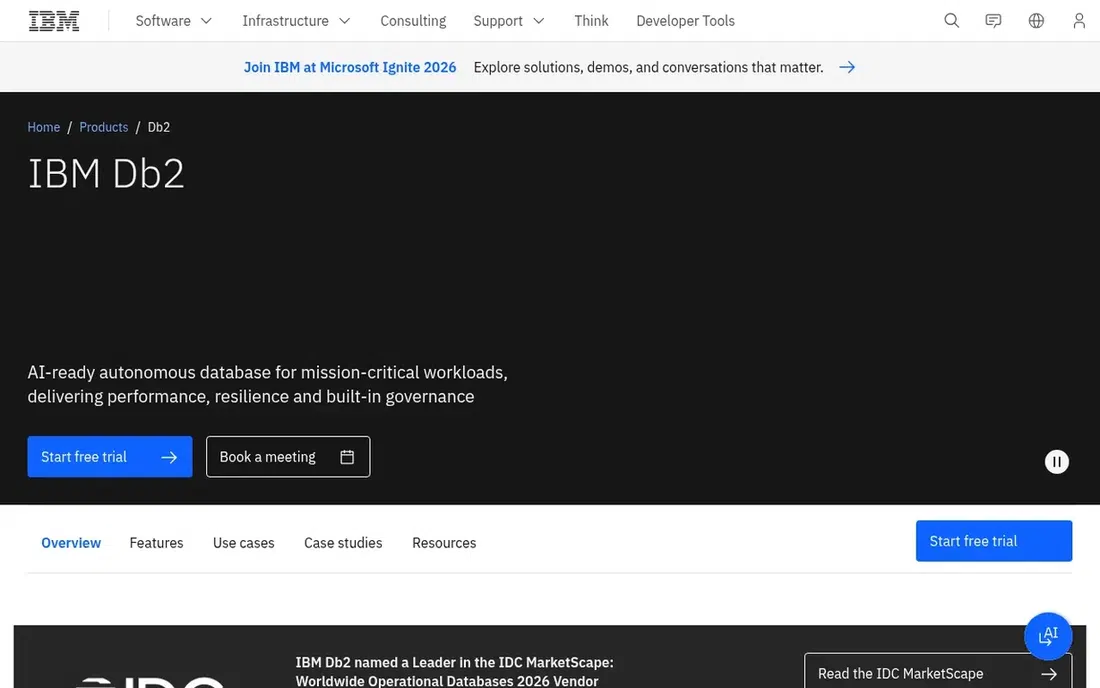
Think of IBM Db2 for autonomous operations in hybrid cloud. The system assumes a certain enterprise scale and skill base, so small teams may find it more than they need.
Limits to weigh: Enterprise scope can mean a ramp-up time.
IBM Db2 shows no starting price here, so confirm the cost on the vendor site. As for free access: Not stated.
- Hybrid cloud adaptability
- AI-powered autonomous features
- Best value with existing IBM skills
How we built this list
LinkVetted looked at what each vendor publishes: pricing, plan limits, feature coverage for database management systems for enterprise and stated drawbacks. No hands-on testing is claimed. Where a vendor does not publish a price, the entry says quote. Where a price depends on seats or billing term, the entry says so. The sequence is a judgement call: typical use case first, then pricing transparency, then free access. Use the profiles to check fit.
What to check before you buy
- Ask each vendor, from Google Cloud Spanner to IBM Db2, for a written quote; none of them publishes a starting price.
- Run a trial of CockroachDB with real work before paying for a year; your own workflow is the best test.
- Before choosing Google Cloud Spanner, weigh its main limit: Cloud-first model may not suit on-premises mandates.
- List the apps you already depend on and check that Oracle Database supports each one on the plan you would buy.
- Look at the help docs and support options for Microsoft SQL Server before you commit.
FAQ
Does any tool for database management systems for enterprise here have a free plan?
No tool in this list, Google Cloud Spanner and IBM Db2 included, has a permanent free plan. CockroachDB offer a trial. Trials and quotes are the usual route, so plan a short evaluation period.
Which enterprise database is easiest to start with?
For teams already using Microsoft tooling, SQL Server tends to be the most familiar starting point. On top of that, organizations wanting open-source foundations with commercial support often evaluate EDB Postgres first.
Is Google Cloud Spanner the right pick for everyone comparing database management systems for enterprise?
No single tool suits every team. Google Cloud Spanner comes first because it fits always-on globally scaled cloud applications, while Microsoft SQL Server suits Microsoft-centric analytics and AI integration and Oracle Database suits mature AI-ready enterprise relational workloads. Match the tool to your own size, budget and workflow before deciding.
Do these tools publish their prices?
No. None of the tools, from Google Cloud Spanner to IBM Db2, shows a fixed starting price here, so budget time for quotes.
Can I try these tools before paying?
Often, yes. CockroachDB offers a free trial. Use your own data and a real task during the test, and check what the free tier or trial limits before you rely on it.
Sources
- https://cloud.google.com/spanner
- https://www.microsoft.com/en-us/sql-server
- https://www.oracle.com/database
- https://www.enterprisedb.com
- https://www.cockroachlabs.com
- https://www.ibm.com/products/db2