Top 6 Data Warehouse Database for 2026 (Prices and Free Plans)
Compare 6 picks for the best data warehouse database, with prices, free plans and who each fits. Plain-spoken summaries throughout. Jump to the table.
- Editor's choiceMicrosoft Azure Synapse Analytics
Combining SQL warehousing with big data
Starts atPricing on requestVisit azure.microsoft.comFull review - Great alternativeDatabricks Lakehouse Platform
Lakehouse, ETL and AI workloads
Starts atPricing on requestVisit databricks.comFull review - Also consider
 Google BigQuery
Automatic cloud analytics at scale
Starts atPricing on requestVisit cloud.google.comFull review
Direct answer
Microsoft Azure Synapse Analytics comes first here, mainly for combining SQL warehousing with big data. Alternatives: Databricks Lakehouse Platform for Lakehouse, ETL and AI workloads, and Google BigQuery for automatic cloud analytics at scale. Free plan facts and limits for all 6 tools follow. None of these vendors publish plan prices, so pricing is on request for every option.
TL;DR:
- Microsoft Azure Synapse Analytics is the opening pick, best for combining SQL warehousing with big data.
- A fair warning about SAP Datasphere: most solid within SAP landscapes.
- For large-scale enterprise analytics platforms, Teradata Vantage is worth a look.
- No starting price is shown for any of the 6 tools, Microsoft Azure Synapse Analytics and Teradata Vantage included, so plan time for sales calls.
- A permanent free plan is missing from all 6 tools, Microsoft Azure Synapse Analytics and Teradata Vantage included; plan for a trial or a premium start.
Last checked November 2026. Pricing on request: vendors did not publish plan prices when this guide was last checked (November 2026), so ask each vendor for a written quote.
Quick comparison
| Tool | Best for | Starts at | Free plan? | |
|---|---|---|---|---|
| Microsoft Azure Synapse Analytics | Combining SQL warehousing with big data | Pricing on request | Not stated | Visit |
| Databricks Lakehouse Platform | Lakehouse, ETL and AI workloads | Pricing on request | Not stated | Visit |
| Google BigQuery | Automatic cloud analytics at scale | Pricing on request | Not stated | Visit |
| SAP Datasphere | SAP-centric unified data access | Pricing on request | Not stated | Visit |
 Amazon Redshift | AWS-centered managed warehousing | Pricing on request | Not stated | Visit |
| Teradata Vantage | Large-scale enterprise analytics systems | Pricing on request | Not stated | Visit |
Every option for data warehouse database explained
LinkVetted compared 6 tools for data warehouse database. The goal is a practical shortlist: published prices, free plan facts, best-fit use cases and honest limits for every entry.
Microsoft Azure Synapse Analytics
Best for: Combining SQL warehousing with big data
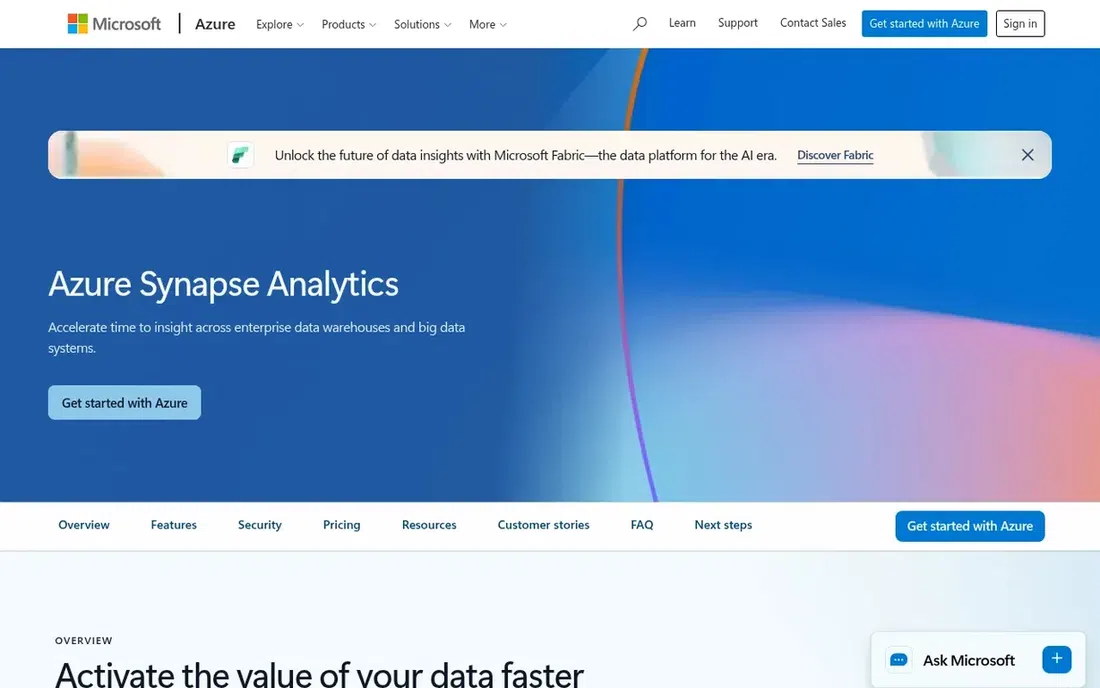
Think of Microsoft Azure Synapse Analytics for combining SQL warehousing with big data. Azure Synapse Analytics brings together enterprise SQL data warehousing and big data analytics services to accelerate time to insight across warehouse and big data systems.
Microsoft Azure Synapse Analytics shows no starting price here, so confirm the cost on the vendor site. Free options: Not stated.
Where it is weaker: Service breadth layers on complexity.
- Big data analytics services together
- Aims to accelerate time to insight
- Needs Azure familiarity
Databricks Lakehouse Platform
Best for: Lakehouse, ETL and AI workloads
Databricks Lakehouse Platform was built for Lakehouse, ETL and AI workloads. From a buyer's view, teams that only need straightforward SQL reporting may find a narrower warehouse more straightforward to run.
Strengths: Eases ETL and governance.
The product's breadth means more moving parts, so governance and clear ownership matter from the start. Check the vendor site for Databricks Lakehouse Platform pricing; none is listed in this comparison. On free options: Not stated.
Where it falls short: Engineering-heavy for pure SQL teams.
- Analytics and AI product
- Unified data
- Wide scope needs clear ownership
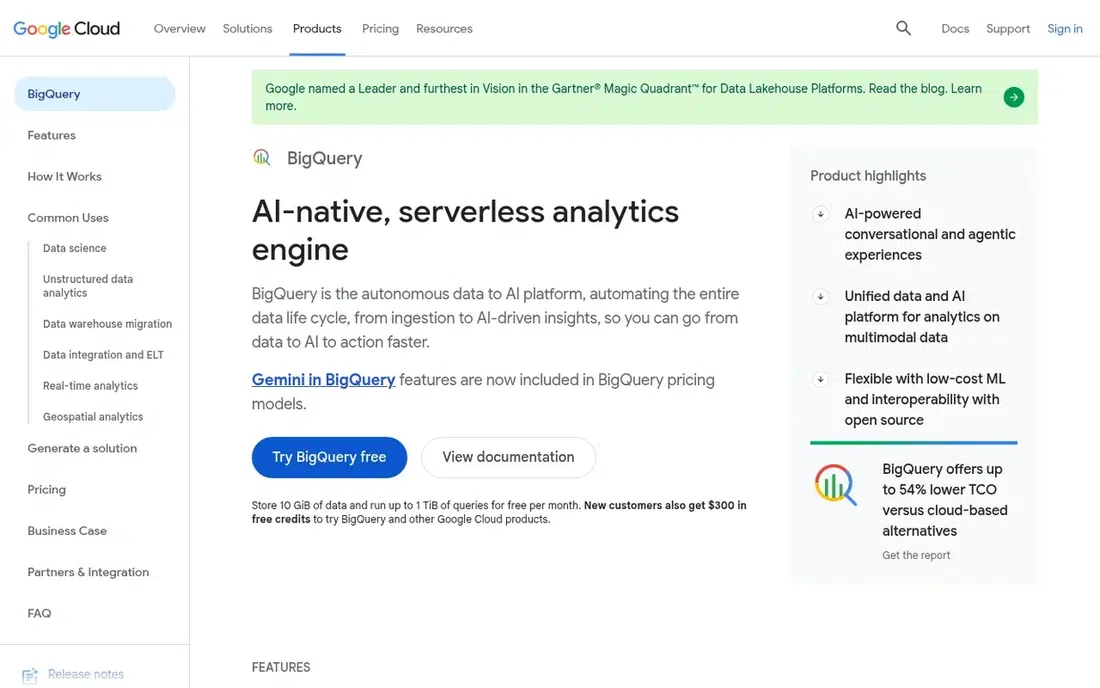
Choose Google BigQuery for automatic cloud analytics at scale. BigQuery is Google's autonomous data and AI system, positioned to automate the whole data life cycle so teams move from data to AI to action quicker. In daily use, if your workloads sit deeply inside another cloud provider's stack, a warehouse native to that ecosystem may cut friction.
The main drawbacks: Ecosystem lock-in considerations.
Beyond that, the system's automation and serverless model can make precise cost forecasting harder, so budget monitoring matters. For everyday use, teams already aligned with Google Cloud services will find the integration story notably natural. More specifically, consider BigQuery when automation and analytics velocity outweigh tight platform coupling. Check the vendor site for Google BigQuery pricing; none is listed in this comparison. As for free access: Not stated.
- Autonomous data life cycle automation
- Ties data work to AI and action
- Cost control needs monitoring
SAP Datasphere
Best for: SAP-centric unified data access
Where SAP Datasphere fits: SAP-centric unified data access. Teams seeking a single data experience across SAP sources will find the positioning relevant.
The main drawbacks: Most solid within SAP landscapes.
SAP Datasphere shows no starting price here, so confirm the cost on the vendor site. As for free access: Not stated.
- Aims at impactful decision-making
- Scalable data service
- Broader data estates need additional planning
Amazon Redshift is aimed squarely at AWS-centered managed warehousing. Amazon Redshift is described as a quick, completely managed cloud data warehouse that makes it straightforward and economical to analyze all your data.
It fits organizations already running workloads on AWS that want a warehouse tightly integrated with their existing cloud services. No starting price is listed for Amazon Redshift here; confirm pricing on the vendor site. As for free access: Not stated.
Trade-offs to know: Tuning still needs expertise.
- Suits AWS-centric environments
- Completely managed cloud warehouse
- Best value inside AWS ecosystem
Teradata Vantage
Best for: Large-scale enterprise analytics systems
Teradata Vantage works best for large-scale enterprise analytics products. Organizations with established enterprise data practices are the most natural audience.
Downsides: May be more than small teams need.
Evaluating fit carefully against lighter managed choices is worthwhile. Beyond that, pick Teradata Vantage when cross-environment scale and enterprise analytics depth are central requirements. No starting price is listed for Teradata Vantage here; confirm pricing on the vendor site. Free options: Not stated.
- Positioned for autonomous operations
- Links and scales across environments
- Enterprise-scale orientation
Our selection method
LinkVetted looked at what each vendor publishes: pricing, plan limits, feature coverage for data warehouse database and stated drawbacks. No hands-on testing is claimed. Prices and plan limits come from vendor pages and can change, so confirm them on the vendor site before you buy. Position on the page reflects fit for a typical buyer first, with price clarity and free access breaking ties. Treat it as a guide, not a ruling.
Things to verify first
- Confirm the entry price with every vendor: no tool from Microsoft Azure Synapse Analytics to Teradata Vantage shows a fixed starting price.
- Read the limits listed for Microsoft Azure Synapse Analytics first: service breadth brings complexity.
- Ask the daily users to test Amazon Redshift on a live task before you roll it out to everyone.
- Ask whether SAP Datasphere integrates with your current software, and whether that comes standard or as an add-on.
- Look at which plan of Google BigQuery unlocks the features you need; entry tiers are often cut down.
FAQ
Can I try these tools before paying?
Not by default. None of the tools, from Microsoft Azure Synapse Analytics to Teradata Vantage, lists a free plan or a free trial here, so ask each vendor for a demo before committing.
Is Microsoft Azure Synapse Analytics the right pick for everyone comparing data warehouse database?
No single tool suits every team. Microsoft Azure Synapse Analytics comes first because it fits combining SQL warehousing with big data, while Databricks Lakehouse Platform suits Lakehouse, ETL and AI workloads and Google BigQuery suits automated cloud analytics at scale. Match the tool to your own size, budget and workflow before deciding.
Do these tools publish their prices?
No. None of the tools, from Microsoft Azure Synapse Analytics to Teradata Vantage, shows a fixed starting price here, so budget time for quotes.
What makes a decent data warehouse database?
A solid fit merges managed operations, analytical query performance, governance controls and integration with your existing cloud and BI tooling. Match the product to where your data already lives and to the skills your team has today.
How are the tools for data warehouse database ordered?
Microsoft Azure Synapse Analytics sits first and Teradata Vantage last because the order follows typical fit for data warehouse database, then price clarity and free access. It is a judgement call, so read each profile for fit and limits.
When does a lakehouse product make sense over a classic warehouse?
A lakehouse approach fits teams that want analytics, engineering and AI workloads on shared data foundations. If you chiefly need SQL reporting, a narrower managed warehouse can be more straightforward to operate and govern.
Sources
- https://azure.microsoft.com/en-us/products/synapse-analytics
- https://www.databricks.com
- https://cloud.google.com/bigquery
- https://www.sap.com/products/data-cloud/datasphere.html
- https://aws.amazon.com/redshift
- https://www.teradata.com