Best Containerization Software for Startups for 2026: Our 5 Vetted Picks
5 best containerization software for startups, with entry costs, free tiers and the buyer each one serves. Each tool is judged on the same checks. Easy to scan.
- Editor's choice
 Amazon EKS
Managed Kubernetes on AWS and on-premises
Starts atSee websiteVisit aws.amazon.comFull review - Great alternative
 Kubernetes
Automatic orchestration of containerized applications
Starts atSee websiteVisit kubernetes.ioFull review - Also consider
 Docker
Simplest container creation and local development
Starts at$9 per user a monthVisit docker.comFull review
Direct answer
Amazon EKS leads the list, best for managed Kubernetes on AWS and on-premises. Listed starting prices: Docker from $9 per user a month. If your case is different, Kubernetes suits automatic orchestration of containerized applications and Docker suits simplest container creation and local development. The full list of 5 tools follows, with prices and free plan facts.
TL;DR:
- Top of the list is Amazon EKS, which targets managed Kubernetes on AWS and on-premises.
- Check the limits for Docker before you commit: orchestration at scale needs extra tools.
- Rancher suits multi-cluster Kubernetes management.
- Just one of the 5 tools, Docker, has a free plan.
- Docker has the lowest monthly starting price in this list: $9 per user per month.
Last checked November 2026. Prices and plan details were read from the vendors' own pages in November 2026; vendors change plans often, so confirm the current price on the vendor site before you buy.
Quick comparison
| Tool | Best for | Starts at | Free plan? | |
|---|---|---|---|---|
| Amazon EKS | Managed Kubernetes on AWS and on-premises | See website | Not stated | Visit |
| Kubernetes | Automatic orchestration of containerized applications | See website | Not stated | Visit |
| Docker | Simplest container creation and local development | $9 per user a month | Yes | Visit |
 Red Hat OpenShift | Enterprise-grade application system with Kubernetes | See website | Not stated | Visit |
 Rancher | Multi-cluster Kubernetes management | See website | Not stated | Visit |
5 containerization software for startups in detail
LinkVetted put together this guide to containerization software for startups for readers who want a clear shortlist without reading every vendor page. It compares 5 tools on starting price, free plans, who each one suits and where each one falls short.
Amazon EKS is designed for managed Kubernetes on AWS and on-premises. Amazon Elastic Kubernetes Service (EKS) is a managed service and certified Kubernetes conformant to run Kubernetes on AWS and on-premises.
This comparison lists no price for Amazon EKS; ask the vendor. As for free access: Not stated.
Downsides: Tied to AWS ecosystem.
- Runs on AWS and on-premises
- Managed service cuts control plane overhead
- Extra cost for management and resources
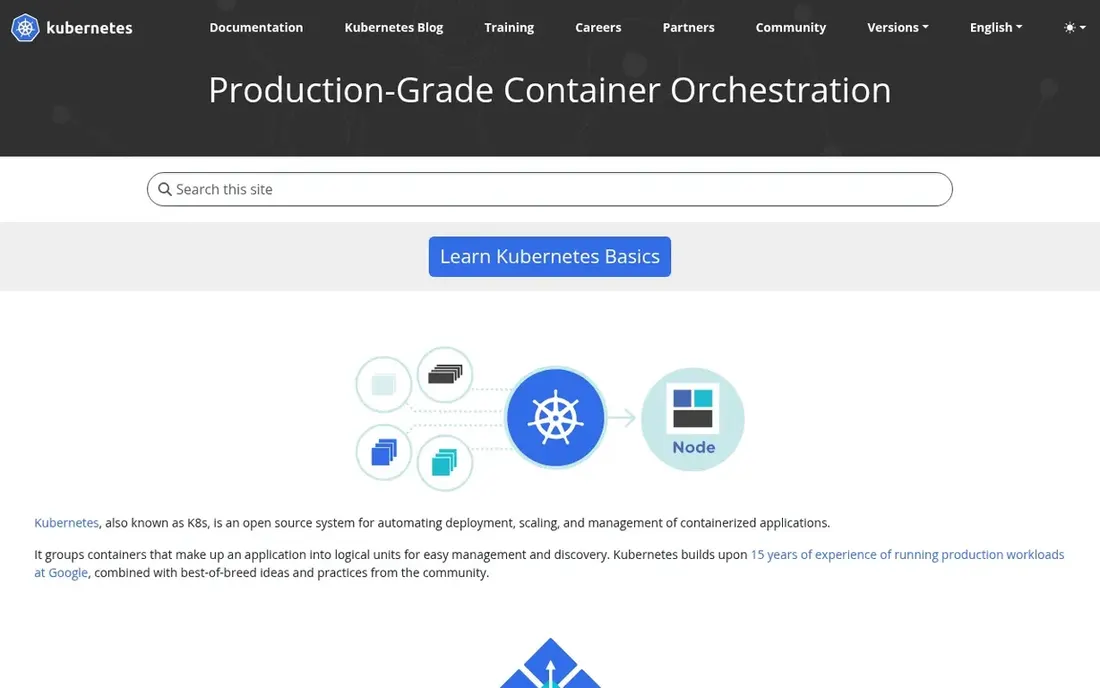
In short, Kubernetes is for automatic orchestration of containerized applications. Kubernetes, also known as K8s, is an open source system for automating deployment, scaling, and management of containerized applications. It groups containers that make up an application into logical units for simple management and discovery.
Where it is weaker: Needs significant operational expertise.
From a buyer's view, startups that anticipate rapid growth or complicated microservices architectures commonly choose Kubernetes for its adaptability and capable community support. It is a solid fit for teams with dedicated DevOps resources. Kubernetes shows no starting price here, so confirm the cost on the vendor site. Free access: Not stated.
- Groups containers into logical units for simple management
- Automates deployment, scaling, management
- Steep learning curve
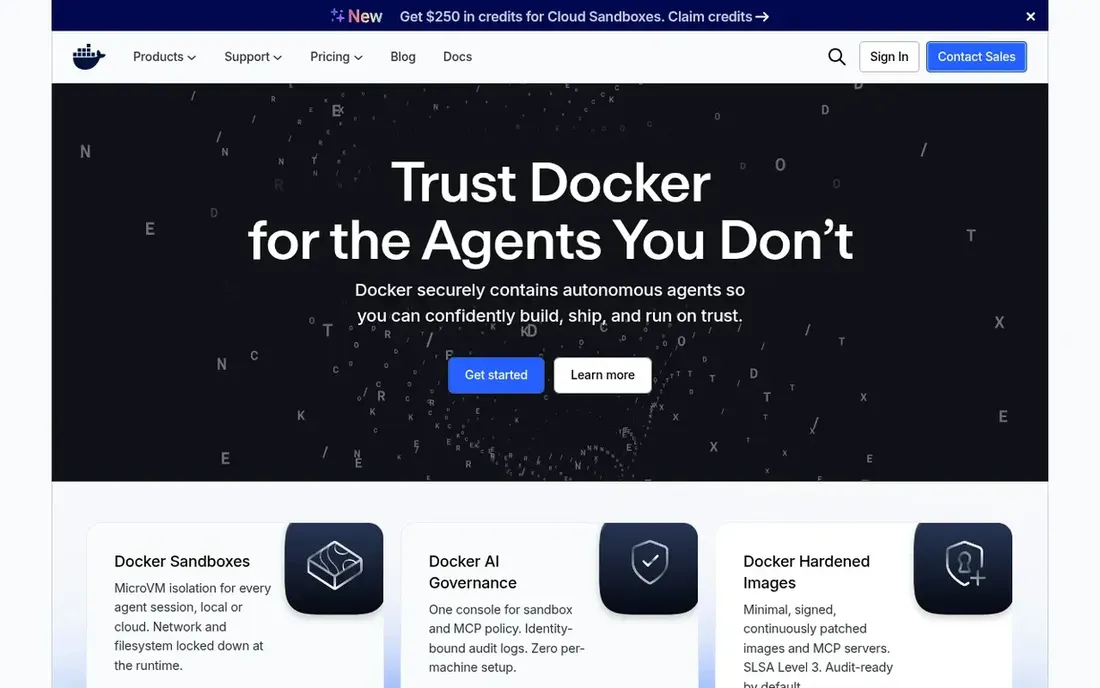
Docker is designed for simplest container creation and local development. Docker is a product for building, running, and sharing containers. As for the details, startups commonly begin with Docker since it eases packaging applications and dependencies into portable containers, making it simple to develop and test consistently across environments.
Limits to weigh: Networking and storage choices can be complicated for beginners.
On top of that, Docker alone does not supply built-in orchestration for large-scale deployments. So you may need Kubernetes or a managed service as you grow. Its ecosystem can be overwhelming for beginners, and production security needs careful configuration. Docker cost at the entry level: $9 per user per month. Docker offers a free plan.
- Trusted sandboxes for AI agents and containers
- Easy to build and run containers locally
- Orchestration at scale needs extra tools
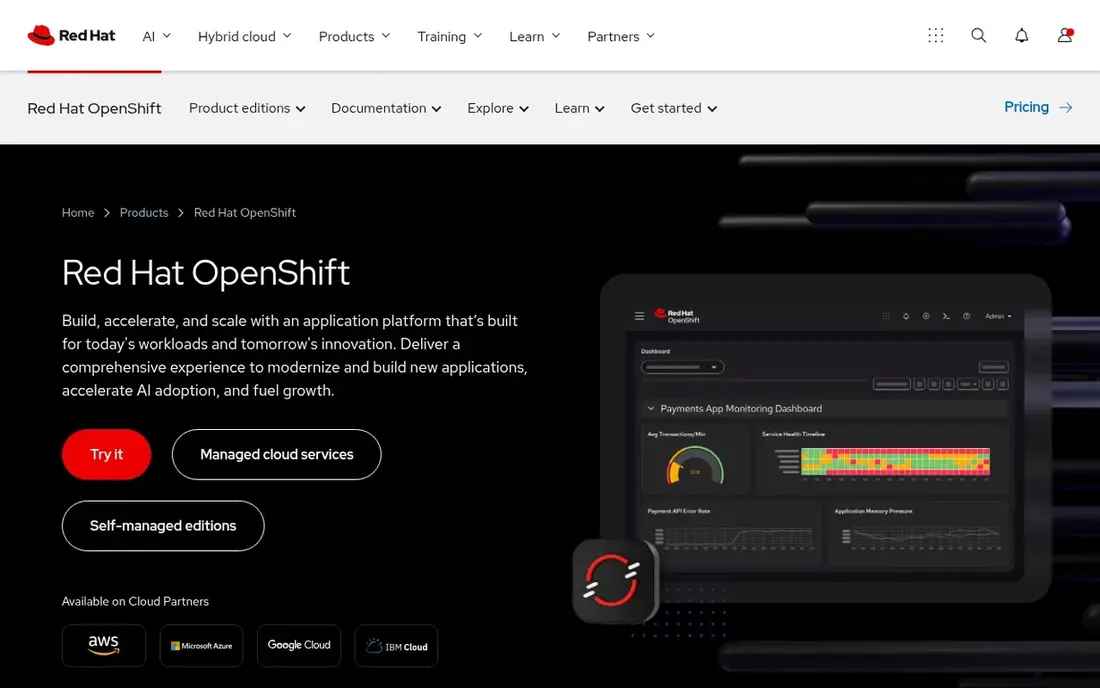
Red Hat OpenShift is built with enterprise-grade application product with Kubernetes in mind. OpenShift can be complicated to set up and run, and it may be overkill for startups with straightforward container needs.
It frequently needs specialized skills and a bigger operational team. Red Hat OpenShift shows no starting price here, so confirm the cost on the vendor site. Trial and free access: Not stated.
Watch-outs: May need specialized skills.
- Supports AI adoption and growth
- Tools to modernize and build new applications
- Complicated setup and management
Rancher is designed for multi-cluster Kubernetes management. Rancher is an open-source multi-cluster orchestration system that lets operations teams deploy, run, and secure enterprise Kubernetes.
The main drawbacks: Needs Kubernetes knowledge.
On top of that, startups that run Kubernetes across several clusters or clouds can use Rancher to centralize management and policy. Check the vendor site for Rancher pricing; none is listed in this comparison. Free options: Not stated.
- Deploy, run
- Works across several clusters and clouds
- Extra layer to handle
How we chose
Questions to settle before buying
- Get a written quote from Amazon EKS, Kubernetes, Red Hat OpenShift and Rancher; the list shows no starting price for them.
- Look at the free plan from Docker closely: its caps decide whether it is usable for real work.
- Before choosing Amazon EKS, weigh its main limit: tied to AWS ecosystem.
- Let daily users try Red Hat OpenShift on real work; their feedback beats any feature checklist.
- Make sure Kubernetes lets you export your data in a format another tool can read.
FAQ
Which options for containerization software for startups have a free plan?
Docker is the only tool in this list with a free plan. Free plans usually cap users, projects or features, so check the limits on the vendor page.
Do these tools publish their prices?
Not all of them. Amazon EKS, Kubernetes, Red Hat OpenShift and Rancher publish no starting price, so expect a quote request for those. The rest, Docker included, show a starting price, though seats and billing terms still change the final cost.
How are the tools for containerization software for startups ordered?
The order follows typical fit for containerization software for startups, with Amazon EKS first and Rancher last, then price clarity and free access. It is editorial judgement, not a score, so another team could rank the tools differently.
Is Amazon EKS the right pick for everyone comparing containerization software for startups?
No single tool suits every team. Amazon EKS comes first because it fits managed Kubernetes on AWS and on-premises, while Kubernetes suits automated orchestration of containerized applications and Docker suits simplest container creation and local development. Match the tool to your own size, budget and workflow before deciding.
What is the difference between Docker and Kubernetes?
Docker is a system for building and running containers, whereas Kubernetes is an orchestration system for managing containerized applications at scale. Docker concentrates on container creation and packaging, whereas Kubernetes takes care of deployment, scaling, and networking across clusters.
Sources
- https://aws.amazon.com/eks
- https://kubernetes.io
- https://www.docker.com
- https://www.redhat.com/en/technologies/cloud-computing/openshift
- https://www.rancher.com