5 Container Orchestration Tools for Remote Teams Worth Shortlisting in 2026
5 best container orchestration tools for remote teams, with entry costs, free tiers and the buyer each one serves. Real limits included. Updated for 2026.
- Editor's choice
 Rancher
Multi-cluster Kubernetes management
Starts atPricing on requestVisit rancher.comFull review - Great alternative
 Google Kubernetes Engine
Completely managed Kubernetes on Google Cloud
Starts atPricing on requestVisit cloud.google.comFull review - Also consider
 Kubernetes
Portable open source container orchestration
Starts atPricing on requestVisit kubernetes.ioFull review
Direct answer
Rancher leads the list, best for multi-cluster Kubernetes management. Alternatives: Google Kubernetes Engine for completely managed Kubernetes on Google Cloud, and Kubernetes for portable open source container orchestration. All 5 tools are compared below on fit, free plan and limits. None of these vendors publish plan prices, so pricing is on request for every option.
TL;DR:
- This list starts with Rancher, which is built for multi-cluster Kubernetes management.
- Red Hat OpenShift is the one to check for application system with built-in tooling.
- Rancher, Red Hat OpenShift and the 3 others all sell by quote; expect sales conversations before you see a price.
- Rancher, Red Hat OpenShift and the 3 others all need a premium plan or a trial, since no free plan is listed.
- A fair warning about Azure Kubernetes Service: Azure-centric identity and networking.
Last checked November 2026. Pricing on request: vendors did not publish plan prices when this guide was last checked (November 2026), so ask each vendor for a written quote.
Quick comparison
| Tool | Best for | Starts at | Free plan? | |
|---|---|---|---|---|
| Rancher | Multi-cluster Kubernetes management | Pricing on request | Not stated | Visit |
| Google Kubernetes Engine | Completely managed Kubernetes on Google Cloud | Pricing on request | Not stated | Visit |
| Kubernetes | Portable open source container orchestration | Pricing on request | Not stated | Visit |
 Azure Kubernetes Service | Managed Kubernetes on Microsoft Azure | Pricing on request | Not stated | Visit |
 Red Hat OpenShift | Application product with built-in tooling | Pricing on request | Not stated | Visit |
Every option for container orchestration tools for remote teams explained
This LinkVetted guide covers 5 container orchestration tools for remote teams. Each profile lists a starting price, free plan details, strengths and drawbacks, so you can drop poor fits quickly.
Pick Rancher if this describes you: multi-cluster Kubernetes management. Choose Rancher when multi-cluster consistency and centralized policy matter more than a minimal toolchain.
In practice, Rancher runs Kubernetes instead of replacing it, so teams still need cluster and workload expertise. In daily use, small teams running a single managed cluster may find the additional layer unnecessary. This comparison lists no price for Rancher; ask the vendor. Free options: Not stated.
Points against: Brings a layer to learn.
Where Rancher stands out: Open source multi-cluster orchestration.
- Fits operations teams
- Deploy
- Assumes Kubernetes familiarity
Google Kubernetes Engine
Best for: Completely managed Kubernetes on Google Cloud
Google Kubernetes Engine serves completely managed Kubernetes on Google Cloud. Google Kubernetes Engine is presented as a completely managed Kubernetes service with the full Kubernetes API, four-way autoscaling, release channels and multi-cluster support. More specifically, remote teams that want managed clusters with predictable upgrade paths can use release channels to stage changes.
The main drawbacks: Autoscaling choices require tuning.
For everyday use, the full API surface keeps standard Kubernetes tooling and manifests usable. For everyday use, GKE is most comfortable for teams already invested in Google Cloud. The range of autoscaling and cluster choices needs deliberate configuration. Also, Select GKE when Google Cloud is your product and you want managed Kubernetes with staged releases. Pricing for Google Kubernetes Engine is not stated here, so ask the vendor for current figures. On free options: Not stated.
- Multi-cluster support and release channels
- Full Kubernetes API support
- Best value inside Google Cloud
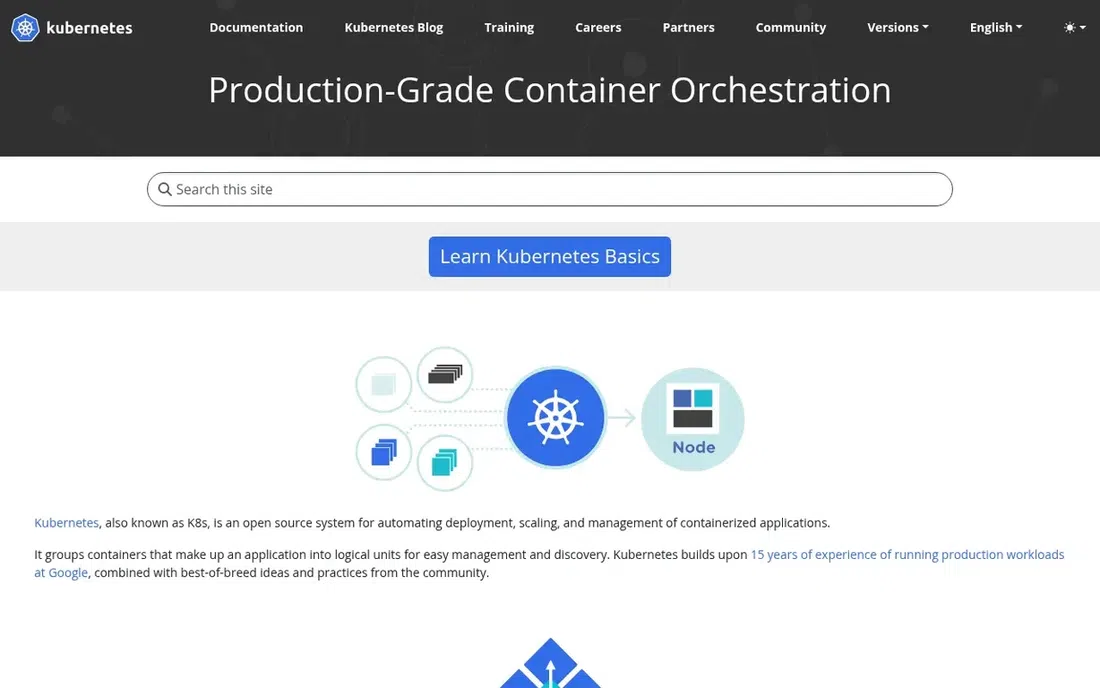
Kubernetes is built with portable open source container orchestration in mind. Choose Kubernetes straight when portability and control matter more than convenience. From a buyer's view, Kubernetes, also known as K8s, is an open source system for automating deployment, scaling and management of containerized applications.
Limits to weigh: Requires dedicated product skills.
It groups the containers that make up an application into logical units for simpler management and discovery. From a buyer's view, for remote teams, this portability means the same orchestration approach can follow engineers across cloud and on-premises environments. Worth adding: the tradeoff is operational weight: running Kubernetes yourself demands ongoing cluster maintenance, upgrades and expertise. This comparison lists no price for Kubernetes; ask the vendor. Free options: Not stated.
- Automates deployment
- Scaling and management
- Operational complexity is high
Azure Kubernetes Service is aimed squarely at managed Kubernetes on Microsoft Azure. Azure Kubernetes Service is described as a way to deploy and run secure, scalable containerized applications with quick delivery on managed Kubernetes clusters. AKS assumes familiarity with Azure identity, networking and governance, which can slow teams coming from other clouds.
On top of that, workload portability remains, but operational patterns are Azure-shaped. Remote teams standardized on Microsoft tooling can align cluster access with existing identity practices. It supplies managed Kubernetes without asking the team to operate the control plane straight. Check the vendor site for Azure Kubernetes Service pricing; none is listed in this comparison. Trial and free access: Not stated.
What Azure Kubernetes Service does well: Quick delivery of cluster provisioning. Where it falls short: Cluster operations still need expertise.
- Concentrated on secure
- Scalable deployment
- Azure-centric identity and networking
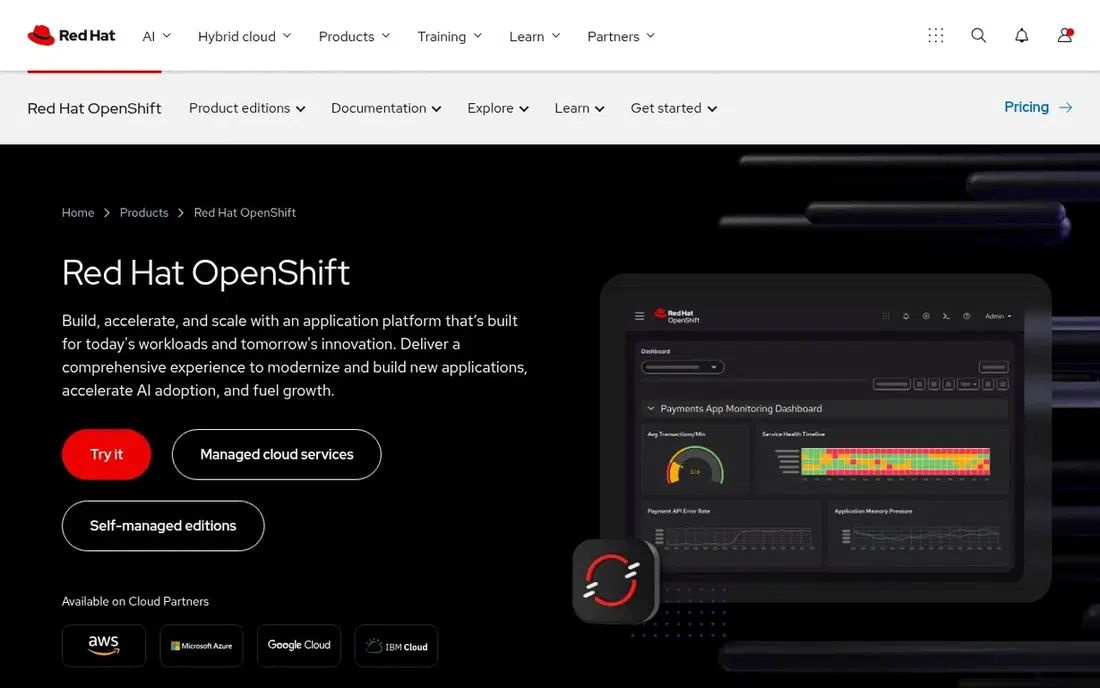
In short, Red Hat OpenShift is for application product with built-in tooling. Red Hat OpenShift is described as an application innovation system delivering a thorough experience with tools to enable organizations to modernize and build new applications, accelerate AI adoption and fuel growth. Since OpenShift is a wide system, it can introduce more surface area than a small team needs for entry-level container scheduling.
Downsides: System scope can feel heavy.
More specifically, organizations standardizing on Red Hat tooling commonly find the fit natural. As for the details, pick OpenShift when you value an integrated application product and consistent enterprise workflows. Check the vendor site for Red Hat OpenShift pricing; none is listed in this comparison. As for free access: Not stated.
- Full application system experience
- Supports AI adoption workflows
- Enterprise orientation layers on process
Our selection method
Selection started from tools commonly considered for container orchestration tools for remote teams, then narrowed to 5 that have clear pricing information or a clear quote process. Plan names, prices and limits change often. Treat the figures here as a starting point and verify them with the vendor. The order reflects how well each tool fits the most common buying scenario for container orchestration tools for remote teams, then price clarity, then free plan access. It is a starting point, not a verdict.
A buyer's checklist
- Confirm the entry price with every vendor: no tool from Rancher to Red Hat OpenShift shows a fixed starting price.
- Before choosing Rancher, weigh its main limit: layers on a layer to learn.
- Ask Red Hat OpenShift whether prices are locked for the first term and what happens at renewal.
- Price Rancher for your actual team size; headline prices rarely include add-ons or overage.
- Run a one or two week pilot of Kubernetes with the people who will use it every day.
FAQ
When does Rancher make sense alongside managed Kubernetes?
Rancher is an open source multi-cluster orchestration system for deploying, managing and securing enterprise Kubernetes. It suits operations teams running clusters across multiple environments that want one management layer.
Does any tool for container orchestration tools for remote teams here have a free plan?
A permanent free plan is not offered by Rancher, Red Hat OpenShift or the other tools here. Plan a short evaluation period instead. Prices, free plan details and limits for all 5 tools in this Container orchestration tools for remote teams roundup sit on the individual cards above.
How are the tools for container orchestration tools for remote teams ordered?
The order follows typical fit for container orchestration tools for remote teams, with Rancher first and Red Hat OpenShift last, then price clarity and free access. It is editorial judgement, not a score, so another team could rank the tools differently.
Do these tools publish their prices?
No. None of the tools, from Rancher to Red Hat OpenShift, shows a fixed starting price here, so budget time for quotes. Each of the 5 options in this Container orchestration tools for remote teams guide has its own card above with the price, free plan and limits.
Is Nomad a replacement for Kubernetes?
Nomad is a scheduler documented by HashiCorp that can orchestrate containers and other workloads with one model. Teams that rely on Kubernetes APIs and integrations should stay with Kubernetes-based choices.
Is Rancher the right pick for everyone comparing container orchestration tools for remote teams?
No single tool suits every team. Rancher comes first because it fits multi-cluster Kubernetes management, while Google Kubernetes Engine suits fully managed Kubernetes on Google Cloud and Kubernetes suits portable open source container orchestration. Match the tool to your own size, budget and workflow before deciding.
Sources
- https://www.rancher.com
- https://cloud.google.com/kubernetes-engine
- https://kubernetes.io
- https://azure.microsoft.com/en-us/products/kubernetes-service
- https://www.redhat.com/en/technologies/cloud-computing/openshift