5 Container Orchestration Tools for Startups Worth Shortlisting in 2026
Weighing the best container orchestration tools for startups? We lined up 5 products by cost, free access and fit. Real limits included. Read the profiles.
- Editor's choice
 Azure Kubernetes Service
Microsoft Azure users seeking managed Kubernetes
Starts atSee websiteVisit azure.microsoft.comFull review - Great alternative
 Docker Swarm
Small teams wanting straightforward orchestration
Starts at$9 per user a monthVisit docker.comFull review - Also consider
 Kubernetes
Teams wanting open source adaptability
Starts atSee websiteVisit kubernetes.ioFull review
Direct answer
For Microsoft Azure users seeking managed Kubernetes, Azure Kubernetes Service is where this list starts. Listed starting prices: Docker Swarm from $9 per user a month. Alternatives: Docker Swarm for small teams wanting straightforward orchestration, and Kubernetes for teams wanting open source adaptability. The full list of 5 tools follows, with prices and free plan facts.
TL;DR:
- This list starts with Azure Kubernetes Service, which is built for Microsoft Azure users seeking managed Kubernetes.
- Just one of the 5 tools, Docker Swarm, has a free plan.
- Before buying Docker Swarm, weigh this: less feature-rich than Kubernetes.
- Docker Swarm has the lowest monthly starting price in this list: $9 per user per month.
- Red Hat OpenShift suits enterprises and startups needing a full system.
Last checked November 2026. Prices and plan details were read from the vendors' own pages in November 2026; vendors change plans often, so confirm the current price on the vendor site before you buy.
Quick comparison
| Tool | Best for | Starts at | Free plan? | |
|---|---|---|---|---|
| Azure Kubernetes Service | Microsoft Azure users seeking managed Kubernetes | See website | Not stated | Visit |
| Docker Swarm | Small teams wanting straightforward orchestration | $9 per user a month | Yes | Visit |
| Kubernetes | Teams wanting open source adaptability | See website | Not stated | Visit |
 Amazon EKS | AWS-centric startups needing managed Kubernetes | See website | Not stated | Visit |
 Red Hat OpenShift | Enterprises and startups needing a full product | See website | Not stated | Visit |
Our 5 container orchestration tools for startups
If you are comparing container orchestration tools for startups, this page covers 5 tools in one place: what each is best for, what it costs to start, whether it has a free plan, and the main limit to know about.
Azure Kubernetes Service
Best for: Microsoft Azure users seeking managed Kubernetes
In short, Azure Kubernetes Service is for Microsoft Azure users seeking managed Kubernetes. Azure Kubernetes Service (AKS) gives you secure, scalable containerized app deployment and management with quick delivery on managed Kubernetes clusters. It is a solid choice for startups invested in the Microsoft ecosystem, supplying a managed control plane and integration with Azure services.
In practice, if you are not on Azure, the integration advantages diminish. Also, you still have to understand Kubernetes concepts to use it effectively. Also, AKS aims to ease Kubernetes operations while retaining adaptability. Azure Kubernetes Service does not show a starting price in this comparison, so check the vendor site for current pricing. Free access: Not stated.
Downsides: Azure-centric for full benefits.
- Secure and scalable deployment
- Managed Kubernetes clusters
- Needs Kubernetes knowledge
Docker Swarm is designed for small teams wanting simple orchestration. Docker Swarm is Docker's native clustering and orchestration option, integrated into the Docker ecosystem. It permits you to manage a cluster of Docker engines and deploy services with familiar Docker commands.
Swarm lacks some advanced features and the deep ecosystem of Kubernetes, and its community is smaller. It may not scale well for highly complicated or large-scale deployments. Docker Swarm cost at the entry level: $9 per user per month. You can start on Docker Swarm without paying.
Trade-offs to know: Smaller ecosystem and community.
- Built into Docker
- More straightforward to learn than Kubernetes
- Less feature-rich than Kubernetes
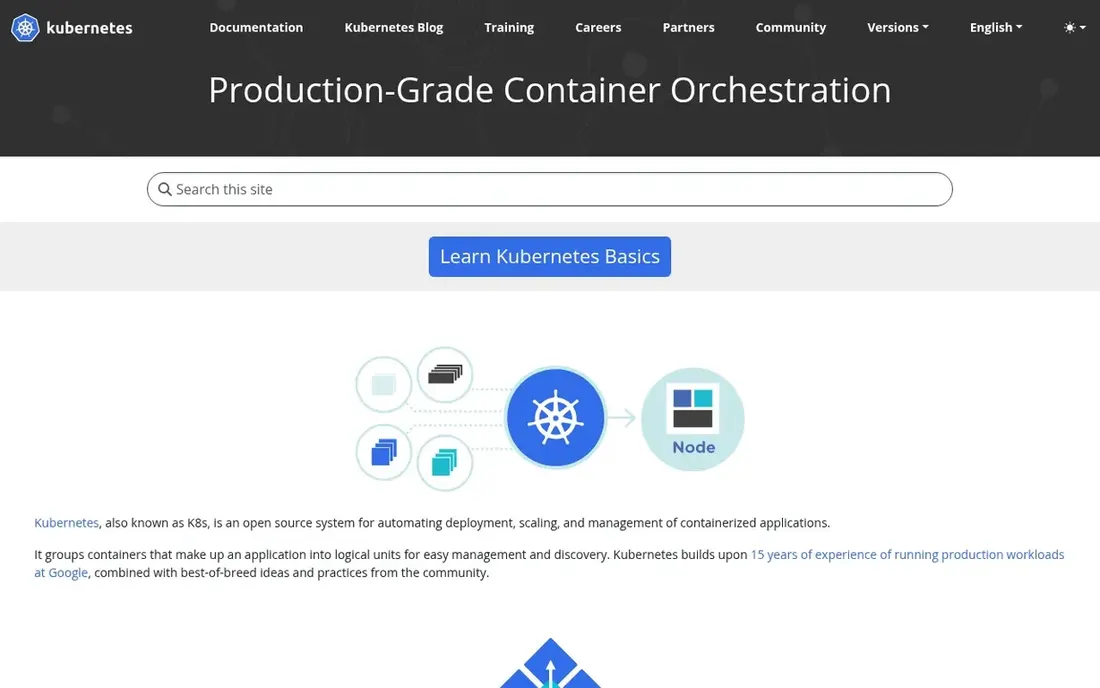
Choose Kubernetes for teams wanting open source adaptability. The trade-off is complexity: Kubernetes demands operational knowledge and ongoing maintenance. More specifically, Kubernetes, also known as K8s, is an open source system for automating deployment, scaling, and management of containerized applications.
It groups containers that make up an application into logical units for simple management and discovery. This makes it a solid fit for startups that expect to grow and want a widely adopted product with community support and deep tooling. As for the details, startups without dedicated product engineers may find it overwhelming. Pricing for Kubernetes is not stated here, so ask the vendor for current figures. As for free access: Not stated.
Limits to weigh: Steep ramp-up time for small teams.
- Open source with a large ecosystem
- Automates deployment, scaling, management
- Needs operational expertise to run
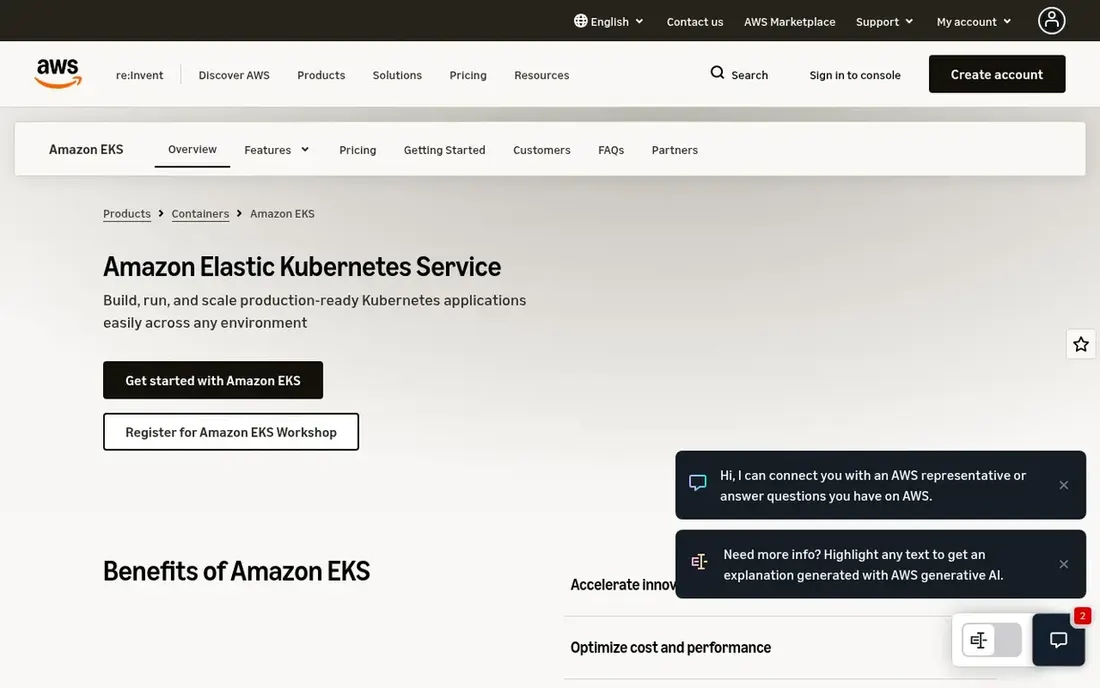
Amazon EKS serves AWS-centric startups needing managed Kubernetes. Amazon Elastic Kubernetes Service (EKS) is a managed service and certified Kubernetes conformant to run Kubernetes on AWS and on-premises. It manages the control plane for you, so your team can focus on applications instead of cluster management.
The main drawbacks: Tied to AWS ecosystem for best experience.
Startups already using AWS will appreciate the integration with other AWS services and the reduced operational burden. From a buyer's view, consider other managed services if you want more abstraction. EKS may not be ideal if you are not on AWS or plan a multi-cloud strategy, as the best experience is within the AWS ecosystem. Also, whereas the control plane is managed, you still have to handle worker nodes and some networking. Pricing for Amazon EKS is not stated here, so ask the vendor for current figures. Trial and free access: Not stated.
- Certified Kubernetes conformant
- Runs on AWS and on-premises
- Can be complicated to configure initially
For enterprises and startups needing a full product, Red Hat OpenShift is a natural candidate. Red Hat OpenShift is an application innovation system delivering a comprehensive experience with tools to enable organizations to modernize and build new applications, accelerate AI adoption, and fuel growth.
Trade-offs to know: Can be complex and heavy for small teams.
It goes beyond orchestration, offering a full product with developer tools and enterprise features. Pricing for Red Hat OpenShift is not stated here, so ask the vendor for current figures. As for free access: Not stated.
- Comprehensive application system
- Tools for modernization and AI adoption
- May need specialized skills
Our selection method
Selection started from tools commonly considered for container orchestration tools for startups, then narrowed to 5 that have clear pricing information or a clear quote process. Where a vendor does not publish a price, the entry says quote. Where a price depends on seats or billing term, the entry says so. The sequence is a judgement call: typical use case first, then pricing transparency, then free access. Use the profiles to check fit.
Pre-purchase checklist
- Get a written quote from Azure Kubernetes Service, Kubernetes, Amazon EKS and Red Hat OpenShift; the list shows no starting price for them.
- Test the free plan from Docker Swarm against your real workload before relying on it.
- Read the limits listed for Azure Kubernetes Service first: Azure-centric for full benefits.
- Pick one real project and run it in Red Hat OpenShift first; a small pilot shows fit faster than a checklist.
- Confirm that Kubernetes connects to the apps your team already uses, on the plan you would actually buy.
FAQ
How do managed Kubernetes services differ from self-managed Kubernetes?
Managed services deal with the control plane, including availability and scaling, whereas self-managed needs you to operate everything. Managed services are usually simpler for startups but may offer less customization and tie you to a provider.
What is the cheapest option for container orchestration tools for startups in this list?
On published monthly entry prices, Docker Swarm is the lowest here at $9 per user per month. Entry price is only part of the cost, because seats, add-ons and billing terms can change the total. Each of the 5 options in this Container orchestration tools for startups guide has its own card above with the price, free plan and limits.
What is container orchestration and why do startups need it?
Container orchestration automates the deployment, scaling, and management of containerized applications. Startups need it to manage expanding workloads steadily without manual intervention, enabling quicker iteration and efficient resource use.
Can I try these tools before paying?
Often, yes. Docker Swarm has a free plan. Use your own data and a real task during the test, and check what the free tier or trial limits before you rely on it. All 5 picks in this Container orchestration tools for startups comparison list a starting price, free plan details and the main limits on their cards above.
Is Azure Kubernetes Service the right pick for everyone comparing container orchestration tools for startups?
No single tool suits every team. Azure Kubernetes Service comes first because it fits Microsoft Azure users seeking managed Kubernetes, while Docker Swarm suits small teams wanting simple orchestration and Kubernetes suits teams wanting open source flexibility. Match the tool to your own size, budget and workflow before deciding.
How are the tools for container orchestration tools for startups ordered?
The order follows typical fit for container orchestration tools for startups, with Azure Kubernetes Service first and Red Hat OpenShift last, then price clarity and free access. It is editorial judgement, not a score, so another team could rank the tools differently.
Sources
- https://azure.microsoft.com/en-us/products/kubernetes-service
- https://www.docker.com
- https://kubernetes.io
- https://aws.amazon.com/eks
- https://www.redhat.com/en/technologies/cloud-computing/openshift