The 5 Best Container Orchestration Tools for Enterprise in 2026, Ranked
Weighing the best container orchestration tools for enterprise? We lined up 5 products by cost, free access and fit. Short verdicts, no fluff. Numbers first.
- Editor's choice
 Rancher
Multi-cluster Kubernetes management and security
Starts atPricing on requestVisit rancher.comFull review - Great alternative
 Mirantis Kubernetes Engine
Private and managed container orchestration
Starts atPricing on requestVisit mirantis.comFull review - Also consider
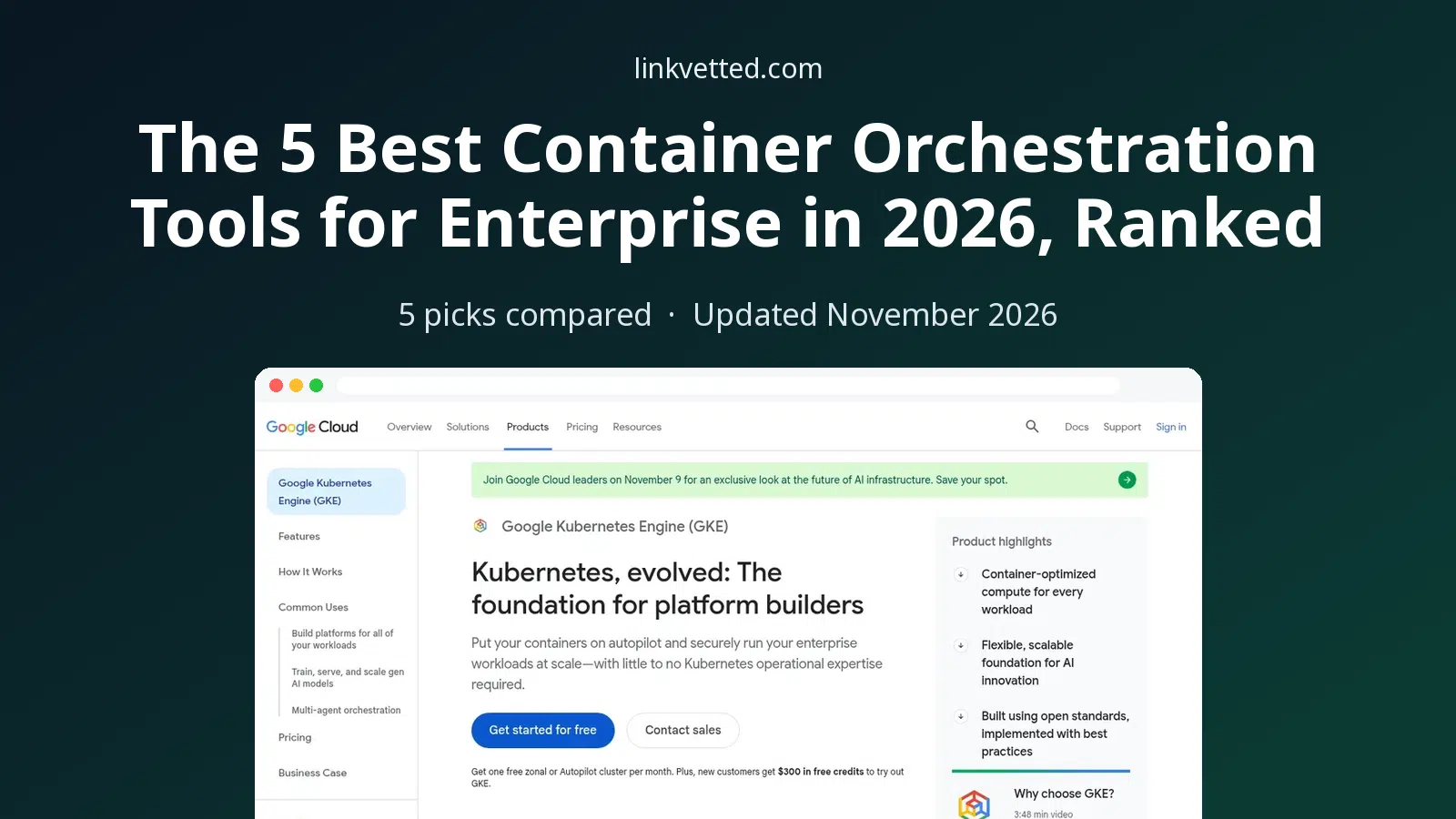
 Google Kubernetes Engine
Completely managed Kubernetes on Google Cloud
Starts atPricing on requestVisit cloud.google.comFull review
Direct answer
Rancher comes first here, mainly for multi-cluster Kubernetes management and security. Mirantis Kubernetes Engine is better for private and managed container orchestration, and Google Kubernetes Engine is better for completely managed Kubernetes on Google Cloud. Free plan facts and limits for all 5 tools follow. None of these vendors publish plan prices, so pricing is on request for every option.
TL;DR:
- Rancher is the opening pick, best for multi-cluster Kubernetes management and security.
- Red Hat OpenShift fits integrated enterprise application product.
- Check the limits for Google Kubernetes Engine before you commit: best fit within Google Cloud.
- None of the 5 tools, from Rancher to Red Hat OpenShift, has a free plan, so budget for a subscription or use a trial.
- Pricing across the list, from Rancher to Red Hat OpenShift, is by quote only.
Last checked November 2026. Pricing on request: vendors did not publish plan prices when this guide was last checked (November 2026), so ask each vendor for a written quote.
Quick comparison
| Tool | Best for | Starts at | Free plan? | |
|---|---|---|---|---|
| Rancher | Multi-cluster Kubernetes management and security | Pricing on request | Not stated | Visit |
| Mirantis Kubernetes Engine | Private and managed container orchestration | Pricing on request | Not stated | Visit |
| Google Kubernetes Engine | Completely managed Kubernetes on Google Cloud | Pricing on request | Not stated | Visit |
| SUSE Rancher | Enterprise Kubernetes management with SUSE support | Pricing on request | Not stated | Visit |
 Red Hat OpenShift | Integrated enterprise application system | Pricing on request | Not stated | Visit |
Every option for container orchestration tools for enterprise explained
LinkVetted put together this guide to container orchestration tools for enterprise for readers who want a clear shortlist without reading every vendor page. It compares 5 tools on starting price, free plans, who each one suits and where each one falls short.
In short, Rancher is for multi-cluster Kubernetes management and security. Rancher is described as an open-source multi-cluster orchestration system that lets operations teams deploy, run and secure enterprise Kubernetes. It appeals to operations teams seeking consistency without locking into one cloud provider.
Organizations wanting a completely managed control plane from their cloud provider may prefer a native service. On top of that, choose Rancher when multi-cluster governance and portability matter most. Rancher layers on a management layer that teams must learn and operate, which can be additional overhead for a single small cluster. Check the vendor site for Rancher pricing; none is listed in this comparison. Free plan details: Not stated.
Downsides: Needs Kubernetes maturity.
- Run and secure Kubernetes
- Deploy
- Layers on a management layer to learn
For private and managed container orchestration, Mirantis Kubernetes Engine is a natural candidate. Organizations that want the tightest coupling with one cloud provider should compare carefully.
Where it falls short: Needs planning for integrations.
Worth adding: consider Mirantis when a vendor-managed, multi-runtime orchestration approach suits your infrastructure model. This comparison lists no price for Mirantis Kubernetes Engine; ask the vendor. Free access: Not stated.
- Enterprise container management focus
- Private and managed choices
- Narrower ecosystem visibility
Google Kubernetes Engine
Best for: Completely managed Kubernetes on Google Cloud
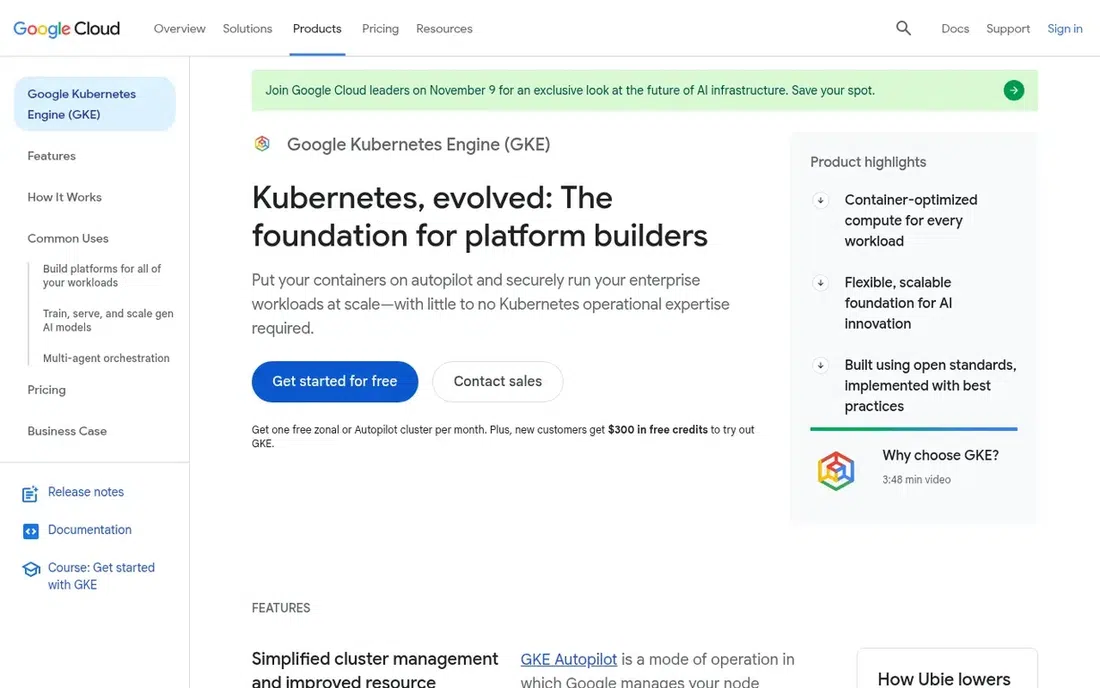
Google Kubernetes Engine is designed for completely managed Kubernetes on Google Cloud. Google Kubernetes Engine is described as a completely managed Kubernetes service with the full Kubernetes API, four-way autoscaling, release channels and multi-cluster support. Its strengths are most apparent inside Google Cloud, so multi-cloud or on-premises-first enterprises may prefer a portable management layer.
Choose GKE when managed Kubernetes with autoscaling and release channels is the priority. In daily use, some operators also want deeper control over cluster internals than a completely managed service gives you. No starting price is listed for Google Kubernetes Engine here; confirm pricing on the vendor site. Free options: Not stated.
The main drawbacks: Best fit within Google Cloud.
- Release channels and multi-cluster support
- Four-way autoscaling
- Managed model limits some control
SUSE Rancher
Best for: Enterprise Kubernetes management with SUSE support
SUSE Rancher is designed for enterprise Kubernetes management with SUSE support. SUSE Rancher is listed as an enterprise Kubernetes management product from SUSE.
Downsides: Overlaps with Rancher offerings.
Since it overlaps with other Rancher offerings, buyers should confirm which edition and support model matches their needs straight with the vendor. This comparison lists no price for SUSE Rancher; ask the vendor. Free plan details: Not stated.
- Enterprise Kubernetes management
- Builds on the Rancher approach
- Needs Kubernetes operational skills
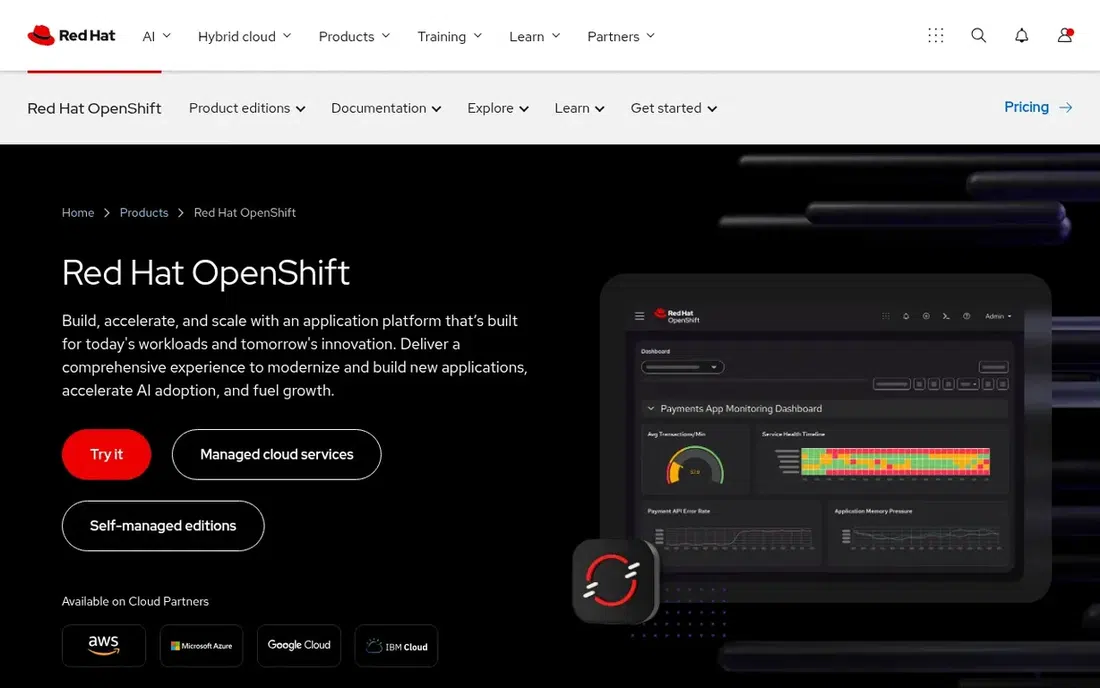
Red Hat OpenShift serves integrated enterprise application product. Consider OpenShift when system integration matters more than minimal footprint.
It suits enterprises that want an integrated environment instead of assembling separate orchestration and developer tooling themselves, and it appeals to teams already aligned with Red Hat's ecosystem. Red Hat OpenShift shows no starting price here, so confirm the cost on the vendor site. As for free access: Not stated.
What to check first: Wide system scope can add complexity.
- Merges product tools with Kubernetes orchestration
- Supports AI adoption initiatives
- May overlap with existing tooling
Our selection method
For each of the 5 tools we noted price, free plan or trial, fit for container orchestration tools for enterprise and the main limit, using vendor pages and documentation. Seat minimums, billing terms and add-ons can move the real cost, so the starting prices here are a guide and not a quote. The ranking is editorial: typical fit first, then clear pricing, then free access. If your needs are unusual, read the profiles rather than relying on position.
Before you commit
- Request quotes from Rancher, Red Hat OpenShift and the others; the list shows no fixed prices.
- Before choosing Rancher, weigh its main limit: layers on a management layer to learn.
- Total up the real monthly cost of Mirantis Kubernetes Engine, including add-ons, extra users and usage-based fees.
- Look at the renewal terms for Rancher: auto-renewal, notice periods and price changes can matter more than the first-year price.
- Find out what support Red Hat OpenShift includes on your plan, and whether onboarding help costs extra.
FAQ
How do system products differ from managed Kubernetes services?
Systems like Red Hat OpenShift bundle broader application tooling alongside orchestration, whereas managed services focus on running conformant Kubernetes clusters. The right choice relies on whether you need an integrated system or a lean managed control plane.
Do these tools publish their prices?
No. None of the tools, from Rancher to Red Hat OpenShift, shows a fixed starting price here, so budget time for quotes.
Can I try these tools before paying?
Not by default. None of the tools, from Rancher to Red Hat OpenShift, lists a free plan or a free trial here, so ask each vendor for a demo before committing.
Does any tool for container orchestration tools for enterprise here have a free plan?
A permanent free plan is not offered by Rancher, Red Hat OpenShift or the other tools here. Plan a short evaluation period instead.
What should enterprises look for in a container orchestration tool?
Focus on managed compared with self-managed operations, multi-cluster and multi-cloud support, security and policy controls, and integration with your existing cloud and delivery tooling.
How are the tools for container orchestration tools for enterprise ordered?
The order follows typical fit for container orchestration tools for enterprise, with Rancher first and Red Hat OpenShift last, then price clarity and free access. It is editorial judgement, not a score, so another team could rank the tools differently.
Sources
- https://www.rancher.com
- https://www.mirantis.com/software/mirantis-kubernetes-engine
- https://cloud.google.com/kubernetes-engine
- https://www.suse.com/products/rancher
- https://www.redhat.com/en/technologies/cloud-computing/openshift