Best API Documentation Tools with Validation (2026): 5 Picks Checked on Vendor Pages
Searching for the best API documentation tools with validation? Here are 5 options with prices and free plans. Caveats come with every verdict. Start here.
- Editor's choice
 GitBook
Docs product with AI accuracy checks
Starts at$65 per site per monthVisit gitbook.comFull review - Great alternative
 Redocly
Reference docs kept current per pull request
Starts at$249 a monthVisit redocly.comFull review - Also consider
 Postman
API engineering with built-in validation
Starts at$9 a monthVisit postman.comFull review
Direct answer
Our first pick is GitBook, best for docs system with AI accuracy checks. Listed starting prices: GitBook from $65 per site per month, Redocly from $249 a month and Postman from $9 a month. Redocly is better for reference docs kept current per pull request, and Postman is better for API engineering with built-in validation. Details, prices and limits for the rest of the 5 tools are below.
TL;DR:
- The list opens with GitBook, aimed at docs product with AI accuracy checks.
- Bump.sh is the one to check for OpenAPI to production with governance.
- Starting prices begin at $9 per month with Postman.
- 2 of 5 tools offer a free plan: GitBook, Postman.
- Before buying GitBook, weigh this: less concentrated on OpenAPI design.
Last checked November 2026. Prices and plan details were read from the vendors' own pages in November 2026; vendors change plans often, so confirm the current price on the vendor site before you buy.
Quick comparison
| Tool | Best for | Starts at | Free plan? | |
|---|---|---|---|---|
| GitBook | Docs product with AI accuracy checks | $65 per site per month | Yes | Visit |
| Redocly | Reference docs kept current per pull request | $249 a month | Free trial | Visit |
| Postman | API engineering with built-in validation | $9 a month | Yes | Visit |
 Stoplight | Spec-first OpenAPI design and docs | $44 a month | Free trial | Visit |
| Bump.sh | OpenAPI to production with governance | $50 a month | Free trial | Visit |
The full API documentation tools with validation list
If you are comparing API documentation tools with validation, this page covers 5 tools in one place: what each is best for, what it costs to start, whether it has a free plan, and the main limit to know about.
For docs system with AI accuracy checks, GitBook is a natural candidate. GitBook is not primarily an OpenAPI design or validation tool, so strict spec validation may need other software.
Downsides: API reference depth relies on setup.
It performs best when general documentation and API reference share one home. GitBook starts at: $65 per site per month. GitBook has a free plan.
- Built-in MCP links docs to AI agents
- GitBook Agent helps keep docs accurate
- Less centred on OpenAPI design
Redocly is built with reference docs kept current per pull request in mind. The tooling is developer-centric instead of writer-centric.
Where it shines: SDKs and tests.
From a buyer's view, pick a general documentation product when content beyond API reference is the priority. Beyond that, Redocly assumes a spec-driven workflow, so teams without a maintained OpenAPI description will have to build one first. What you pay to start with Redocly: $249 per month. On free options: Free trial.
Where it falls short: Setup assumes a spec-driven workflow.
- From the makers of Redoc
- Keeps output current on every pull request
- Tied closely to OpenAPI descriptions
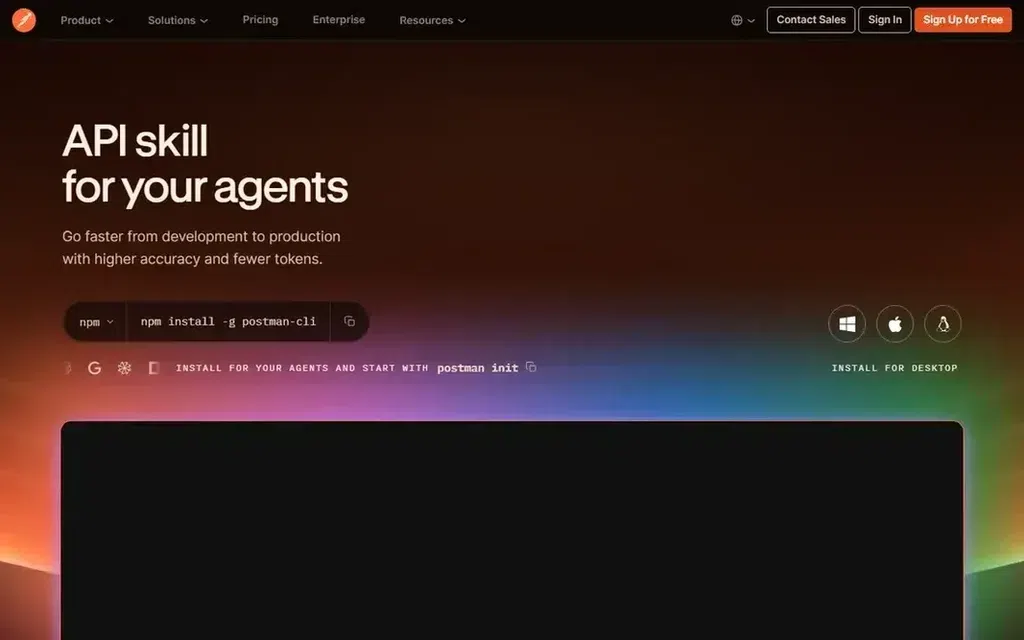
For API engineering with built-in validation, Postman is a natural candidate. Since requests, tests and documentation sit in one environment, it suits teams that want to validate responses and keep docs close to the API work itself. As for the details, documentation polish for external audiences is not its core focus.
The main drawbacks: Less centred on refined public doc sites.
In practice, the product is wide, so teams that only need a public documentation site may find it more than necessary. From a buyer's view, pick a dedicated docs product instead when publishing a refined developer portal is the primary goal. On cost, Postman starts like this: $9 per month. Postman includes a free tier.
- Documentation lives near request testing
- Accelerates the path from development to production
- Wide system can feel heavy for docs-only teams
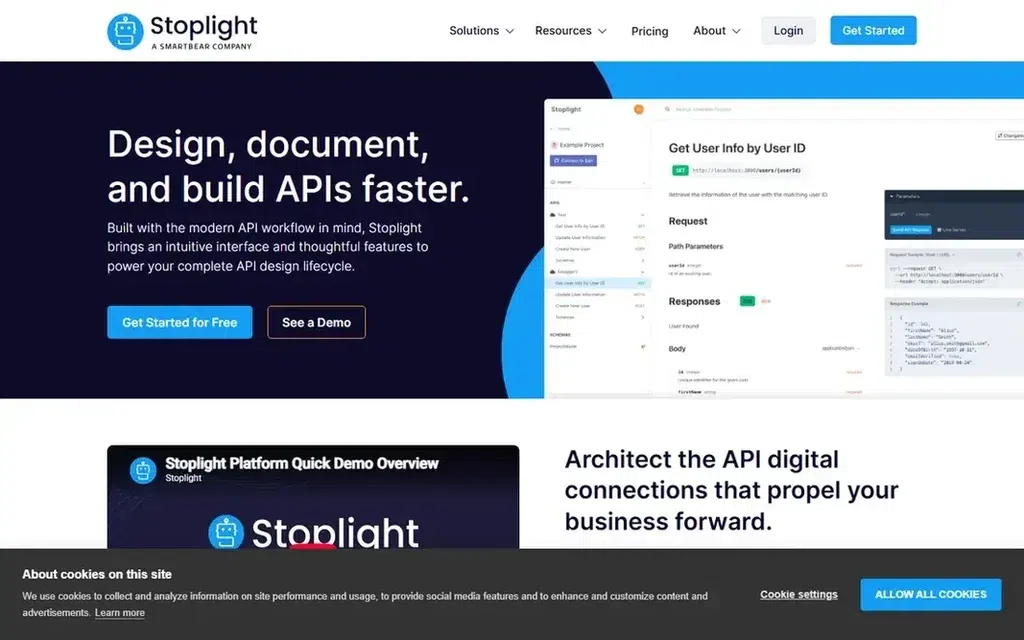
Stoplight is built with spec-first OpenAPI design and docs in mind. Stoplight is an OpenAPI design and documentation management tool. As for the details, consider a docs-only system when spec authoring is handled elsewhere.
The product is built around OpenAPI, so teams using other description formats may need additional steps. Organizations already standardized on separate design tools could see overlap. Stoplight cost at the entry level: $44 per month. As for free access: Free trial.
Watch-outs: Centered on OpenAPI workflows.
Main advantages: Centralized system; Builds OpenAPI descriptions and docs quicker.
- Includes mock servers
- No specialized knowledge required
- May overlap with existing design tooling
Bump.sh
Best for: OpenAPI to production with governance
Bump.sh is aimed squarely at OpenAPI to production with governance. Consider it when API docs and governance are the core requirement instead of general content publishing. As for the details, from OpenAPI to production, it contains built-in governance, authentication and observability.
What Bump.sh does well: Built-in governance and authentication.
Also, Bump.sh centers on OpenAPI, so teams with other spec formats or wide content needs may need extra tools. Its scope is narrower than full documentation suites. Bump.sh pricing: $50 per month. Free plan details: Free trial.
Points against: Concentrated on OpenAPI-based workflows.
- Ships docs plus MCP servers from OpenAPI
- Observability included
- Narrower scope than full docs suites
How we built this list
The comparison looks at four things: starting price, free access, how well the feature set matches API documentation tools with validation, and the main limit of each tool. Treat prices as a snapshot: vendors change plans often, so check the vendor site for the figure that applies today. The sequence is a judgement call: typical use case first, then pricing transparency, then free access. Use the profiles to check fit.
What to confirm before you sign up
- Confirm the entry price on the vendor page: Postman starts at $9 per month, but seat counts and billing terms change the total.
- Look at free plan limits closely: GitBook and Postman have one, and the caps decide whether it is usable for real work.
- Use real work to test the free trial from Redocly, Stoplight and Bump.sh, rather than a demo project.
- Before choosing GitBook, weigh its main limit: less centred on OpenAPI design.
- Test the integrations you rely on with Bump.sh before committing; some connectors sit on upper tiers.
- Ask GitBook about contract length, onboarding fees and user minimums before you sign.
FAQ
Which tool is best for spec-first teams?
This list starts with GitBook, which fits docs product with AI accuracy checks. For other needs, Redocly is aimed at reference docs kept current per pull request, and Postman at API engineering with built-in validation. Check each tool's price and main limit first.
Which options for API documentation tools with validation have a free plan?
On this list, GitBook and Postman include a free plan. Caps on seats, usage or features are common, so test the free plan against your real workload. Several others offer a trial instead.
Is GitBook the right pick for everyone comparing API documentation tools with validation?
No single tool suits every team. GitBook comes first because it fits docs platform with AI accuracy checks, while Redocly suits reference docs kept current per pull request and Postman suits API engineering with built-in validation. Match the tool to your own size, budget and workflow before deciding.
Do these tools publish their prices?
Yes. Every tool from GitBook to Bump.sh shows a starting price, though seats, add-ons and billing terms still change the final cost.
Can I try these tools before paying?
Often, yes. GitBook and Postman have a free plan and Redocly, Stoplight and Bump.sh offer a free trial. Use your own data and a real task during the test, and check what the free tier or trial limits before you rely on it.
Sources
- https://www.gitbook.com
- https://redocly.com
- https://www.postman.com
- https://stoplight.io
- https://bump.sh