Switching From Ruby? 5 Alternatives for 2026
Ruby alternatives: 5 contenders ranked by fit, with entry costs and free tiers. For straightforward, scalable backend systems, begin with Go. No filler.
- Editor's choice
 Go
Straightforward, scalable backend systems
Starts atPricing on requestVisit go.devFull review - Great alternativeElixir
Scalable, maintainable concurrent applications
Starts atPricing on requestVisit elixir-lang.orgFull review - Also considerNode.js
JavaScript across client and server
Starts atPricing on requestVisit nodejs.orgFull review
Direct answer
Go comes first here, mainly for straightforward, scalable backend systems. Alternatives: Elixir for scalable, maintainable concurrent applications, and Node.js for JavaScript across client and server. The full list of 5 tools follows, with free plan facts. None of these vendors publish plan prices, so pricing is on request for every option.
TL;DR:
- Go sits first on this list: straightforward, scalable backend systems.
- The main caution on Go: less expressive than Ruby.
- Java suits large, long-lived enterprise systems.
- A permanent free plan is missing from all 5 tools, Go and Java included; plan for a trial or a premium start.
Last checked November 2026. Pricing on request: vendors did not publish plan prices when this guide was last checked (November 2026), so ask each vendor for a written quote.
Quick comparison
| Tool | Best for | Starts at | Free plan? | |
|---|---|---|---|---|
| Go | Straightforward, scalable backend systems | Pricing on request | Not stated | Visit |
| Elixir | Scalable, maintainable concurrent applications | Pricing on request | Not stated | Visit |
| Node.js | JavaScript across client and server | Pricing on request | Not stated | Visit |
 Python | General-purpose scripting and data work | Pricing on request | Not stated | Visit |
 Java | Large, long-lived enterprise systems | Pricing on request | Not stated | Visit |
Our 5 picks for Ruby
Choosing Ruby usually comes down to price, fit and limits. This LinkVetted guide sets 5 tools side by side on those three points, with the facts kept short and checkable.

In short, Go is for straightforward, scalable backend systems. Go is an open source programming language built to make it straightforward to build secure, scalable systems. In practice, developers leaving Ruby frequently appreciate Go for its explicit style and ease of deployment as a single binary.
Go is less adaptable and expressive than Ruby, and its library ecosystem is narrower for some domains. In practice, choose Go when operational simplicity and scalability outweigh convenience features. For rapid web prototyping, Ruby or Python may still be quicker to start. From a buyer's view, writing routine code can feel verbose. Go does not show a starting price in this comparison, so check the vendor site for current pricing. Free plan details: Not stated.
Limits to weigh: Less expressive than Ruby.
- Decent concurrency support
- Small
- Smaller library selection
Elixir
Best for: Scalable, maintainable concurrent applications
In short, Elixir is for scalable, maintainable concurrent applications. Elixir has a smaller ecosystem than Python or Java, and the functional style takes adjustment for teams used to object-oriented code.
Trade-offs to know: Smaller ecosystem.
For everyday use, hiring can be harder in some regions. No starting price is listed for Elixir here; confirm pricing on the vendor site. As for free access: Not stated.
- Solid concurrency model
- Functional and maintainable
- Functional style has a ramp-up time
Node.js
Best for: JavaScript across client and server
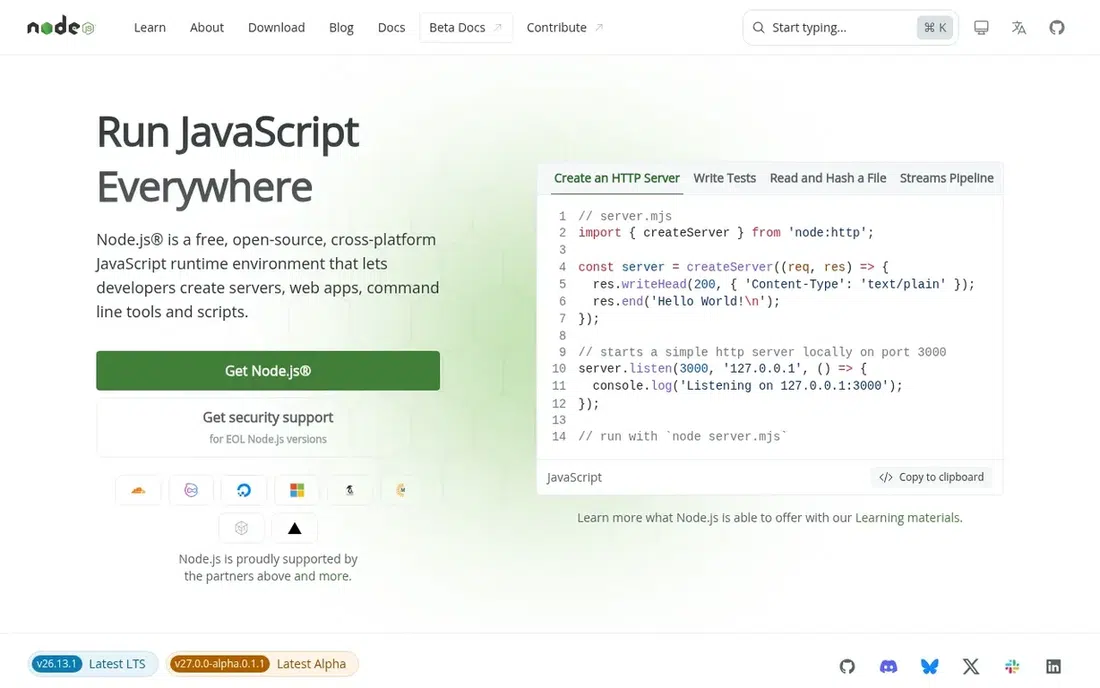
Where Node.js fits: JavaScript across client and server. Node.js is a free, open-source, cross-platform JavaScript runtime environment for servers, web apps, command line tools and scripts. In practice, pick Node.js when a shared JavaScript stack is the primary goal; otherwise consider Go for more straightforward system-level services.
Watch-outs: Callback and async complexity.
Beyond that, heavy computation can block the event loop, so CPU-bound tasks may need worker processes or another language. For everyday use, dependency management also needs care as projects grow. Pricing for Node.js is not stated here, so ask the vendor for current figures. On free options: Not stated.
- One language for front and back end
- Large package ecosystem
- CPU-bound work can be limiting
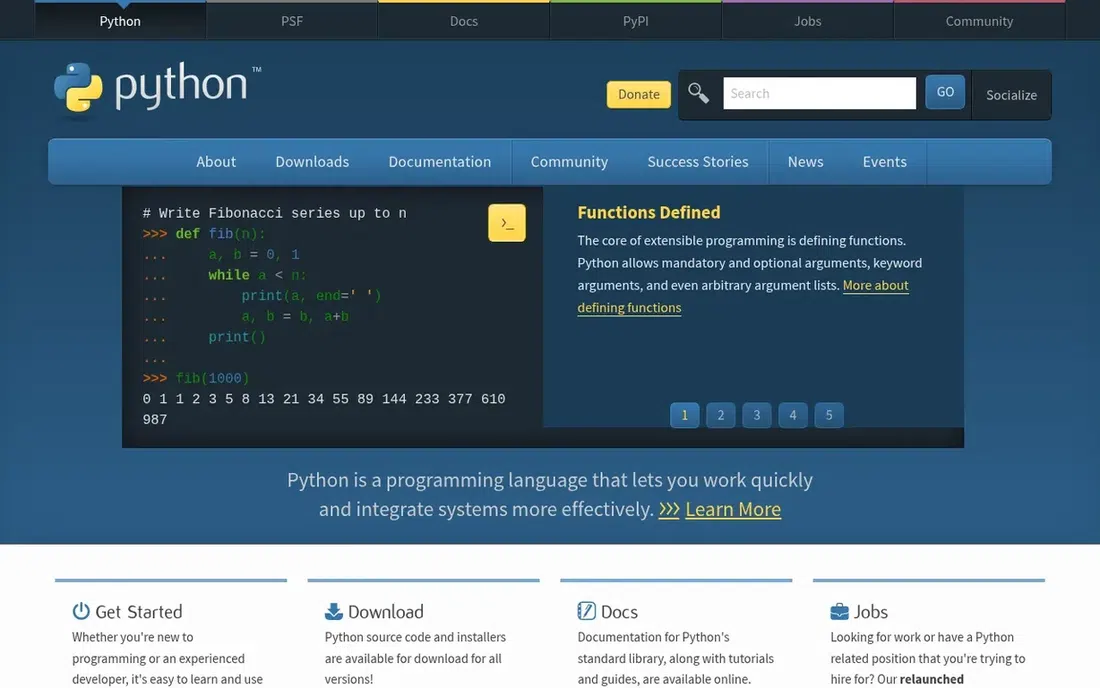
Python targets general-purpose scripting and data work. Developers coming from Ruby commonly find the transition natural since both favor expressive, dynamic code. It is a solid default when the work spans beyond a single web application.
Where it falls short: Slower runtime for some workloads.
As for the details, Python is not the fastest choice for CPU-heavy services, and managing environments and dependencies can take care. If your priority is a single runtime for browser and server code, Node.js may fit better. Pricing for Python is not stated here, so ask the vendor for current figures. Trial and free access: Not stated.
- Capable for scripting and data
- Readable syntax
- Packaging can be complicated
Java serves large, long-lived enterprise systems. Teams moving from Ruby often find Java more structured, which helps in environments with plenty of developers and strict interfaces.
Trade-offs to know: Verbose syntax.
As for the details, Java tends to be more verbose than Ruby, and small services can feel heavy compared to lighter runtimes. No starting price is listed for Java here; confirm pricing on the vendor site. Free access: Not stated.
- Mature tooling
- Solid static typing
- Slower startup for small services
Selection criteria
The comparison looks at four things: starting price, free access, how well the feature set matches Ruby, and the main limit of each tool. Prices and plan limits come from vendor pages and can change, so confirm them on the vendor site before you buy. The sequence is a judgement call: typical use case first, then pricing transparency, then free access. Use the profiles to check fit.
Questions to settle before buying
- Confirm the entry price with every vendor: no tool from Go to Java shows a fixed starting price.
- Read the limits listed for Go first: less expressive than Ruby.
- Total up the real monthly cost of Node.js, including add-ons, extra users and usage-based fees.
- Check how data leaves Go: formats, limits and whether exports are available on every plan.
- Test the integrations you rely on with Java before committing; some connectors sit on upper tiers.
FAQ
Does any tool for Ruby here have a free plan?
A permanent free plan is not offered by Go, Java or the other tools here. Plan a short evaluation period instead.
Is Go the right pick for everyone comparing Ruby?
No single tool suits every team. Go comes first because it fits simple, scalable backend systems, while Elixir suits scalable, maintainable concurrent applications and Node.js suits JavaScript across client and server. Match the tool to your own size, budget and workflow before deciding.
Can I try these tools before paying?
Not by default. None of the tools, from Go to Java, lists a free plan or a free trial here, so ask each vendor for a demo before committing.
How are the tools for Ruby ordered?
The order follows typical fit for Ruby, with Go first and Java last, then price clarity and free access. It is editorial judgement, not a score, so another team could rank the tools differently.
Sources
- https://go.dev
- https://elixir-lang.org
- https://nodejs.org
- https://www.python.org
- https://www.java.com