Database Software with Best Performance in 2026: The 6 Best Options Side by Side
Compare 6 picks for database software with best performance, with prices, free plans and who each fits. Each listing flags where it falls short. Easy to scan.
- Editor's choice
 Microsoft SQL Server
Enterprises integrating analytics and AI
Starts atPricing on requestVisit microsoft.comFull review - Great alternative
 CockroachDB
Resilient, cloud-native distributed SQL
Starts atPricing on requestVisit cockroachlabs.comFull review - Also consider
 Google Cloud Spanner
Globally distributed, always-on apps
Starts atPricing on requestVisit cloud.google.comFull review
Direct answer
This list puts Microsoft SQL Server first for enterprises integrating analytics and AI. If your case is different, CockroachDB suits Resilient, cloud-native distributed SQL and Google Cloud Spanner suits globally distributed, always-on apps. The full list of 6 tools follows, with free plan facts. None of these vendors publish plan prices, so pricing is on request for every option.
TL;DR:
- The list opens with Microsoft SQL Server, aimed at enterprises integrating analytics and AI.
- IBM Db2 fits AI-powered autonomous operations.
- Only MongoDB offers a free plan among these 6 tools.
- Every tool from Microsoft SQL Server to IBM Db2 works by quote, with no list price shown.
Last checked November 2026. Pricing on request: vendors did not publish plan prices when this guide was last checked (November 2026), so ask each vendor for a written quote.
Quick comparison
| Tool | Best for | Starts at | Free plan? | |
|---|---|---|---|---|
| Microsoft SQL Server | Enterprises integrating analytics and AI | Pricing on request | Not stated | Visit |
| CockroachDB | Resilient, cloud-native distributed SQL | Pricing on request | Free trial | Visit |
| Google Cloud Spanner | Globally distributed, always-on apps | Pricing on request | Not stated | Visit |
 Oracle Database | Critical workloads needing AI integration | Pricing on request | Not stated | Visit |
 MongoDB | Adaptable, scalable document data | Pricing on request | Yes | Visit |
 IBM Db2 | AI-powered autonomous operations | Pricing on request | Not stated | Visit |
Our 6 picks for database software with best performance
LinkVetted put together this guide to database software with best performance for readers who want a clear shortlist without reading every vendor page. It compares 6 tools on starting price, free plans, who each one suits and where each one falls short.
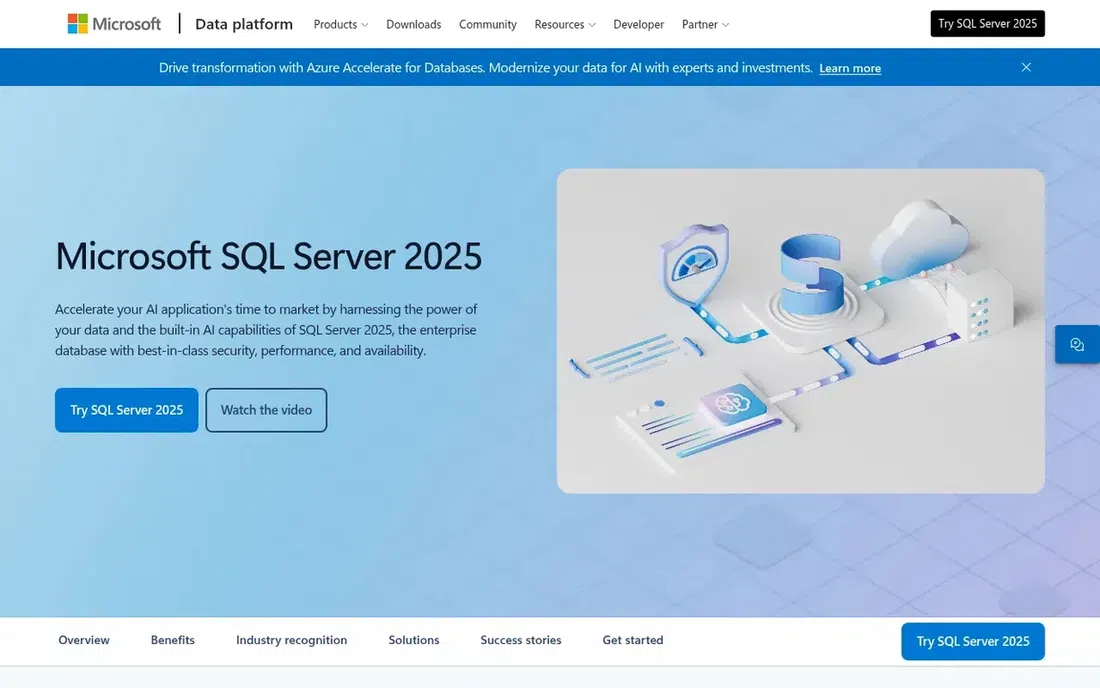
Microsoft SQL Server is a good fit for enterprises integrating analytics and AI. Licensing costs can be significant for large deployments. Whereas SQL Server supports Linux, plenty of features are optimized for Windows environments.
If you need a completely open-source option or run primarily on non-Microsoft products, other choices may be more appropriate. The homepage emphasizes developer-first features and acceleration of AI innovation using existing data. No starting price is listed for Microsoft SQL Server here; confirm pricing on the vendor site. Free options: Not stated.
Downsides: Primarily Windows-centric.
- Enterprise-grade
- Analytics and AI integration
- Licensing can be expensive
CockroachDB works best for Resilient, cloud-native distributed SQL. CockroachDB is a cloud-native, distributed SQL database aimed at extreme resilience and smooth horizontal scaling. Its homepage also mentions Cockroach Continuum, an agentic database cloud service.
Trade-offs to know: Younger ecosystem.
Consider alternatives if you need broad external tooling or have restricted experience with distributed systems. Beyond that, the ecosystem is smaller than those of established vendors. Worth adding: Whereas CockroachDB eases scaling, it can introduce operational complexity compared with traditional databases. This comparison lists no price for CockroachDB; ask the vendor. Trial and free access: Free trial.
- Smooth horizontal scaling
- Extreme resilience
- Operational complexity
Google Cloud Spanner is a good fit for globally distributed, always-on apps. Spanner is only available as a cloud service, so it may not suit on-premises requirements. More specifically, Google Cloud Spanner is a globally distributed relational database service that combines relational, graph, key-value, and search capabilities.
Its homepage flags always-on availability and virtually unlimited scale, making it well suited to mission-critical applications that need uninterrupted service. On top of that, costs can grow with scale and usage. Google Cloud Spanner shows no starting price here, so confirm the cost on the vendor site. Trial and free access: Not stated.
Limits to weigh: Can be pricey at scale.
- No maintenance windows
- Multi-model support
- Cloud-only deployment
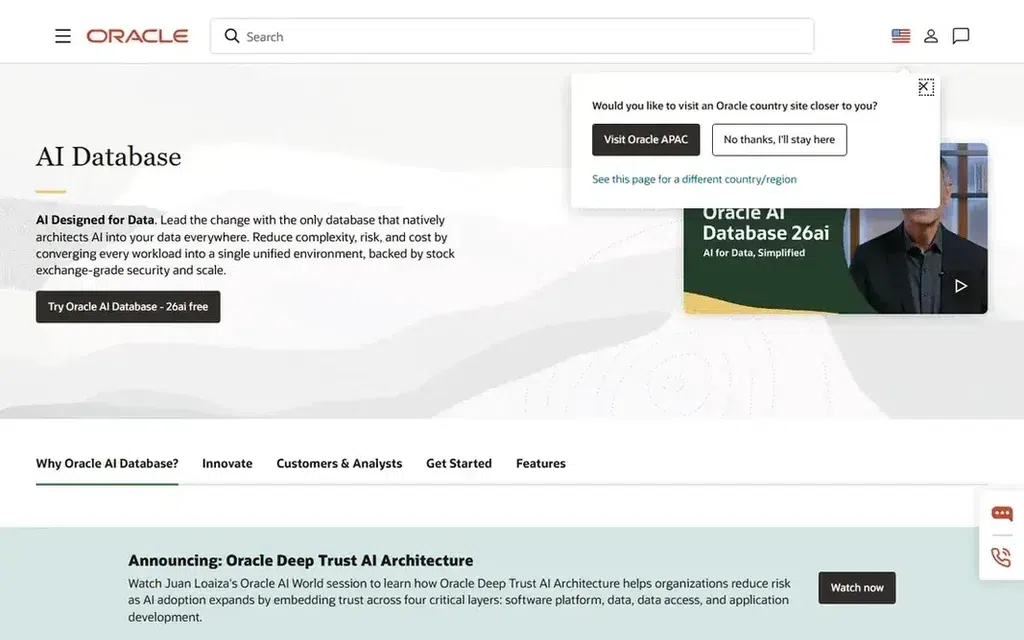
Oracle Database targets critical workloads needing AI integration. Its homepage flags AI capabilities and support for critical workloads, making it a good match for organizations that require solid performance and advanced features. Beyond that, consider alternatives if you need a more straightforward, light database or have restricted administrative resources.
Trade-offs to know: Complicated for beginners.
In daily use, licensing and operational costs may be high for smaller teams. The system can be complicated to set up and handle, commonly requiring dedicated database administrators. Oracle Database shows no starting price here, so confirm the cost on the vendor site. Trial and free access: Not stated.
- Handles critical workloads
- Supports app development
- Needs specialized skills
MongoDB works best for adaptable, scalable document data. MongoDB is a document-oriented database system aimed at adaptability and scalability. Its homepage describes it as an intelligent data system for the AI era, enabling quicker time to market with live data that scales across any cloud.
On top of that, MongoDB is not a relational database, so it may lack some features like complicated joins and strict transactions. Consider it when schema adaptability and horizontal scaling are priorities. For workloads requiring solid relational integrity or complicated reporting, a relational database might be better. MongoDB does not show a starting price in this comparison, so check the vendor site for current pricing. MongoDB has a free plan.
Reasons to shortlist it: Adaptable schema. Points against: Not relational.
- Scales across clouds
- Live data
- Restricted joins
IBM Db2 serves AI-powered autonomous operations. IBM Db2 is an AI-powered autonomous database that supplies live insights and hybrid cloud adaptability. Its homepage emphasizes simplified operations and data protection, making it a fit for enterprises looking to cut administrative overhead whereas maintaining performance.
Whereas autonomous features cut routine tasks, complicated deployments may still need expert support. In practice, consider alternatives if you need a more light or open-source solution. More specifically, Db2 can have a steep ramp-up time, particularly for teams unfamiliar with IBM products. Check the vendor site for IBM Db2 pricing; none is listed in this comparison. On free options: Not stated.
Honest limits: Steep ramp-up time.
- AI-powered automation
- Live insights
- May need IBM support
Selection criteria
We compared the tools on published pricing, free plan or trial availability, feature coverage for database software with best performance, and the limits each vendor documents. Where a vendor does not publish a price, the entry says quote. Where a price depends on seats or billing term, the entry says so. We ordered the tools by general fit, then by how clearly pricing is shown, then by free access. A buyer with unusual needs may reorder them.
Questions to settle before buying
- Ask each vendor, from Microsoft SQL Server to IBM Db2, for a written quote; none of them publishes a starting price.
- Test the free plan from MongoDB against your real workload before relying on it.
- Use real work to test the free trial from CockroachDB, rather than a demo project.
- Before choosing Microsoft SQL Server, weigh its main limit: primarily Windows-centric.
- Work out what MongoDB costs with your real seat count, add-ons and usage, not just the entry price.
- Run a one or two week pilot of IBM Db2 with the people who will use it every day.
FAQ
Is Microsoft SQL Server the right pick for everyone comparing database software with best performance?
No single tool suits every team. Microsoft SQL Server comes first because it fits enterprises integrating analytics and AI, while CockroachDB suits Resilient, cloud-native distributed SQL and Google Cloud Spanner suits globally distributed, always-on apps. Match the tool to your own size, budget and workflow before deciding.
Do these tools publish their prices?
No. None of the tools, from Microsoft SQL Server to IBM Db2, shows a fixed starting price here, so budget time for quotes.
What does performance mean for a database?
Performance in databases generally refers to query speed, throughput, latency, and scalability under load. It also bundles availability and resilience. Different databases optimize for different workloads, so performance relies on your specific use case.
How are the tools for database software with best performance ordered?
Microsoft SQL Server sits first and IBM Db2 last because the order follows typical fit for database software with best performance, then price clarity and free access. It is a judgement call, so read each profile for fit and limits.
Which options for database software with best performance have a free plan?
MongoDB is the only tool in this list with a free plan. Free plans usually cap users, projects or features, so check the limits on the vendor page. One other tool offers a trial instead. For the full picture, the cards above cover all 6 entries of this database software with best performance list, including price, free plan and limits.
Sources
- https://www.microsoft.com/en-us/sql-server
- https://www.cockroachlabs.com
- https://cloud.google.com/spanner
- https://www.oracle.com/database
- https://www.mongodb.com
- https://www.ibm.com/products/db2