Choosing Service Mesh Tools for Platform Teams in 2026: 6 Options Compared
6 best service Mesh tools for platform teams, compared on pricing, free plans and best-fit use. Every pick gets a straight assessment. Checked this month.
- Editor's choiceKuma
Multi-cluster and multi-cloud deployments
Starts atPricing on requestVisit kuma.ioFull review - Great alternativeAWS App Mesh
AWS-native service mesh
Starts atPricing on requestVisit aws.amazon.comFull review - Also considerIstio
Thorough observability and security
Starts atPricing on requestVisit istio.ioFull review
Direct answer
Kuma comes first here, mainly for multi-cluster and multi-cloud deployments. AWS App Mesh is better for AWS-native service mesh, and Istio is better for thorough observability and security. Free plan facts and limits for all 6 tools follow. None of these vendors publish plan prices, so pricing is on request for every option.
TL;DR:
- Number one here is Kuma, a fit for multi-cluster and multi-cloud deployments.
- Kuma, Traefik Mesh and the 4 others all sell by quote; expect sales conversations before you see a price.
- Only AWS App Mesh offers a free plan among these 6 tools.
- Traefik Mesh suits integration with Traefik ecosystem.
Last checked November 2026. Pricing on request: vendors did not publish plan prices when this guide was last checked (November 2026), so ask each vendor for a written quote.
Quick comparison
| Tool | Best for | Starts at | Free plan? | |
|---|---|---|---|---|
| Kuma | Multi-cluster and multi-cloud deployments | Pricing on request | Not stated | Visit |
| AWS App Mesh | AWS-native service mesh | Pricing on request | Yes | Visit |
| Istio | Thorough observability and security | Pricing on request | Not stated | Visit |
| Linkerd | Simplicity and simplicity | Pricing on request | Not stated | Visit |
| Open Service Mesh | Light and extensible mesh | Pricing on request | Not stated | Visit |
| Traefik Mesh | Integration with Traefik ecosystem | Pricing on request | Not stated | Visit |
Every option for service Mesh tools for platform teams explained
This LinkVetted guide covers 6 service Mesh tools for platform teams. Each profile lists a starting price, free plan details, strengths and drawbacks, so you can drop poor fits quickly.
Kuma
Best for: Multi-cluster and multi-cloud deployments
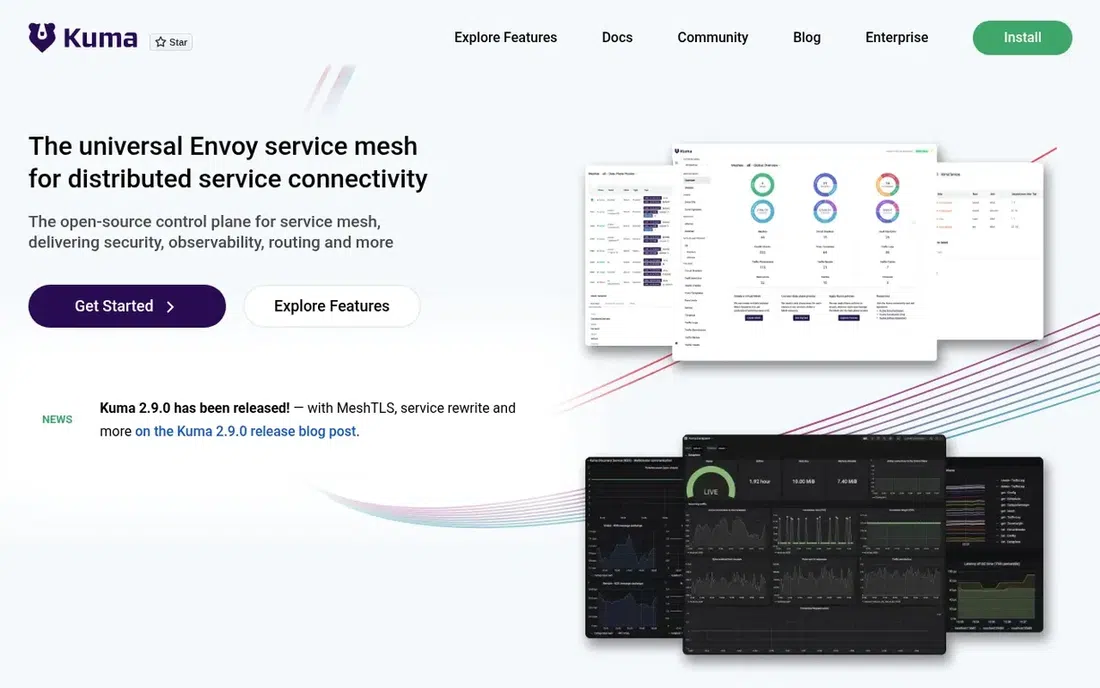
Think of Kuma for multi-cluster and multi-cloud deployments. Kuma is a service mesh that makes it possible for you to build, secure, and observe your modern service mesh. More specifically, Kuma supplies a unified control plane for policies and traffic management.
Limits to weigh: Needs Envoy knowledge.
Teams with single-cluster needs might prefer Linkerd for its simplicity. Kuma's reliance on Envoy proxy may need extra expertise, and its feature set can be complicated for straightforward use cases. Check the vendor site for Kuma pricing; none is listed in this comparison. Free options: Not stated.
- Built on Envoy
- Unified policy management
- Moderate complexity
AWS App Mesh
Best for: AWS-native service mesh
AWS App Mesh is designed for AWS-native service mesh. App Mesh is tightly coupled with AWS, which may not suit multi-cloud strategies.
Teams seeking vendor-neutral meshes might consider Istio or Linkerd instead. Pricing for AWS App Mesh is not stated here, so ask the vendor for current figures. AWS App Mesh includes a free tier.
Points against: AWS vendor lock-in.
- Managed service
- Works with ECS and EKS
- Restricted multi-cloud support
Istio
Best for: Thorough observability and security
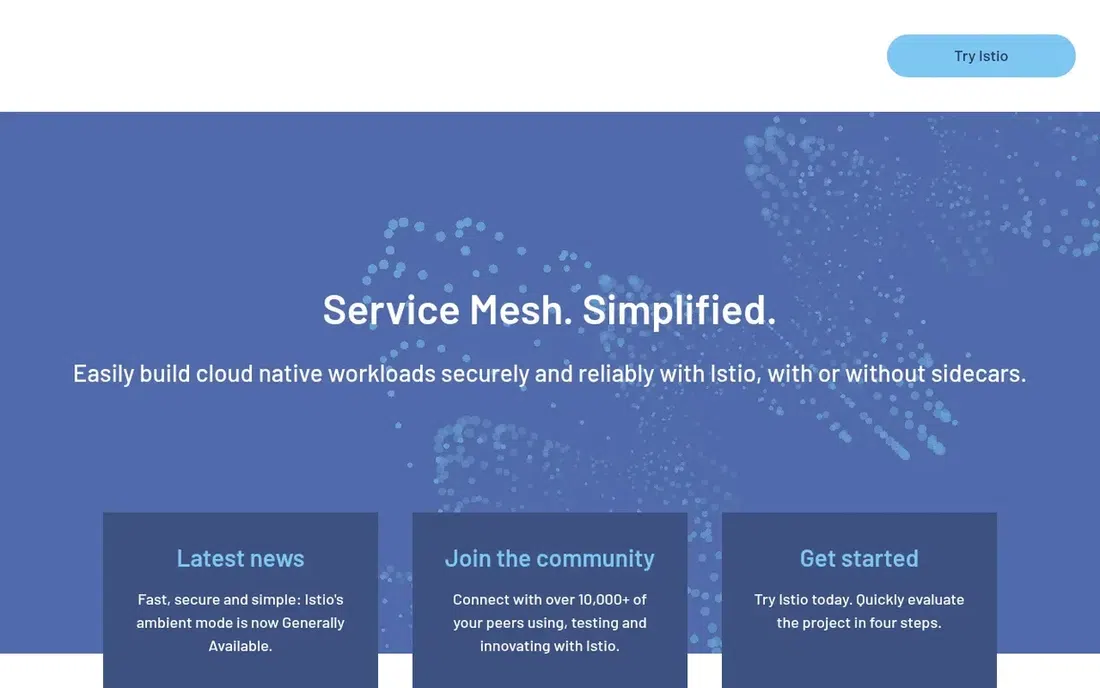
Istio serves full observability and security. Teams seeking a more straightforward mesh with less configuration overhead might consider Linkerd or Open Service Mesh instead.
The main drawbacks: Complicated to configure.
Also, Istio is well suited for organizations with dedicated platform engineering resources and complicated Kubernetes environments. Its broad feature set can introduce operational complexity and a steep ramp-up time. Istio does not show a starting price in this comparison, so check the vendor site for current pricing. As for free access: Not stated.
- Rich observability features
- Solid security capabilities
- Steep ramp-up time
Linkerd
Best for: Simplicity and simplicity
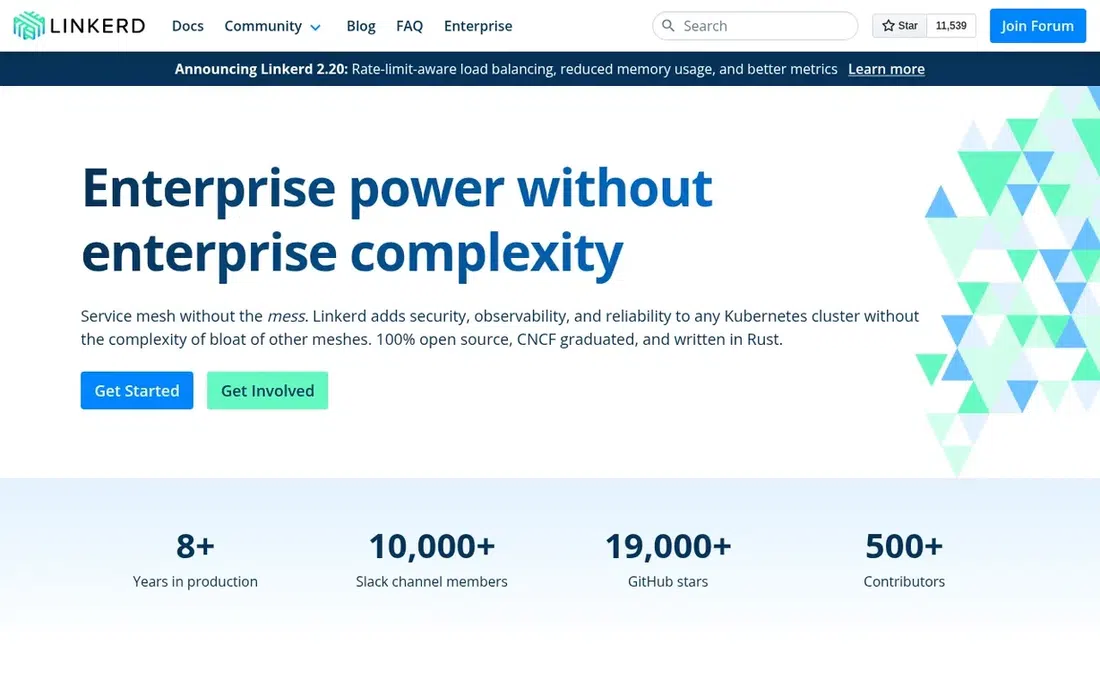
Linkerd makes the most sense for simplicity and simplicity. Linkerd brings critical security, observability, and reliability to your Kubernetes stack without code changes. It is built for system teams that prioritize simplicity and fast adoption.
Linkerd's light architecture makes it a solid fit for teams new to service meshes or those wanting to minimize operational overhead. Whereas Linkerd spans core mesh functionality, it may lack some advanced features offered by Istio, like deep traffic management policies. For everyday use, teams needing deep customization might look at Istio or Kuma. This comparison lists no price for Linkerd; ask the vendor. Free access: Not stated.
Best features of Linkerd: Brings security and reliability.
Watch-outs: Fewer advanced features.
- Light and straightforward
- No code changes required
- Restricted multi-cluster support
Open Service Mesh
Best for: Light and extensible mesh
Open Service Mesh is a good fit for light and extensible mesh. Open Service Mesh (OSM) is a light, extensible, Cloud Native service mesh.
Also, OSM implements the Service Mesh Interface (SMI) and is right for teams looking for a minimal, Kubernetes-native option. Open Service Mesh does not show a starting price in this comparison, so check the vendor site for current pricing. On free options: Not stated.
Drawbacks to consider: Restricted advanced features.
- Light architecture
- Cloud native
- Less mature ecosystem
Traefik Mesh
Best for: Integration with Traefik ecosystem
Traefik Mesh is aimed squarely at integration with Traefik ecosystem. Traefik Mesh is a service mesh built on Traefik Proxy, offering a unified control plane for APIs and workloads.
Teams not invested in Traefik might find better standalone choices elsewhere. Traefik Mesh emphasizes simplicity and infrastructure-as-code. Check the vendor site for Traefik Mesh pricing; none is listed in this comparison. Trial and free access: Not stated.
Trade-offs to know: Less community support.
- Simplified configuration
- Smooth with Traefik Proxy
- Restricted standalone features
How we compared the tools
For each of the 6 tools we noted price, free plan or trial, fit for service Mesh tools for platform teams and the main limit, using vendor pages and documentation. Prices and plan limits come from vendor pages and can change, so confirm them on the vendor site before you buy. The order reflects how well each tool fits the most common buying scenario for service Mesh tools for platform teams, then price clarity, then free plan access. It is a starting point, not a verdict.
Pre-purchase checklist
- Confirm the entry price with every vendor: no tool from Kuma to Traefik Mesh shows a fixed starting price.
- Look at the free plan from AWS App Mesh closely: its caps decide whether it is usable for real work.
- Read the limits listed for Kuma first: needs Envoy knowledge.
- A short pilot of Linkerd with your real workflow tells you more than a feature table.
- Before you load data into Open Service Mesh, check what an export looks like and who can run it.
FAQ
Can I try these tools before paying?
Often, yes. AWS App Mesh has a free plan. Use your own data and a real task during the test, and check what the free tier or trial limits before you rely on it. Each of the 6 options in this service Mesh tools for platform teams guide has its own card above with the price, free plan and limits.
Which options for service Mesh tools for platform teams have a free plan?
AWS App Mesh is the only tool in this list with a free plan. Free plans usually cap users, projects or features, so check the limits on the vendor page. All 6 picks in this service Mesh tools for platform teams comparison list a starting price, free plan details and the main limits on their cards above.
Is Kuma the right pick for everyone comparing service Mesh tools for platform teams?
No single tool suits every team. Kuma comes first because it fits multi-cluster and multi-cloud deployments, while AWS App Mesh suits AWS-native service mesh and Istio suits comprehensive observability and security. Match the tool to your own size, budget and workflow before deciding.
Do these tools publish their prices?
No. None of the tools, from Kuma to Traefik Mesh, shows a fixed starting price here, so budget time for quotes.
How does Istio compare to Linkerd for product teams?
Istio gives you a broader feature set, including advanced traffic management and security policies, but includes higher complexity. Beyond that, Linkerd prioritizes simplicity and simplicity, making it a decent choice for teams new to service meshes or those wanting minimal operational overhead.
Sources
- https://kuma.io
- https://aws.amazon.com/app-mesh
- https://istio.io
- https://linkerd.io
- https://openservicemesh.io
- https://traefik.io/traefik-mesh