5 Service Mesh Platforms for Microservices Worth Shortlisting in 2026
Searching for the best service Mesh platforms for microservices? Here are 5 options with prices and free plans. Each pick lists its main limit. Start here.
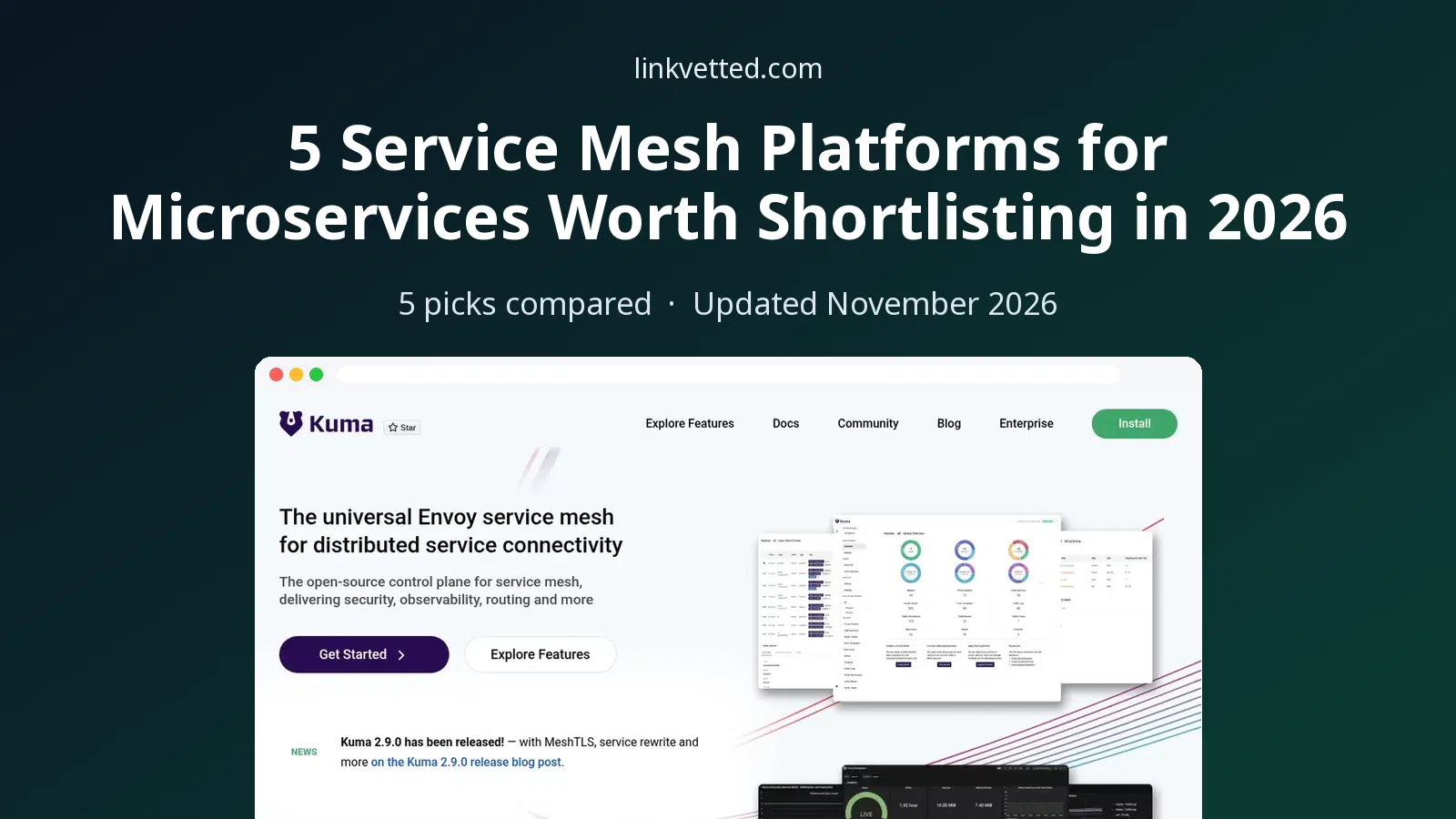
- Editor's choiceKuma
Building, securing and observing modern meshes
Starts atPricing on requestVisit kuma.ioFull review - Great alternativeTraefik Mesh
Unified control plane for APIs and workloads
Starts atPricing on requestVisit traefik.ioFull review - Also considerLinkerd
Straightforward Kubernetes mesh without code changes
Starts atPricing on requestVisit linkerd.ioFull review
Direct answer
Kuma leads the list, best for building, securing and observing modern meshes. Traefik Mesh fits unified control plane for APIs and workloads; Linkerd fits straightforward Kubernetes mesh without code changes. The remaining 2 options are covered below with pricing notes and limits. None of these vendors publish plan prices, so pricing is on request for every option.
TL;DR:
- Kuma is the opening pick, best for building, securing and observing modern meshes.
- The main caution on Traefik Mesh: Mesh is one part of a broader system.
- Every tool from Kuma to AWS App Mesh works by quote, with no list price shown.
- AWS App Mesh fits AWS-centric application networking.
Last checked November 2026. Pricing on request: vendors did not publish plan prices when this guide was last checked (November 2026), so ask each vendor for a written quote.
Quick comparison
| Tool | Best for | Starts at | Free plan? | |
|---|---|---|---|---|
| Kuma | Building, securing and observing modern meshes | Pricing on request | Not stated | Visit |
| Traefik Mesh | Unified control plane for APIs and workloads | Pricing on request | Not stated | Visit |
| Linkerd | Straightforward Kubernetes mesh without code changes | Pricing on request | Not stated | Visit |
| Istio | Full-featured mesh with solid security controls | Pricing on request | Not stated | Visit |
| AWS App Mesh | AWS-centric application networking | Pricing on request | Yes | Visit |
Service Mesh Platforms for Microservices, one by one
Short on time? The summary and table above give the quick view of 5 service Mesh platforms for microservices, and the profiles that follow give the detail behind each entry.
Kuma
Best for: Building, securing and observing modern meshes
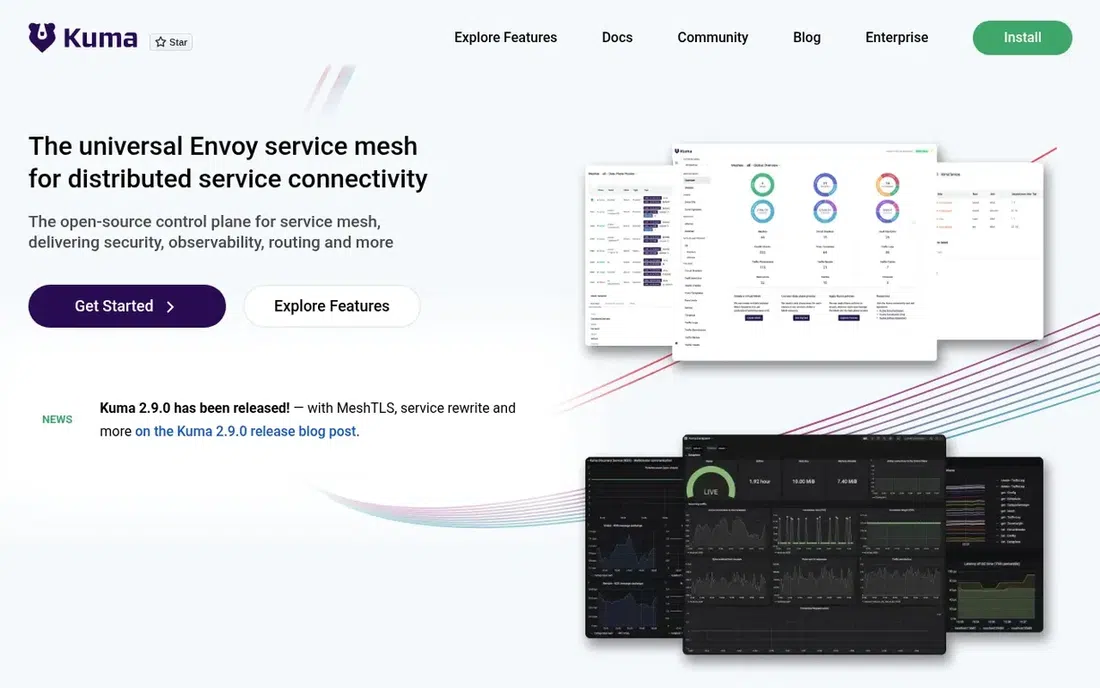
Kuma is aimed squarely at building, securing and observing modern meshes. Choose Kuma when its build, secure and observe focus matches your platform goals. In practice, where an organization already has deep investment in a different mesh ecosystem, migration effort may outweigh benefits.
Drawbacks to consider: Smaller ecosystem than bigger projects.
Kuma is presented as a system to build, secure and observe your modern service mesh. It can fit organizations standardizing mesh behavior across several environments whereas keeping security and telemetry as first-class concerns. No starting price is listed for Kuma here; confirm pricing on the vendor site. Free plan details: Not stated.
- Supports modern service mesh workflows
- Centred on mesh build and observe
- Needs mesh expertise
Traefik Mesh
Best for: Unified control plane for APIs and workloads
Traefik Mesh serves unified control plane for APIs and workloads. Traefik Mesh sits within the Traefik Labs unified control plane for APIs, models and agents, positioned to eliminate fragmentation and unify governance for any workload, anywhere. For everyday use, teams wanting a narrowly scoped mesh product may find the broader positioning unnecessary.
Drawbacks to consider: Mesh is one part of a broader product.
From a buyer's view, the vendor describes the platform as sovereign-by-design, infrastructure-as-code and composable. Worth adding: since the mesh is part of a wider product, evaluating it means assessing the entire Traefik stack instead of an isolated mesh. Traefik Mesh does not show a starting price in this comparison, so check the vendor site for current pricing. Trial and free access: Not stated.
- Unified control plane approach
- Infrastructure-as-code friendly
- Needs familiarity with Traefik tooling
Linkerd
Best for: Straightforward Kubernetes mesh without code changes
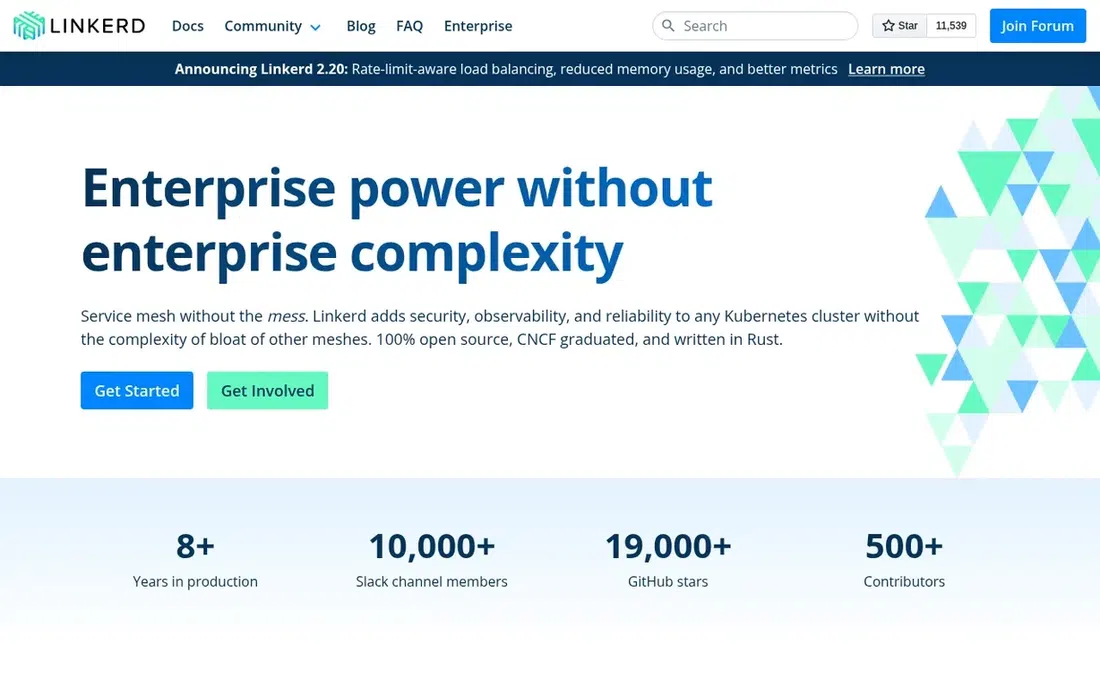
For simple Kubernetes mesh without code changes, Linkerd is a natural candidate. Linkerd layers on critical security, observability and reliability to your Kubernetes stack without code changes. It is geared toward teams that want the core benefits of a mesh, for example encrypted service communication and clear telemetry, without adopting a large configuration surface.
What to check first: Fewer advanced traffic features.
Since it centers on Kubernetes, Linkerd is less suited to mixed or non-Kubernetes environments. Organizations already standardized on Kubernetes frequently find it a natural fit for gradual rollout across namespaces and workloads. Pricing for Linkerd is not stated here, so ask the vendor for current figures. On free options: Not stated.
- Adds security and reliability
- No code changes required
- Kubernetes-focused scope
Istio
Best for: Full-featured mesh with solid security controls
Istio is aimed squarely at full-featured mesh with solid security controls. It targets organizations running plenty of microservices that require consistent traffic policy, mutual security and telemetry across services.
Smaller teams or those wanting the lightest possible footprint may prefer a more straightforward mesh. Pricing for Istio is not stated here, so ask the vendor for current figures. Free access: Not stated.
Points against: Steep ramp-up time.
- Accelerates deployment cycles
- Security in depth
- Operational complexity
AWS App Mesh
Best for: AWS-centric application networking
AWS App Mesh targets AWS-centric application networking. Teams seeking a vendor-neutral mesh may prefer a different choice.
What to check first: Less attractive for multi-cloud.
In practice, teams already invested in AWS networking and identity patterns can align mesh configuration with their existing cloud practices. Its value is most solid inside AWS, so multi-cloud or on-premises estates may find it a partial fit. AWS App Mesh shows no starting price here, so confirm the cost on the vendor site. A free plan is available with AWS App Mesh.
- Suits AWS application networking
- Monitor and control service communication
- Tied to AWS environments
Our selection method
Selection started from tools commonly considered for service Mesh platforms for microservices, then narrowed to 5 that have clear pricing information or a clear quote process. Seat minimums, billing terms and add-ons can move the real cost, so the starting prices here are a guide and not a quote. Tools are placed by general fit for service Mesh platforms for microservices, with price clarity and free access as tie-breakers. A different team can reasonably rank them differently.
Pre-purchase checklist
- Ask each vendor, from Kuma to AWS App Mesh, for a written quote; none of them publishes a starting price.
- Look at the free plan from AWS App Mesh closely: its caps decide whether it is usable for real work.
- Read the limits listed for Kuma first: needs mesh expertise.
- Ask Kuma how an export works before you move any records in; an easy exit lowers the risk.
- Look at the help docs and support options for Linkerd before you commit.
FAQ
How do I evaluate a mesh before adopting it?
Start with your environments, security requirements and telemetry stack, then map those to documented features on vendor sites. Confirm upgrade and support policies before wider rollout.
Which options for service Mesh platforms for microservices have a free plan?
AWS App Mesh is the only tool in this list with a free plan. Free plans usually cap users, projects or features, so check the limits on the vendor page.
Do these tools publish their prices?
No. None of the tools, from Kuma to AWS App Mesh, shows a fixed starting price here, so budget time for quotes.
How are the tools for service Mesh platforms for microservices ordered?
The order follows typical fit for service Mesh platforms for microservices, with Kuma first and AWS App Mesh last, then price clarity and free access. It is editorial judgement, not a score, so another team could rank the tools differently.
Can I try these options before paying?
Often, yes. AWS App Mesh has a free plan. Use your own data and a real task during the test, and check what the free tier or trial limits before you rely on it.
Sources
- https://kuma.io
- https://traefik.io/traefik-mesh
- https://linkerd.io
- https://istio.io
- https://aws.amazon.com/app-mesh