The 6 Best Scientific Data Management Systems for Remote Teams in 2026, Ranked
Searching for the best scientific data management systems for remote teams? Here are 6 options with prices and free plans. Real limits included. Pick by budget.
- Editor's choiceDotmatics
Unifying best-of-breed R&D applications
Starts atSee websiteVisit dotmatics.comFull review - Great alternative
 LabArchives
Electronic lab notebooks for research groups
Starts at$25 per student per termVisit labarchives.comFull review - Also consider
 Benchling
Biology-first cloud collaboration
Starts atSee websiteVisit benchling.comFull review
Direct answer
Dotmatics comes first here, mainly for unifying best-of-breed R&D applications. Listed starting prices: LabArchives from $25 per student per term. Look at LabArchives for electronic lab notebooks for research groups, and at Benchling for biology-first cloud collaboration. All 6 tools are compared below on price, free plan and limits.
TL;DR:
- The list opens with Dotmatics, aimed at unifying best-of-breed R&D applications.
- Pricing for Dotmatics, Benchling, LabVantage and others is quote-based, which adds a sales step before you can compare cost.
- Dotmatics, Thermo Fisher Scientific SampleManager LIMS and the 4 others all need a premium plan or a trial, since no free plan is listed.
- Before buying Dotmatics, weigh this: integration of plenty of applications can add complexity.
Last checked November 2026. Prices and plan details were read from the vendors' own pages in November 2026; vendors change plans often, so confirm the current price on the vendor site before you buy.
Quick comparison
| Tool | Best for | Starts at | Free plan? | |
|---|---|---|---|---|
| Dotmatics | Unifying best-of-breed R&D applications | See website | Not stated | Visit |
| LabArchives | Electronic lab notebooks for research groups | $25 per student per term | Free trial | Visit |
| Benchling | Biology-first cloud collaboration | See website | Not stated | Visit |
 LabVantage | End-to-end laboratory informatics | See website | Not stated | Visit |
 SciNote | Electronic lab notebook for research teams | See website | Not stated | Visit |
| Thermo Fisher Scientific SampleManager LIMS | Laboratory information management at scale | See website | Not stated | Visit |
Tool-by-tool breakdown
Short on time? The summary and table above give the quick view of 6 scientific data management systems for remote teams, and the profiles that follow give the detail behind each entry.
Dotmatics
Best for: Unifying best-of-breed R&D applications
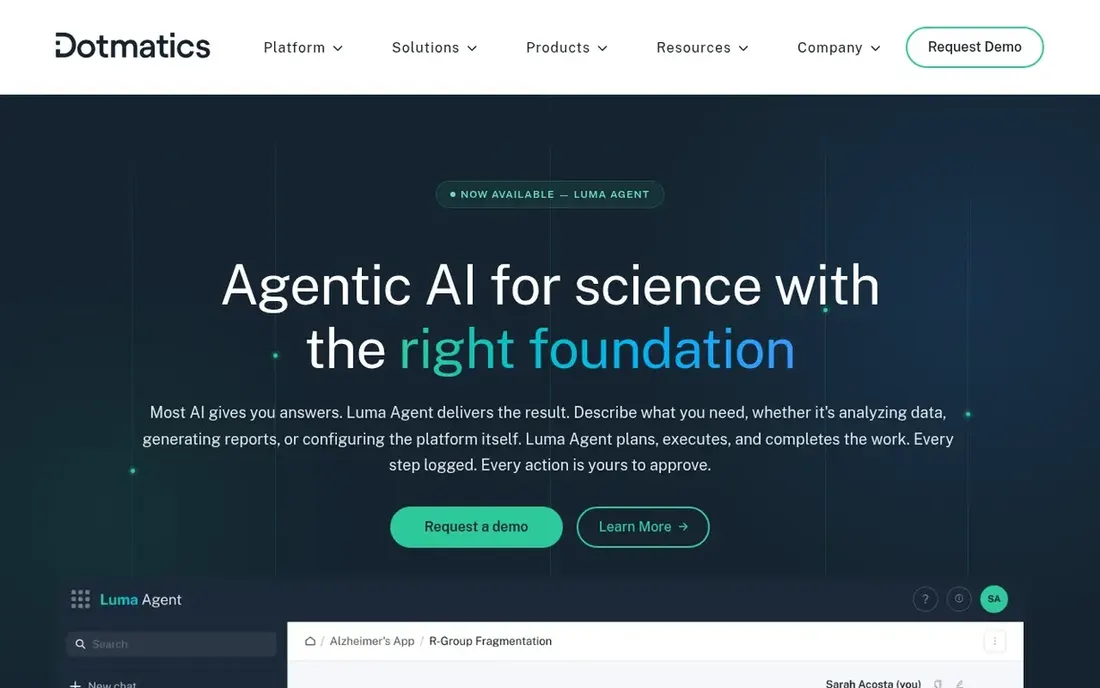
Where Dotmatics fits: unifying best-of-breed R&D applications. Dotmatics presents its R&D software as a way to unify science and data insights through best-of-breed applications.
Honest limits: May suit bigger R&D settings better.
Teams that primarily need a straightforward electronic lab notebook, or a single tightly scoped system, may prefer a more straightforward choice. No starting price is listed for Dotmatics here; confirm pricing on the vendor site. Trial and free access: Not stated.
- Geared toward digital transformation in R&D
- Focus on science and data insights
- Integration of plenty of applications can add complexity
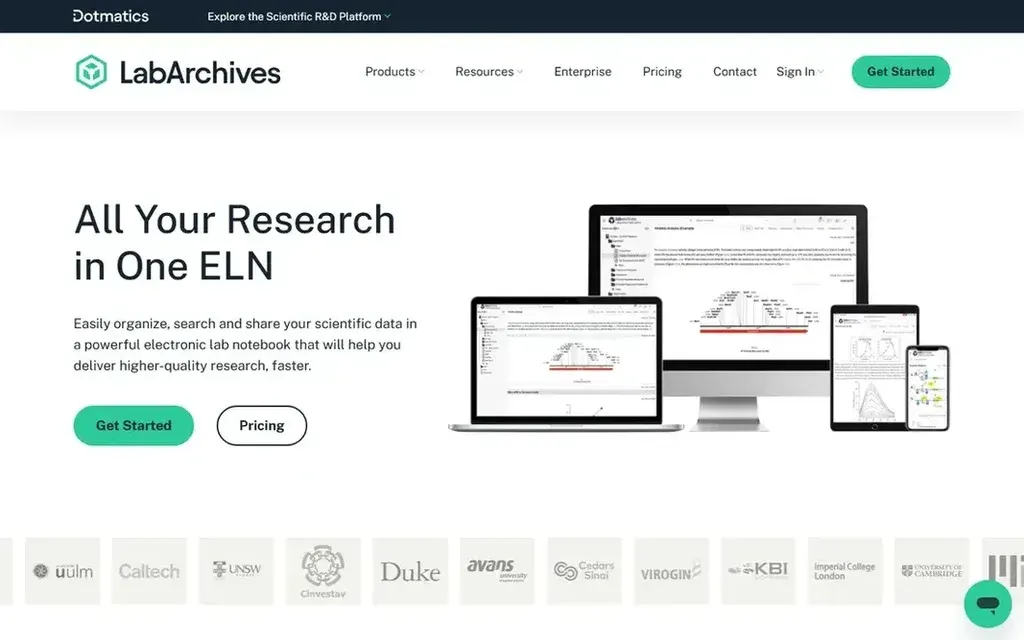
Think of LabArchives for electronic lab notebooks for research groups. Consider a wider system when the notebook is only one part of the requirement.
Where LabArchives stands out: Used by research organizations.
On cost, LabArchives starts like this: $25 per student per term. On free options: Free trial. Drawbacks to consider: May need extras for broader lab operations.
- Electronic laboratory notebook focus
- Search and share data
- Narrower than a full informatics suite
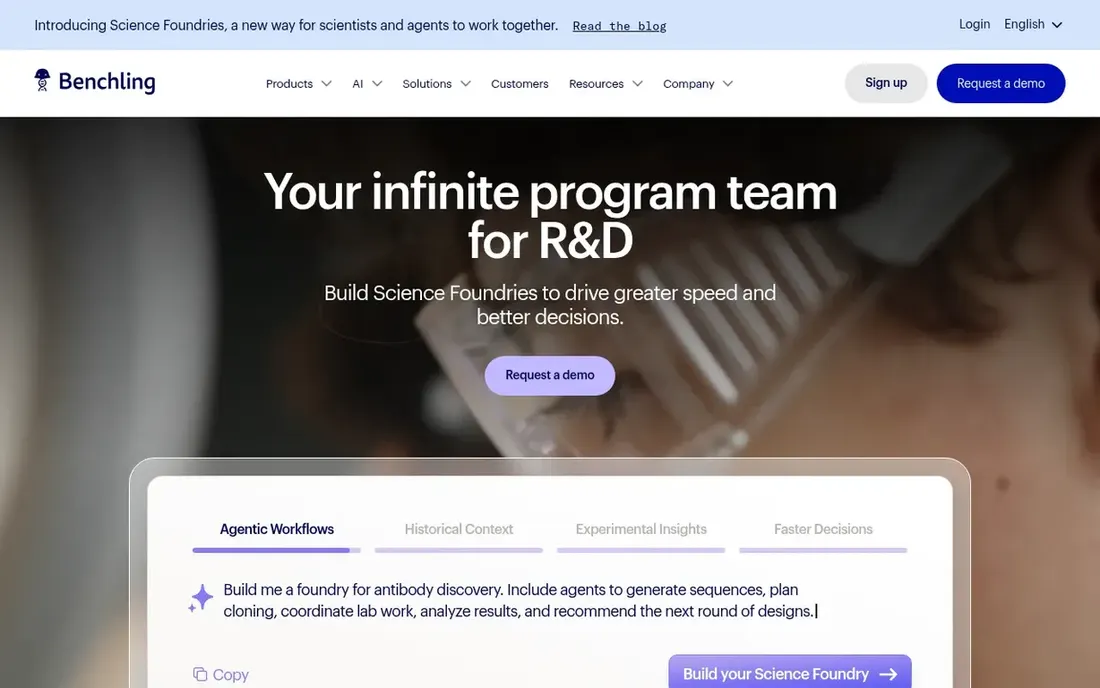
For biology-first cloud collaboration, Benchling is a natural candidate. Since the product is oriented toward biology, teams in chemistry, physics or other disciplines may find the fit less direct and should check whether their workflows are supported.
Downsides: Wide system may need onboarding effort.
Worth adding: consider other choices when you need a general-purpose electronic lab notebook or a wide laboratory informatics suite instead. On top of that, Benchling is a cloud-based product for biotechnology research and development, described by the vendor as a biology-first product for scientific data, collaboration and insights. This comparison lists no price for Benchling; ask the vendor. As for free access: Not stated.
- Cloud-based system
- Aimed at scientific data and collaboration
- Emphasis on biology may not fit other fields
LabVantage targets end-to-end laboratory informatics. LabVantage supplies an end-to-end laboratory informatics product intended to work for operators, QC labs and leadership alike.
Downsides: Wide scope may need planning.
Teams with narrow needs, for example a straightforward electronic notebook, may find a smaller choice simpler to adopt. LabVantage does not show a starting price in this comparison, so check the vendor site for current pricing. As for free access: Not stated.
- Spans QC lab use cases
- End-to-end informatics product
- May be heavy for straightforward research needs
In short, SciNote is for electronic lab notebook for research teams. SciNote is an electronic lab notebook pitched at helping research teams organize protocols, experiments and leads to a shared digital space.
Best features of SciNote: Suited to collaborative lab records.
Drawbacks to consider: May not include full lab informatics needs. Worth adding: teams needing sample tracking, instrument integration or enterprise-scale laboratory operations may find a notebook alone insufficient and should compare wider products. More specifically, check the vendor site for current capabilities before deciding. No starting price is listed for SciNote here; confirm pricing on the vendor site. On free options: Not stated.
- Electronic lab notebook focus
- Geared toward organizing research work
- Restricted public detail on the homepage
Thermo Fisher Scientific SampleManager LIMS
Best for: Laboratory information management at scale
Thermo Fisher Scientific SampleManager LIMS is aimed squarely at laboratory information management at scale. SampleManager LIMS is Thermo Fisher Scientific's laboratory information management system, part of a company that serves laboratory, pharmaceutical and biotechnology customers.
What to check first: May be more than small teams need.
In daily use, a LIMS deployment can involve significant setup and process design, which may outweigh the benefits for small or lightly regulated teams. Pricing for Thermo Fisher Scientific SampleManager LIMS is not stated here, so ask the vendor for current figures. As for free access: Not stated.
- Part of a wide scientific vendor portfolio
- Laboratory information management focus
- LIMS deployments can be involved
How we chose
Pre-purchase checklist
- Confirm the entry price on the vendor page. For Dotmatics, Benchling, LabVantage and others that means a quote rather than a fixed price.
- Use real work to test the free trial from LabArchives, rather than a demo project.
- Read the limits listed for Dotmatics first: integration of many applications can add complexity.
- A short pilot of Thermo Fisher Scientific SampleManager LIMS with your real workflow tells you more than a feature table.
- Find out whether the entry plan of SciNote covers your must-haves or only a trimmed-down version.
FAQ
Do these tools publish their prices?
Not all of them. Dotmatics, Benchling, LabVantage and others publish no starting price, so expect a quote request for those. The rest, LabArchives included, show a starting price, though seats and billing terms still change the final cost.
How are the tools for scientific data management systems for remote teams ordered?
Dotmatics sits first and Thermo Fisher Scientific SampleManager LIMS last because the order follows typical fit for scientific data management systems for remote teams, then price clarity and free access. It is a judgement call, so read each profile for fit and limits.
Is Dotmatics the right pick for everyone comparing scientific data management systems for remote teams?
No single tool suits every team. Dotmatics comes first because it fits unifying best-of-breed R&D applications, while LabArchives suits electronic lab notebooks for research groups and Benchling suits biology-first cloud collaboration. Match the tool to your own size, budget and workflow before deciding.
Can I try these tools before paying?
Often, yes. LabArchives offers a free trial. Use your own data and a real task during the test, and check what the free tier or trial limits before you rely on it. For the full picture, the cards above cover all 6 entries of this scientific data management systems for remote teams list, including price, free plan and limits.
How do biology-focused products differ from general lab informatics?
A biology-first system like Benchling is built around biological research data and collaboration. General informatics products like Dotmatics or LabVantage aim to unify numerous applications and lab processes, which can suit multidisciplinary organizations.
Sources
- https://www.dotmatics.com
- https://www.labarchives.com
- https://www.benchling.com
- https://www.labvantage.com
- https://www.scinote.net
- https://www.thermofisher.com