Best Emissions Management Software in 2026: 8 Platforms Compared
Compare the best emissions management software for carbon accounting, Scope 3, CSRD, and audit-ready reporting in this detailed 2026 guide for teams today.

- Editor's choice
 Watershed
Large enterprise climate programs
Starts atSee websiteVisit watershed.comFull review - Great alternative
 Persefoni
Starting free and scaling up
Starts atFreeVisit persefoni.comFull review - Also consider
 Greenly
Mid-market companies in Europe
Starts atSee websiteVisit greenly.earthFull review
TL;DR:
- Persefoni is the clearest free starting point, while Watershed and Sphera suit large enterprises with complex reporting needs.
- Most of your footprint often sits in Scope 3, so supplier data tools matter more than a polished dashboard alone.
- Audit trails and data lineage separate serious platforms from spreadsheets, especially when disclosures face outside review.
- Expect quote based enterprise pricing, and budget for implementation time as well as the annual subscription.
Quick comparison
| Tool | Best for | Starts at | Free plan? | |
|---|---|---|---|---|
| Watershed | Large enterprise climate programs | See website | No | Visit |
| Persefoni | Starting free and scaling up | Free | Yes | Visit |
| Greenly | Mid-market companies in Europe | See website | No | Visit |
 Sweep | Complex groups with many units | See website | No | Visit |
 Normative | Value chain and supplier data | See website | No | Visit |
 Plan A | CSRD focused mid-market teams | See website | No | Visit |
 IBM Envizi | Large IBM centered organizations | See website | No | Visit |
 Sphera | Enterprises with EHS programs | See website | No | Visit |
The best emissions management software
Emissions management software helps a company measure greenhouse gas emissions, track reduction plans, and prepare reports for regulators, customers, and investors. The right platform depends on company size, reporting rules, and how much of the footprint comes from suppliers.
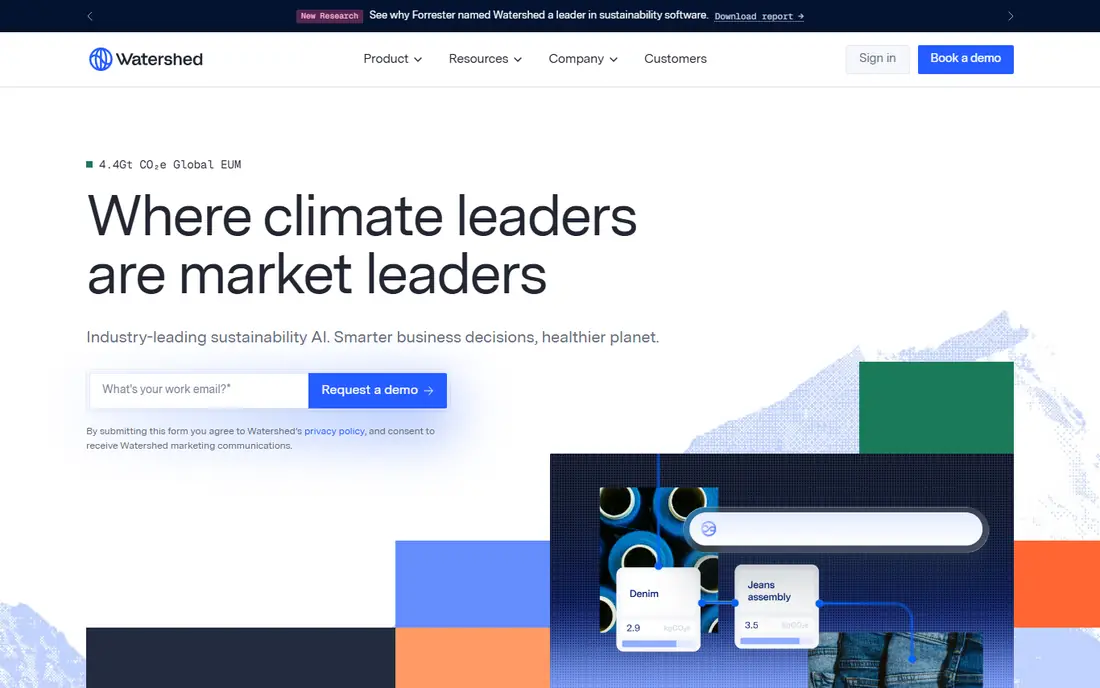
Watershed covers measure, report, and act in one platform, with granular carbon measurement, data lineage, and tools for reduction planning. It is frequently shortlisted by large companies that need board ready disclosure and a system that can handle many entities and data sources.
We see it as a benchmark for large enterprises, not a starting point for small firms. The sales led process and implementation effort mean smaller teams should look elsewhere first, while large teams with a serious climate program will find the depth worth the cost.
- Audit grade measurement across scopes
- Automated report drafting
- Carbon removal marketplace
- Enterprise pricing with no public price list
- Implementation is a major project
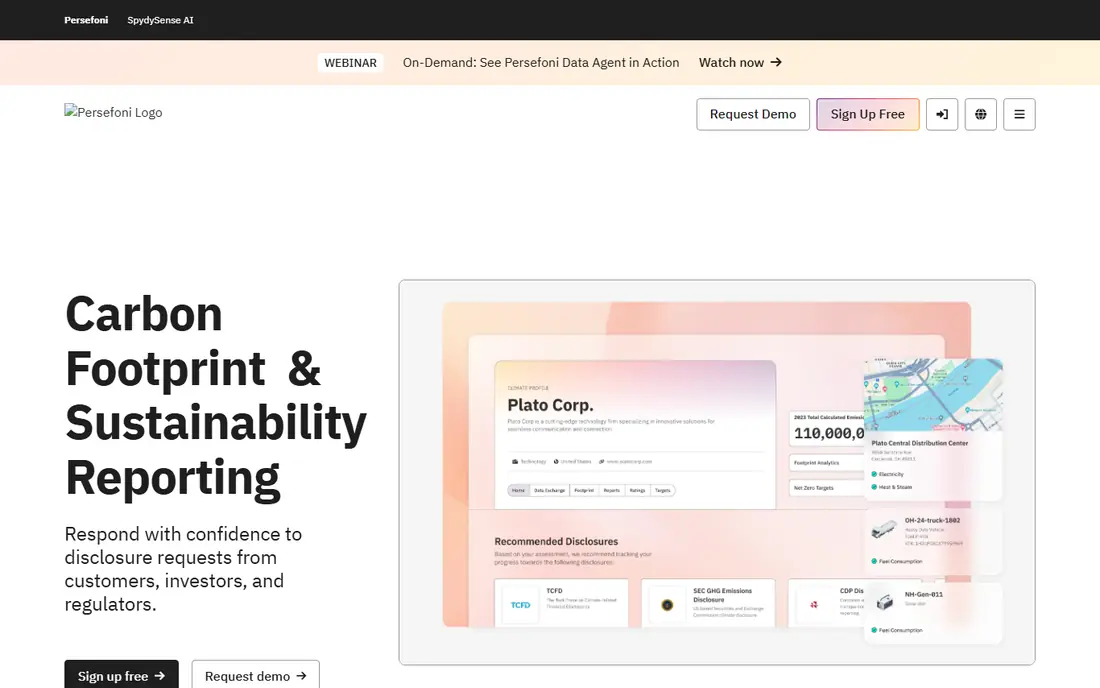
Persefoni stands out because its free Pro tier lets a company build a real carbon footprint without paying first. That is rare in this category, and it makes the platform a sensible first step for a team that wants to understand its emissions before committing budget. The paid Advanced tier adds deeper features and dedicated expert support.
The audit focus is the other reason to consider it. Every number carries lineage from source to disclosure, which matters for financial institutions and regulated companies facing scrutiny. Just be clear that the free tier is limited, and enterprise pricing will be a separate conversation.
- Free Pro tier for a first footprint
- Strong audit trail
- Popular with financial firms
- Full enterprise tier is quote based
- Advanced features need the paid tier
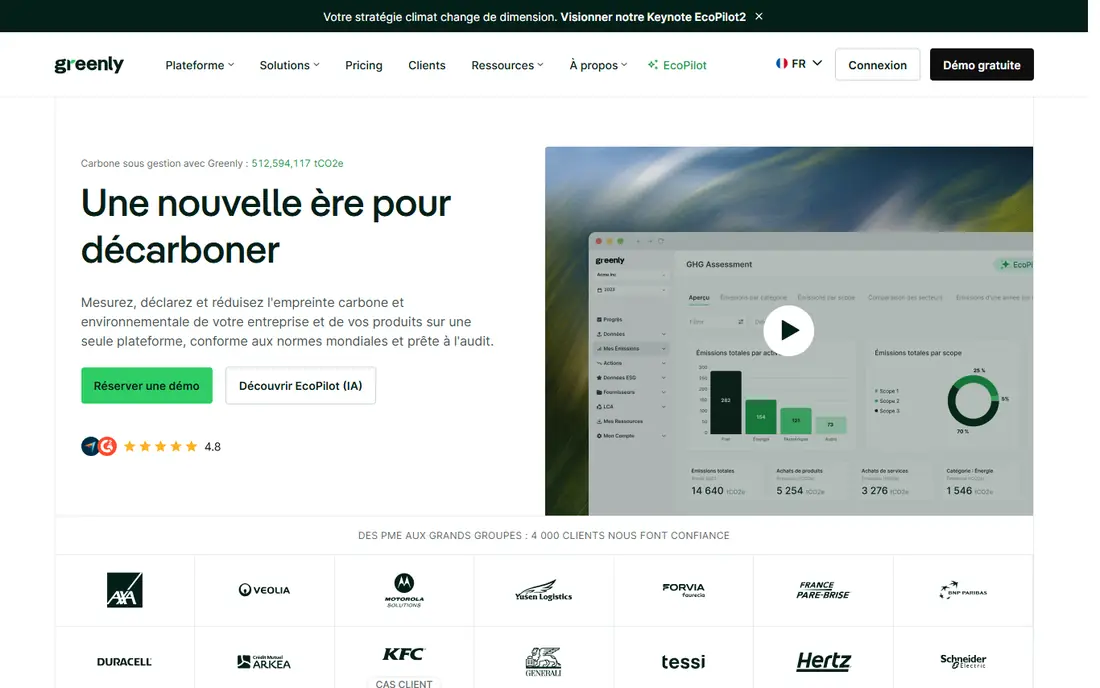
Greenly is aimed at small and mid sized companies, especially in Europe, that need a guided route to a first footprint and to CSRD reporting. It combines carbon accounting with supplier engagement and reporting workflows, without assuming a large sustainability team.
It fits a mid-market company that wants to move from spreadsheets to a managed platform. Very large firms with complex value chains may need a platform with deeper supplier network tools, but for many mid-market teams Greenly hits the right balance of guidance and cost.
- Guided carbon accounting for smaller teams
- Supplier and reporting workflows
- CSRD support
- Scope 3 depth is moderate for very complex supply chains
- Pricing is quote based
Sweep is built for organizations with many business units, sites, and data owners. It centralizes carbon, ESG, and supply chain data, with validation rules that help a central team trust numbers coming from many contributors. Supplier data collection is a core strength, which matters when Scope 3 stalls other projects.
We recommend it for complex groups that need governance as much as calculation. Smaller companies may find the structure more than they need, and should test whether the workflow fits a small team before signing.
- Central carbon, ESG, and supply chain data
- Validation and governance controls
- Supplier collection tools
- Quote based pricing
- Setup needs care across many business units
Normative focuses on the value chain, where most emissions sit for many companies. Its automated accounting and supplier engagement tools help teams collect data from suppliers rather than estimating everything from spend. That approach improves accuracy over time, which is important for targets that will be checked later.
It suits mid sized and large companies with a real supply chain footprint. Teams with mostly direct energy emissions may get similar results from a simpler platform at lower cost, so match the tool to where your emissions actually come from.
- Automated value chain accounting
- Supplier engagement network
- CSRD and SBTi support
- Enterprise focused pricing
- Smaller firms may need more hand holding
Plan A is built around CSRD driven reporting for European mid-market and larger companies. It covers all three scopes, supports decarbonization forecasting, and helps teams turn a footprint into a reduction plan with actions and timelines.
We would shortlist it for companies facing CSRD deadlines that want a platform designed for that rule set from the start. Companies outside Europe should check how well its reporting templates match their local disclosure needs before committing.
- CSRD ready accounting across scopes
- Decarbonization forecasting
- Guided reduction planning
- Quote based pricing
- EU focus may suit some teams less than others
IBM Envizi is an enterprise sustainability platform for large, multi entity organizations that need to standardize emissions data across countries and business units. It handles complex data collection, reporting, and audit needs, and fits naturally where IBM systems are already in use.
The trade off is scale. Implementation and governance effort are real, and a small team will likely find a lighter platform faster to adopt. For a multinational that needs one system of record, Envizi is a credible enterprise choice.
- Multi entity and global reporting depth
- Strong data management
- Fits wider IBM estates
- Enterprise pricing and complexity
- Smaller teams may find it heavy
Sphera combines environmental, health, safety, and sustainability data in one enterprise platform. For companies already running EHS programs on Sphera, adding emissions management in the same system avoids a separate data silo and keeps audit trails in one place.
It fits large industrial and enterprise teams with existing EHS needs. A company that only needs carbon accounting may find a focused platform simpler, but for integrated risk and sustainability reporting, Sphera has a clear case.
- Integrated EHS, risk, and sustainability data
- Strong data trails
- Broad enterprise coverage
- Quote based pricing
- Breadth can mean a longer rollout
How we picked these
We compared official feature pages, pricing information, and public reviews for platforms that measure emissions and support disclosure. We favored platforms with current products, clear scope coverage, and a track record in real reporting programs. We did not claim hands-on testing. Where pricing was not published, we wrote See website rather than guessing a figure.
How to choose an emissions platform
Start with your reporting duty, not the feature list. List the frameworks you must report under, such as GHG Protocol, CSRD, or CDP, and check which templates each platform supports out of the box. Then map your emissions: energy, travel, purchased goods, and financed emissions each need different data sources.
Data, audit, and reduction
Ask how data enters the system: utility bills, travel systems, procurement, and supplier surveys each need a different workflow. Check audit features: data lineage, approval steps, and change history. Finally, ask how the platform supports reduction, not just reporting. Forecasting, target tracking, and supplier actions turn a footprint into a plan, which is what boards and customers increasingly expect.
Cost and implementation
Enterprise platforms in this category are usually quote based, with annual costs driven by entities, data sources, and support level. Ask for implementation time, data migration help, and training in the quote, not just the subscription. A platform that is cheap to buy but slow to implement can cost more in staff time than a pricier platform that goes live on schedule.
FAQ
What are Scope 1, 2, and 3 emissions?
Scope 1 covers direct emissions from sources a company owns, such as fuel burned on site. Scope 2 covers indirect emissions from purchased energy, such as electricity. Scope 3 covers all other indirect emissions in the value chain, including purchased goods, travel, and product use, and it is often the largest share.
Is emissions software only for large companies?
No, but the right platform changes with size. Small companies can start with a free tier such as Persefoni Pro or a guided mid-market tool, while large companies need multi entity reporting and audit controls. The key is to start measuring with a system that can grow, rather than waiting for a perfect platform.
How long does implementation take?
It depends on data complexity. A small company with clean energy and travel data may get a first footprint in weeks, while a large multinational with many entities and suppliers may take months. Ask vendors for a timeline based on your data sources, not a generic promise.
Can software guarantee my emissions numbers are correct?
No software can guarantee correctness on its own. Accuracy depends on data quality, emission factors, and supplier information. Good platforms help with validation, lineage, and audit trails, but a human review of key inputs and assumptions remains essential before a disclosure is published.
What is the difference between carbon accounting and emissions management?
Carbon accounting is the measurement of emissions, usually in carbon dioxide equivalent. Emissions management is wider: it includes accounting plus target setting, reduction planning, supplier engagement, and reporting. Most platforms on this list cover both, but their depth in reduction planning varies.