Top 6 Runtime Software for 2026 (Prices and Free Plans)
6 tools for the best runtime software, compared on pricing, free plans and best-fit use. Trade-offs are spelled out for each entry. Updated November 2026.
- Editor's choice
 Go
Secure, scalable system services
Starts atPricing on requestVisit go.devFull review - Great alternativeMicrosoft.NET
Building modern cross-platform apps
Starts atPricing on requestVisit dotnet.microsoft.comFull review - Also considerJava (Oracle JDK)
Enterprise and cross-platform applications
Starts atPricing on requestVisit oracle.comFull review
Direct answer
Go comes first here, mainly for secure, scalable system services. Microsoft.NET fits building modern cross-platform apps; Java (Oracle JDK) fits enterprise and cross-platform applications. All 6 tools are compared below on fit, free plan and limits. None of these vendors publish plan prices, so pricing is on request for every option.
TL;DR:
- Number one here is Go, a fit for secure, scalable system services.
- Before buying Java (Oracle JDK), weigh this: Verbose syntax compared with some languages.
- Python is the one to check for scripting, automation, and data work.
- A permanent free plan is missing from all 6 tools, Go and Python included; plan for a trial or a premium start.
- No starting price is shown for any of the 6 tools, Go and Python included, so plan time for sales calls.
Last checked November 2026. Pricing on request: vendors did not publish plan prices when this guide was last checked (November 2026), so ask each vendor for a written quote.
Quick comparison
| Tool | Best for | Starts at | Free plan? | |
|---|---|---|---|---|
| Go | Secure, scalable system services | Pricing on request | Not stated | Visit |
| Microsoft.NET | Building modern cross-platform apps | Pricing on request | Not stated | Visit |
| Java (Oracle JDK) | Enterprise and cross-platform applications | Pricing on request | Not stated | Visit |
| Node.js | JavaScript on servers and tools | Pricing on request | Not stated | Visit |
 PHP | Server-side web development | Pricing on request | Not stated | Visit |
 Python | Scripting, automation, and data work | Pricing on request | Not stated | Visit |
6 options for runtime software in detail
Choosing runtime software usually comes down to price, fit and limits. This LinkVetted guide sets 6 tools side by side on those three points, with the facts kept short and checkable.
Choose Go for secure, scalable system services. It is aimed at clarity and efficiency, with built-in support for concurrent programming.
It fits teams building network services, cloud infrastructure, and distributed systems where performance and simplicity matter. Go does not show a starting price in this comparison, so check the vendor site for current pricing. Trial and free access: Not stated.
Points against: Restricted generics compared with some languages.
- Compiles to standalone binaries
- Built-in concurrency support
- Smaller ecosystem than older languages
Microsoft.NET
Best for: Building modern cross-platform apps
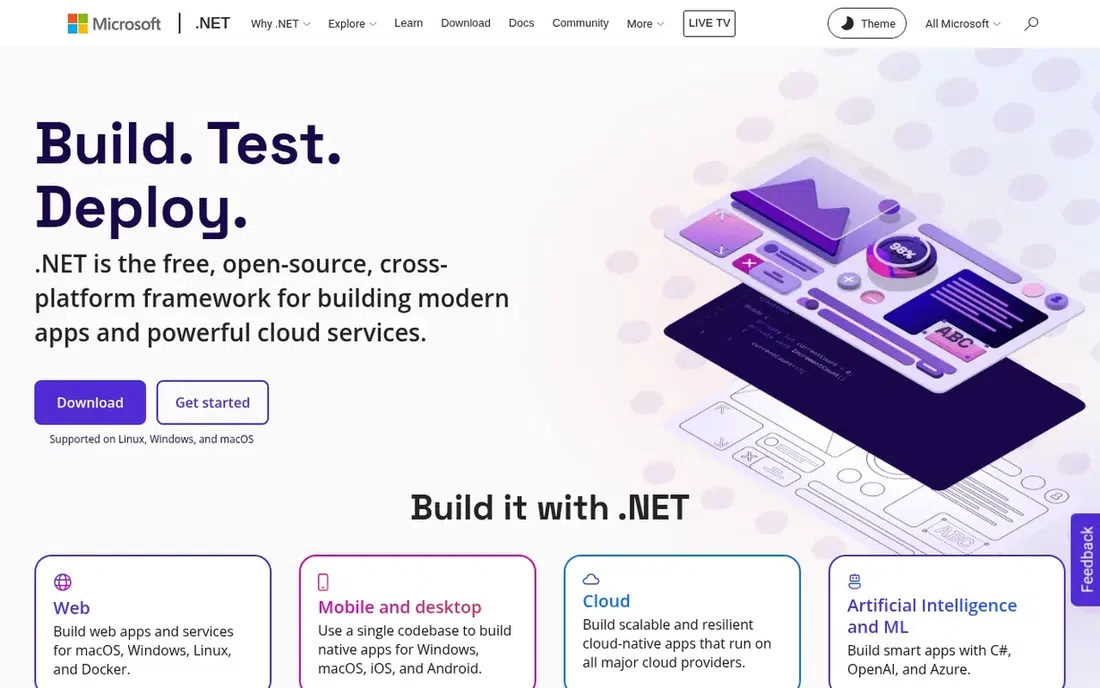
Choose Microsoft.NET for building modern cross-platform apps. Microsoft.NET is a developer system with tools and libraries for building any type of app, including web, mobile, desktop, games, IoT, cloud, and microservices.
Honest limits: Primarily C# and related languages.
More specifically, Whereas.NET is versatile, it is most often used with C# and related languages, so teams using other stacks may face a ramp-up time. For everyday use, for light scripting tasks, a more straightforward runtime might be more appropriate. Microsoft.NET does not show a starting price in this comparison, so check the vendor site for current pricing. As for free access: Not stated.
- Backed by broad libraries
- Tools for web, mobile, desktop, cloud
- Can be heavier for straightforward scripts
Java (Oracle JDK)
Best for: Enterprise and cross-platform applications
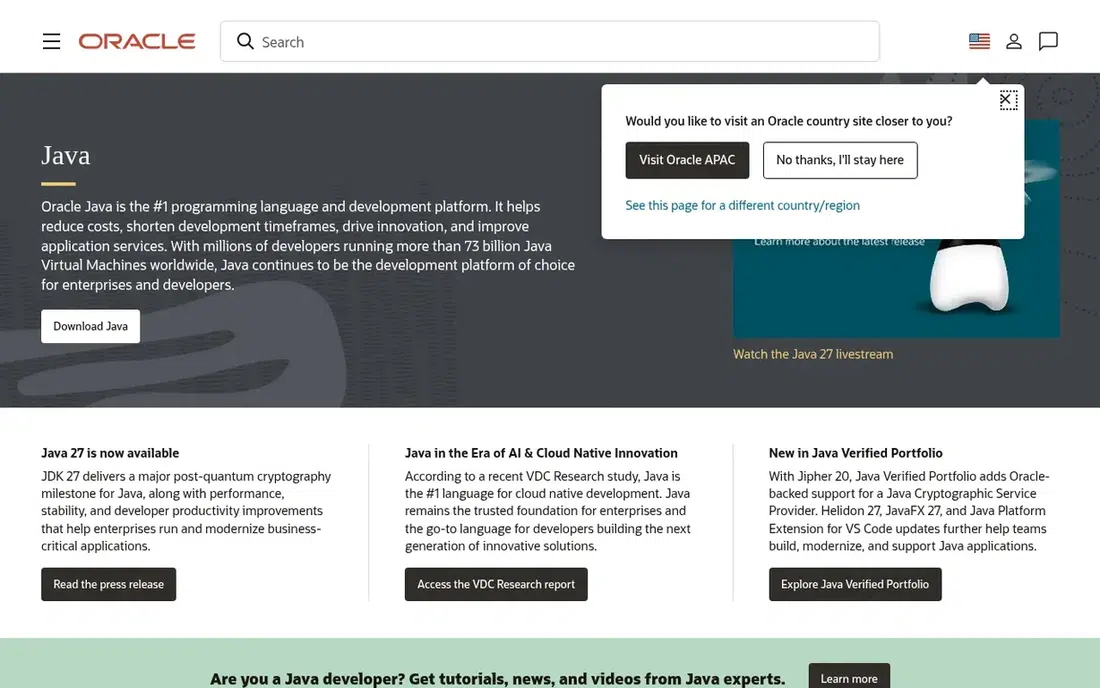
Choose Java (Oracle JDK) for enterprise and cross-platform applications. Oracle describes Java software as reducing costs and improving application services. Worth adding: Java can feel verbose for small projects, and the Oracle JDK has specific licensing terms that organizations should verify.
Points against: Oracle JDK licensing needs review.
Where it shines: Long-standing. On top of that, Java (Oracle JDK) is a development system and runtime for building applications. If you need a more concise language or are building light scripts, other runtimes may be more straightforward. Java (Oracle JDK) shows no starting price here, so confirm the cost on the vendor site. As for free access: Not stated.
- Capable tooling and libraries
- Widely used system
- Verbose syntax compared with some languages
Node.js
Best for: JavaScript on servers and tools
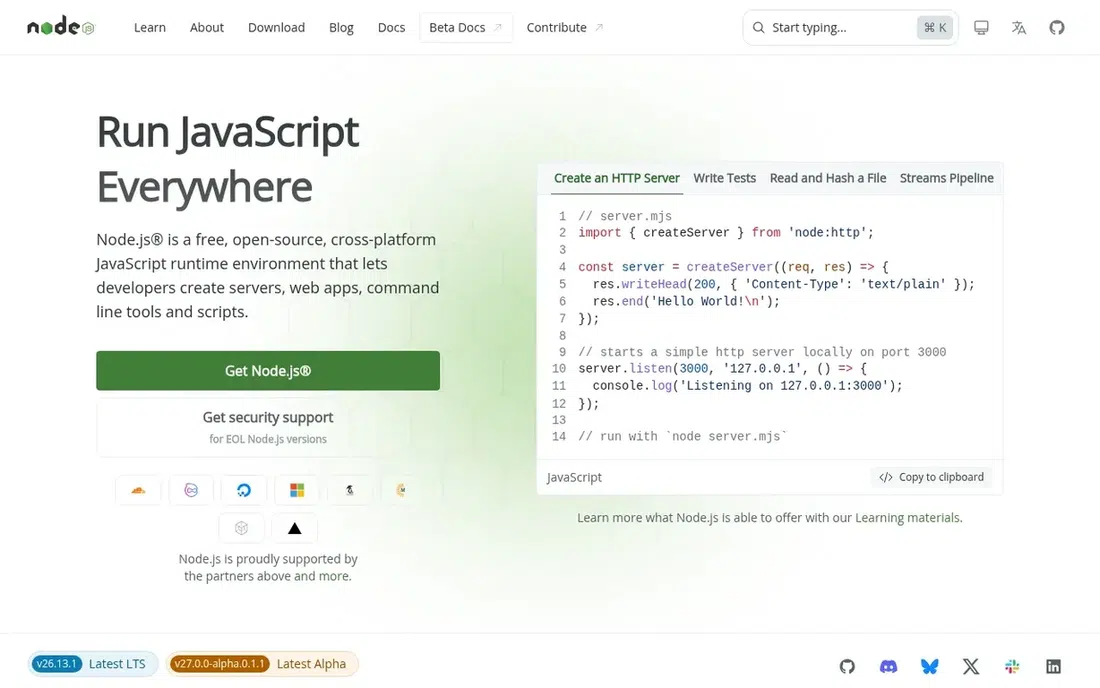
Node.js is aimed squarely at JavaScript on servers and tools. If your project is primarily numeric or needs true multithreading, consider a runtime aimed at those workloads instead. From a buyer's view, node.js is a free, open-source, cross-platform JavaScript runtime environment.
It lets developers build servers, web applications, command line tools, and scripts using JavaScript. Since Node.js uses a single-threaded event loop, heavy CPU-bound work can block other requests, so it may not be well suited to compute-intensive services. Check the vendor site for Node.js pricing; none is listed in this comparison. As for free access: Not stated.
Where it is weaker: Single-threaded model for CPU tasks.
What users get: Supports servers.
- Runs JavaScript across products
- Open source and free to use
- Callback patterns can complicate code
PHP serves server-side web development. PHP has faced criticism for inconsistent function naming and legacy patterns, though modern versions address many concerns.
Watch-outs: Inconsistent naming and APIs.
Also, PHP is a widely used general-purpose scripting language that powers everything from your blog to the most widely used websites in the world. Check the vendor site for PHP pricing; none is listed in this comparison. Free access: Not stated.
- Widely supported by hosting providers
- Embedded in HTML
- Perceived as less modern by some
Where Python fits: scripting, automation, and data work. Python is a programming language runtime known for its clear, readable syntax and wide applicability.
The main drawbacks: Packaging and environment management can vary.
If raw performance or strict type safety is a top priority, consider a compiled language runtime instead. Python may not be the fastest choice for certain CPU-intensive workloads, and managing dependencies across projects can need care. Pricing for Python is not stated here, so ask the vendor for current figures. Free access: Not stated.
- Readable and beginner-friendly syntax
- Large standard library
- Slower for some CPU-bound tasks
How we compared the tools
The comparison looks at four things: starting price, free access, how well the feature set matches runtime software, and the main limit of each tool. Treat prices as a snapshot: vendors change plans often, so check the vendor site for the figure that applies today. The sequence is a judgement call: typical use case first, then pricing transparency, then free access. Use the profiles to check fit.
What to check before you buy
- Ask each vendor, from Go to Python, for a written quote; none of them publishes a starting price.
- Before choosing Go, weigh its main limit: smaller ecosystem than older languages.
- Ask the daily users to test Node.js on a live task before you roll it out to everyone.
- Verify that exporting from Java (Oracle JDK) is possible on your plan and covers all your records.
- Find out whether the entry plan of Python covers your must-haves or only a trimmed-down version.
FAQ
Do these tools publish their prices?
No. None of the tools, from Go to Python, shows a fixed starting price here, so budget time for quotes.
Can I use multiple runtimes in one project?
Yes, numerous projects use several runtimes for different components. For instance, a web application might use Node.js for the frontend server and Python for data processing.
Can I try these options before paying?
Not by default. None of the tools, from Go to Python, lists a free plan or a free trial here, so ask each vendor for a demo before committing.
How do I choose between Python and Go?
Python is frequently chosen for its readability and wide library ecosystem, making it right for scripting, data work, and web development. Consider your project's performance needs and your team's familiarity with each language.
Is Go the right pick for everyone comparing runtime software?
No single tool suits every team. Go comes first because it fits secure, scalable system services, while Microsoft.NET suits building modern cross-platform apps and Java (Oracle JDK) suits enterprise and cross-platform applications. Match the tool to your own size, budget and workflow before deciding.
Which runtime is best for web development?
Start with Go if you need secure, scalable system services. Microsoft.NET is the better match for building modern cross-platform apps, and Java (Oracle JDK) for enterprise and cross-platform applications. The best choice depends on budget, team size and workflow.
Sources
- https://go.dev
- https://dotnet.microsoft.com
- https://www.oracle.com/java
- https://nodejs.org
- https://www.php.net
- https://www.python.org