Top-Rated Property Management Software Options in 2026: 8 Tools Compared
Compare the top-rated property management software options for landlords and managers, with rent, accounting, maintenance, and pricing details in 2026.
- Editor's choice
 AppFolio
Large portfolios
Starts at$1.49 per unit per monthVisit appfolio.comFull review - Great alternative
 Buildium
Growing residential managers
Starts at$62 per monthVisit buildium.comFull review - Also consider
 DoorLoop
Modern, easy-to-learn system
Starts atSee websiteVisit doorloop.comFull review
TL;DR:
- Buildium is our pick for growing residential managers, with full accounting, owner portals, and maintenance in one structured system.
- AppFolio suits larger portfolios, with automation and reporting depth that smaller tools cannot match at scale.
- RentRedi is the best flat-rate option for self-managing landlords, covering unlimited units for one monthly price.
- TurboTenant and Innago are the best free starting points for independent landlords with a small number of units.
Quick comparison
| Tool | Best for | Starts at | Free plan? | |
|---|---|---|---|---|
| AppFolio | Large portfolios | $1.49 per unit per month | No | Visit |
| Buildium | Growing residential managers | $62 per month | Free trial | Visit |
| DoorLoop | Modern, easy-to-learn system | See website | No | Visit |
 Yardi Breeze | Small portfolios with Yardi accounting | $1 per unit per month | No | Visit |
 RentRedi | Flat-rate landlords | $12 per month billed annually | No | Visit |
 TurboTenant | Independent landlords | Free | Yes | Visit |
 Innago | Free landlord tools | Free | Yes | Visit |
 TenantCloud | Budget accounting depth | $15 per month billed annually | Free trial | Visit |
The best property management software options
Property management software handles listings, applications, rent collection, accounting, maintenance, and owner reporting. These eight tools cover independent landlords through large management companies, with different pricing models to match portfolio size.
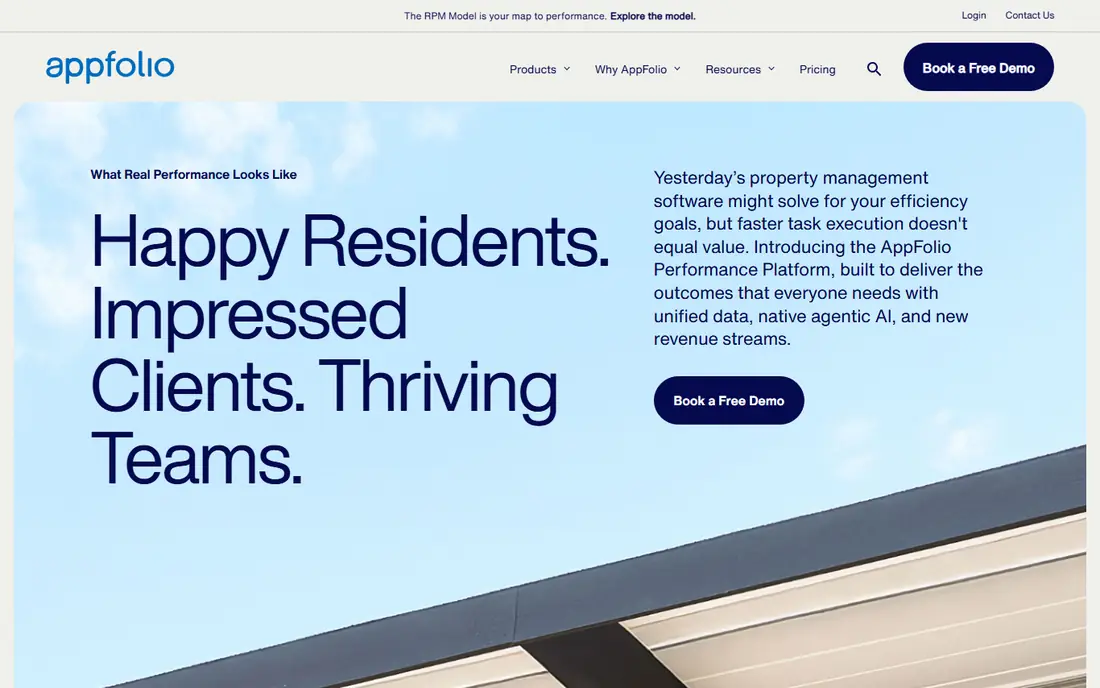
AppFolio is built for professional management companies, with automation for leasing, rent collection, maintenance, and owner statements. Resident and owner portals keep communication in one place, and reporting depth helps firms manage hundreds of units across properties. AI-assisted accounting features speed up bookkeeping tasks that otherwise consume staff time.
The 50-unit minimum on Core pricing rules out most independent landlords, and per-unit costs add up as portfolios grow. For firms above that threshold, AppFolio offers a level of automation and reporting that smaller tools struggle to match.
- Strong automation and reporting
- Resident and owner portals
- AI-assisted accounting features
- 50-unit minimum on Core pricing
- Cost rises fast with portfolio size

Buildium combines property operations with real accounting, including general ledger, owner statements, and trust accounting, which matters for firms handling client funds. Leasing, screening, maintenance, and resident communication sit in the same system, so staff avoid juggling spreadsheets and separate apps. That structure suits residential managers growing from a handful of units toward several hundred.
Some users find the interface less modern than DoorLoop, and advanced features sit on higher tiers. For managers who prize accounting depth and a long track record over a sleek interface, Buildium remains a reliable core system.
- Full accounting and trust accounting
- Leasing and maintenance workflows
- Owner portals
- Interface feels dated to some users
- Higher tiers needed for advanced features

DoorLoop appeals to managers who want a modern interface that new staff learn quickly, with accounting, leasing, maintenance, and owner reporting in one place. AI assistance helps draft messages and summarise tasks, which saves time for small teams. The system covers residential portfolios well, with workflows that feel current rather than legacy.
Pricing uses a minimum monthly spend that varies by plan, so small portfolios should confirm the total before signing. For growing firms that value ease of use and a clean interface, DoorLoop is a strong alternative to Buildium.
- Modern interface
- Full accounting on plans
- AI assistance features
- Minimum monthly spend
- Pricing varies by plan and unit count
Yardi Breeze brings Yardi accounting to smaller portfolios without the complexity of full Yardi Voyager. Per-unit pricing at $1 per unit per month, with a $100 monthly minimum, suits landlords scaling from a few units upward. Premier tiers add commercial lease handling and more advanced features for mixed portfolios.
The monthly minimum means very small landlords pay more per unit than the headline rate suggests. For managers who want Yardi-grade accounting at a small-portfolio price, Breeze is a sensible middle ground.
- Yardi accounting heritage
- Low per-unit price
- Residential and commercial options
- $100 monthly minimum
- Setup takes care for larger portfolios
RentRedi charges one flat monthly rate for unlimited units, which keeps costs predictable as a portfolio grows. Rent collection, accounting, maintenance tracking, and tenant screening cover the core landlord workflow without per-unit math. Self-managing landlords with ten or twenty units often find it cheaper than per-unit platforms once they pass a handful of doors.
Enterprise features such as deep owner reporting and commercial leases are thinner than in AppFolio or Buildium. For independent landlords who self-manage, the flat rate and simple workflow are the main appeal.
- One flat rate for unlimited units
- Rent collection and accounting
- Tenant screening
- Less depth than enterprise platforms
- Some features need add-ons
TurboTenant offers a free core plan covering rental listings, applications, tenant screening, and rent collection, which suits independent landlords starting out. Paid tiers add accounting, document storage, and more automation for growing portfolios. The signup path is simple, and landlords can list a property without a monthly commitment.
Advanced accounting and reporting need paid upgrades, so larger landlords may outgrow the free tier. For a landlord with a few units who wants free core tools with a clear upgrade path, TurboTenant is an easy start.
- Free core plan
- Listings, applications, and rent collection
- Screening add-ons
- Paid upgrades needed for advanced accounting
- Per-property limits on free tier
Innago provides capable landlord software free, covering rent collection, leases, maintenance requests, and document storage. That free core suits landlords who want a real system without a monthly fee, especially for small portfolios. Paid services, such as screening, sit alongside the free platform rather than gating core use.
Advanced accounting, owner portals, and enterprise reporting are thinner than in Buildium or AppFolio. For a landlord who needs solid basics at no cost, Innago is one of the best free options available.
- Free core platform
- Rent collection and maintenance
- Document storage
- Fewer advanced features than paid platforms
- Support options are limited
TenantCloud gives DIY landlords accounting depth at a low flat price, with income and expense tracking, online payments, maintenance, and reporting in one system. That accounting focus suits landlords who manage their own books and want tax-ready summaries without a separate accounting app. The Starter price, billed annually, keeps the monthly cost predictable.
The interface takes some learning, and higher tiers add additional features. For landlords who value bookkeeping depth on a budget, TenantCloud offers more accounting than most free tools.
- Low flat monthly price
- Accounting and reporting depth
- Online payments and maintenance
- Interface takes learning
- Some features sit on higher tiers
How we picked these
We compared official feature pages, pricing pages, and public comparisons, focusing on tools that still operate in October 2026 and cover real landlord workflows, not just rent collection. We favoured a mix of free landlord tools, flat-rate platforms, and enterprise systems, and we used See website where pricing varies by plan. We did not claim hands-on testing, and we weighed rent collection, accounting, maintenance, portals, and total cost at different portfolio sizes.
How to choose for your portfolio
Portfolio size drives the choice more than any feature list. A tool that is cheap at five units can be the most expensive at fifty, and vice versa.
Count units and model the cost
Model your cost at your current unit count and at double that count before you decide. Flat-rate tools such as RentRedi win once you pass about fifteen to twenty units, while per-unit tools such as Yardi Breeze can be cheaper below that. Add screening fees, usually tenant-paid, and payment processing costs to the real total.
Match accounting to your needs
Independent landlords often need rent tracking and Schedule E summaries, which TurboTenant, Innago, and TenantCloud cover. Professional managers handling client funds need trust accounting, owner statements, and general ledger depth, which Buildium, AppFolio, and DoorLoop provide. If you use an accountant, check which reports they accept before you commit.
Test leasing and maintenance workflows
List a test property, run a test application, and submit a test maintenance request during a trial. Those three workflows reveal more than a feature list, since staff and tenants live in them daily. Check mobile access too, since landlords and tenants often work from phones on site.
FAQ
What is the best free property management software?
TurboTenant, Innago, and Avail offer free tiers covering listings, applications, screening, and rent collection for small portfolios. Free plans work best under about ten units, and paid upgrades become worthwhile once advanced accounting or owner reporting matters. Start free, and upgrade when limits start costing time.
How much does property management software cost?
Free tiers cover basics, while paid plans run from RentRedi at $12 per month billed annually and TenantCloud at $15 per month billed annually, through Buildium at $62 per month, up to AppFolio at $1.49 per unit per month with a 50-unit minimum. Per-unit plans typically cost $1 to $9 per unit per month, plus screening and payment fees.
Should I choose per-unit or flat-rate pricing?
Flat rate wins once you pass about fifteen to twenty units, since the cost stays fixed while units grow. Below that, per-unit plans such as Yardi Breeze can be cheaper. Model your cost at double your current unit count, since a platform that is cheap today can become expensive as you grow.
Can this software handle commercial properties?
Most landlord tools here are residential-first, while Yardi Breeze Premier and Propertyware handle commercial leases, CAM charges, and multi-tenant billing. If you manage retail, office, or industrial space, confirm commercial lease modelling in a demo before buying, since residential workflows do not cover it well.
Do I still need an accountant?
Yes, for tax filing and entity structure, but good software removes the bookkeeping scramble. Categorised income and expenses, rent rolls, and Schedule E summaries give your CPA clean data to work from. Tools such as Buildium and TenantCloud produce tax-ready reports that can reduce your accounting bill.