Choosing Retail Ecommerce Platforms in 2026: 6 Options Compared
6 best retail ecommerce platforms, compared on pricing, free plans and best-fit use. Every profile names its biggest catch. Built for quick decisions.

- Editor's choice
 Salesforce Commerce Cloud
Commerce within the Salesforce ecosystem
Starts atSee websiteVisit salesforce.comFull review - Great alternative
 Wix eCommerce
Beginner-friendly all-in-one store building
Starts atSee websiteVisit wix.comFull review - Also consider
 Shopify
All-in-one retail storefronts
Starts at$19 a monthVisit shopify.comFull review
Direct answer
Our first pick is Salesforce Commerce Cloud, best for Commerce within the Salesforce ecosystem. Listed starting prices: Shopify from $19 a month and WooCommerce from $29 per month. Wix eCommerce fits beginner-friendly all-in-one store building; Shopify fits all-in-one retail storefronts. Details, prices and limits for the rest of the 6 tools are below.
TL;DR:
- Top of the list is Salesforce Commerce Cloud, which targets Commerce within the Salesforce ecosystem.
- Starting prices begin at $19 per month with Shopify.
- BigCommerce is the one to check for scaling across regions and channels.
- Salesforce Commerce Cloud, BigCommerce and the 4 others all need a premium plan or a trial, since no free plan is listed.
- Before buying Salesforce Commerce Cloud, weigh this: best value includes ecosystem commitment.
Last checked November 2026. Prices and plan details were read from the vendors' own pages in November 2026; vendors change plans often, so confirm the current price on the vendor site before you buy.
Quick comparison
| Tool | Best for | Starts at | Free plan? | |
|---|---|---|---|---|
| Salesforce Commerce Cloud | Commerce within the Salesforce ecosystem | See website | Not stated | Visit |
| Wix eCommerce | Beginner-friendly all-in-one store building | See website | Not stated | Visit |
| Shopify | All-in-one retail storefronts | $19 a month | Free trial | Visit |
 Squarespace Commerce | Design-led keeps for products and services | See website | Not stated | Visit |
 WooCommerce | Open-source control and adaptability | $29 per month | Not stated | Visit |
 BigCommerce | Scaling across regions and channels | See website | Not stated | Visit |
Retail Ecommerce Platforms profiles
If you are comparing retail ecommerce platforms, this page covers 6 tools in one place: what each is best for, what it costs to start, whether it has a free plan, and the main limit to know about.
In short, Salesforce Commerce Cloud is for Commerce within the Salesforce ecosystem. Choose Commerce Cloud when commerce must plug into existing Salesforce operations.
Honest limits: Best value includes ecosystem commitment.
Salesforce Commerce Cloud does not show a starting price in this comparison, so check the vendor site for current pricing. Free access: Not stated.
- Supports connected customer data
- Commerce offering from a wide CRM product
- Implementation usually needs partners
Wix eCommerce is aimed squarely at beginner-friendly all-in-one store building. For straightforward retail keeps, the guided building experience keeps launch simple. For everyday use, as a hosted builder, Wix bounds how far you can customize the underlying structure, and complicated enterprise requirements may exceed it.
What to check first: Less suited to complicated enterprise needs.
Also, Wix eCommerce is described as an all-in-one ecommerce system for creating a completely configurable website and selling in numerous places. Its website builder background makes it approachable for retailers who want to design a store visually without code. Wix eCommerce shows no starting price here, so confirm the cost on the vendor site. As for free access: Not stated.
- Sell across several places
- Customizable website building
- Deep customization is bounded by the product

In short, Shopify is for all-in-one retail storefronts. Shopify presents itself as an all-in-one commerce system for companies, with tools to build or grow a store rapidly and AI support along the way. It goes beyond ecommerce software by including much of the daily management of a business.
That breadth makes it a natural fit for retailers who want one place to launch a storefront and run operations without stitching together separate systems. Since Shopify is a hosted product, merchants work within its structure instead of owning the underlying code, which can matter for highly customized setups. Beyond that, for most standard retail keeps, the integrated approach removes plenty of setup work. Starting cost for Shopify: $19 per month. Free options: Free trial.
Drawbacks to consider: Advanced needs may need add-on apps.
- Takes care of numerous parts of running a business
- AI-assisted setup and growth features
- Hosted model limits deep backend customization
Squarespace Commerce makes the most sense for design-led stores for products and services. Retailers with complex fulfillment, B2B pricing or multi-region needs may prefer a more scalable system. For everyday use, Squarespace Commerce lets you build an ecommerce website to sell products, services or content, starting from a template and building an online store.
The main drawbacks: Fewer deep commerce customizations.
Its strength is presentation, which fits creative and design-led retailers who want a refined storefront without heavy configuration. It performs well for small catalogs and firms that blend selling physical goods with services or digital content. Choose Squarespace Commerce when a clean, design-first storefront matters most. Squarespace Commerce shows no starting price here, so confirm the cost on the vendor site. Free options: Not stated. Best features of Squarespace Commerce: services or content.
- Sells products
- Template-driven store setup
- Complicated catalogs may outgrow it
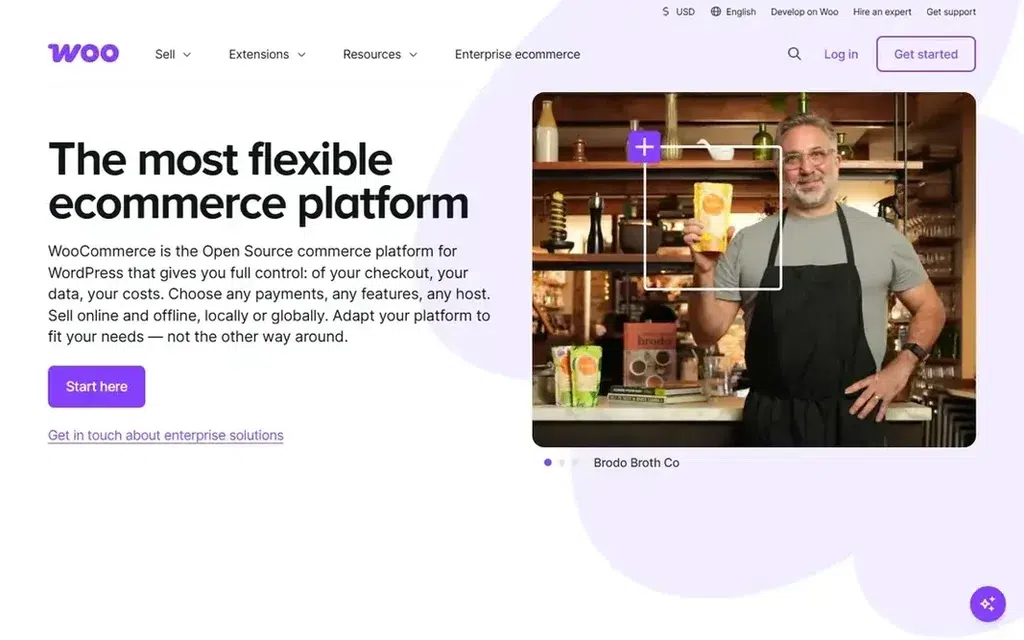
Choose WooCommerce for open-source control and adaptability. Since it is open source, teams can shape the store around their own requirements instead of a fixed hosted structure. It tends to appeal to retailers with in-house development capacity or an agency partner who value ownership and adaptability.
Where it falls short: Hosting and maintenance are your responsibility.
In practice, pick WooCommerce when control over the stack matters more than hands-off management. In daily use, retailers without development resources may find a completely hosted platform more straightforward. Beyond that, open source also means the merchant takes care of hosting, updates and maintenance, which layers on continuing technical work. WooCommerce pricing: $29 per month. As for free access: Not stated.
- Designed for long-term business building
- Open-source product
- Needs more technical upkeep

In short, BigCommerce is for scaling across regions and channels. BigCommerce describes itself as commerce made for momentum, powering modern buying experiences across brands, regions and channels from a single, scalable foundation. It is pitched at retailers who expect to expand into new markets or sell through multiple channels and want one base to run that growth.
Trade-offs to know: Enterprise-oriented setup can feel heavy for small keeps.
Beyond that, the positioning fits expanding and mid-market brands instead of very small shops. That scalability focus can mean more configuration than a straightforward store needs, and some advanced functions depend on integrations. No starting price is listed for BigCommerce here; confirm pricing on the vendor site. On free options: Not stated.
- Supports several sales channels
- Single scalable foundation
- Some capabilities rely on integrations
How we compared the tools
We compared the tools on published pricing, free plan or trial availability, feature coverage for retail ecommerce platforms, and the limits each vendor documents. Treat prices as a snapshot: vendors change plans often, so check the vendor site for the figure that applies today. We ordered the tools by general fit, then by how clearly pricing is shown, then by free access. A buyer with unusual needs may reorder them.
Questions to settle before buying
- Confirm the entry price on the vendor page. For Salesforce Commerce Cloud, Wix eCommerce, Squarespace Commerce and BigCommerce that means a quote rather than a fixed price.
- Use real work to test the free trial from Shopify, rather than a demo project.
- Before choosing Salesforce Commerce Cloud, weigh its main limit: best value includes ecosystem commitment.
- Test the integrations you rely on with Salesforce Commerce Cloud before committing; some connectors sit on upper tiers.
- Ask the daily users to test Shopify on a live task before you roll it out to everyone.
FAQ
Can I try these options before paying?
Often, yes. Shopify offers a free trial. Use your own data and a real task during the test, and check what the free tier or trial limits before you rely on it. All 6 picks in this retail ecommerce platforms comparison list a starting price, free plan details and the main limits on their cards above.
How are the tools for retail ecommerce platforms ordered?
Salesforce Commerce Cloud sits first and BigCommerce last because the order follows typical fit for retail ecommerce platforms, then price clarity and free access. It is a judgement call, so read each profile for fit and limits.
Is Salesforce Commerce Cloud the right pick for everyone comparing retail ecommerce platforms?
No single tool suits every team. Salesforce Commerce Cloud comes first because it fits Commerce within the Salesforce ecosystem, while Wix eCommerce suits beginner-friendly all-in-one store building and Shopify suits all-in-one retail storefronts. Match the tool to your own size, budget and workflow before deciding.
Which retail ecommerce system is a good match for a new store?
Start with Salesforce Commerce Cloud if you need Commerce within the Salesforce ecosystem. Wix eCommerce is the better match for beginner-friendly all-in-one store building, and Shopify for all-in-one retail storefronts. The best choice depends on budget, team size and workflow.
Does any tool for retail ecommerce platforms here have a free plan?
A permanent free plan is not offered by Salesforce Commerce Cloud, BigCommerce or the other tools here. Shopify offer a trial. Plan a short evaluation period instead.
Sources
- https://www.salesforce.com/commerce
- https://www.wix.com/ecommerce/website
- https://www.shopify.com
- https://www.squarespace.com/ecommerce-website
- https://woocommerce.com
- https://www.bigcommerce.com