Best Research Organization Software for Academics in 2026: Prices, Free Plans and 5 Picks
5 best research organization software for academics, compared on pricing, free plans and best-fit use. Weak spots flagged for every entry. Straight answers.

- Editor's choice
 MAXQDA
Mixed methods and qualitative coding
Starts atSee websiteVisit maxqda.comFull review - Great alternative
 EndNote
Formatting citations and bibliographies
Starts atSee websiteVisit endnote.comFull review - Also consider
 Zotero
Collecting, citing, and sharing references
Starts atSee websiteVisit zotero.orgFull review
Direct answer
Start with MAXQDA if you need mixed methods and qualitative coding. Listed starting prices: Notion from $10 per member per month and Mendeley from $26 a month. For a different need, EndNote covers Formatting citations and bibliographies and Zotero covers Collecting, citing, and sharing references. The other 2 tools in the list cover narrower or pricier cases.
TL;DR:
- MAXQDA takes the first slot, best suited to mixed methods and qualitative coding.
- 2 of 5 tools offer a free plan: Notion, Mendeley.
- The cheapest monthly starting price in the list is $10 per member per month, offered by Notion.
- Mendeley fits reference management alongside writing.
Last checked November 2026. Prices and plan details were read from the vendors' own pages in November 2026; vendors change plans often, so confirm the current price on the vendor site before you buy.
Quick comparison
| Tool | Best for | Starts at | Free plan? | |
|---|---|---|---|---|
| MAXQDA | Mixed methods and qualitative coding | See website | Free trial | Visit |
| EndNote | Formatting citations and bibliographies | See website | Not stated | Visit |
| Zotero | Collecting, citing, and sharing references | See website | Not stated | Visit |
 Notion | Adaptable workspace for research notes | $10 per member per month | Yes | Visit |
 Mendeley | Reference management alongside writing | $26 a month | Yes | Visit |
The full research organization software for academics list
LinkVetted compared 5 research organization software for academics. The goal is a practical shortlist: published prices, free plan facts, best-fit use cases and honest limits for every entry.
MAXQDA serves mixed methods and qualitative coding. It fits academics combining numeric and textual data who want coding and presentation tools in a single environment.
For everyday use, mixed methods depth includes a learning period, and it does not replace a reference manager for citations. MAXQDA shows no starting price here, so confirm the cost on the vendor site. Free options: Free trial.
Where it falls short: Not for citation formatting.
- Coding and analysis
- Presentation of findings
- Ramp-up time for beginners

For Formatting citations and bibliographies, EndNote is a natural candidate. EndNote is a citation and reference management tool that helps you save time formatting citations so you can focus on research.
Honest limits: Interface can feel dense.
Its strength is citation formatting, not qualitative data analysis or general note-taking. For everyday use, if you primarily need a light way to collect and share sources with collaborators, a more straightforward manager may fit better. Check the vendor site for EndNote pricing; none is listed in this comparison. Trial and free access: Not stated.
- Citation formatting focus
- Reference management
- Less suited to qualitative analysis
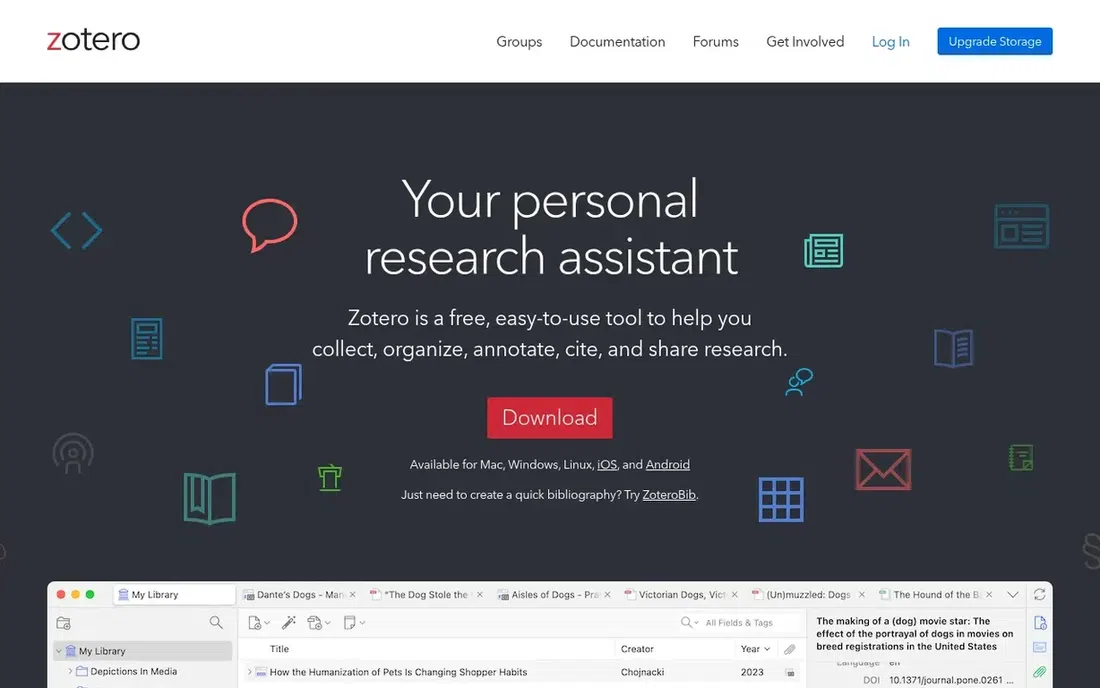
Pick Zotero if this describes you: Collecting, citing, and sharing references. Choose something else if your primary task is coding interviews or transcripts instead of managing references and citations.
What to check first: Restricted qualitative coding.
Pricing for Zotero is not stated here, so ask the vendor for current figures. Free plan details: Not stated.
- Collects and organizes sources
- Takes care of citations and sharing
- Advanced needs may need extras
Notion is a good fit for adaptable workspace for research notes. Notion does not handle citations or code qualitative data, so it complements instead of replaces dedicated research software.
Drawbacks to consider: No citation management.
In daily use, pick a reference manager or qualitative suite when those tasks are central. Notion starts at: $10 per member per month. A free plan is available with Notion.
- Custom pages and databases
- Search across apps
- No qualitative coding engine
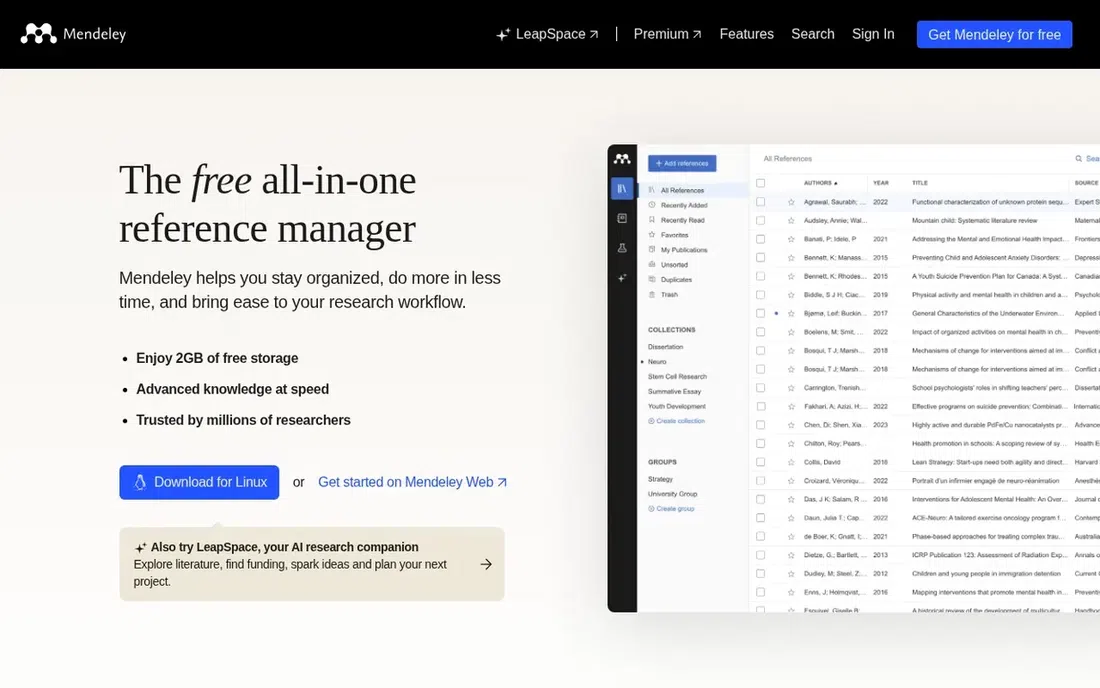
For reference management alongside writing, Mendeley is a natural candidate. Mendeley is widely known as a reference manager for researchers, used to store sources, organize PDFs, and create citations whereas writing.
More specifically, if your project centers on transcripts and thematic coding, a dedicated qualitative tool is the better fit. Entry price for Mendeley: $26 per month. You can start on Mendeley without paying.
Downsides: Feature depth varies by use.
- Pitched at researchers
- Reference organization
- Not a qualitative analysis tool
How the list was put together
Selection started from tools commonly considered for research organization software for academics, then narrowed to 5 that have clear pricing information or a clear quote process. Where a vendor does not publish a price, the entry says quote. Where a price depends on seats or billing term, the entry says so. The sequence is a judgement call: typical use case first, then pricing transparency, then free access. Use the profiles to check fit.
Pre-purchase checklist
- Get a written quote from MAXQDA, EndNote and Zotero; the list shows no starting price for them.
- Check what the free option really includes: Notion and Mendeley offer a free plan, and usage caps differ.
- Use real work to test the free trial from MAXQDA, rather than a demo project.
- Read the limits listed for MAXQDA first: ramp-up time for beginners.
- Add up seats, add-ons and usage charges for Mendeley before comparing it with cheaper entries.
- Pick one real project and run it in MAXQDA first; a small pilot shows fit faster than a checklist.
FAQ
How are the tools for research organization software for academics ordered?
The order follows typical fit for research organization software for academics, with MAXQDA first and Mendeley last, then price clarity and free access. It is editorial judgement, not a score, so another team could rank the tools differently.
Which options for research organization software for academics have a free plan?
Notion and Mendeley offer a free plan in this list. Free plans usually cap users, projects or features, so check the limits on the vendor page. One other tool offers a trial instead.
Can I try these tools before paying?
Often, yes. Notion and Mendeley have a free plan and MAXQDA offers a free trial. Use your own data and a real task during the test, and check what the free tier or trial limits before you rely on it.
Which tool should a student start with?
Zotero is a reasonable starting point because its homepage emphasizes simplicity for collecting, organizing, citing, and sharing research. Students can add a qualitative tool later if their projects need coding transcripts.
What is the cheapest option for research organization software for academics in this list?
On published monthly entry prices, Notion is the lowest here at $10 per member per month. Entry price is only part of the cost, because seats, add-ons and billing terms can change the total. All 5 picks in this research organization software for Academics comparison list a starting price, free plan details and the main limits on their cards above.
Sources
- https://www.maxqda.com
- https://endnote.com
- https://www.zotero.org
- https://www.notion.com
- https://www.mendeley.com