6 Best Practices for Deploying Database Software for 2026, Vetted and Compared
Best practices for deploying database software: 6 tools compared on price, free plans and fit. Fit and flaws are laid out for each entry. See the full list.
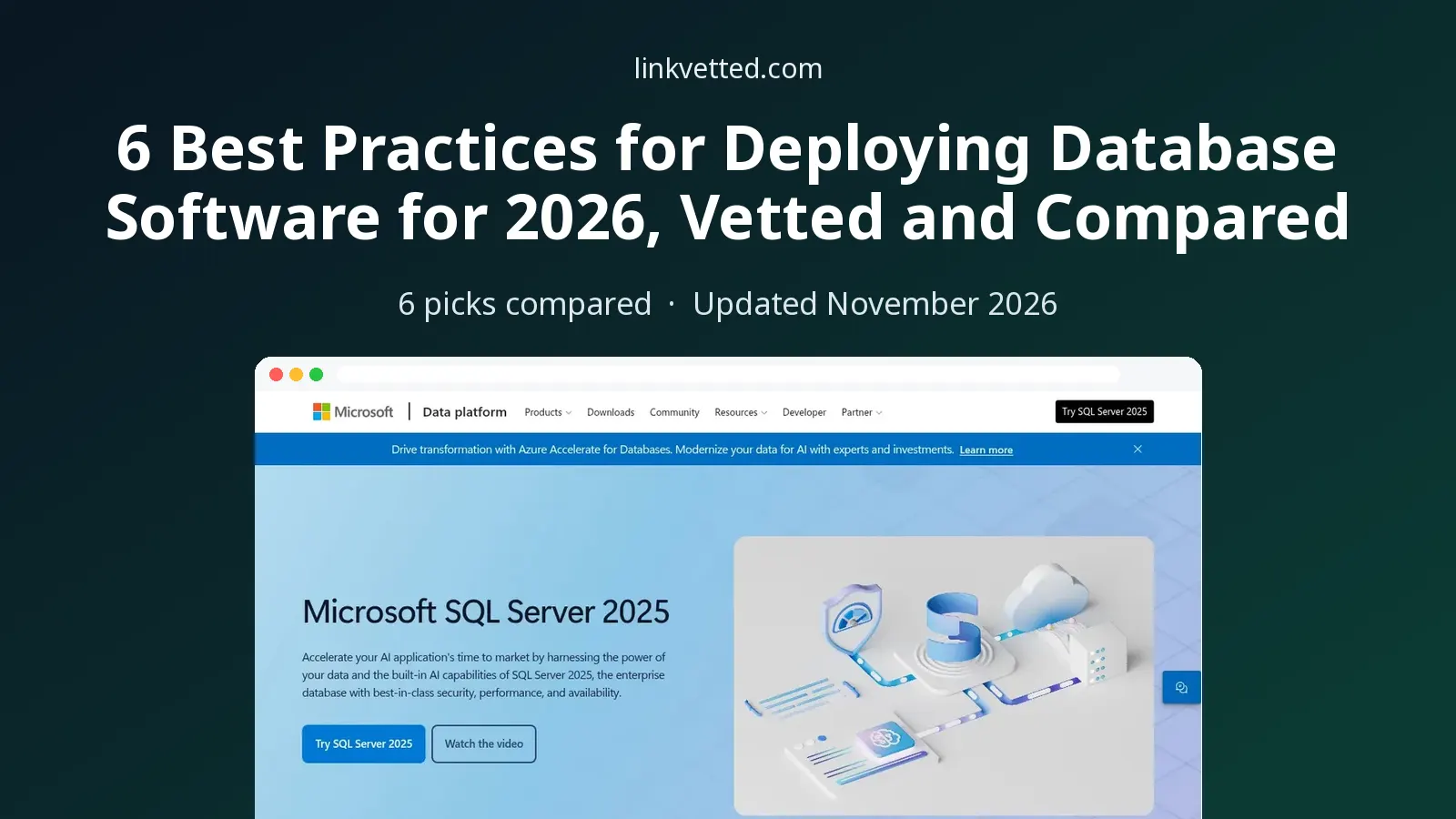
- Editor's choice
 Microsoft SQL Server
Enterprise relational plus analytics
Starts atSee websiteVisit microsoft.comFull review - Great alternative
 MySQL
Widely used open source relational
Starts atSee websiteVisit mysql.comFull review - Also consider
 Redis
Live caching and quick data
Starts at$5 a monthVisit redis.ioFull review
Direct answer
If you need enterprise relational plus analytics, Microsoft SQL Server is the first tool to look at here. Listed starting prices: Redis from $5 a month. Look at MySQL for widely used open source relational, and at Redis for live caching and quick data. The other 3 tools in the list cover narrower or pricier cases.
TL;DR:
- Number one here is Microsoft SQL Server, a fit for enterprise relational plus analytics.
- For adaptable document data at scale, MongoDB is worth a look.
- Only 2 of the 6 tools have a free plan (Redis, MongoDB), so check the caps.
- Redis has the lowest monthly starting price in this list: $5 per month.
Last checked November 2026. Prices and plan details were read from the vendors' own pages in November 2026; vendors change plans often, so confirm the current price on the vendor site before you buy.
Quick comparison
| Tool | Best for | Starts at | Free plan? | |
|---|---|---|---|---|
| Microsoft SQL Server | Enterprise relational plus analytics | See website | Not stated | Visit |
| MySQL | Widely used open source relational | See website | Not stated | Visit |
| Redis | Live caching and quick data | $5 a month | Yes | Visit |
 Oracle Database | Critical workloads with AI features | See website | Not stated | Visit |
 PostgreSQL | Open source relational deployments | See website | Not stated | Visit |
 MongoDB | Adaptable document data at scale | See website | Yes | Visit |
Our 6 picks for practices for deploying database software
This LinkVetted guide covers 6 options for practices for deploying database software. Each profile lists a starting price, free plan details, strengths and drawbacks, so you can drop poor fits quickly.
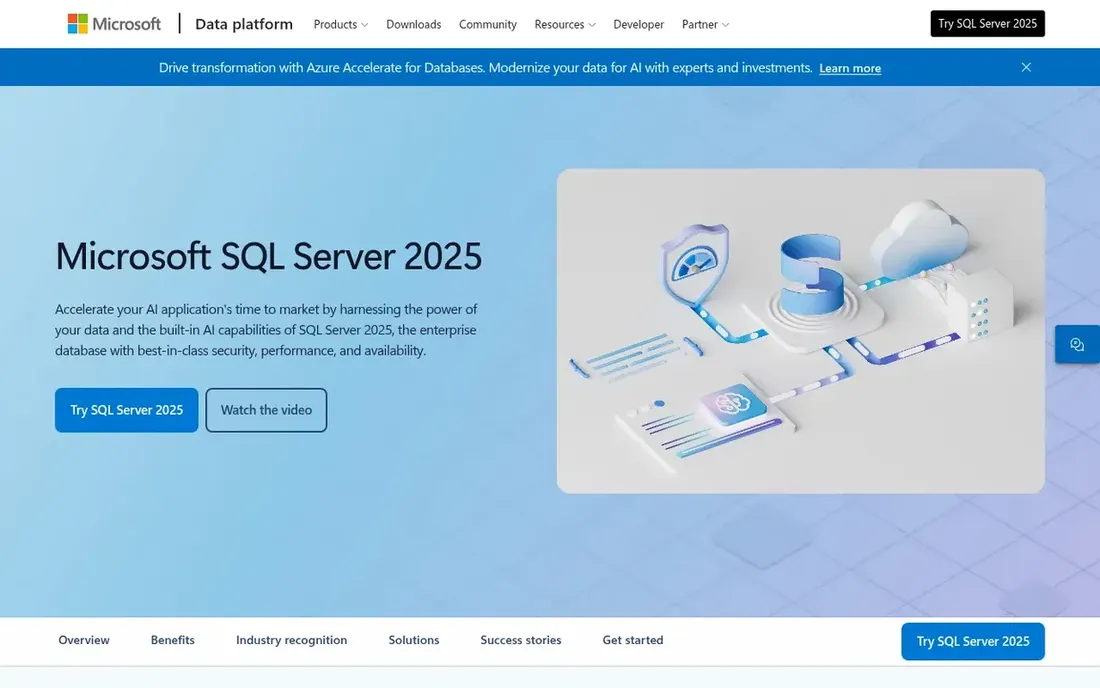
Choose Microsoft SQL Server for enterprise relational plus analytics. The breadth of features means deployment planning must include edition choice, licensing and configuration reviews.
Beyond that, teams without Microsoft tooling or with tight portability requirements may prefer a lighter open source engine instead. Microsoft SQL Server shows no starting price here, so confirm the cost on the vendor site. On free options: Not stated.
Points against: Deep feature set layers on operational complexity.
- Developer-first features per vendor page
- Suits Microsoft-centered environments
- Licensing and editions need careful review
MySQL serves widely used open source relational. MySQL is a widely adopted open source relational database known for powering web applications and content systems.
Honest limits: Some advanced features differ from rivals.
MySQL does not show a starting price in this comparison, so check the vendor site for current pricing. As for free access: Not stated.
- Straightforward for typical web workloads
- Wide hosting and tooling support
- Self-managed deployments need tuning care
Redis is designed for live caching and quick data. Redis is presented as real-time data for agents and apps, with developers using it for quick data access and the vendor offering Redis Enterprise for demanding deployments.
It suits caching layers, session keeps, queues and other latency-sensitive roles alongside a primary database instead of replacing it. The starting price for Redis: $5 per month. Redis includes a free tier.
Where it is weaker: Data durability needs deliberate design.
- Optimized for live data access
- Well known for low-latency use cases
- Not a general-purpose primary database
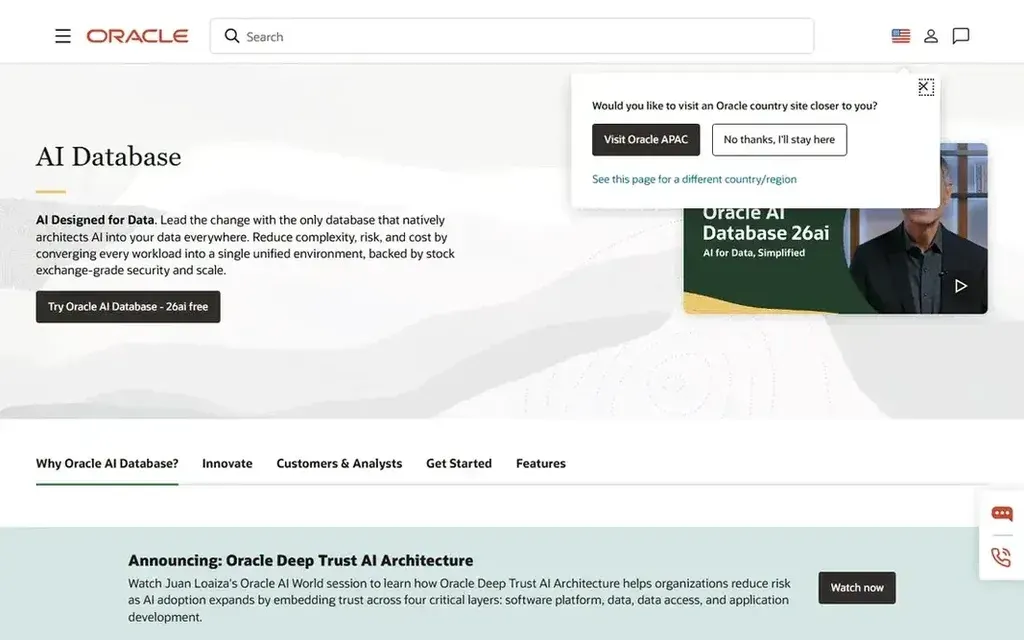
Oracle Database makes the most sense for critical workloads with AI features. Oracle Database is presented by its vendor as an AI database, with Oracle Database 26ai targeted at powering app development and critical workloads.
Honest limits: Feature depth can be heavy for small apps.
It suits enterprises that require a proven system for demanding transactional systems and want AI-related capabilities available alongside core data operations. No starting price is listed for Oracle Database here; confirm pricing on the vendor site. On free options: Not stated.
- Long-standing enterprise data product
- Made for critical enterprise workloads
- Configuration and administration are involved
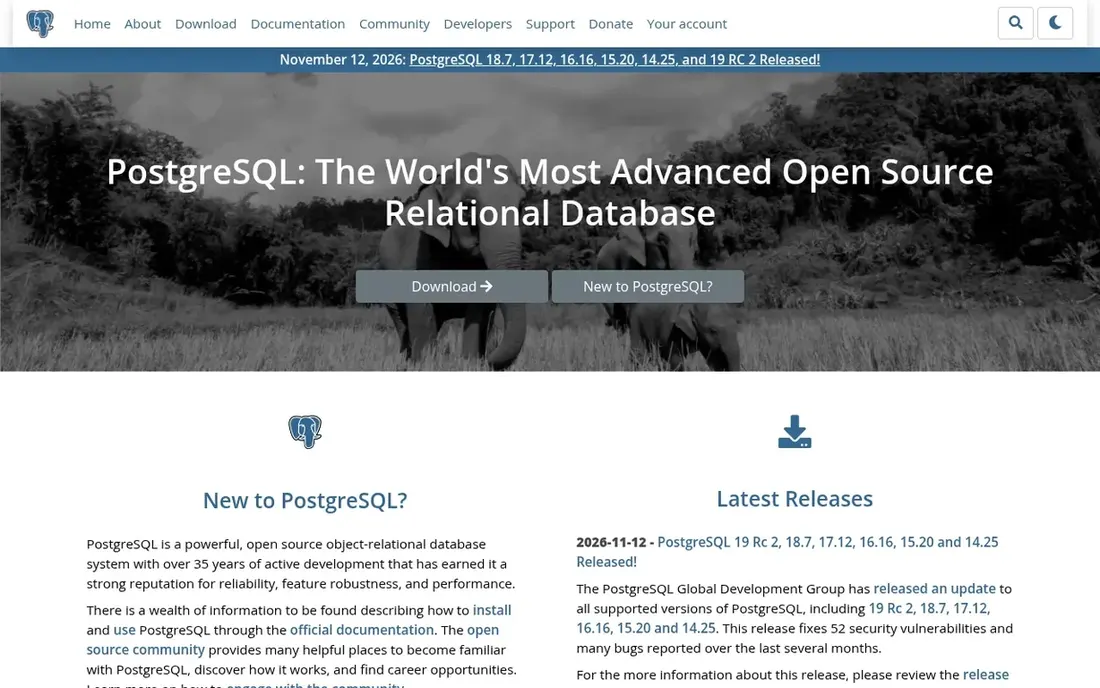
PostgreSQL serves open source relational deployments. Since it is self-managed in most deployments, your team owns patching, replication setup and performance tuning.
PostgreSQL is an open source relational database positioned by its project as the world's most advanced open source database. PostgreSQL does not show a starting price in this comparison, so check the vendor site for current pricing. On free options: Not stated.
Trade-offs to know: Tuning and operations fall to your team.
- Mature open source relational engine
- Wide documentation and extension ecosystem
- Advanced scaling needs careful planning
Pick MongoDB if this describes you: adaptable document data at scale. Choose a relational engine when strict joins and constraints are central to the workload.
Downsides: Not a drop-in fit for strict relational needs.
On top of that, the adaptable model shifts responsibility to your team for schema and index design, and complicated multi-entity transactions are less natural than in relational systems. MongoDB does not show a starting price in this comparison, so check the vendor site for current pricing. You can start on MongoDB without paying.
- Scales across cloud environments
- Adaptable document data model
- Schema design needs discipline
Selection criteria
LinkVetted looked at what each vendor publishes: pricing, plan limits, feature coverage for practices for deploying database software and stated drawbacks. No hands-on testing is claimed. Where a price is missing, the vendor does not list one publicly or ties it to a quote. Always confirm before budgeting. Tools are placed by general fit for practices for deploying database software, with price clarity and free access as tie-breakers. A different team can reasonably rank them differently.
What to confirm before you sign up
- Confirm the entry price on the vendor page. For Microsoft SQL Server, MySQL, Oracle Database and others that means a quote rather than a fixed price.
- Check what the free option really includes: Redis and MongoDB offer a free plan, and usage caps differ.
- Read the limits listed for Microsoft SQL Server first: licensing and editions need careful review.
- Check whether Oracle Database bills monthly or annually, and what cancelling early costs.
- Find out what support MySQL includes on your plan, and whether onboarding help costs extra.
FAQ
How are the tools for practices for deploying database software ordered?
Microsoft SQL Server sits first and MongoDB last because the order follows typical fit for practices for deploying database software, then price clarity and free access. It is a judgement call, so read each profile for fit and limits.
Is Microsoft SQL Server the right pick for everyone comparing practices for deploying database software?
No single tool suits every team. Microsoft SQL Server comes first because it fits enterprise relational plus analytics, while MySQL suits widely used open source relational and Redis suits real-time caching and fast data. Match the tool to your own size, budget and workflow before deciding.
When should I use a document or key-value database rather than relational?
Document keeps like MongoDB fit evolving or document-shaped data, whereas Redis excels at caching and live access alongside a primary database. Relational engines remain the safer default when strict constraints, joins and transactional integrity are central to the workload.
Do these tools publish their prices?
Not all of them. Microsoft SQL Server, MySQL, Oracle Database and others publish no starting price, so expect a quote request for those. The rest, Redis included, show a starting price, though seats and billing terms still change the final cost.
What is the cheapest option for practices for deploying database software in this list?
On published monthly entry prices, Redis is the lowest here at $5 per month. Entry price is only part of the cost, because seats, add-ons and billing terms can change the total. Prices, free plan details and limits for all 6 tools in this practices for Deploying database software roundup sit on the individual cards above.
Sources
- https://www.microsoft.com/en-us/sql-server
- https://www.mysql.com
- https://redis.io
- https://www.oracle.com/database
- https://www.postgresql.org
- https://www.mongodb.com