5 Best Business Database Software for ERP for 2026, Vetted and Compared
Weighing the best business database software for ERP? We lined up 5 products by cost, free access and fit. Verdicts stay brief and factual. Easy to scan.
- Editor's choiceMySQL (Oracle)
Cost-conscious departmental ERP
Starts atPricing on requestVisit mysql.comFull review - Great alternative
 Microsoft SQL Server
Microsoft-centric ERP environments
Starts atPricing on requestVisit microsoft.comFull review - Also consider
 IBM Db2
Autonomous operations in hybrid cloud
Starts atPricing on requestVisit ibm.comFull review
Direct answer
Our first pick is MySQL (Oracle), best for cost-conscious departmental ERP. Microsoft SQL Server fits Microsoft-centric ERP environments; IBM Db2 fits autonomous operations in hybrid cloud. The remaining 2 options are covered below with pricing notes and limits. None of these vendors publish plan prices, so pricing is on request for every option.
TL;DR:
- This list starts with MySQL (Oracle), which is built for cost-conscious departmental ERP.
- Oracle Database fits large, critical ERP workloads.
- Only MongoDB offers a free plan among these 5 tools.
- MySQL (Oracle) comes with a trade-off: fewer advanced enterprise features.
- No starting price is shown for any of the 5 tools, MySQL (Oracle) and Oracle Database included, so plan time for sales calls.
Last checked November 2026. Pricing on request: vendors did not publish plan prices when this guide was last checked (November 2026), so ask each vendor for a written quote.
Quick comparison
| Tool | Best for | Starts at | Free plan? | |
|---|---|---|---|---|
| MySQL (Oracle) | Cost-conscious departmental ERP | Pricing on request | Not stated | Visit |
| Microsoft SQL Server | Microsoft-centric ERP environments | Pricing on request | Not stated | Visit |
| IBM Db2 | Autonomous operations in hybrid cloud | Pricing on request | Not stated | Visit |
 MongoDB | Adaptable, live application data | Pricing on request | Yes | Visit |
 Oracle Database | Large, critical ERP workloads | Pricing on request | Not stated | Visit |
Business Database Software for ERP compared in detail
Choosing business database software for ERP usually comes down to price, fit and limits. This LinkVetted guide sets 5 tools side by side on those three points, with the facts kept short and checkable.
MySQL (Oracle)
Best for: Cost-conscious departmental ERP
MySQL (Oracle) is aimed squarely at cost-conscious departmental ERP. MySQL is a widely used open-source relational database maintained by Oracle.
Limits to weigh: Scaling large ERP needs planning.
Very large ERP workloads may need careful planning around scaling and high availability. More specifically, organizations with demanding enterprise requirements commonly look to heavier systems, whereas smaller teams may find MySQL sufficient. MySQL (Oracle) does not show a starting price in this comparison, so check the vendor site for current pricing. On free options: Not stated.
- Straightforward for smaller deployments
- Wide hosting and tooling support
- Fewer advanced enterprise features
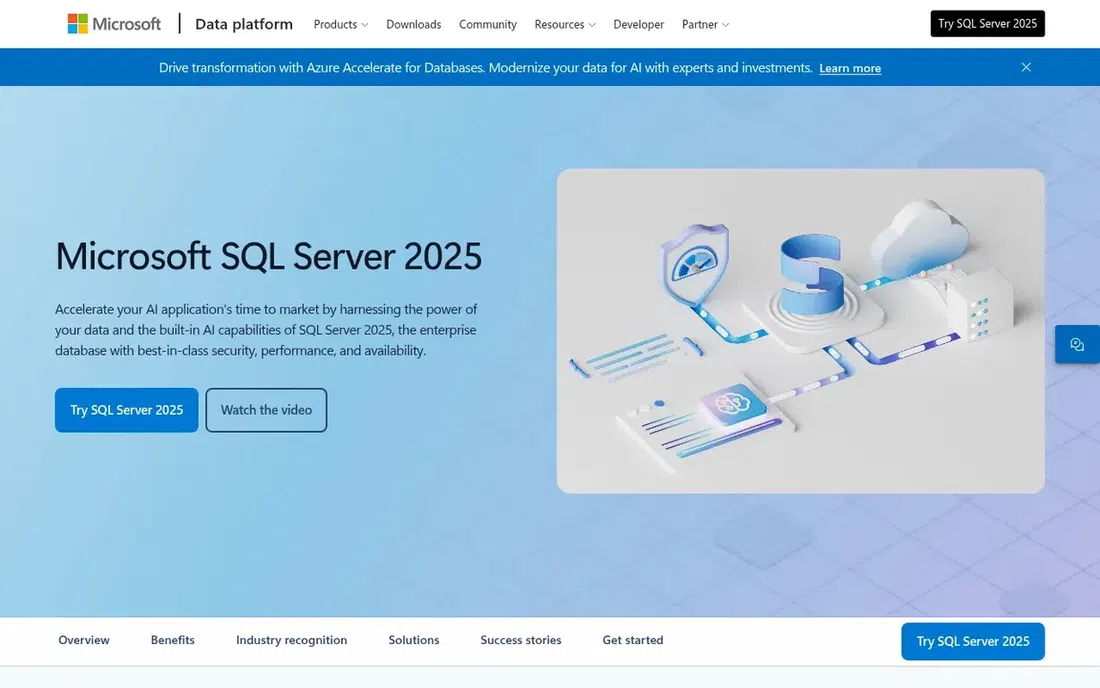
Microsoft SQL Server is a good fit for Microsoft-centric ERP environments. Microsoft SQL Server is a relational database that emphasizes developer-first features and integration with analytics and AI models. Its homepage stresses accelerating AI innovation using existing data.
From a buyer's view, value is most solid when you are already invested in the Microsoft ecosystem, and licensing structures can take effort to understand. Teams standardized on other systems may find competing choices more straightforward to fit into their existing operations. Check the vendor site for Microsoft SQL Server pricing; none is listed in this comparison. On free options: Not stated.
Where it falls short: Best value inside Microsoft stack.
- Integration with analytics and AI models
- Familiar tooling for Microsoft teams
- Licensing can be complicated
Choose IBM Db2 for autonomous operations in hybrid cloud. IBM Db2 is presented as an AI-powered autonomous database with live insights and hybrid cloud adaptability. It aims to ease operations and protect critical data.
Drawbacks to consider: Smaller community than some peers.
From a buyer's view, teams seeking the broadest external tooling may want to compare other relational choices first. On top of that, Db2 can need careful tuning and specialist knowledge, and its community is smaller than some alternatives. This comparison lists no price for IBM Db2; ask the vendor. Free access: Not stated.
- Live insights
- Hybrid cloud adaptability
- Can be complicated to tune
Where MongoDB fits: adaptable, live application data. MongoDB is described as an intelligent data platform for the AI era, offering adaptable live data that scales across any cloud.
Numerous ERP modules expect a relational engine, so MongoDB is seldom a full replacement for a core ERP database. This comparison lists no price for MongoDB; ask the vendor. A free plan is available with MongoDB.
Trade-offs to know: Not a traditional relational fit.
- Live data across clouds
- Quick path from idea to market
- ERP modules may expect SQL
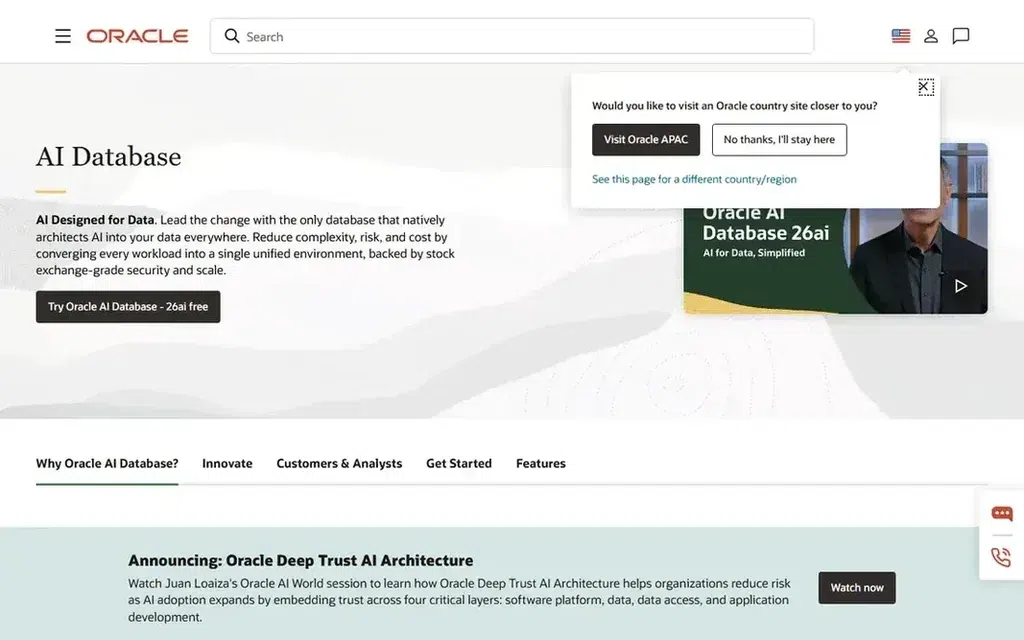
Oracle Database was built for large, critical ERP workloads. Oracle Database is a long-standing enterprise relational system positioned around AI-assisted development and running critical workloads.
Its homepage flags AI capabilities and app development support. Smaller teams or those wanting minimal overhead may prefer a lighter choice, whereas organizations deeply tied to Oracle applications will find it a natural fit. No starting price is listed for Oracle Database here; confirm pricing on the vendor site. On free options: Not stated.
Where it is weaker: Complex to administer.
- Solid support for critical workloads
- AI features built into the product
- Heavy resource footprint
How we compared the tools
We compared the tools on published pricing, free plan or trial availability, feature coverage for business database software for ERP, and the limits each vendor documents. Figures are shown as the vendors publish them. Billing terms, seat minimums and add-ons can change the real cost. We ordered the tools by general fit, then by how clearly pricing is shown, then by free access. A buyer with unusual needs may reorder them.
Pre-purchase checklist
- Confirm the entry price with every vendor: no tool from MySQL (Oracle) to Oracle Database shows a fixed starting price.
- Look at the free plan from MongoDB closely: its caps decide whether it is usable for real work.
- Read the limits listed for MySQL (Oracle) first: fewer advanced enterprise features.
- Test the integrations you rely on with Microsoft SQL Server before committing; some connectors sit on upper tiers.
- Look at which plan of MongoDB unlocks the features you need; entry tiers are often cut down.
FAQ
Do these tools publish their prices?
No. None of the tools, from MySQL (Oracle) to Oracle Database, shows a fixed starting price here, so budget time for quotes.
How are the tools for business database software for ERP ordered?
MySQL (Oracle) sits first and Oracle Database last because the order follows typical fit for business database software for ERP, then price clarity and free access. It is a judgement call, so read each profile for fit and limits.
Can I try these tools before paying?
Often, yes. MongoDB has a free plan. Use your own data and a real task during the test, and check what the free tier or trial limits before you rely on it.
Can open-source databases run ERP workloads?
Yes, PostgreSQL through EnterpriseDB and MySQL can support ERP workloads, notably for smaller or departmental deployments. Confirm that your ERP vendor certifies the specific database and version before committing.
Is MySQL (Oracle) the right pick for everyone comparing business database software for ERP?
No single tool suits every team. MySQL (Oracle) comes first because it fits cost-conscious departmental ERP, while Microsoft SQL Server suits Microsoft-centric ERP environments and IBM Db2 suits autonomous operations in hybrid cloud. Match the tool to your own size, budget and workflow before deciding.
Sources
- https://www.mysql.com
- https://www.microsoft.com/en-us/sql-server
- https://www.ibm.com/products/db2
- https://www.mongodb.com
- https://www.oracle.com/database