The 5 Best PaaS Software for Enterprise in 2026, Ranked
Best PaaS software for enterprise in 2026: 5 tools with starting prices, free plans and limits. Price notes and drawbacks come with each one. Updated for 2026.
- Editor's choiceGoogle Cloud App Engine
Serverless back ends in plenty of languages
Starts atSee websiteVisit cloud.google.comFull review - Great alternative
 Red Hat OpenShift
Kubernetes-based application modernization
Starts atSee websiteVisit redhat.comFull review - Also considerMicrosoft Azure App Service
Managed web apps and APIs on Azure
Starts atSee websiteVisit azure.microsoft.comFull review
Direct answer
If you need serverless back ends in plenty of languages, Google Cloud App Engine is the first tool to look at here. Listed starting prices: Heroku from $5 a month. Red Hat OpenShift is better for Kubernetes-based application modernization, and Microsoft Azure App Service is better for managed web apps and APIs on Azure. The remaining 2 options are covered below with prices and limits.
TL;DR:
- The list opens with Google Cloud App Engine, aimed at serverless back ends in plenty of languages.
- The cheapest monthly starting price in the list is $5 per month, offered by Heroku.
- For metadata-driven enterprise app building, Salesforce Platform is worth a look.
- Before buying Microsoft Azure App Service, weigh this: deepest value inside the Azure ecosystem.
Last checked November 2026. Prices and plan details were read from the vendors' own pages in November 2026; vendors change plans often, so confirm the current price on the vendor site before you buy.
Quick comparison
| Tool | Best for | Starts at | Free plan? | |
|---|---|---|---|---|
| Google Cloud App Engine | Serverless back ends in plenty of languages | See website | Not stated | Visit |
| Red Hat OpenShift | Kubernetes-based application modernization | See website | Not stated | Visit |
| Microsoft Azure App Service | Managed web apps and APIs on Azure | See website | Not stated | Visit |
 Heroku | Developer-friendly managed app hosting | $5 a month | No | Visit |
 Salesforce Platform | Metadata-driven enterprise app building | See website | Not stated | Visit |
The best PaaS software for enterprise
LinkVetted put together this guide to PaaS software for enterprise for readers who want a clear shortlist without reading every vendor page. It compares 5 tools on starting price, free plans, who each one suits and where each one falls short.
Google Cloud App Engine
Best for: Serverless back ends in plenty of languages
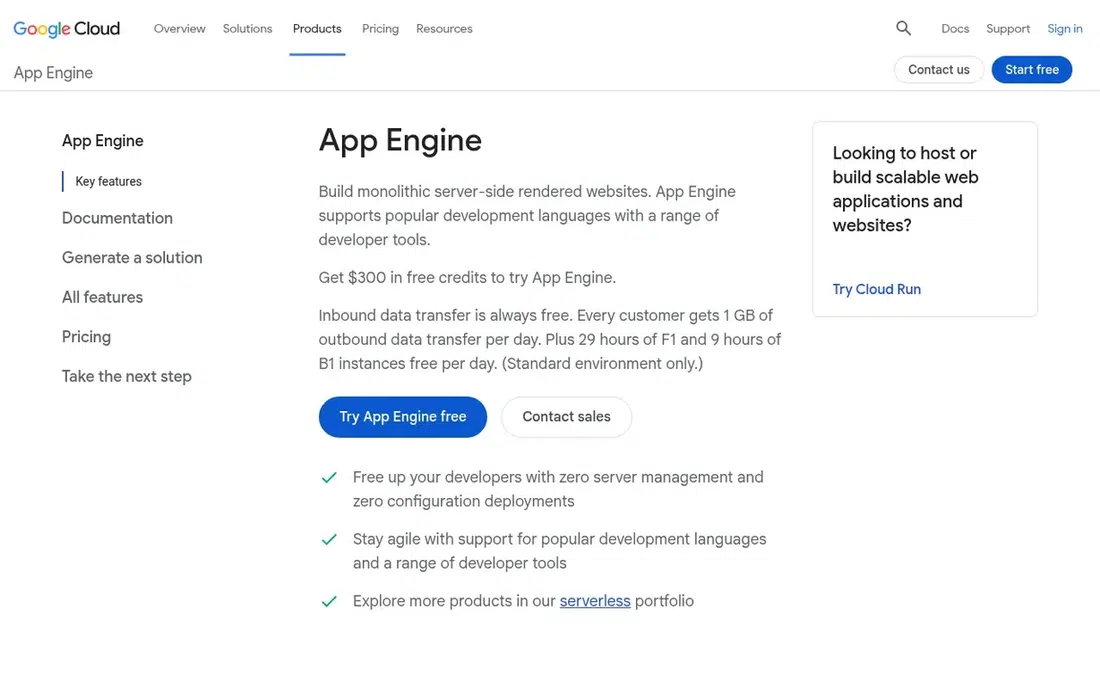
Choose Google Cloud App Engine for serverless back ends in plenty of languages. It fits enterprises that want to focus on code whereas the product takes care of scaling.
It does well for teams already building on Google Cloud infrastructure. Check the vendor site for Google Cloud App Engine pricing; none is listed in this comparison. Trial and free access: Not stated.
Limits to weigh: Best experience within Google Cloud.
- Supports several programming languages
- Completely managed serverless product
- Serverless model limits low-level control
Red Hat OpenShift makes the most sense for Kubernetes-based application modernization. Red Hat OpenShift is an application innovation product offering tools to help organizations modernize existing applications, build new ones and accelerate AI adoption.
Upsides: Tools to modernize and build apps.
Downsides: Needs Kubernetes expertise.
Running OpenShift demands container and cluster skills, and it carries more operational responsibility than more straightforward managed systems. On top of that, teams without product engineering capacity may find lighter managed PaaS choices simpler to adopt. Pricing for Red Hat OpenShift is not stated here, so ask the vendor for current figures. Free access: Not stated.
- Application innovation system
- Supports AI adoption initiatives
- More operational overhead than straightforward PaaS
Microsoft Azure App Service
Best for: Managed web apps and APIs on Azure
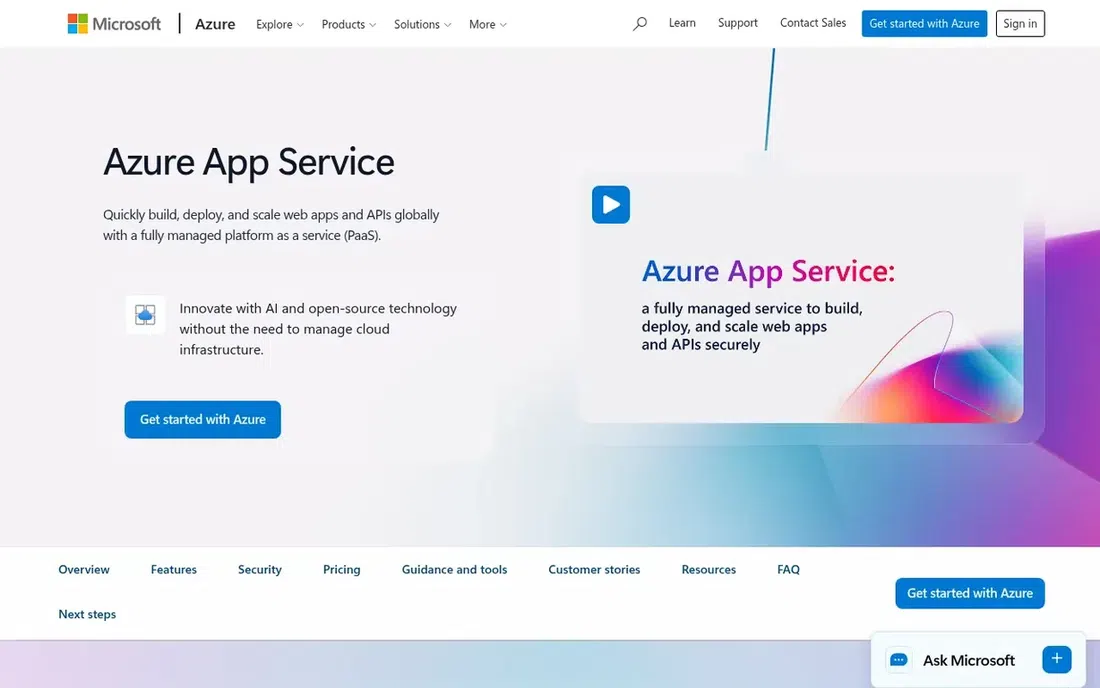
Choose Microsoft Azure App Service for managed web apps and APIs on Azure. Azure App Service is Microsoft's completely managed platform for building, deploying and scaling web apps and APIs in the cloud. It emphasizes global reach and AI-ready application hosting, and it fits enterprises already invested in Azure that want to offload server management whereas keeping a familiar Microsoft toolchain and governance model.
Where it falls short: Less control over underlying infrastructure.
Worth adding: since it is tightly bound to Azure, teams running multi-cloud or non-Microsoft stacks may find the fit less natural. Those wanting direct control over containers and cluster configuration should look at Kubernetes-based choices like OpenShift instead. Microsoft Azure App Service shows no starting price here, so confirm the cost on the vendor site. On free options: Not stated.
- Deploy and scale globally
- Fully managed PaaS for web apps and APIs
- Deepest value inside the Azure ecosystem
Pick Heroku if this describes you: developer-friendly managed app hosting. Heroku is a cloud application product offering completely managed app hosting with a straightforward build, deploy and scale workflow.
It appeals to enterprises and product teams that prioritize developer experience and want to ship applications without managing servers or clusters straight. On cost, Heroku starts like this: $5 per month. Heroku does not include a free plan.
What works well: Long-established developer system.
Limits to weigh: Less infrastructure control.
- Simple build
- Deploy and scale workflow
- Add-on ecosystem shapes costs and fit
Choose Salesforce Platform for metadata-driven enterprise app building. Salesforce Platform powers what the vendor describes as the agentic enterprise, combining metadata, governance, MuleSoft and Data Cloud.
Upsides: Bundles MuleSoft and Data Cloud.
It is not a general-purpose runtime for any language or framework, so teams deploying custom web applications will typically need a different product. Choose it when business process logic, integration and data governance are the core requirements. This comparison lists no price for Salesforce Platform; ask the vendor. On free options: Not stated. Honest limits: Not a general-purpose hosting PaaS.
- Targeted at agentic enterprise use cases
- Merges metadata and governance
- Centered on the Salesforce ecosystem
Selection criteria
The comparison looks at four things: starting price, free access, how well the feature set matches PaaS software for enterprise, and the main limit of each tool. Treat prices as a snapshot: vendors change plans often, so check the vendor site for the figure that applies today. Position on the page reflects fit for a typical buyer first, with price clarity and free access breaking ties. Treat it as a guide, not a ruling.
Questions to settle before buying
- Confirm the entry price on the vendor page. For Google Cloud App Engine, Red Hat OpenShift, Microsoft Azure App Service and Salesforce Platform that means a quote rather than a fixed price.
- Read the limits listed for Google Cloud App Engine first: serverless model limits low-level control.
- The entry price of Microsoft Azure App Service is only the starting point; model the full cost with seats and extras.
- Map your must-have features to a specific Red Hat OpenShift plan before you compare prices.
- Involve the people who will use Heroku daily; a short pilot beats a long feature checklist.
FAQ
Can I try these tools before paying?
Not by default. None of the tools, from Google Cloud App Engine to Salesforce Platform, lists a free plan or a free trial here, so ask each vendor for a demo before committing.
How are the tools for PaaS software for enterprise ordered?
The order follows typical fit for PaaS software for enterprise, with Google Cloud App Engine first and Salesforce Platform last, then price clarity and free access. It is editorial judgement, not a score, so another team could rank the tools differently.
What is the cheapest option for PaaS software for enterprise in this list?
On published monthly entry prices, Heroku is the lowest here at $5 per month. Entry price is only part of the cost, because seats, add-ons and billing terms can change the total. Each of the 5 options in this PaaS software for enterprise guide has its own card above with the price, free plan and limits.
How should we evaluate PaaS vendors before buying?
Run a pilot deployment on a representative application and involve security and product teams early so hidden operational costs surface before rollout.
What makes a PaaS a good match for enterprise use?
Enterprise buyers usually look for governance controls, identity integration, regional availability and support for existing toolchains. Managed products for example Azure App Service and OpenShift address these in different ways, so match the model to your operating style.
Should enterprises choose serverless PaaS or Kubernetes?
Serverless choices like App Engine and Code Engine cut operational burden by abstracting infrastructure. Kubernetes-based systems like OpenShift offer more control and portability at the cost of added operational work.
Sources
- https://cloud.google.com/appengine
- https://www.redhat.com/en/technologies/cloud-computing/openshift
- https://azure.microsoft.com/en-us/products/app-service
- https://www.heroku.com
- https://www.salesforce.com/platform