Best API Security Platforms for Enterprise in 2026: 8 Platforms Compared
Best API security platforms for enterprise in 2026, compared on API discovery, runtime protection, testing and bot defense, from Salt to Akamai. Read on.
- Editor's choice
 Salt Security
Behavioral API threat detection
Starts atSee websiteVisit salt.securityFull review - Great alternative
 Akamai API Security
Edge-scale enterprise APIs
Starts atSee websiteVisit akamai.comFull review - Also consider
 Traceable
Microservice tracing and abuse detection
Starts atSee websiteVisit traceable.aiFull review
TL;DR:
- Salt Security leads for behavioral detection, building per-endpoint baselines that catch slow abuse that rules miss.
- Akamai API Security, built on Noname, leads for edge-scale enterprises that already route traffic through Akamai.
- Traceable and Cequence add deep tracing and bot defense for microservice and customer-facing APIs.
- Wallarm, Imperva, 42Crunch and Cloudflare each win in a specific lane, from testing to edge protection.
- Most enterprise API security pricing is quote-based, so test discovery and blocking on your real API traffic before buying.
Quick comparison
| Tool | Best for | Starts at | Free plan? | |
|---|---|---|---|---|
| Salt Security | Behavioral API threat detection | See website | Free trial | Visit |
| Akamai API Security | Edge-scale enterprise APIs | See website | Free trial | Visit |
| Traceable | Microservice tracing and abuse detection | See website | Free trial | Visit |
 Cequence | Bot and fraud defense for APIs | See website | Free trial | Visit |
 Wallarm | API protection and testing | See website | Free trial | Visit |
 Imperva API Security | WAF plus API protection | See website | Free trial | Visit |
 42Crunch | API contract security and testing | See website | Free trial | Visit |
 Cloudflare API Security | Edge API protection | See website | Free trial | Visit |
The best API security platforms for enterprise
Enterprise APIs face shadow endpoints, broken authorization, business-logic abuse and bots, and a firewall alone cannot catch valid-looking requests that abuse real logic. We compared official product pages, discovery methods, runtime protection, testing features and public buyer feedback, and we favored platforms with traffic-based discovery and clear blocking, not just posture reports.

Salt Security is our pick for large enterprises with many internal and partner APIs. It builds an inventory from live traffic, finds shadow and zombie APIs, and models normal behavior per endpoint, so it can flag slow data scraping or authorization abuse that signature rules miss. Correlated attacker timelines also help analysts see a full attack across endpoints instead of chasing isolated alerts.
The trade is stack complexity. Salt sits alongside your gateway and WAF rather than replacing them, so you run another platform and another integration. Pricing is quote-based and enterprise-level. If API abuse and shadow APIs are your main risk, Salt is a leading choice.
- Strong API discovery from live traffic
- Per-endpoint behavioral baselines
- Attacker timeline correlation
- Quote-based enterprise pricing
- Adds a platform alongside your gateway and WAF

Akamai API Security, which absorbed Noname Security, suits enterprises that already route internet traffic through Akamai. It combines edge protection with API discovery, posture management and testing, so public and partner APIs get discovery and detection at the edge where traffic first arrives. That scale matters for high-volume retail, media and financial APIs.
The limit is scope. Internal east-west traffic between services inside Kubernetes or a private mesh falls outside an edge-centric view, so microservice-heavy teams may need extra internal coverage. If Akamai already carries your traffic, this platform adds API security with less new infrastructure.
- Edge-scale traffic handling
- Noname discovery and posture features
- Strong fit for Akamai customers
- Deepest value for teams already on Akamai
- East-west internal traffic needs separate coverage
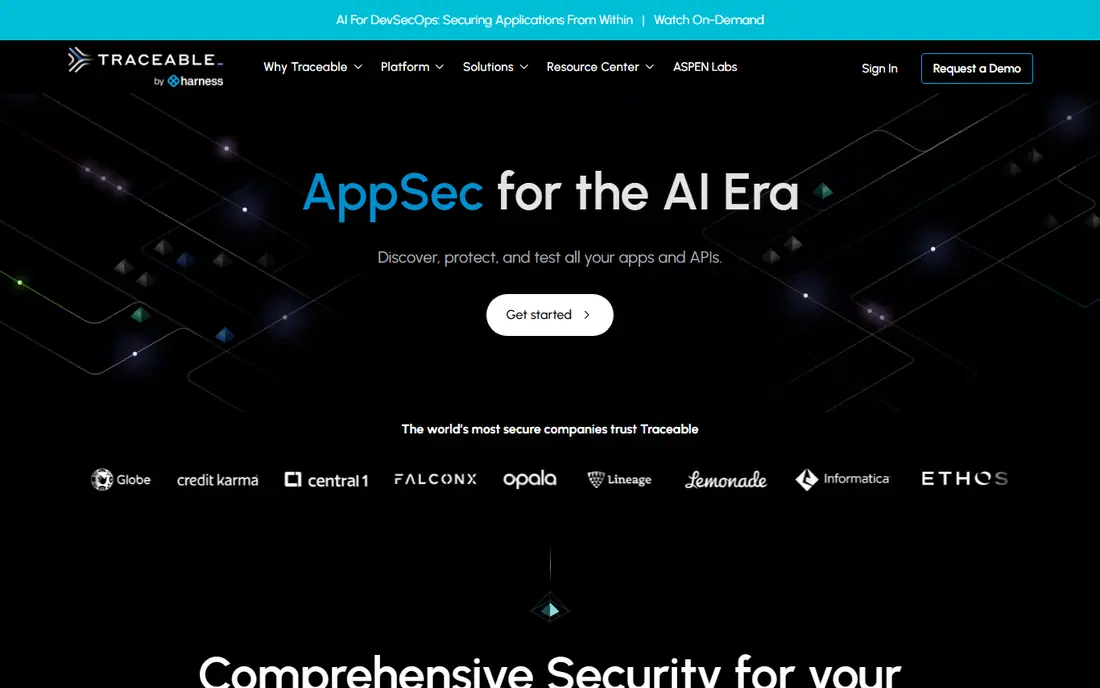
Traceable suits organizations with complex microservice estates. By using distributed tracing data, it follows a request across services, which helps analysts understand multi-step abuse, data exposure and fraud that a single endpoint view would miss. That context is especially useful when an attack spans login, search, checkout and account services.
Instrumentation is the cost. Getting full tracing across many services takes engineering time, and pricing is quote-based. If your APIs already use tracing or you plan to invest in observability, Traceable offers depth that simpler discovery tools cannot match.
- Distributed tracing gives deep request context
- Strong fraud and abuse correlation
- API discovery from traffic
- Full value needs broad service instrumentation
- Quote-based enterprise pricing
Cequence Unified API Protection suits customer-facing APIs that attract bots. It covers discovery, compliance checks, testing and native bot and fraud mitigation in one platform, which helps retail, finance and travel companies facing credential stuffing, scraping and fake account creation. Stopping automated abuse at the API layer protects both revenue and customer accounts.
Teams that only need contract testing will use a fraction of the platform, and pricing is quote-based. If bots and business-logic abuse are a daily problem, Cequence is a strong shortlist choice.
- Unified discovery, compliance, testing and bot mitigation
- Strong against account takeover and scraping
- Broad platform may be more than testing-only teams need
- Quote-based pricing
Wallarm suits teams that want protection and testing together. It discovers APIs from traffic, blocks attacks in real time and tests endpoints for OWASP API Top 10 issues, which helps teams that ship APIs often and want one workflow from test to production. Cloud and Kubernetes deployment options also fit modern platform teams.
Wallarm still needs proper traffic integration and tuning, and smaller teams may find the full platform more than they need. If you want a combined protect-and-test product for APIs you control, Wallarm is worth a proof of concept.
- API discovery, protection and testing in one product
- Good for cloud and Kubernetes deployments
- Clear OWASP API coverage
- Needs traffic or deployment integration to reach full value
- Enterprise pricing is quote-based
Imperva API Security suits enterprises already using Imperva for web protection. A unified control plane for WAF and API security reduces vendor sprawl, and mature reporting helps with PCI DSS and HIPAA needs. Hybrid deployment also fits teams with both cloud and on-premises APIs.
Dedicated API rivals offer deeper shadow discovery in Kubernetes, so teams with many internal microservices should test that gap. If you already run Imperva and want API protection without adding a separate vendor, this is a practical choice.
- Unified WAF and API control plane
- Mature compliance reporting
- Hybrid deployment options
- Shadow API discovery in Kubernetes is thinner than dedicated rivals
- Best value inside Imperva stack
42Crunch is the pick for teams that want to secure APIs before they ship. It audits OpenAPI contracts, finds auth, data and schema issues, and runs security tests in CI pipelines, with fix guidance developers can act on. That shift-left focus catches contract flaws early, when fixes are cheapest.
42Crunch does not replace runtime protection, since it focuses on design and test time rather than live attack blocking. It also works best when teams maintain accurate API specifications. Pair it with a runtime platform such as Salt or Akamai for full lifecycle cover.
- Strong OpenAPI contract auditing
- Shift-left testing in CI pipelines
- Clear fix guidance for developers
- Focuses on design and test time, not live runtime blocking
- Needs good API specifications to shine
Cloudflare API Security suits teams already on Cloudflare that want API protection at the edge. It offers discovery, schema validation, abuse detection and bot controls on a global network, which helps high-traffic public APIs handle attacks close to the user. For Cloudflare customers, setup is faster than adding a separate edge vendor.
API-specific depth varies by plan, and internal service-to-service APIs still need separate coverage. If Cloudflare already fronts your APIs, this is a sensible first layer. If you need deep behavioral detection for internal APIs, pair it with a dedicated platform.
- Global edge network
- API discovery and abuse detection
- Easy fit for Cloudflare customers
- Deepest API-specific depth varies by plan
- Internal API traffic needs separate tools
How we picked these
We compared official product pages, discovery methods, runtime and testing features, and public buyer feedback, and we favored platforms with traffic-based discovery, behavioral or tracing depth, and real blocking rather than reports alone. We kept a mix of dedicated API platforms, edge platforms and testing tools, since enterprise API security spans design, runtime and bot defense. Pricing was left as See website because most enterprise plans are quoted by API volume and traffic.
How to choose an API security platform
Inventory first, then protect
Start with discovery. If a platform cannot find your shadow, zombie and partner APIs from real traffic, its protection will miss the endpoints attackers actually use. Run discovery on production-like traffic before judging detection quality.
Test blocking on real abuse cases
Use test cases for broken authorization, excessive data exposure, rate abuse and bot scraping, and check whether the platform blocks, challenges or only alerts. A platform that only reports abuse leaves your team to build blocking elsewhere.
Plan for design time and runtime together
Runtime platforms catch live abuse, while contract testing catches design flaws before release. Most enterprises need both, so budget for a testing tool alongside a runtime platform rather than expecting one product to do every job.
FAQ
What are the best API security tools for enterprise?
Salt Security, Akamai API Security and Traceable lead for large enterprises, with Cequence, Wallarm, Imperva, 42Crunch and Cloudflare strong in specific lanes. The best choice depends on traffic location, microservice complexity and bot risk.
What is the best API security platform for enterprise APIs at the edge?
Akamai API Security and Cloudflare API Security lead at the edge, especially for teams already routing traffic through those networks. They combine scale with discovery and abuse detection close to the user.
Do I need a dedicated API security tool if I have a WAF?
Often yes, because a WAF focuses on known web attack patterns, while API tools model endpoint behavior, find shadow APIs and catch authorization abuse in valid-looking requests. Many enterprises run both, with the WAF at the edge and an API platform for deeper API logic.
How much does enterprise API security cost?
Most enterprise pricing is quote-based and scales with API traffic, endpoints and modules, often reaching six figures per year for large estates. Get a quote based on your real endpoint count and traffic, and test discovery before signing.
What is API discovery and why does it matter?
API discovery builds a full inventory of live endpoints, including shadow and zombie APIs that teams forgot or left running. Without that inventory, protection, testing and compliance all miss the endpoints attackers are most likely to probe.