Best Enterprise Asset Management Software in 2026: 8 Tools Compared
Compare the best enterprise asset management software for 2026, from IBM Maximo and SAP EAM to Fiix, UpKeep and other maintenance platforms for teams.
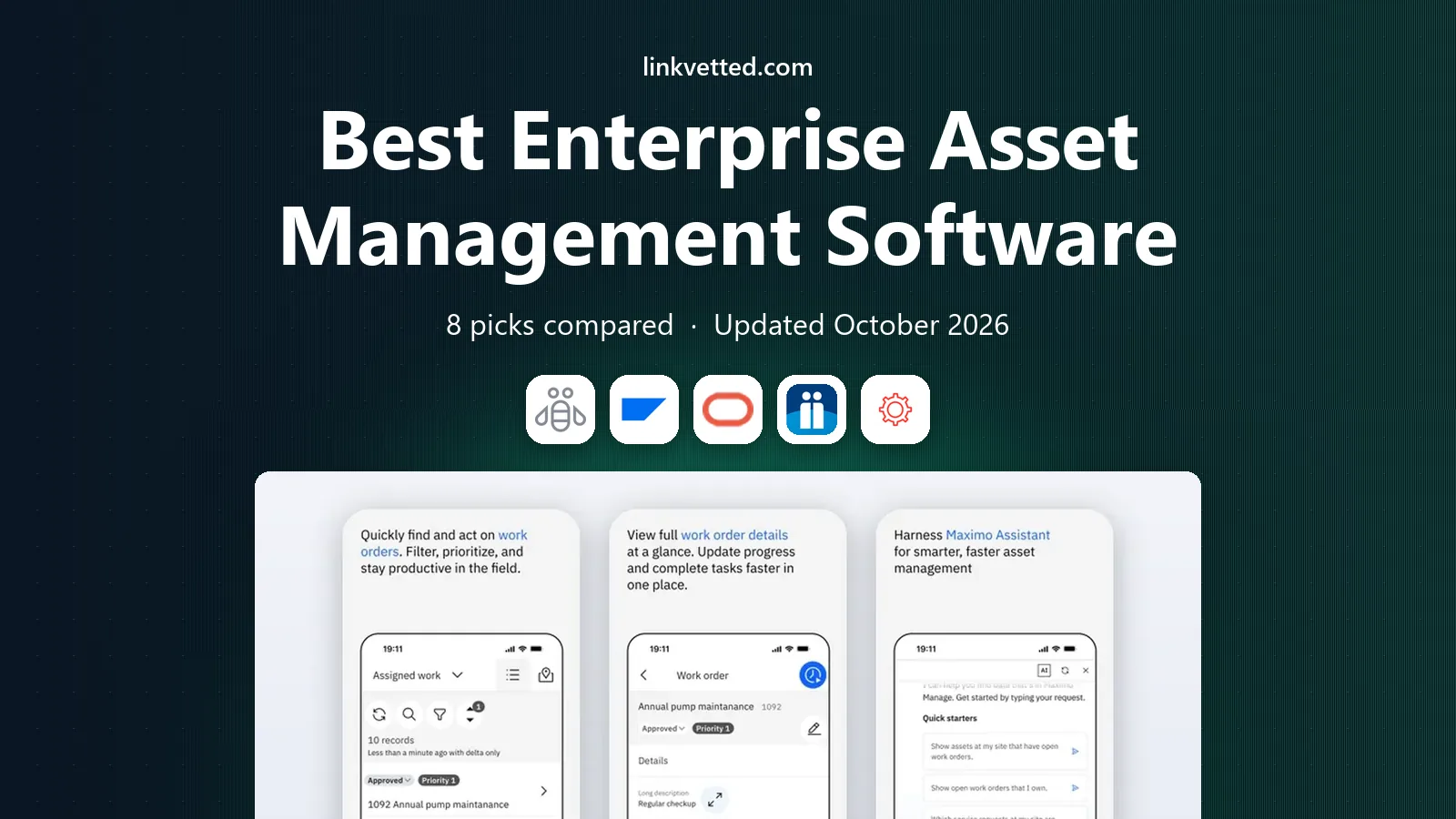
- Editor's choice
 IBM Maximo
Large asset-heavy enterprises
Starts atSee websiteVisit ibm.comFull review - Great alternative
 SAP EAM
Companies running SAP ERP
Starts atSee websiteVisit sap.comFull review - Also consider
 Oracle EAM
Companies running Oracle ERP
Starts atSee websiteVisit oracle.comFull review
TL;DR:
- IBM Maximo, SAP EAM and Oracle EAM suit large, asset-heavy organisations that need deep control, compliance and ERP integration.
- Fiix, UpKeep, Limble and MaintainX suit smaller and mid-size maintenance teams that need fast setup and mobile work orders.
- EAM and CMMS overlap, but true EAM covers the full asset lifecycle, from procurement to disposal, not just repairs.
- Total cost includes implementation, training and integration, not just the per-user licence price.
Quick comparison
| Tool | Best for | Starts at | Free plan? | |
|---|---|---|---|---|
| IBM Maximo | Large asset-heavy enterprises | See website | No | Visit |
| SAP EAM | Companies running SAP ERP | See website | No | Visit |
| Oracle EAM | Companies running Oracle ERP | See website | No | Visit |
 Fiix | Growing maintenance teams | $45 per month | Yes | Visit |
 UpKeep | Small to mid-size mobile teams | $24 per user per month | Free trial | Visit |
 Limble | Fast setup for lean teams | See website | Free trial | Visit |
 eMaint | Complex maintenance environments | $69 per month | Free trial | Visit |
 MaintainX | Mobile-first frontline teams | See website | Yes | Visit |
The best enterprise asset management software
Enterprise asset management, or EAM, covers how an organisation tracks, maintains and retires physical assets, from factory machines to fleets and facilities. We compared official product pages, pricing information and public maintenance guides in October 2026, and included both full EAM suites and strong CMMS platforms that many firms use for the same job.
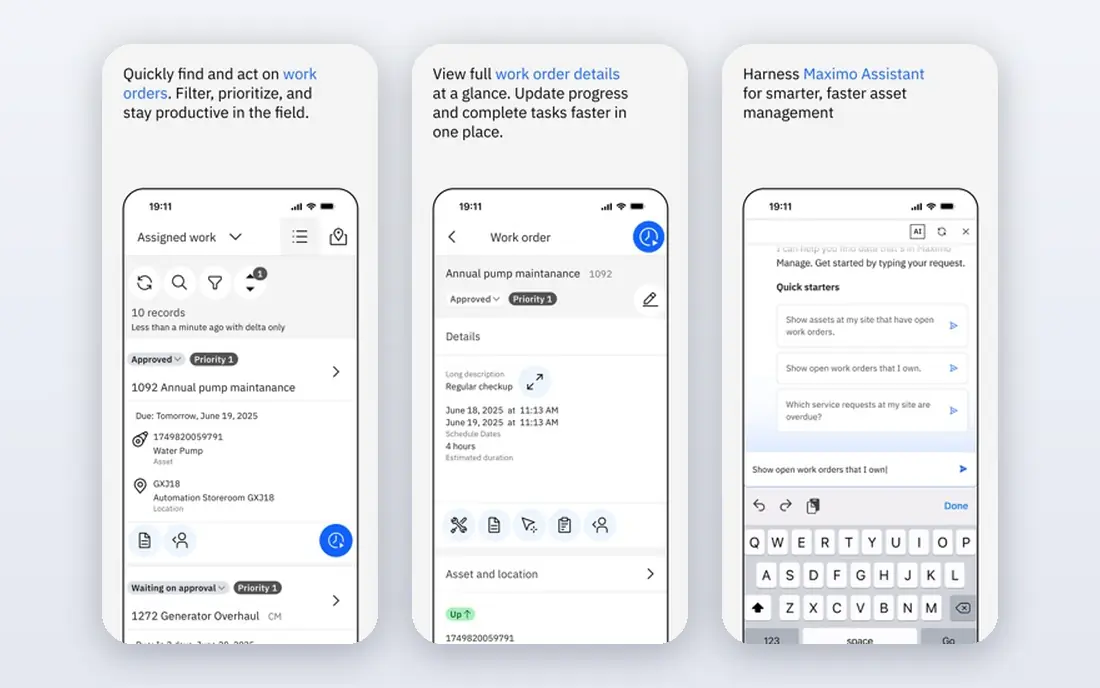
IBM Maximo is the classic EAM choice for asset-heavy industries such as utilities, transport, oil and gas, and manufacturing. It covers asset registers, work orders, preventive maintenance, inventory, procurement and reliability analysis in one system. Its AppPoints licensing model gives flexibility, but it also makes simple price comparison hard.
Maximo suits organisations with large asset portfolios and formal compliance needs, not small maintenance teams. Implementation, data migration and training should be budgeted alongside licences. For scale, depth and industry track record, Maximo remains the benchmark many EAM buyers compare against.
- Deep asset lifecycle tools
- Strong for utilities, transport and manufacturing
- AI and IoT options
- Pricing is complex and quote led
- Implementation takes time and expertise

SAP EAM, built around SAP Plant Maintenance and related modules, suits companies that already run SAP for finance, procurement and operations. Asset data, maintenance plans, spare parts and costs sit in the same ERP system, which helps finance and operations teams share one view of asset performance.
Outside SAP, the case is weak, since the value comes from that integration and the implementation is ERP-scale. Pricing is quoted as part of a wider SAP agreement. For SAP-centric enterprises, SAP EAM is often the natural choice, even when standalone tools look cheaper.
- Tight integration with SAP ERP
- Plant maintenance and asset data in one system
- Global enterprise support
- Pricing is ERP led and quoted
- Best only inside an SAP environment
Oracle EAM suits enterprises that run Oracle ERP and supply chain systems, where maintenance, inventory and procurement need to share data. It covers asset tracking, work orders, preventive maintenance and lifecycle costing, with controls that suit regulated and multi-site operations.
Like SAP EAM, its value depends on the wider ERP environment, and standalone buyers will find simpler tools easier to run. Pricing is quoted, and implementation needs planning. For Oracle-centric firms, it gives a consistent asset view without a separate integration project.
- Integration with Oracle ERP and supply chain
- Asset lifecycle and maintenance planning
- Enterprise controls
- Pricing is quoted
- Complex for firms outside Oracle
Fiix, now part of Rockwell Automation, is a cloud maintenance platform that bridges CMMS and lighter EAM needs. It covers asset registers, work orders, preventive schedules, inventory and reporting, with a mobile app that technicians can use on site. A free plan helps small teams start, while paid plans start at $45 per month in recent guides.
Fiix suits growing companies that need structure without a full ERP project. Advanced features and enterprise pricing sit on higher tiers, so check which reporting and integration features your plan includes. For many mid-size firms, Fiix is the practical middle ground.
- Clear work order and preventive maintenance tools
- Mobile app for technicians
- Scalable plans
- Add-ons can raise cost
- Enterprise pricing is quoted
UpKeep is a mobile-first maintenance platform that small and mid-size teams can learn quickly. Work orders, assets, preventive schedules and parts tracking are clear and simple, and technicians can update jobs from a phone without returning to a desk. Its Essential plan is listed at $24 per user per month, with a free trial and no card needed in recent guides.
Lower tiers limit reporting and customisation, and per-user pricing adds up when many requesters need accounts. Check whether requesters can submit jobs for free before you sign. For teams moving off paper or spreadsheets, UpKeep offers a fast, low-friction start.
- Easy to learn and use
- Strong mobile app
- Fast setup for small teams
- Reporting limits on lower tiers
- Costs rise as user numbers grow
Limble focuses on ease of use and fast setup, which appeals to lean maintenance teams without IT support. Assets, work orders, preventive schedules and parts can be set up in days, and the mobile app suits technicians who need simple job cards. Support is often cited as a strength in public reviews.
Limble is not a full EAM suite for large, multi-site enterprises, and its integration list is narrower than Fiix or Maximo. For a small to mid-size team that wants to start quickly and keep admin light, Limble is a strong, low-drama option.
- Very easy setup
- Good customer support
- Clear preventive maintenance tools
- Fewer integrations than larger suites
- Reporting limits on basic plans
eMaint, from Fluke, suits maintenance teams with complex assets, compliance needs and custom workflows. It offers deep customisation for forms, reports and asset hierarchies, which helps regulated industries prove that inspections and repairs happened. Pricing in recent guides starts at $69 per month, with a free trial available.
That flexibility needs more setup and training than UpKeep or Limble, and implementation costs should be budgeted. For teams that have outgrown a simple CMMS but do not need a full ERP suite, eMaint fills the gap well.
- Highly customisable
- Strong compliance and reporting options
- Handles complex asset hierarchies
- Steeper learning curve
- Implementation can add cost
MaintainX is built for frontline teams that live on mobile devices. Work orders, checklists, messaging and asset records sit in a simple app that technicians and managers can both use without training. A free plan covers basic use, which helps small teams try the workflow before paying.
MaintainX is a CMMS rather than a full EAM suite, so firms needing lifecycle costing, procurement depth or ERP-grade asset analytics should look higher up this list. For day-to-day maintenance, communication and preventive work, it is one of the easiest tools to adopt.
- Free plan for small teams
- Strong team messaging
- Simple work order creation
- Fewer advanced EAM features than Maximo or SAP
- Paid plans needed for full reporting
How we picked these
We compared official product pages, pricing guides and public maintenance documentation in October 2026, and included both full EAM suites and CMMS platforms that buyers commonly compare for the same job. We looked for live products, clear asset and work order features, mobile access, and a distinct audience, from global enterprises to small maintenance crews.
How to choose EAM software
Decide whether you need EAM or CMMS
If your main job is work orders, preventive schedules and repairs, a CMMS such as Fiix, UpKeep or MaintainX may be enough. If you also need lifecycle costing, procurement, reliability analysis and ERP integration, a full EAM suite such as Maximo, SAP EAM or Oracle EAM fits better. Buying EAM depth you will not use adds cost and complexity.
Count users, sites and asset types
Per-user pricing, site pricing and asset counts all change the total. Map how many technicians, managers and requesters need accounts, how many sites you run, and how many asset types you track. Ask vendors how requester accounts, read-only users and multi-site access are priced.
Plan data migration and training
Asset registers, spare parts lists and maintenance histories need cleaning before migration, or the new system will inherit old errors. Budget time for data work, technician training and a pilot site. A system that works on one site before rollout will cause fewer problems at scale.
A final point for asset teams is data quality, because an EAM system is only as useful as the asset records inside it. Before migration, clean up duplicate assets, missing serial numbers and outdated locations, and agree on naming rules for sites, asset types and work types. Assign owners for each asset group, and set a routine for updating records when equipment moves, is repaired or is retired. It also helps to start with the assets that cause the most downtime or compliance risk, rather than trying to load every minor item on day one. A clean, well-owned asset register will make preventive schedules, spare parts planning and reporting far more reliable than a larger system filled with messy data.
FAQ
What is the best EAM software?
IBM Maximo suits large asset-heavy enterprises, while SAP EAM and Oracle EAM suit firms already running those ERP systems. For smaller and mid-size teams, Fiix, UpKeep and Limble offer faster setup and lower cost. The best EAM software depends on asset scale, ERP environment and maintenance maturity.
What is the difference between EAM and CMMS?
CMMS software focuses on maintenance tasks, work orders and preventive schedules. EAM covers the full asset lifecycle, including procurement, lifecycle costing, reliability and disposal, often with ERP integration. Many firms start with CMMS and move to EAM as asset portfolios and compliance needs grow.
How much does enterprise asset management software cost?
Costs range from free CMMS plans and $24 to $69 per user per month for mid-size tools, to quoted enterprise pricing for Maximo, SAP EAM and Oracle EAM. Implementation, training and integration can add substantially to licence costs, so request a total first-year estimate before signing.
Is Fiix or UpKeep better for a small team?
UpKeep is often easier to learn and quicker to set up for very small teams, while Fiix offers more scalability and reporting as teams grow. Try both free or trial options with real work orders, and check mobile usability, reporting limits and per-user costs at your team size.
Can EAM software integrate with ERP systems?
Yes, and integration is a key reason to choose Maximo, SAP EAM or Oracle EAM, which connect asset data to finance, procurement and inventory. Mid-size tools such as Fiix and eMaint also offer integrations, but depth varies by plan, so confirm the specific ERP and data flows you need.