Best Observability Pipeline Software for Startups (2026): 5 Picks Checked on Vendor Pages
5 best observability pipeline software for startups, compared on pricing, free plans and best-fit use. Honest caveats for every entry. Read the profiles.
- Editor's choice
 Elastic Observability
Search-powered observability
Starts atSee websiteVisit elastic.coFull review - Great alternativeSumo Logic
Cloud log management and SIEM
Starts atSee websiteVisit sumologic.comFull review - Also consider
 Datadog
Unified cloud monitoring for apps and services
Starts at$8 per committer a monthVisit datadoghq.comFull review
Direct answer
This list puts Elastic Observability first for search-powered observability. Listed starting prices: Datadog from $8 per committer a month, Splunk Observability Cloud from $6 a month, per CPU core, billed annually and New Relic from $10 per user a month. If your case is different, Sumo Logic suits Cloud log management and SIEM and Datadog suits unified cloud monitoring for apps and services. All 5 tools are compared below on price, free plan and limits.
TL;DR:
- The list opens with Elastic Observability, aimed at search-powered observability.
- The cheapest monthly starting price in the list is $6 per month, per CPU core, billed annually, offered by Splunk Observability Cloud.
- Before buying Splunk Observability Cloud, weigh this: may be too heavy for early-stage startups.
- New Relic suits AI-powered root cause analysis.
- Only 2 of the 5 tools have a free plan (Splunk Observability Cloud, New Relic), so check the caps.
Last checked November 2026. Prices and plan details were read from the vendors' own pages in November 2026; vendors change plans often, so confirm the current price on the vendor site before you buy.
Quick comparison
| Tool | Best for | Starts at | Free plan? | |
|---|---|---|---|---|
| Elastic Observability | Search-powered observability | See website | Free trial | Visit |
| Sumo Logic | Cloud log management and SIEM | See website | Free trial | Visit |
| Datadog | Unified cloud monitoring for apps and services | $8 per committer a month | Free trial | Visit |
 Splunk Observability Cloud | Large-scale security and observability | $6 a month, per CPU core, billed annually | Yes | Visit |
 New Relic | AI-powered root cause analysis | $10 per user a month | Yes | Visit |
The 5 tools in detail
If you are comparing observability pipeline software for startups, this page covers 5 tools in one place: what each is best for, what it costs to start, whether it has a free plan, and the main limit to know about.
In short, Elastic Observability is for search-powered observability. If you prefer a more managed service, Datadog or New Relic might be better.
Limits to weigh: Needs tuning for optimal performance.
In daily use, the product is ready to deploy and can be a solid fit for teams already using Elasticsearch or those who require advanced search functionality. Choose Elastic Observability when search-driven insights are essential. Elastic Observability shows no starting price here, so confirm the cost on the vendor site. Free options: Free trial.
- Built on Elasticsearch for capable search
- Plugs into security
- Can be complicated to handle at scale
Sumo Logic
Best for: Cloud log management and SIEM
Sumo Logic targets Cloud log management and SIEM. Choose Sumo Logic when log management and security are primary concerns. Also, Sumo Logic gives you cloud log management, monitoring, and SIEM tools, offering live insights for web and SaaS-based applications.
Limits to weigh: May be less known for full-stack observability.
It is a solid fit for startups that require capable log management and security capabilities, especially those with a focus on compliance or threat detection. For everyday use, Whereas Sumo Logic excels at log management and SIEM, it may not offer the same breadth of full-stack observability as some competitors. No starting price is listed for Sumo Logic here; confirm pricing on the vendor site. Free access: Free trial.
- Contains SIEM tools
- Best-in-class cloud monitoring and log management
- Can be complicated for beginners
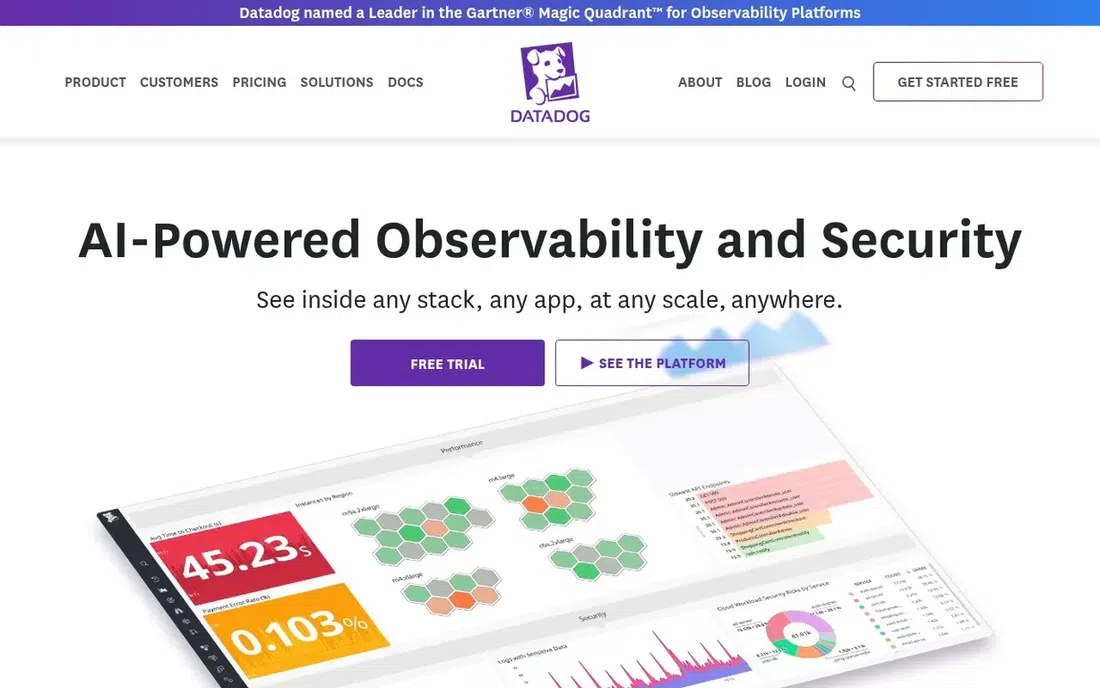
Datadog is built with unified cloud monitoring for apps and services in mind. Startups frequently choose it for its ease of setup and the capacity to see metrics across the stack, which helps with early detection of issues.
Consider Datadog when you want a managed service that brings metrics together quickly. More specifically, Datadog is a cloud monitoring service that collects metrics from all your applications, tools, and services in one place. What you pay to start with Datadog: $8 per committer per month. Free plan details: Free trial.
Downsides: Can become expensive at scale.
- Wide integration support
- Cloud monitoring as a service
- May need configuration for custom metrics
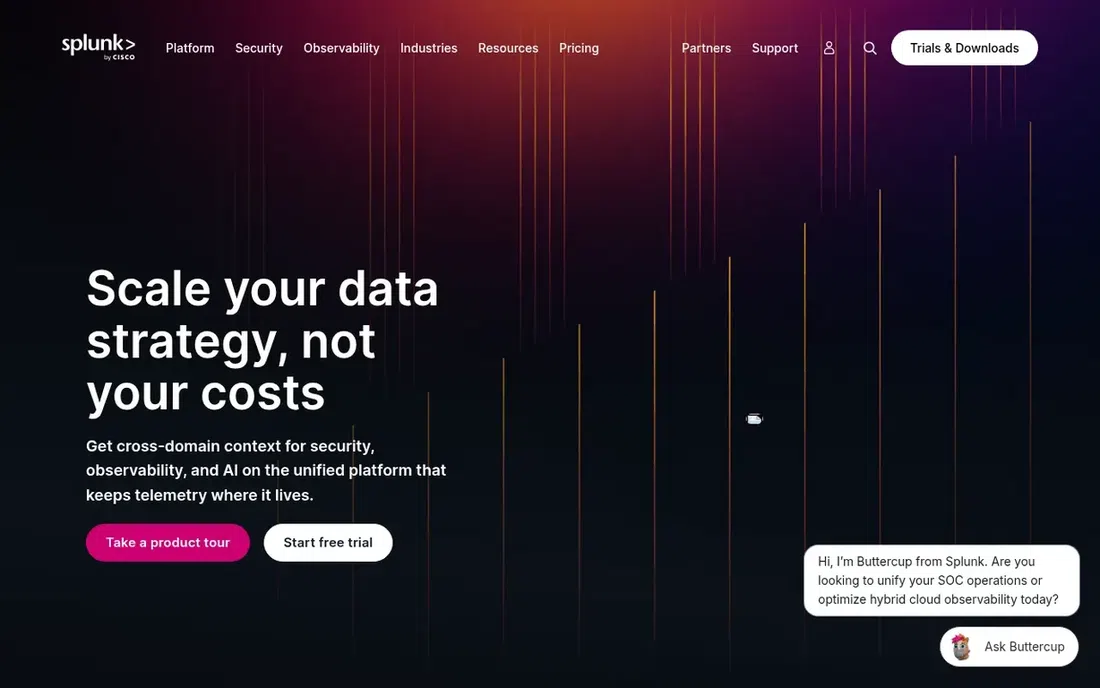
Think of Splunk Observability Cloud for large-scale security and observability. It is aimed at organizations that require to stop threats and prevent downtime at machine speed.
Points against: May be too heavy for early-stage startups.
Starting cost for Splunk Observability Cloud: $6 per month, per CPU core, billed annually. You can start on Splunk Observability Cloud without paying.
- Deals with petabyte-scale data
- Part of a broader data product
- Complicated setup and management
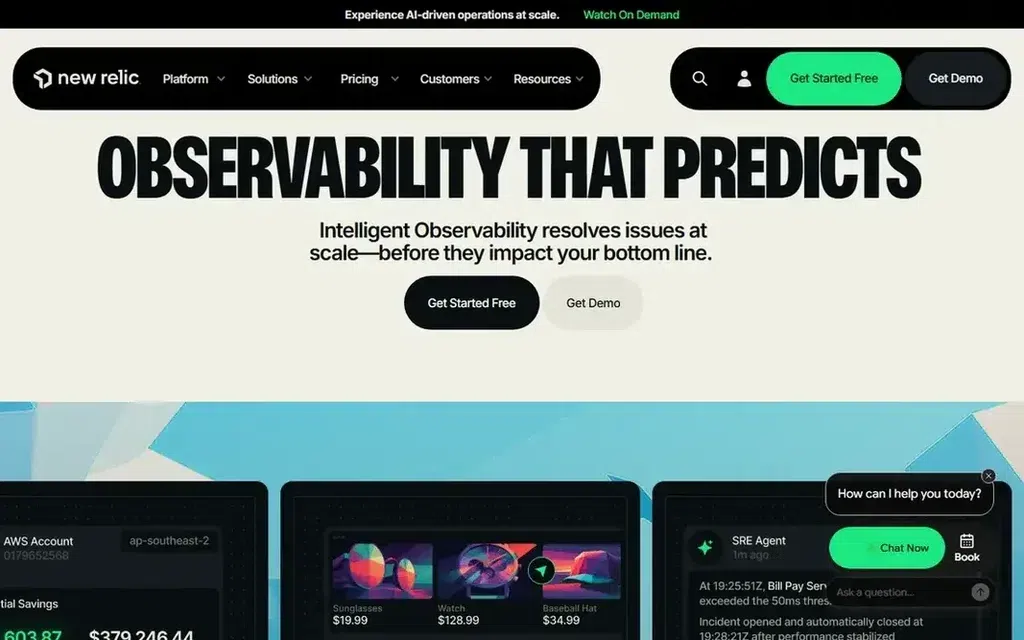
New Relic works best for AI-powered root cause analysis. For startups with minimal telemetry, the AI features may not be completely utilized, and the product can be complicated to configure.
Limits to weigh: May be overkill for very small teams.
Choose New Relic when AI-driven correlation is a priority. Starting cost for New Relic: $10 per user per month. Free access exists with New Relic.
- Helps isolate root cause and cut MTTR
- AI-powered observability system
- Needs instrumentation for full benefit
Selection criteria
Things to verify first
- Get a written quote from Elastic Observability and Sumo Logic; the list shows no starting price for them.
- Look at free plan limits closely: Splunk Observability Cloud and New Relic have one, and the caps decide whether it is usable for real work.
- Take the trial from Elastic Observability, Sumo Logic and Datadog and push a live task through it before you pay.
- Read the limits listed for Elastic Observability first: can be complicated to handle at scale.
- Pick one real project and run it in New Relic first; a small pilot shows fit faster than a checklist.
- Get the contract term, renewal terms and any onboarding fees from Datadog in writing.
FAQ
Do these tools publish their prices?
Not all of them. Elastic Observability and Sumo Logic publish no starting price, so expect a quote request for those. The rest, Datadog included, show a starting price, though seats and billing terms still change the final cost.
How do I choose the right observability tool for my startup?
Consider your team's size, technical expertise, and specific needs like log management, AI-driven insights, or open standards. Evaluate factors like ease of setup, scalability, and cost structure.
What is an observability pipeline?
An observability pipeline is a system that collects, processes, and routes telemetry data for example metrics, logs, and traces from several sources to backend tools. It helps startups centralize and run observability data efficiently, ensuring they can monitor and troubleshoot applications effectively.
What are the key benefits of observability for startups?
Observability helps startups detect and resolve issues rapidly, boost reliability, and understand user experience. It makes it possible for proactive monitoring and quicker debugging, which is crucial for maintaining a competitive edge and keeping customers satisfied.
How are the tools for observability pipeline software for startups ordered?
Elastic Observability sits first and New Relic last because the order follows typical fit for observability pipeline software for startups, then price clarity and free access. It is a judgement call, so read each profile for fit and limits.
Can I try these tools before paying?
Often, yes. Splunk Observability Cloud and New Relic have a free plan and Elastic Observability, Sumo Logic and Datadog offer a free trial. Use your own data and a real task during the test, and check what the free tier or trial limits before you rely on it.
Sources
- https://www.elastic.co
- https://www.sumologic.com
- https://www.datadoghq.com
- https://www.splunk.com
- https://newrelic.com