6 Low Code Test Automation Tools Worth Shortlisting in 2026
Comparing the best low code test automation tools? 6 contenders, each with entry cost, free tier and best-fit buyer. Real limits included. Jump to the table.
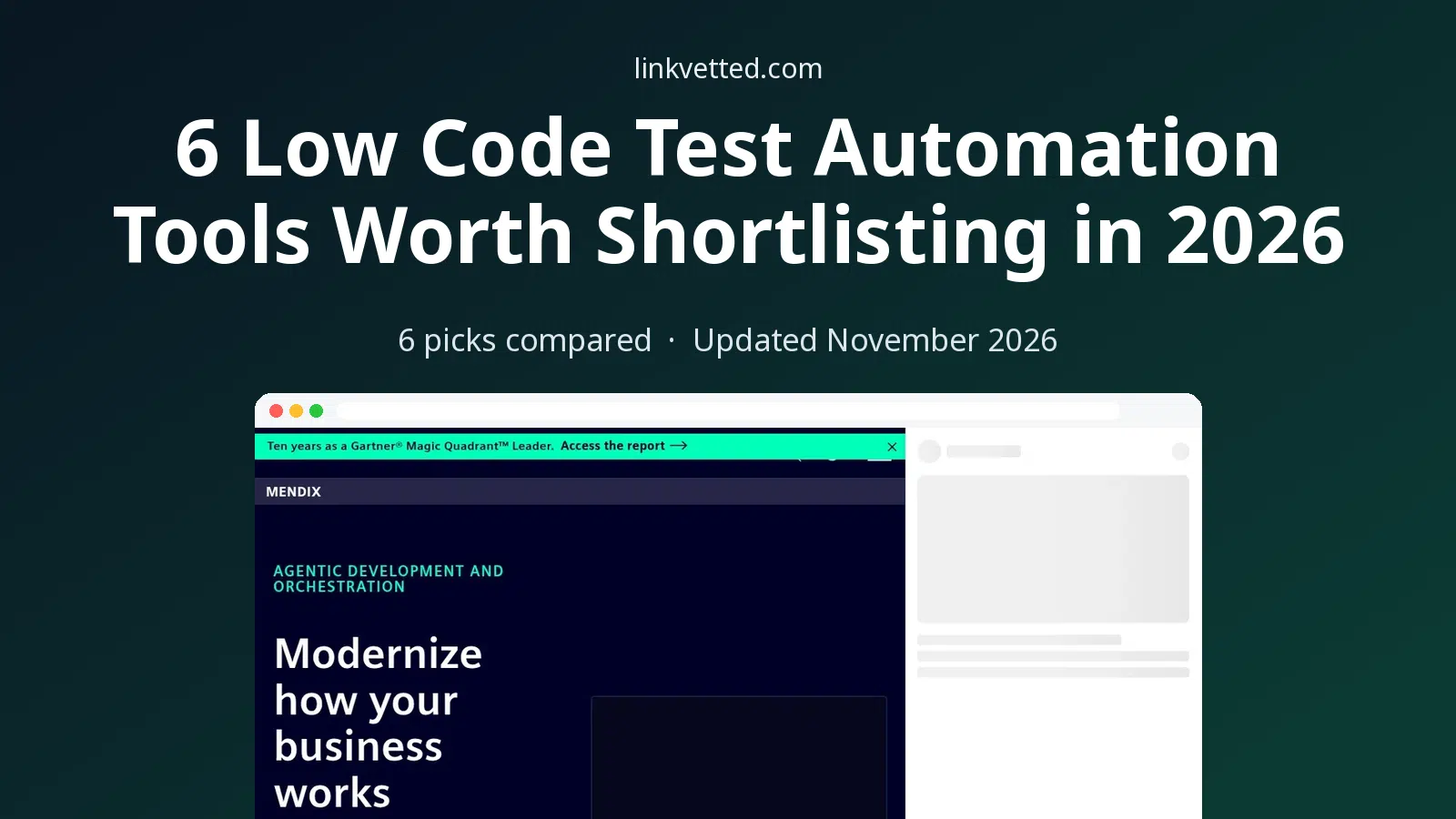
- Editor's choice
 Mendix
Building governed low code workflows
Starts atSee websiteVisit mendix.comFull review - Great alternative
 Katalon Studio
QA teams mixing manual and automatic tests
Starts at$150 per seat per monthVisit katalon.comFull review - Also consider
 Microsoft Power Apps
Everyday business app building
Starts atSee websiteVisit powerapps.microsoft.comFull review
Direct answer
If you need building governed low code workflows, Mendix is the first tool to look at here. Listed starting prices: Katalon Studio from $150 per seat per month. Katalon Studio is better for QA teams mixing manual and automatic tests, and Microsoft Power Apps is better for everyday business app building. The remaining 3 options are covered below with prices and limits.
TL;DR:
- Number one here is Mendix, a fit for building governed low code workflows.
- Katalon Studio has the lowest monthly starting price in this list: $150 per seat per month.
- Tricentis Tosca is the one to check for Codeless enterprise continuous testing.
- Just one of the 6 tools, Microsoft Power Apps, has a free plan.
- What to know about Katalon Studio first: feature depth varies by application type.
Last checked November 2026. Prices and plan details were read from the vendors' own pages in November 2026; vendors change plans often, so confirm the current price on the vendor site before you buy.
Quick comparison
| Tool | Best for | Starts at | Free plan? | |
|---|---|---|---|---|
| Mendix | Building governed low code workflows | See website | Not stated | Visit |
| Katalon Studio | QA teams mixing manual and automatic tests | $150 per seat per month | Free trial | Visit |
| Microsoft Power Apps | Everyday business app building | See website | Yes | Visit |
 OutSystems | Modernizing legacy with custom apps | See website | Not stated | Visit |
 Appian | Orchestrating processes and AI agents | See website | Not stated | Visit |
 Tricentis Tosca | Codeless enterprise continuous testing | See website | Not stated | Visit |
Low Code Test Automation Tools, one by one
If you are comparing low code test automation tools, this page covers 6 tools in one place: what each is best for, what it costs to start, whether it has a free plan, and the main limit to know about.
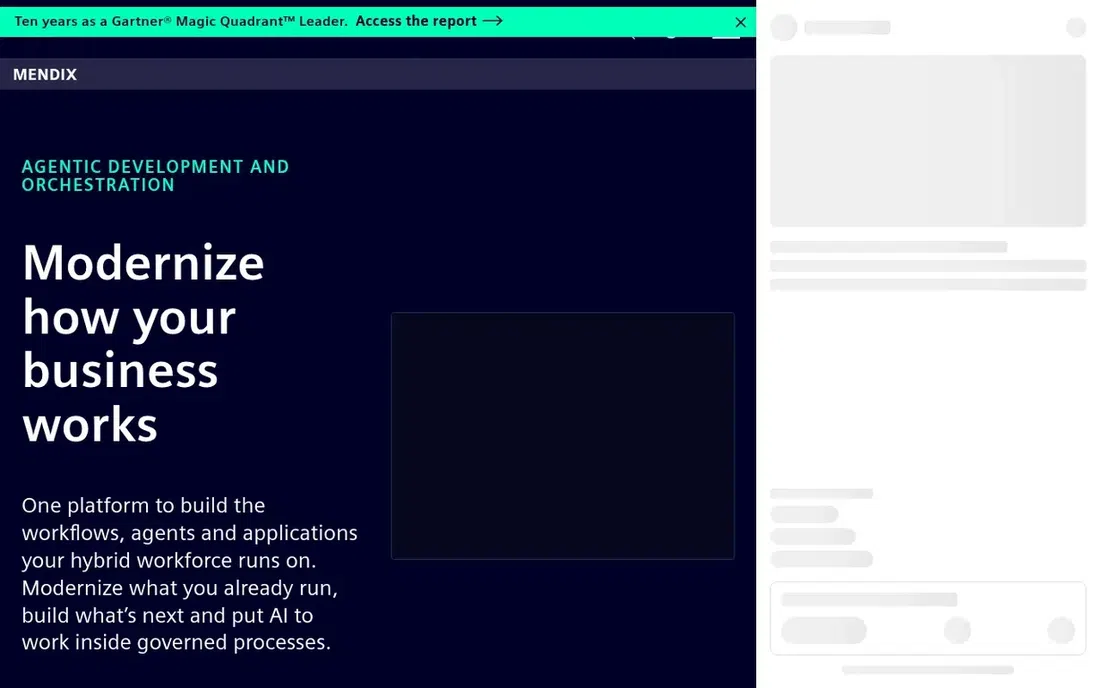
For building governed low code workflows, Mendix is a natural candidate. Mendix is an application system instead of a dedicated test automation product, so test depth relies on what you link to it. Organizations wanting a standalone testing suite with rich built-in test management may prefer a specialized tool.
More specifically, Mendix is a low code system for building the workflows, agents and applications a hybrid workforce runs on. Its vendor page emphasizes modernizing existing systems, building new capabilities and putting AI to work inside governed processes. Teams that build business applications on Mendix should plan testing around the product's own tooling and the integrations they link. No starting price is listed for Mendix here; confirm pricing on the vendor site. Free access: Not stated.
Trade-offs to know: Testing depends on built-in and connected tools.
- Supports modernization of existing systems
- Agents and apps
- Wide system scope needs planning
Katalon Studio is built with QA teams mixing manual and automatic tests in mind. It suits QA organizations that want one place to organize mixed testing efforts and gradually expand automation across application types.
What to check first: Feature depth varies by application type.
Coverage depth can differ between web, mobile, API and desktop targets, so validate your specific stack during evaluation. Starting cost for Katalon Studio: $150 per seat per month. Free access: Free trial. Strengths: Made for QA team workflows.
- Automatic and AI-generated tests
- API and desktop
- Needs setup for complicated environments
Microsoft Power Apps is aimed squarely at everyday business app building. Microsoft Power Apps is a low code app builder for creating custom business apps that simplify processes and boost productivity.
Teams needing rich test authoring, reporting and cross-platform coverage should pair it with a specialized testing product. On top of that, Power Apps is an app builder, not a dedicated test automation system, so it will not replace a QA suite on its own. Microsoft Power Apps does not show a starting price in this comparison, so check the vendor site for current pricing. Microsoft Power Apps offers a free plan.
Drawbacks to consider: Testing relies on complementary tools.
- Simplifies internal processes
- Suits organizations already in the Microsoft ecosystem
- Restricted as a standalone test suite
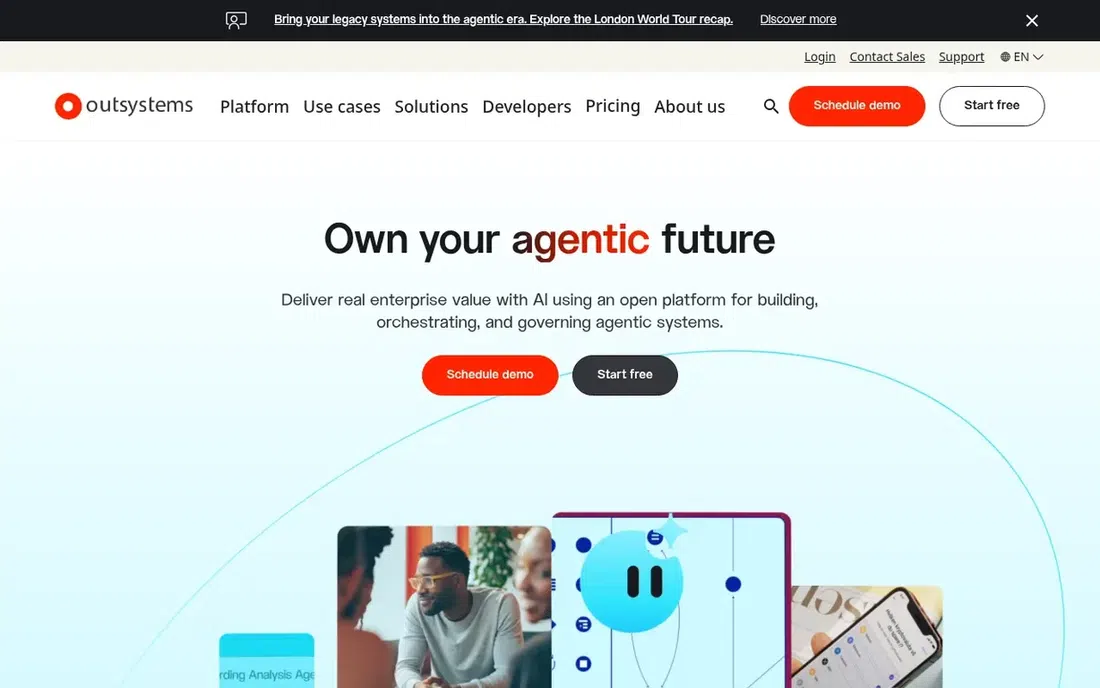
Choose OutSystems for Modernizing legacy with custom apps. OutSystems is a low code platform for building applications and AI agents with confidence. Its vendor page describes helping enterprises modernize legacy systems and run custom apps and agents to meet customer and regulator demands.
Teams whose central need is a ready-made test automation suite should compare dedicated options before committing. Beyond that, as with other application systems, automatic testing is not the core product, so coverage relies on the tools you integrate. This comparison lists no price for OutSystems; ask the vendor. As for free access: Not stated.
Downsides: System breadth needs governance.
- Enterprise-grade application delivery
- Focus on legacy modernization
- Testing relies on connected tooling
In short, Appian is for orchestrating processes and AI agents. Appian is an AI-powered process orchestration product. Its vendor page describes orchestrating AI agents, systems and people for critical processes on an enterprise system without replacing existing systems.
For everyday use, Appian centers on process automation instead of test automation. So teams seeking scripted or codeless test creation across many app types may need extra tools. As for the details, evaluate whether its workflow coverage matches your testing scope. This comparison lists no price for Appian; ask the vendor. As for free access: Not stated.
Drawbacks to consider: Process focus shapes testing approach.
- Orchestrates agents
- AI automation for critical processes
- Not a dedicated test automation suite
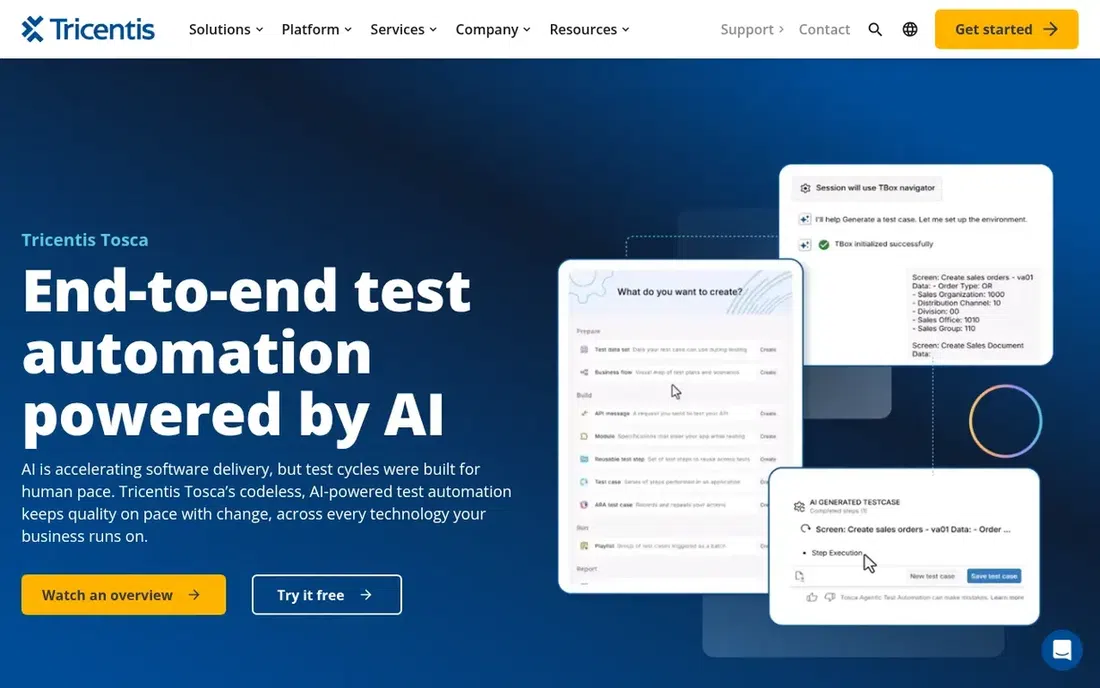
Where Tricentis Tosca fits: Codeless enterprise continuous testing. It suits bigger QA organizations that require to handle numerous connected applications and want to cut hand-coding in test creation and maintenance.
In daily use, the product is positioned for enterprise testing programs, so teams with narrow or straightforward testing needs may find it broader than required. Tricentis Tosca shows no starting price here, so confirm the cost on the vendor site. Free plan details: Not stated.
Best features of Tricentis Tosca: AI-powered test approach. Where it is weaker: Enterprise-oriented scope can feel heavy for small teams.
- Pitched at continuous testing at scale
- Codeless
- Deep system features need onboarding effort
Our selection method
Pricing pages, product documentation and feature lists were the main sources, and every entry carries at least one honest drawback. Where a price is missing, the vendor does not list one publicly or ties it to a quote. Always confirm before budgeting. Tools are placed by general fit for low code test automation tools, with price clarity and free access as tie-breakers. A different team can reasonably rank them differently.
Things to verify first
- Ask Mendix, Microsoft Power Apps, OutSystems and others for a written quote, since no starting price is shown.
- Test the free plan from Microsoft Power Apps against your real workload before relying on it.
- Run a trial of Katalon Studio with real work before paying for a year; your own workflow is the best test.
- Read the limits listed for Mendix first: testing depends on built-in and connected tools.
- Check whether the features you need in OutSystems sit on the entry plan or only on higher tiers.
- Test the integrations you rely on with Microsoft Power Apps before committing; some connectors sit on upper tiers.
FAQ
What makes a test automation tool low code?
Low code test automation emphasizes visual or codeless test creation so team members can build tests with less scripting. The degree of coding required varies by tool, so check how each vendor describes authoring and maintenance.
Do these tools publish their prices?
Not all of them. Mendix, Microsoft Power Apps, OutSystems and others publish no starting price, so expect a quote request for those. The rest, Katalon Studio included, show a starting price, though seats and billing terms still change the final cost.
How are the tools for low code test automation tools ordered?
The order follows typical fit for low code test automation tools, with Mendix first and Tricentis Tosca last, then price clarity and free access. It is editorial judgement, not a score, so another team could rank the tools differently.
Which options for low code test automation tools have a free plan?
Microsoft Power Apps is the only tool in this list with a free plan. Free plans usually cap users, projects or features, so check the limits on the vendor page. One other tool offers a trial instead. For the full picture, the cards above cover all 6 entries of this low code test automation tools list, including price, free plan and limits.
What is the cheapest option for low code test automation tools in this list?
On published monthly entry prices, Katalon Studio is the lowest here at $150 per seat per month. Entry price is only part of the cost, because seats, add-ons and billing terms can change the total. Prices, free plan details and limits for all 6 tools in this low code test automation tools roundup sit on the individual cards above.
Sources
- https://www.mendix.com
- https://katalon.com
- https://powerapps.microsoft.com
- https://www.outsystems.com
- https://appian.com
- https://www.tricentis.com/products/automate-continuous-testing-tosca