Best Codeless Test Automation Tools in 2026: 8 Tools Compared
We compare the best codeless test automation tools for 2026, from visual builders to AI-assisted recorders, with pricing and honest limits for QA teams.

- Editor's choice
 Testim
AI-assisted web and mobile tests
Starts atSee websiteVisit testim.ioFull review - Great alternative
 mabl
SaaS teams wanting low maintenance tests
Starts atSee websiteVisit mabl.comFull review - Also consider
 Katalon Platform
Low code testing across web, mobile and API
Starts at$167 per monthVisit katalon.comFull review
TL;DR:
- Codeless tools suit QA and product teams that need coverage without hiring more developers for test code.
- Self healing locators cut maintenance, but they do not remove the need for good test design.
- Many enterprise tools price by quote, so budget checks need a sales conversation before a final decision.
- Web, mobile, API and desktop coverage varies a lot, so match the tool to the apps you actually ship.
Quick comparison
| Tool | Best for | Starts at | Free plan? | |
|---|---|---|---|---|
| Testim | AI-assisted web and mobile tests | See website | Free trial | Visit |
| mabl | SaaS teams wanting low maintenance tests | See website | Free trial | Visit |
| Katalon Platform | Low code testing across web, mobile and API | $167 per month | Yes | Visit |
 Leapwork | Visual no code flows for business users | See website | Free trial | Visit |
 TestRigor | Plain English end to end tests | See website | Free trial | Visit |
 ACCELQ | Design first codeless testing at scale | See website | Free trial | Visit |
 Tricentis Tosca | Enterprise model based testing | See website | No | Visit |
 Testsigma | Cloud testing with natural language steps | See website | Free trial | Visit |
The best codeless test automation tools
Codeless testing promises coverage without a large test codebase, and the best tools deliver much of that promise. They record, model or generate tests from clicks, flows or plain language, then keep those tests running as the app changes. We compared official feature and pricing pages to separate tools that truly reduce coding from tools that only hide code behind a recorder.

Testim, now part of Tricentis, focuses on stable end to end tests that need little code to create or maintain. Smart locators use several attributes to find elements, so small UI changes break fewer tests. Teams can also export tests as code when they need custom logic, which gives an escape route that pure recorders lack.
Pricing by quote makes quick budget checks hard, and teams should ask for a trial on their own app before signing. Web testing is the strongest area, so mobile heavy teams should test mobile flows early in a trial.
- AI assisted test creation and smart locators
- Fast authoring for web apps
- TestOps reporting and CI integration
- Quote based pricing
- Mobile coverage is narrower than web coverage
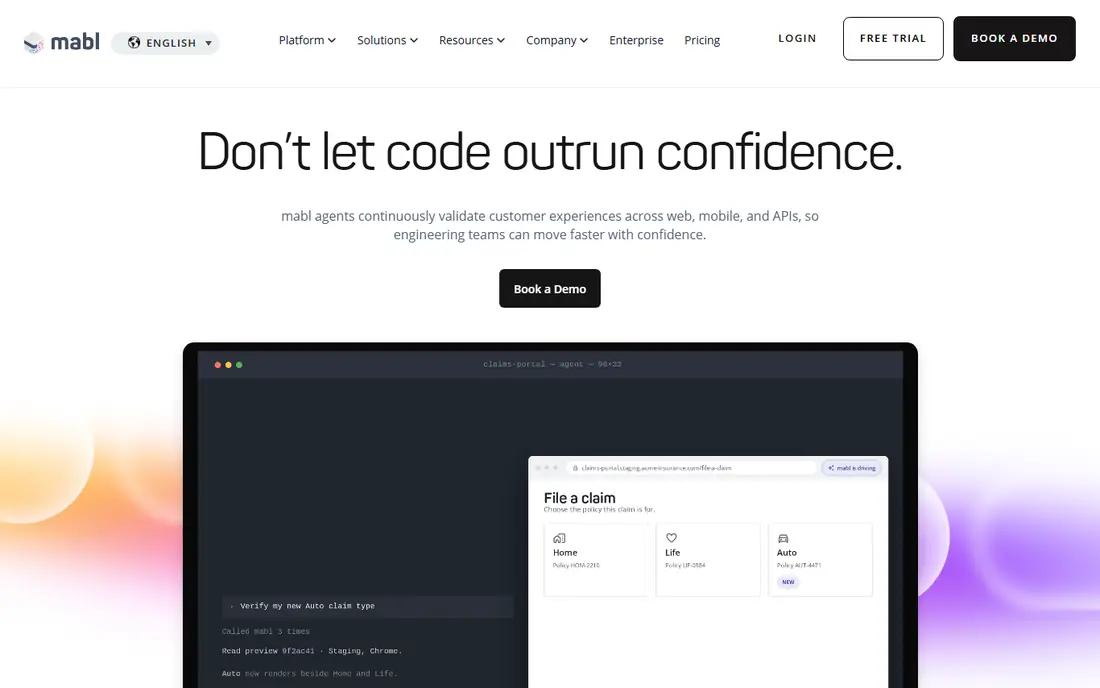
mabl is a cloud testing platform for SaaS teams that want tests to keep working with less upkeep. Low code authoring, AI assistance and auto heal reduce the repair work that usually follows UI changes. Performance and accessibility checks in the same run add value beyond pass or fail results.
The platform is priced by quote, so small teams cannot check costs from a pricing page alone. Desktop app coverage is also thinner than web and mobile. For SaaS products with frequent releases, the low maintenance angle is the main draw.
- Low code creation with AI assistance
- Auto heal for changing elements
- Built in performance and accessibility checks
- Quote based pricing
- Best fit is SaaS web and mobile, not desktop
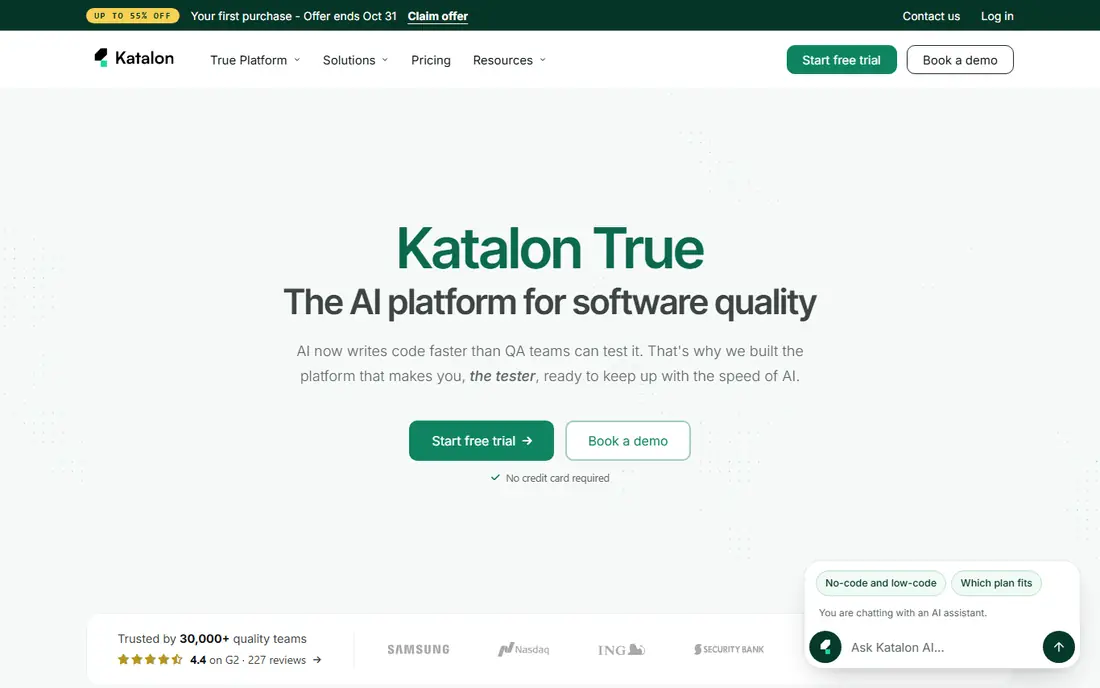
Katalon gives teams a single platform for web, mobile, API and desktop testing with low code and no code options. Record, keyword driven and script modes let beginners start simple and let engineers add code where needed. TestCloud runs tests in parallel across browsers and devices, which shortens release cycles.
The free tier helps teams start, but serious parallel and cloud use moves to paid plans. The breadth of features also means a learning curve for new testers. For teams that need one tool across many app types, Katalon covers more ground than most codeless rivals.
- Record and keyword driven authoring
- Web, mobile, API and desktop coverage
- TestCloud for parallel runs
- Paid tiers add up for cloud and parallel use
- Interface holds many features to learn
Leapwork uses visual flowcharts to build automation, which makes tests readable for business users and QA staff alike. Flows show steps, branches and data clearly, so reviews do not require reading code. Enterprise governance, scheduling and distributed execution suit large organizations with many teams.
That enterprise focus brings quote based pricing and a heavier setup than a browser recorder. Small teams may find it more than they need. Large teams that want business users involved in automation will value the visual approach.
- Visual flowchart design anyone can read
- Strong enterprise governance
- Good for business process automation as well as testing
- Quote based enterprise pricing
- Heavier setup than cloud recorders
TestRigor lets teams write tests in plain English, such as clicking a button by its visible label rather than by code selectors. That approach opens test creation to product managers and manual testers, not just engineers. Self healing helps tests survive UI changes, and coverage spans web, mobile, desktop and APIs.
Plain English does not mean vague English. Tests still need clear steps and expected results, or they become hard to debug. Pricing is by quote, so teams should trial it on real user journeys before judging value.
- Tests written in plain English
- Self healing across web, mobile and desktop
- Low maintenance for changing UIs
- Quote based pricing
- Plain language still needs clear test design
ACCELQ takes a design first approach, where teams model actions and flows once and reuse them across many tests. That reuse pays off at scale, since a changed login flow updates everywhere instead of in dozens of recorded tests. Auto healing locators and broad integrations support large QA programs.
The method needs upfront design discipline, which can feel slow for a team that wants quick recorded tests. Pricing is by quote, and the platform targets mid size and enterprise teams. For programs with hundreds of tests, the maintainability gain is the reason to choose it.
- Design first modeling with reusable actions
- Auto healing locators
- Strong Jira and CI integrations
- Quote based pricing
- Design first method takes time to learn
Tosca is the enterprise end of codeless testing, with model based automation across web, mobile, API, SAP and legacy systems. Risk based optimization helps large teams focus testing on the highest risk changes. That breadth suits regulated industries and companies with many connected systems.
It is not a quick trial tool for a small team. Pricing is premium and quote based, and implementation takes planning. Teams with simpler web apps will get faster value from Testim, mabl or Katalon. Teams with complex enterprise estates may need Tosca depth.
- Model based testing across many technologies
- Risk based test optimization
- Strong SAP and enterprise app support
- Quote based premium pricing
- Long implementation for complex estates
Testsigma runs codeless tests in the cloud using natural language steps, with parallel execution across browsers and devices. Teams can write tests without local setup, schedule runs and review results in one place. GenAI assistance helps draft steps and explain failures on supported tiers.
Public pricing detail is limited, so teams need a quote to budget accurately. Some advanced features also require higher tiers. For SaaS teams that want cloud native testing without managing test infrastructure, Testsigma is a strong contender to trial.
- Natural language test steps in the cloud
- Large parallel execution
- GenAI assistance on higher tiers
- Public pricing is limited
- Advanced features sit on higher tiers
How we picked these
We compared official feature and pricing pages, and we favored tools that are actively sold and that let teams create tests without writing code for common flows. We weighed coverage, authoring style, self healing, CI integration, reporting and pricing transparency. We did not claim hands-on testing, and we left out code only frameworks and recorders with no maintenance features.
How to choose a codeless testing tool
Match coverage to your apps
List every app type you ship, including web, mobile, API and desktop, then check each tool against that list. A great web tool is a poor choice for a desktop heavy product. Trial the weakest coverage area first, not the demo flow.
Test maintenance on a real change
Record a test, then change a label, move a button and rename a page. Watch how many tests break and how long repairs take. Self healing claims matter less than what happens on your own app.
Check CI and reporting fit
Tests need to run on pull requests and releases, with results developers can act on. Check integrations with your CI system, Jira and Slack, plus failure screenshots and logs. A tool that only runs by hand will not scale.
Price at your real test volume
Quote based tools can look similar until you add parallel runs, cloud minutes and seats. Model costs at your test count and release pace, and ask what counts as a billable run before signing.
FAQ
What is the best codeless test automation tool for beginners?
Katalon Platform is a good starting point, thanks to a free tier and record plus keyword authoring. mabl and Testim suit SaaS teams that want AI assistance and low maintenance. Start with a trial on one real user journey.
What is the best web testing tool that needs no code?
Testim and mabl lead for web testing with low code authoring and self healing. Leapwork leads for visual flowchart testing that business users can read. The best choice depends on whether your team prefers recording, plain language or flowcharts.
Do codeless tools really need no coding?
For common flows, yes, but complex logic, custom data setup and tricky assertions may still need code or workarounds. Good tools let engineers add code where needed without rewriting every test. Plan for a mix, with most tests codeless and a few coded.
How do self healing tests work?
Self healing tools store several ways to find each element, so if one selector changes, another can still locate it. The test then updates its stored locator for future runs. This cuts routine repairs, but it does not fix tests broken by changed app behavior or bad test design.
Is codeless testing good for mobile apps?
Yes, for many apps, especially with Katalon, TestRigor and Testsigma, which cover mobile alongside web. Check device and OS coverage for your app, and trial on real devices or cloud devices before committing. Native features and gestures vary by tool.