6 Low Code Digital Platform Worth Shortlisting in 2026
Best low code digital platform: 6 contenders ranked by fit, with entry costs and free tiers. We note where every tool falls short. Skim the table first.

- Editor's choice
 Salesforce Platform
CRM-connected enterprise application development
Starts atSee websiteVisit salesforce.comFull review - Great alternative
 Appian
Process orchestration across the enterprise
Starts atSee websiteVisit appian.comFull review - Also consider
 Pega Platform
Enterprise transformation and workflow automation
Starts atSee websiteVisit pega.comFull review
Direct answer
Salesforce Platform comes first here, mainly for CRM-connected enterprise application development. Listed starting prices: Retool from $10 per builder per month. Alternatives: Appian for process orchestration across the enterprise, and Pega Platform for enterprise transformation and workflow automation. The full list of 6 tools follows, with prices and free plan facts.
TL;DR:
- Salesforce Platform sits first on this list: CRM-connected enterprise application development.
- Microsoft Power Apps is the one to check for Microsoft-centric business app building.
- 2 of 6 tools offer a free plan: Retool, Microsoft Power Apps.
- The main caution on Mendix: wide scope can require upfront planning.
- Retool has the lowest monthly starting price in this list: $10 per builder per month.
Last checked November 2026. Prices and plan details were read from the vendors' own pages in November 2026; vendors change plans often, so confirm the current price on the vendor site before you buy.
Quick comparison
| Tool | Best for | Starts at | Free plan? | |
|---|---|---|---|---|
| Salesforce Platform | CRM-connected enterprise application development | See website | Not stated | Visit |
| Appian | Process orchestration across the enterprise | See website | Not stated | Visit |
| Pega Platform | Enterprise transformation and workflow automation | See website | Not stated | Visit |
 Mendix | Governed enterprise workflows and agents | See website | Not stated | Visit |
 Retool | Internal tools and admin software | $10 per builder per month | Yes | Visit |
 Microsoft Power Apps | Microsoft-centric business app building | See website | Yes | Visit |
Low Code Digital Platform compared in detail
Short on time? The summary and table above give the quick view of 6 tools for low code digital platform, and the profiles that follow give the detail behind each entry.
For CRM-connected enterprise application development, Salesforce Platform is a natural candidate. A standalone low code builder may be more straightforward when the goal is a small internal app without CRM dependencies. Beyond that, teams already using Salesforce services will find the most natural fit.
Strengths: Suits organizations already on Salesforce.
Trade-offs to know: Wide service set needs coordination.
Salesforce Platform is described as powering the agentic enterprise by combining metadata, governance, MuleSoft, and Data Cloud. The product's value is concentrated in the Salesforce ecosystem, so organizations outside it should weigh integration effort carefully. Check the vendor site for Salesforce Platform pricing; none is listed in this comparison. As for free access: Not stated.
- Data Cloud
- Pitched at agentic enterprise development
- Deepest value inside the Salesforce ecosystem
Appian is built with process orchestration across the enterprise in mind. Since the system is process-centric, teams should expect to model and govern workflows carefully. For everyday use, Appian concentrates on AI-powered process orchestration across the enterprise, automating critical processes by coordinating AI agents, systems, and people.
It is built to work without replacing the systems an organization already runs. That makes it a fit for teams whose primary challenge is connecting workflows instead of building standalone apps. Worth adding: consider a builder-oriented system when application construction, not orchestration, is the primary goal. No starting price is listed for Appian here; confirm pricing on the vendor site. On free options: Not stated.
The main drawbacks: Process-first approach may not suit all app types.
- Orchestrates agents, systems, people
- AI-powered process orchestration
- Needs process modeling discipline
Pega Platform targets enterprise transformation and workflow automation. It is pitched at organizations undertaking broad change programs instead of isolated app builds. Worth adding: enterprises with cross-functional transformation goals are the clearest fit.
Also, the product's transformation focus means implementation involves planning across teams and systems. Beyond that, smaller organizations or single-team projects may find it more than necessary. Pega Platform does not show a starting price in this comparison, so check the vendor site for current pricing. Free plan details: Not stated.
Downsides: Enterprise scope needs significant planning.
- AI-powered product for enterprise transformation
- Automates workflows and modernizes legacy systems
- Adoption can take time for new teams
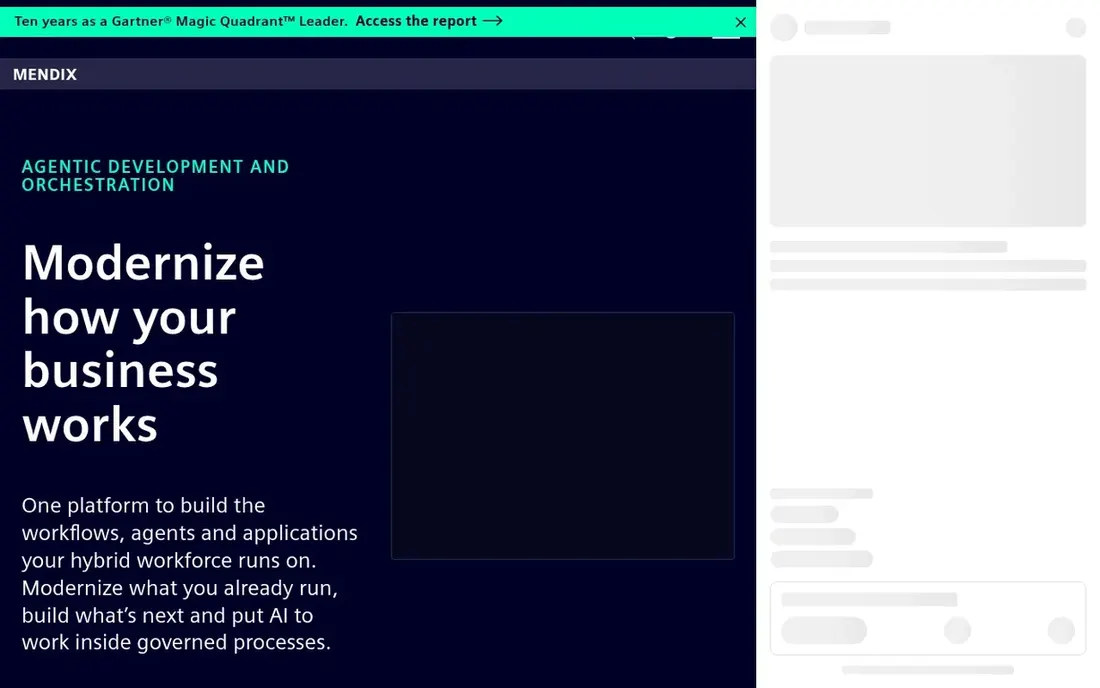
Mendix makes the most sense for governed enterprise workflows and agents. It is geared toward organizations that want to modernize what they already run, build what comes next, and put AI to work inside governed processes.
Drawbacks to consider: Governance setup layers on configuration effort.
More specifically, pick something more straightforward when the goal is a single dashboard instead of governed enterprise workflows. The breadth of the system means teams should plan governance and architecture before building, which can slow early progress. Check the vendor site for Mendix pricing; none is listed in this comparison. Free options: Not stated.
- One product for workflows, agents, applications
- Puts AI inside governed processes
- Wide scope can need upfront planning
Where Retool fits: internal tools and admin software. Retool is made for building internal software better with AI, letting teams build, deploy, and run internal tools on a unified engine.
Retool cost at the entry level: $10 per builder per month. Retool includes a free tier.
Points against: Needs understanding of data sources.
- Uses AI throughout business operations
- Builds, deploys
- Concentrated on internal instead of customer-facing apps
Microsoft Power Apps
Best for: Microsoft-centric business app building
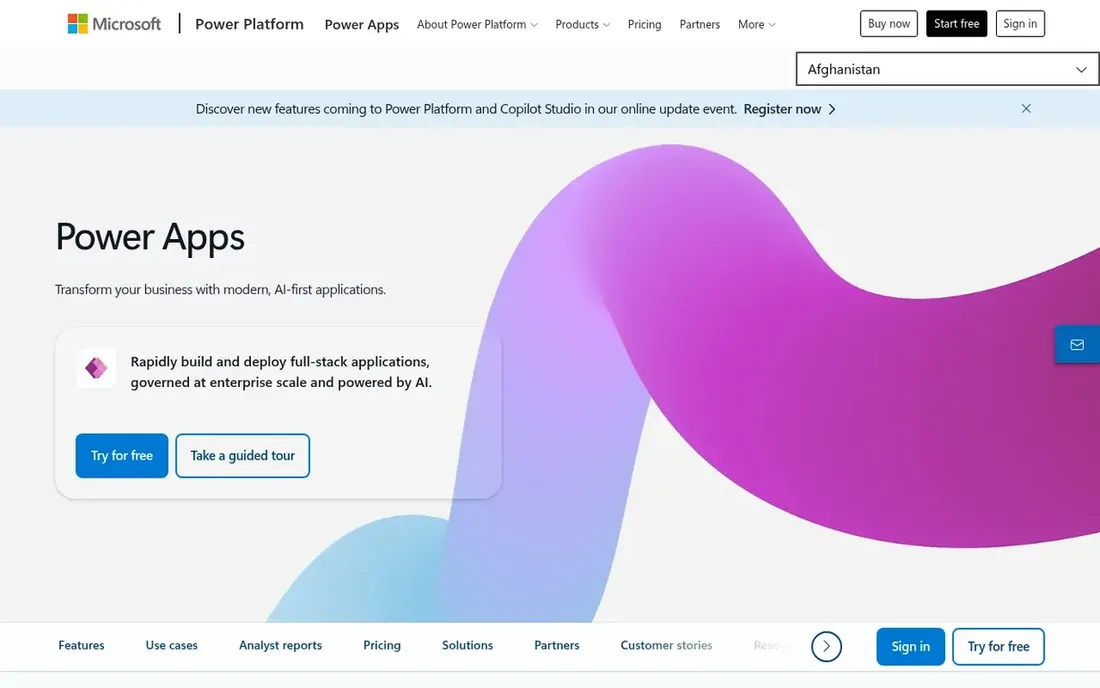
Microsoft Power Apps was built for Microsoft-centric business app building. Microsoft Power Apps is a low code app builder for creating custom business apps that simplify processes and boost productivity across an organization. Its strengths are tied to the Microsoft environment, so organizations outside that ecosystem may find integration less natural.
Downsides: Complex apps may need pro developer input.
More specifically, consider a system with broader enterprise application lifecycle tooling if you have to modernize large legacy systems instead of build focused business apps. For everyday use, very complicated or highly custom applications can still need professional development effort. No starting price is listed for Microsoft Power Apps here; confirm pricing on the vendor site. You can start on Microsoft Power Apps without paying.
- Suits organizations already using Microsoft services
- Aims to simplify processes and boost productivity
- Best value inside the Microsoft ecosystem
What went into this list
What to confirm before you sign up
- Ask Salesforce Platform, Appian, Pega Platform and others for a written quote, since no starting price is shown.
- Look at free plan limits closely: Retool and Microsoft Power Apps have one, and the caps decide whether it is usable for real work.
- Before choosing Salesforce Platform, weigh its main limit: deepest value inside the Salesforce ecosystem.
- Before you load data into Retool, check what an export looks like and who can run it.
- Ask Microsoft Power Apps whether prices are locked for the first term and what happens at renewal.
FAQ
What is the cheapest option for low code digital platform in this list?
On published monthly entry prices, Retool is the lowest here at $10 per builder per month. Entry price is only part of the cost, because seats, add-ons and billing terms can change the total. Prices, free plan details and limits for all 6 tools in this low code digital platform roundup sit on the individual cards above.
How are the tools for low code digital platform ordered?
The order follows typical fit for low code digital platform, with Salesforce Platform first and Microsoft Power Apps last, then price clarity and free access. It is editorial judgement, not a score, so another team could rank the tools differently.
Do low code products replace professional developers?
They cut the amount of hand-written code needed for numerous projects, but complicated integrations, governance, and custom logic can still call for professional development skills. For everyday use, numerous organizations combine low code tools with developer expertise.
Which options for low code digital platform have a free plan?
Retool and Microsoft Power Apps offer a free plan in this list. Free plans usually cap users, projects or features, so check the limits on the vendor page. Each of the 6 options in this low code digital platform guide has its own card above with the price, free plan and limits.
Is Salesforce Platform the right pick for everyone comparing low code digital platform?
No single tool suits every team. Salesforce Platform comes first because it fits CRM-connected enterprise application development, while Appian suits process orchestration across the enterprise and Pega Platform suits enterprise transformation and workflow automation. Match the tool to your own size, budget and workflow before deciding.
How do I choose between app builders and process platforms?
Start with the primary goal. From a buyer's view, if you have to build business apps or internal tools, app builders like Microsoft Power Apps or Retool are a natural fit.
Sources
- https://www.salesforce.com/platform
- https://appian.com
- https://www.pega.com
- https://www.mendix.com
- https://retool.com
- https://powerapps.microsoft.com