Best Internet of Things Developers Software for Enterprise in 2026: 6 Tools Compared
Weighing the best internet of things developers software for enterprise? We lined up 6 products by cost, free access and fit. Plus the drawbacks of each tool.
- Editor's choice
 Losant
Visual enterprise IoT development
Starts atSee websiteVisit losant.comFull review - Great alternativeAWS IoT Greengrass
Open-source edge runtime
Starts atSee websiteVisit aws.amazon.comFull review - Also considerThingWorx
Industrial IoT application development
Starts atSee websiteVisit ptc.comFull review
Direct answer
Our first pick is Losant, best for visual enterprise IoT development. Listed starting prices: Particle from $299 a month per block. AWS IoT Greengrass is better for open-source edge runtime, and ThingWorx is better for industrial IoT application development. The remaining 3 options are covered below with prices and limits.
TL;DR:
- Losant sits first on this list: visual enterprise IoT development.
- A free plan is available from 3 of the 6 tools: AWS IoT Greengrass, Particle, AWS IoT Core.
- One limit worth knowing about Particle: hardware-centric approach may not suit all.
- Particle is the lowest-priced starter here at $299 per month per block.
- For managing large device fleets, Azure IoT Hub is worth a look.
Last checked November 2026. Prices and plan details were read from the vendors' own pages in November 2026; vendors change plans often, so confirm the current price on the vendor site before you buy.
Quick comparison
| Tool | Best for | Starts at | Free plan? | |
|---|---|---|---|---|
| Losant | Visual enterprise IoT development | See website | Not stated | Visit |
| AWS IoT Greengrass | Open-source edge runtime | See website | Yes | Visit |
| ThingWorx | Industrial IoT application development | See website | Not stated | Visit |
 Particle | Integrated hardware-to-cloud products | $299 a month per block | Yes | Visit |
 AWS IoT Core | Secure cloud device connectivity | See website | Yes | Visit |
 Azure IoT Hub | Managing large device fleets | See website | Free trial | Visit |
Our 6 picks for internet of things developers software for enterprise
This LinkVetted guide covers 6 options for internet of things developers software for enterprise. Each profile lists a starting price, free plan details, strengths and drawbacks, so you can drop poor fits quickly.
Losant was built for visual enterprise IoT development. If your organization is already committed to a hyperscaler, Azure IoT Hub or AWS IoT Core could be a more natural starting point.
In practice, Losant is an enterprise IoT system meant to help teams rapidly build live connected options. As a smaller vendor compared to AWS or Microsoft, Losant may be less familiar to enterprises with strict procurement preferences. Pricing for Losant is not stated here, so ask the vendor for current figures. As for free access: Not stated.
Trade-offs to know: May need vendor consultation for scale.
- Easy-to-use enterprise product
- Built for team collaboration
- Less known than hyperscaler systems
AWS IoT Greengrass
Best for: Open-source edge runtime
AWS IoT Greengrass is a good fit for open-source edge runtime. AWS IoT Greengrass is an open-source edge runtime and cloud service that helps enterprises build, deploy, and run intelligent device software.
It makes it possible for local compute, messaging, and machine learning inference on connected devices, making it a solid fit for AWS-centric organizations that require edge processing. No starting price is listed for AWS IoT Greengrass here; confirm pricing on the vendor site. AWS IoT Greengrass offers a free plan.
Honest limits: Edge device provisioning needed.
- Build, deploy
- Supports local compute on devices
- Needs AWS IoT familiarity
ThingWorx
Best for: Industrial IoT application development
ThingWorx works best for industrial IoT application development. ThingWorx is an industrial IoT product from PTC that supports application development and connected operations. It is widely known for industrial use cases, helping enterprises build IoT applications that plug into manufacturing and product data, and it suits organizations with industrial digital transformation goals.
Trade-offs to know: Enterprise sales process.
In daily use, ThingWorx is generally positioned for bigger industrial deployments, so smaller or more straightforward projects may find it heavy. If you need a light cloud gateway, AWS IoT Core or Azure IoT Hub may be more appropriate. ThingWorx shows no starting price here, so confirm the cost on the vendor site. Free options: Not stated.
- Part of PTC product suite
- Industrial IoT focus
- Complicated deployment for straightforward use cases
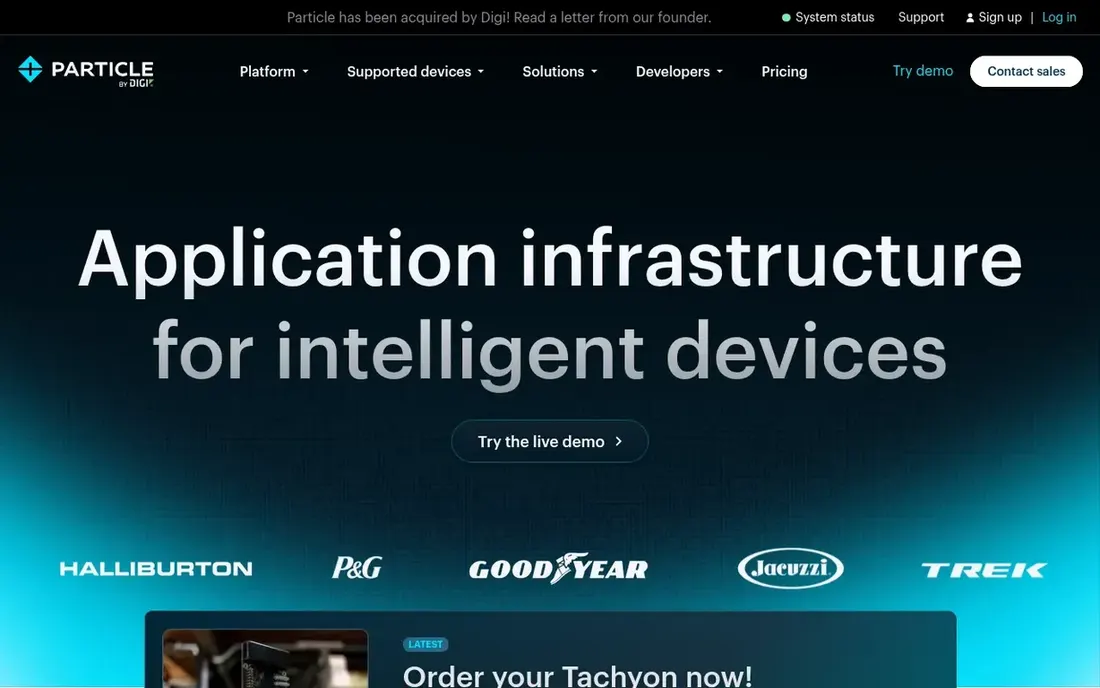
Particle is built with integrated hardware-to-cloud products in mind. Since Particle leans toward integrated hardware and software, enterprises with existing device hardware or a cloud-only strategy may prefer a system like AWS IoT Core.
What to check first: Less emphasis on pure cloud gateway.
The starting price for Particle: $299 per month per block. You can start on Particle without paying.
- Supports connected machines and vehicles
- Integrated IoT platform-as-a-service
- Hardware-centric approach may not suit all
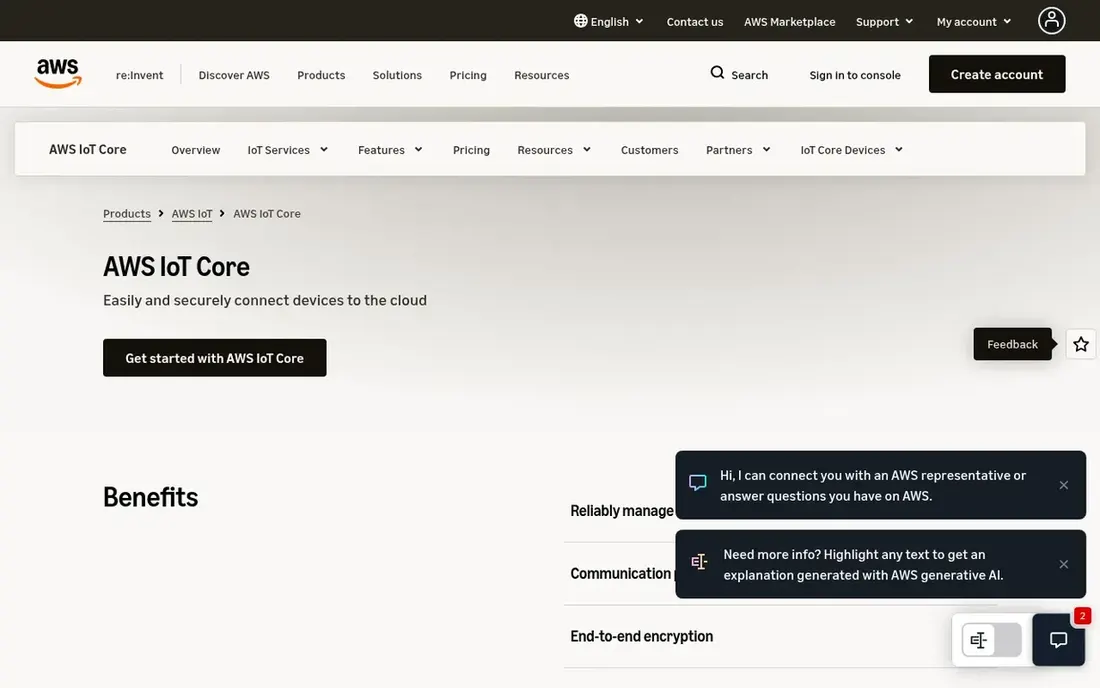
AWS IoT Core is a good fit for secure cloud device connectivity. If you need a completely integrated hardware and software product system, consider Particle instead. In daily use, the product assumes familiarity with AWS identity, networking, and billing models, which can add setup overhead for teams new to the ecosystem.
As for the details, AWS IoT Core is a managed cloud service that enables secure two-way communication between internet-connected devices and AWS services. It offers a device gateway and device SDK capabilities, making it a natural fit for enterprises already building on AWS that need dependable device connectivity and integration with cloud backends. No starting price is listed for AWS IoT Core here; confirm pricing on the vendor site. You can start on AWS IoT Core without paying.
Drawbacks to consider: Complicated pricing at scale.
- Device SDKs for typical hardware
- Connects with AWS services
- Needs AWS ecosystem familiarity
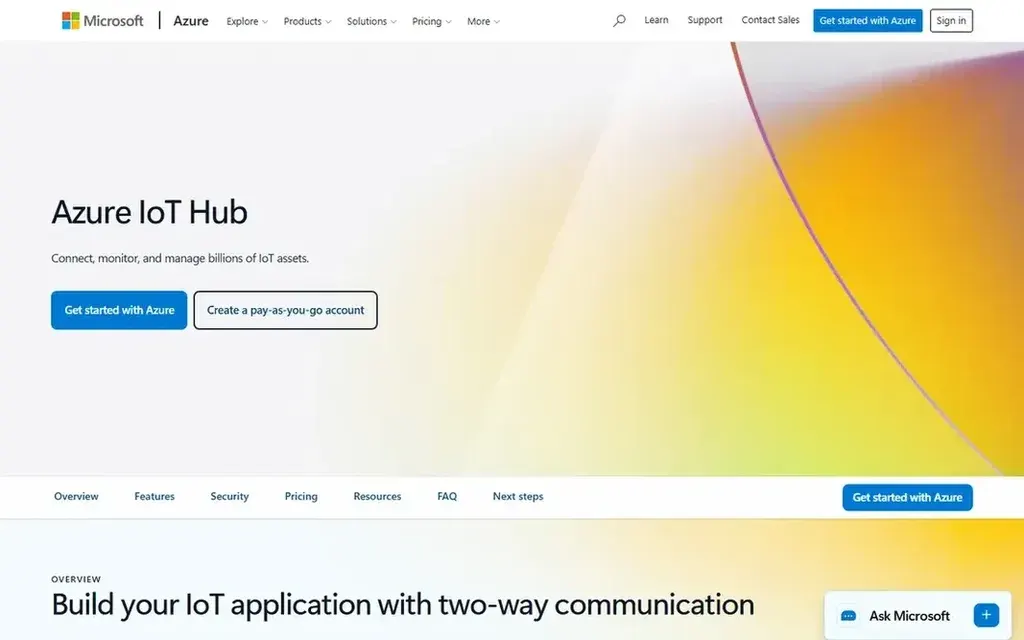
Think of Azure IoT Hub for managing large device fleets. Azure IoT Hub is a cloud product for connecting, monitoring, provisioning, and configuring IoT devices. It is meant to run large device fleets and performs well for enterprises standardized on Microsoft Azure that require a central hub for device communication and lifecycle management.
As for the details, teams outside the Azure ecosystem may find the ramp-up time steeper. Some advanced capabilities require pairing with other Azure services. If you prefer a vendor-neutral system with visual tooling, Losant may be a better fit. Azure IoT Hub shows no starting price here, so confirm the cost on the vendor site. Free access: Free trial.
The main drawbacks: Azure-specific configuration required.
- Link, monitor
- Configure devices
- Advanced features need extra services
How we built this list
Selection started from tools commonly considered for internet of things developers software for enterprise, then narrowed to 6 that have clear pricing information or a clear quote process. Treat prices as a snapshot: vendors change plans often, so check the vendor site for the figure that applies today. We ordered the tools by general fit, then by how clearly pricing is shown, then by free access. A buyer with unusual needs may reorder them.
What to check before you buy
- Confirm the entry price on the vendor page. For Losant, AWS IoT Greengrass, ThingWorx and others that means a quote rather than a fixed price.
- Look at free plan limits closely: AWS IoT Greengrass, Particle and AWS IoT Core have one, and the caps decide whether it is usable for real work.
- Take the trial from Azure IoT Hub and push a live task through it before you pay.
- Read the limits listed for Losant first: less known than hyperscaler systems.
- Involve the people who will use AWS IoT Core daily; a short pilot beats a long feature checklist.
- Test the integrations you rely on with Losant before committing; some connectors sit on upper tiers.
FAQ
Which options for internet of things developers software for enterprise have a free plan?
AWS IoT Greengrass, Particle and AWS IoT Core offer a free plan in this list. Free plans usually cap users, projects or features, so check the limits on the vendor page. One other tool offers a trial instead.
What is the cheapest option for internet of things developers software for enterprise in this list?
On published monthly entry prices, Particle is the lowest here at $299 per month per block. Entry price is only part of the cost, because seats, add-ons and billing terms can change the total. For the full picture, the cards above cover all 6 entries of this internet of things developers software for enterprise list, including price, free plan and limits.
Is Losant the right pick for everyone comparing internet of things developers software for enterprise?
No single tool suits every team. Losant comes first because it fits visual enterprise IoT development, while AWS IoT Greengrass suits open-source edge runtime and ThingWorx suits industrial IoT application development. Match the tool to your own size, budget and workflow before deciding.
When should I choose Particle or Losant over a hyperscaler product?
Particle fits product firms that want an integrated hardware-to-cloud product. Losant suits teams seeking an easy-to-use enterprise system for building live connected options.
Can I try these tools before paying?
Often, yes. AWS IoT Greengrass, Particle and AWS IoT Core have a free plan and Azure IoT Hub offers a free trial. Use your own data and a real task during the test, and check what the free tier or trial limits before you rely on it.
Sources
- https://www.losant.com
- https://aws.amazon.com/greengrass
- https://www.ptc.com/en/products/thingworx
- https://www.particle.io
- https://aws.amazon.com/iot-core
- https://azure.microsoft.com/en-us/products/iot-hub