Best Incident Management Software for Startups for 2026: Our 5 Vetted Picks
Best incident management software for startups: 5 contenders ranked by fit, with entry costs and free tiers. Every pick gets a straight assessment. Start here.
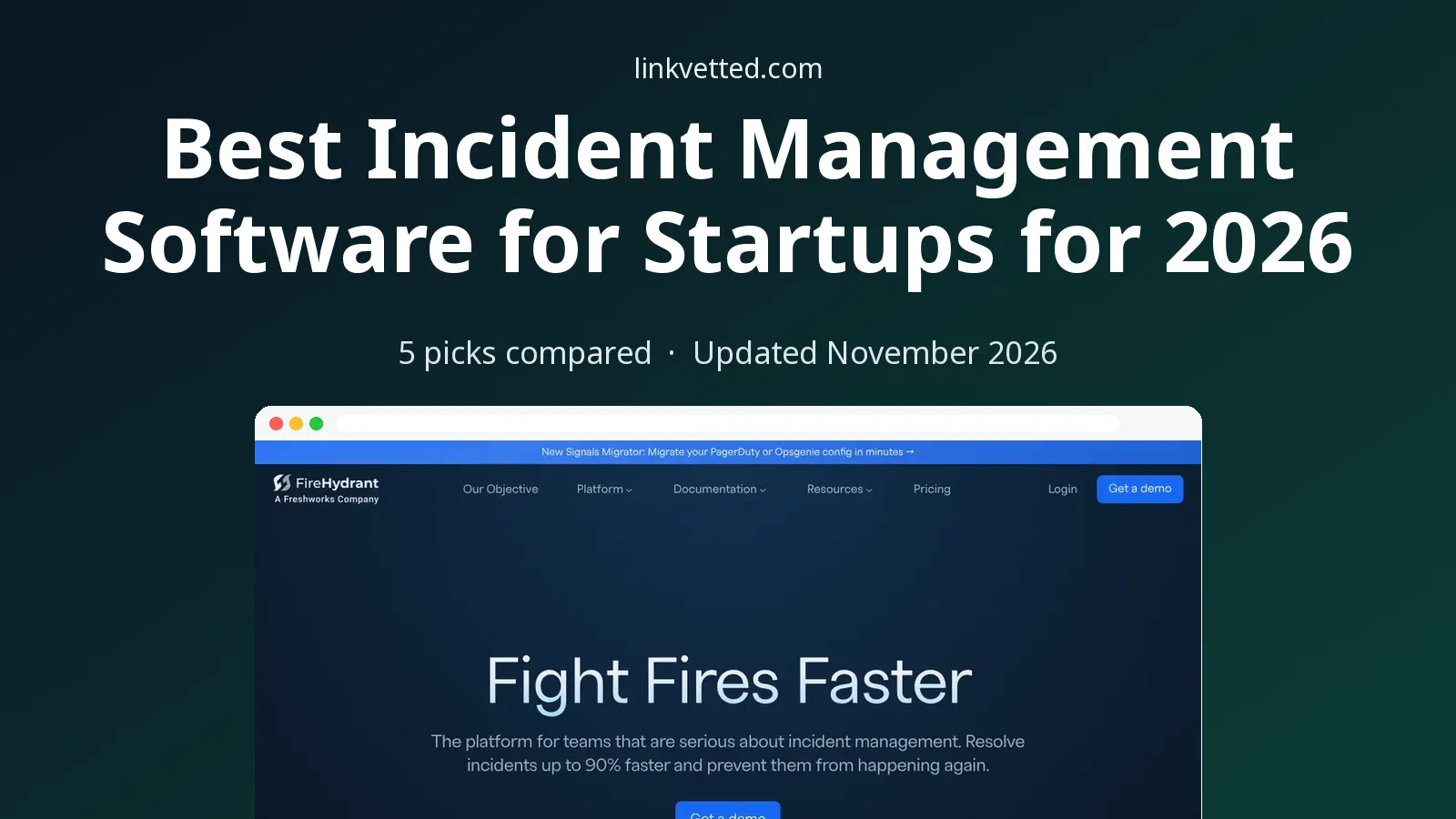
- Editor's choice
 FireHydrant
Alerting plus on-call and retros
Starts at$25 per responder a monthVisit firehydrant.comFull review - Great alternative
 Rootly
AI-native incident handling for quick teams
Starts at$20 per user a monthVisit rootly.comFull review - Also considerOpsgenie
Teams already invested in Atlassian
Starts atSee websiteVisit atlassian.comFull review
Direct answer
FireHydrant comes first here, mainly for alerting plus on-call and retros. Listed starting prices: FireHydrant from $25 per responder a month, Rootly from $20 per user a month and PagerDuty from $21 per user a month. Rootly is the stronger choice for AI-native incident handling for quick teams, while Opsgenie suits teams already invested in Atlassian. The other 2 tools in the list cover narrower or pricier cases.
TL;DR:
- Top of the list is FireHydrant, which targets alerting plus on-call and retros.
- A free plan is available from 2 of the 5 tools: PagerDuty, Incident.io.
- For the cheapest start, look at Incident.io: $15 per user per month.
- A fair warning about Rootly: newer category, evaluate fit carefully.
Last checked November 2026. Prices and plan details were read from the vendors' own pages in November 2026; vendors change plans often, so confirm the current price on the vendor site before you buy.
Quick comparison
| Tool | Best for | Starts at | Free plan? | |
|---|---|---|---|---|
| FireHydrant | Alerting plus on-call and retros | $25 per responder a month | Free trial | Visit |
| Rootly | AI-native incident handling for quick teams | $20 per user a month | Not stated | Visit |
| Opsgenie | Teams already invested in Atlassian | See website | Not stated | Visit |
 PagerDuty | Mature AI-assisted operations and on-call | $21 per user a month | Yes | Visit |
 Incident.io | Unified on-call and incident response | $15 per user a month | Yes | Visit |
Tool-by-tool breakdown
LinkVetted compared 5 incident management software for startups. The goal is a practical shortlist: published prices, free plan facts, best-fit use cases and honest limits for every entry.
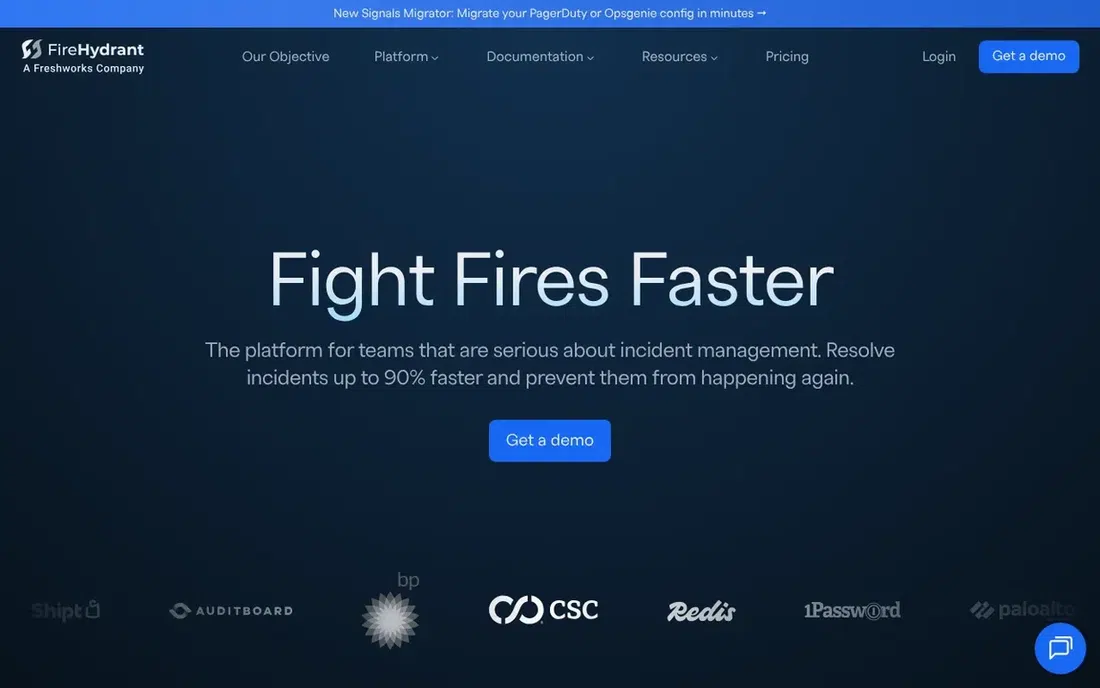
Choose FireHydrant for alerting plus on-call and retros. If your priority is AI-native incident handling with minimal process overhead, Rootly is worth comparing.
Beyond that, the all-in-one scope can overlap with tools a startup already uses, so consolidation should be planned instead of assumed. On top of that, startups that want the full incident lifecycle, including the learning step after resolution, will find that scope appealing. Price to start with FireHydrant: $25 per responder per month. Free options: Free trial.
Where it falls short: May overlap with existing tools.
- AI-powered workflows
- Smart alerting and on-call scheduling
- Wide feature set needs tuning
Think of Rootly for AI-native incident handling for quick teams. Teams scaling their on-call rotation and response process may find the detect-to-learn coverage practical.
Rootly positions itself as an all-in-one AI incident management product for fast-moving engineering teams to detect, handle, resolve and learn from incidents quicker. In daily use, if you prefer a long-established operations system with wide integrations, PagerDuty is the safer comparison point. Rootly starts at: $20 per user per month. Free access: Not stated.
What to check first: Process design still required.
- Aimed at fast-moving teams
- AI-native incident system
- Newer category, evaluate fit carefully
Opsgenie
Best for: Teams already invested in Atlassian
Choose Opsgenie for teams already invested in Atlassian. Opsgenie is Atlassian's alerting and on-call product, and its vendor page now concentrates on migrating to Jira Service Management with no downtime, including planning, scheduling and an automatic migration tool.
Watch-outs: Vendor page centers on migration.
If you want a standalone incident system without a migration path, incident.io or Rootly may be a cleaner starting point. Since the official page centers on migration instead of new adoption, teams starting fresh should confirm current guidance before committing. Opsgenie does not show a starting price in this comparison, so check the vendor site for current pricing. As for free access: Not stated.
- Suits Atlassian-centered stacks
- Alerting and on-call heritage
- Long-term direction favors Jira Service Management
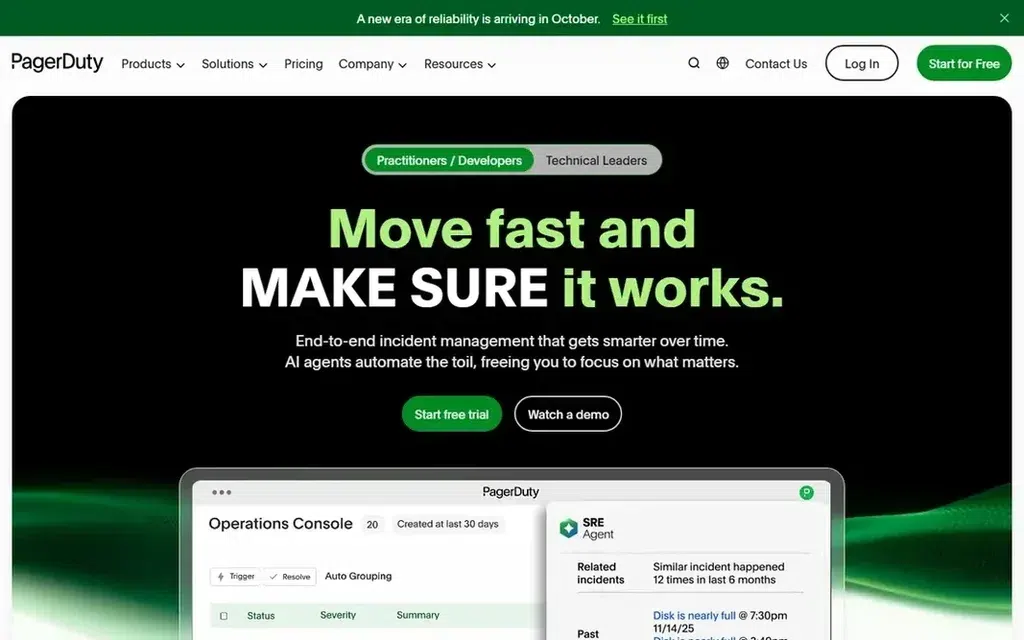
PagerDuty is designed for mature AI-assisted operations and on-call. For startups, that means a recognizable on-call and incident response foundation that can grow with the engineering organization.
If you only need entry-level alerting and status updates, a more straightforward choice for example incident.io may be simpler to adopt early on. What you pay to start with PagerDuty: $21 per user per month. PagerDuty has a free plan.
The main drawbacks: Setup needs planning.
- Automates detection to resolution
- Wide incident workflow coverage
- Can feel heavy for very small teams

Choose Incident.io for unified on-call and incident response. Teams with very straightforward needs may find the breadth of the product more than they use at first, and value relies on actually adopting the response workflow.
Where it is weaker: Feature depth may exceed early needs.
From a buyer's view, if you primarily want alerting plus retros, FireHydrant is a reasonable alternative to evaluate. Starting cost for Incident.io: $15 per user per month. Incident.io includes a free tier.
- Agentic root cause analysis
- Status pages included
- Needs workflow discipline
How we chose
For each of the 5 tools we noted price, free plan or trial, fit for incident management software for startups and the main limit, using vendor pages and documentation. Where a vendor does not publish a price, the entry says quote. Where a price depends on seats or billing term, the entry says so. Position on the page reflects fit for a typical buyer first, with price clarity and free access breaking ties. Treat it as a guide, not a ruling.
Pre-purchase checklist
- Confirm the entry price on the vendor page. For Opsgenie that means a quote rather than a fixed price.
- Look at free plan limits closely: PagerDuty and Incident.io have one, and the caps decide whether it is usable for real work.
- Take the trial from FireHydrant and push a live task through it before you pay.
- Read the limits listed for FireHydrant first: wide feature set needs tuning.
- Ask the daily users to test PagerDuty on a live task before you roll it out to everyone.
- Read the plan comparison for Opsgenie carefully; key features often start on a higher tier.
FAQ
Do these tools publish their prices?
Not all of them. Opsgenie publishes no starting price, so expect a quote request for it. The rest, FireHydrant included, show a starting price, though seats and billing terms still change the final cost.
How are the tools for incident management software for startups ordered?
The order follows typical fit for incident management software for startups, with FireHydrant first and Incident.io last, then price clarity and free access. It is editorial judgement, not a score, so another team could rank the tools differently.
Which options for incident management software for startups have a free plan?
On this list, PagerDuty and Incident.io include a free plan. Caps on seats, usage or features are common, so test the free plan against your real workload. One other tool offers a trial instead.
Is FireHydrant the right pick for everyone comparing incident management software for startups?
No single tool suits every team. FireHydrant comes first because it fits alerting plus on-call and retros, while Rootly suits AI-native incident handling for fast teams and Opsgenie suits teams already invested in Atlassian. Match the tool to your own size, budget and workflow before deciding.
Which incident management tool is a good match for a small startup?
The first pick on this list is FireHydrant, because it suits alerting plus on-call and retros. Rootly is better for AI-native incident handling for quick teams, and Opsgenie for teams already invested in Atlassian. Check price and limits against your own needs before choosing.
Sources
- https://firehydrant.com
- https://rootly.com
- https://www.atlassian.com/software/opsgenie
- https://www.pagerduty.com
- https://incident.io