Best Cloud Incident Response Services in 2026: 8 Services Compared
Looking for the best cloud incident response service? We compare 8 platforms and managed services on detection, containment, and recovery speed for your team.
- Editor's choice
 CrowdStrike Falcon Complete
Organizations that want experts handling response
Starts atSee websiteVisit crowdstrike.comFull review - Great alternative
 Palo Alto Cortex XDR and Unit 42
Enterprises that want platform plus investigators
Starts atSee websiteVisit paloaltonetworks.comFull review - Also consider
 Microsoft Sentinel
Teams running Azure and Microsoft 365
Starts atSee websiteVisit microsoft.comFull review
TL;DR:
- CrowdStrike Falcon Complete and Palo Alto Unit 42 are the strongest choices for organizations that want experts on call around the clock.
- Microsoft Sentinel suits teams already running on Azure and Microsoft 365, with native data collection across Microsoft services.
- Google Mandiant is the best-known name for investigating major breaches and nation-state intrusions.
- Arctic Wolf and Rapid7 offer managed detection and response for mid-size teams without a large in-house security staff.
- Most enterprise pricing is quote-based, so compare response time guarantees and retainer terms, not just headline features.
Quick comparison
| Tool | Best for | Starts at | Free plan? | |
|---|---|---|---|---|
| CrowdStrike Falcon Complete | Organizations that want experts handling response | See website | No | Visit |
| Palo Alto Cortex XDR and Unit 42 | Enterprises that want platform plus investigators | See website | No | Visit |
| Microsoft Sentinel | Teams running Azure and Microsoft 365 | See website | No | Visit |
 Google Mandiant | Investigating major breaches and targeted attacks | See website | No | Visit |
 Rapid7 Managed Detection and Response | Mid-size teams without a large security staff | See website | No | Visit |
 Splunk SOAR | Teams that want automated response playbooks | See website | No | Visit |
 Arctic Wolf | Managed security operations for mid-size companies | See website | No | Visit |
 Datadog Cloud SIEM | Cloud-native teams already using Datadog | See website | No | Visit |
The best cloud incident response services
A cloud incident response service helps you detect an attack, contain it, find how far it spread, and recover. Some products are platforms your team runs; others are managed services where vendor experts do the responding. We compared both types on detection, response speed, cloud coverage, and support.
CrowdStrike Falcon Complete
Best for: Organizations that want experts handling response
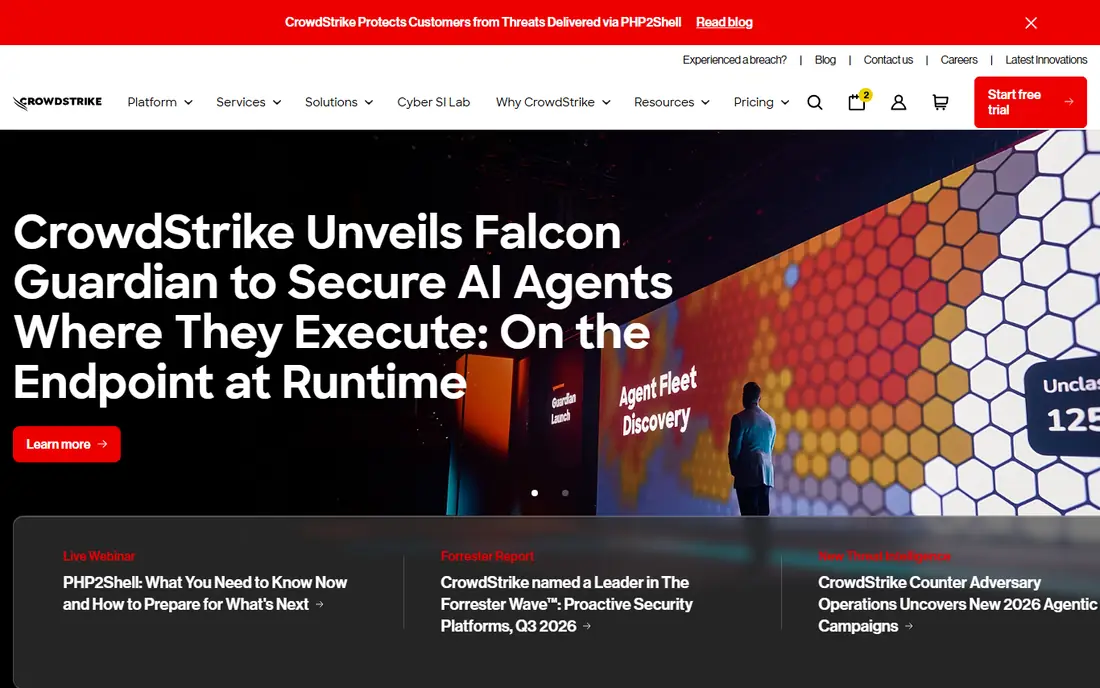
CrowdStrike Falcon Complete pairs the Falcon endpoint and cloud security platform with a team of CrowdStrike analysts who monitor, investigate, and respond on your behalf. When a threat is detected, the team can isolate hosts, kill malicious processes, and guide remediation, which matters most in the first hours of an incident when internal staff may be overwhelmed. The platform covers Windows, Mac, Linux, and cloud workloads.
The main drawback is cost and fit. Pricing is quote-based and aimed at organizations with serious security budgets, and smaller teams may find the platform more than they need. For companies that cannot staff a 24-hour security operations center, though, Falcon Complete is the closest thing to hiring one, and its track record in major incident response is well documented.
- Fully managed detection and response around the clock
- Falcon platform covers endpoints and cloud workloads
- Rapid containment and remediation by CrowdStrike experts
- Enterprise pricing is quote-based and not cheap
- Best suited to larger organizations
- Onboarding takes planning
Palo Alto Cortex XDR and Unit 42
Best for: Enterprises that want platform plus investigators
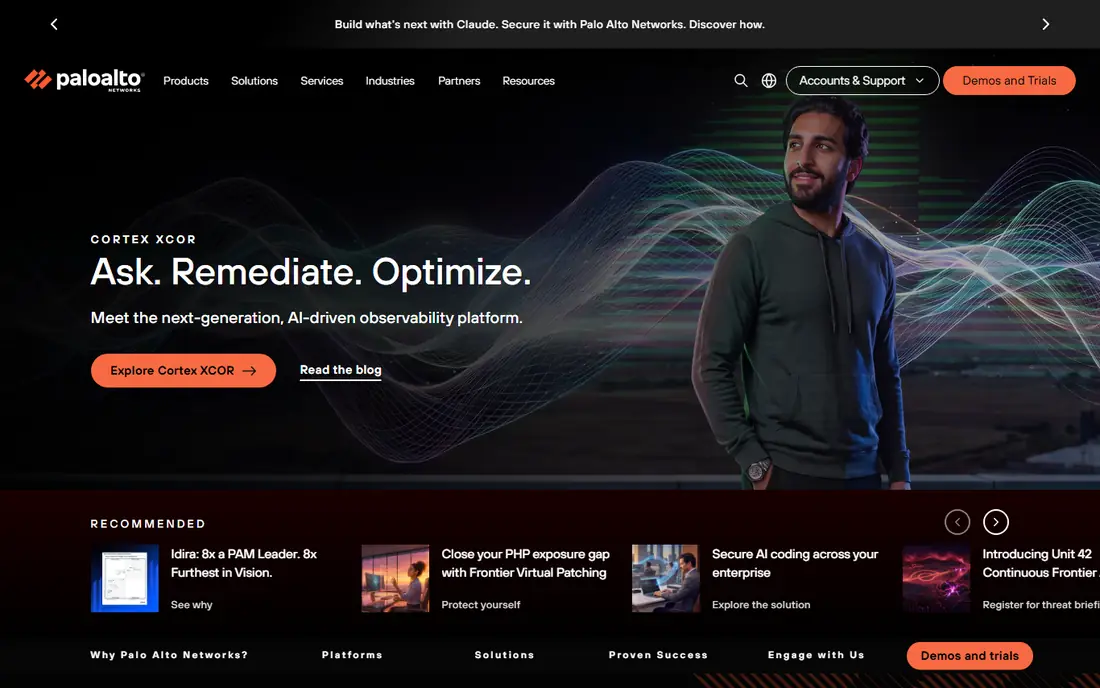
Palo Alto Networks combines two strengths: Cortex XDR, which pulls together endpoint, network, and cloud telemetry to spot attacks that single tools miss, and Unit 42, its incident response and threat intelligence team. In a serious incident, Unit 42 investigators can take over analysis, containment, and recovery, backed by research on attacker groups and campaigns.
The platform's breadth is also its complexity. Getting full value from Cortex XDR takes careful deployment across endpoints, firewalls, and cloud accounts, and pricing is quote-based. For enterprises already using Palo Alto firewalls or Prisma Cloud, the integration is a strong reason to choose it. For smaller teams, the managed options from Arctic Wolf or Rapid7 may be simpler.
- Cortex XDR correlates endpoint, network, and cloud data
- Unit 42 provides expert incident response and threat research
- Strong automation for containment
- Quote-based pricing
- The platform is complex to deploy fully
- Smaller teams may need partner help
Microsoft Sentinel is a cloud-native security information and event management (SIEM) and orchestration service that fits naturally into Microsoft environments. It collects data from Azure services, Microsoft 365, Defender products, and third-party connectors, then uses analytics rules, machine learning, and automated playbooks to detect and respond to incidents. Because it runs in Azure, there is no SIEM infrastructure to maintain.
The pricing model deserves attention: Sentinel bills largely on data ingested and retained, so a noisy environment can produce a large bill. Teams outside the Microsoft ecosystem get less native value, and tuning detections takes real expertise. For organizations already committed to Azure and Microsoft 365, Sentinel is the most integrated incident response foundation available.
- Native collection from Azure, Microsoft 365, and Defender
- Cloud-native SIEM and SOAR in one service
- Pay-as-you-go pricing based on data ingested
- Costs scale with data volume
- Best results need Microsoft-centric environments
- Tuning detection rules takes expertise
Mandiant, part of Google Cloud, is the name most associated with investigating serious breaches, including intrusions by nation-state and financially motivated groups. Its incident response teams handle scoping, containment, eradication, and recovery, and its threat intelligence feeds Mandiant Advantage and Google Cloud security products. Retainers give customers guaranteed response times and proactive readiness services.
Mandiant is a premium service, and its pricing reflects the seniority of its investigators. It is less of an everyday monitoring platform than CrowdStrike or Palo Alto, and more of a specialist team you call when something serious has happened. For organizations that face targeted threats or need credible investigation after a breach, Mandiant is the benchmark.
- Leading breach investigation expertise
- Deep threat intelligence on attacker groups
- Incident response retainers with guaranteed response times
- Premium pricing aimed at large organizations
- Retainer terms vary
- Less of a day-to-day platform than rivals
Rapid7 Managed Detection and Response
Best for: Mid-size teams without a large security staff
Rapid7's managed detection and response service pairs its InsightIDR detection platform with analysts who monitor your environment around the clock, investigate alerts, and guide containment. InsightIDR collects data from endpoints, cloud services, and network sources, and Rapid7's wider platform adds vulnerability management and cloud security posture tools that help prevent repeat incidents.
The service is aimed at mid-size organizations rather than the largest enterprises, and some advanced capabilities sit in higher tiers. Pricing is quote-based, so you will need a sales conversation to get a number. For a team that wants expert monitoring without building a security operations center, Rapid7 is a practical middle ground between a pure platform and a premium firm such as Mandiant.
- Managed detection and response with 24-hour coverage
- InsightIDR platform for detection across cloud and endpoints
- Vulnerability management included in the wider platform
- Pricing is quote-based
- Some advanced features need higher tiers
- Cloud coverage is narrower than the biggest platforms
Splunk SOAR, formerly Phantom, automates the repetitive work of incident response. When an alert arrives, SOAR playbooks can enrich it with threat intelligence, check related assets, open tickets, block malicious addresses, and isolate hosts, all without waiting for an analyst to click through each step. It connects to hundreds of security tools and works alongside Splunk Enterprise Security for detection.
SOAR is a force multiplier, not a complete solution on its own: it needs detection sources feeding it alerts, and building good playbooks requires Splunk expertise. Licensing is also complex. For security teams that already use Splunk and want to cut response times from hours to minutes on common incident types, SOAR is the strongest automation choice in this list.
- Mature automation and orchestration playbooks
- Integrates with hundreds of security tools
- Strong case management for investigations
- Requires Splunk expertise to run well
- Licensing is complex
- Needs existing detection tools to feed it
Arctic Wolf provides managed detection and response as a service, with a dedicated security team monitoring your endpoints, network, and cloud accounts around the clock. Its platform triages alerts, investigates incidents, and guides containment, and it adds security awareness training and risk assessments to help prevent future incidents. The model suits companies that want a security operations capability without hiring for it.
Pricing is quote-based and varies with the size of your environment, and in some deployments Arctic Wolf works with tools you already own rather than replacing them. Onboarding also takes time to tune detections to your environment. For mid-size companies that need dependable 24-hour coverage with a human team behind it, Arctic Wolf is one of the most popular managed options.
- Managed detection and response with a named security team
- Covers endpoints, network, and cloud
- Risk assessments and readiness services included
- Quote-based pricing
- Relies on your existing tools in some deployments
- Onboarding can take weeks
Datadog Cloud SIEM brings security detection into the observability platform many cloud teams already use. It applies detection rules to logs from cloud providers, containers, and applications, correlates security signals with performance data, and supports investigation workflows and automated responses through integrations. For teams running on AWS, Azure, or Google Cloud with Datadog already deployed, the setup is fast and the context is rich.
Datadog is not a managed incident response firm: it gives your team detection and investigation tools, not a team of responders on call. Pricing scales with ingested data, which can grow quickly in large environments. For cloud-native engineering teams that want security detection inside their existing monitoring stack, it is a strong choice. For organizations that want experts to respond for them, choose a managed service instead.
- Deep integration with Datadog observability data
- Detection rules for cloud workloads and containers
- Fast investigation across logs and metrics
- Pricing scales with data volume
- Incident response features are lighter than dedicated IR firms
- Needs Datadog expertise
How we picked these
We compared platforms and managed services that genuinely handle cloud incident response, not just general antivirus or firewall products. We checked each vendor's published service descriptions, response offerings, and cloud coverage, and we favored vendors with documented incident response teams and 24-hour coverage. We did not claim hands-on testing; our comparison rests on official product pages, service descriptions, and public documentation. Enterprise pricing in this category is almost always quote-based, so we list it as such rather than inventing figures.
How to choose an incident response service
Start with your response model. If you have an internal security team, a platform such as Sentinel, Cortex XDR, or Datadog Cloud SIEM gives them better detection and automation. If you do not, a managed service such as Falcon Complete, Arctic Wolf, or Rapid7 puts experts on your incidents around the clock.
Next, check the retainer terms. Ask for the guaranteed response time, what hours coverage applies, whether investigation hours are included or billed separately, and how the vendor handles evidence and reporting for insurance or legal needs. Finally, run a tabletop exercise before you sign: a vendor that cannot walk through a realistic cloud incident with your team in plain language is not the right partner, whatever its feature list says.
FAQ
What does a cloud incident response service do?
It detects attacks on your cloud accounts and workloads, contains the damage by isolating affected systems, investigates how the attacker got in and what they touched, and helps you recover safely. Managed services provide the expert team as well as the tools, while platforms give your own team detection and automation.
How fast should incident response be?
Minutes matter for containment. Leading managed services offer 24-hour monitoring with response times measured in minutes to a few hours under a retainer. Ask any vendor for its guaranteed response time in writing, and check whether that guarantee applies around the clock or only during business hours.
Do I need a retainer before an incident happens?
Yes, if you want guaranteed help. Without a retainer, you can still hire firms during an incident, but response may be slower and more expensive, and the firm will need time to learn your environment. A retainer also usually includes readiness work such as planning and tabletop exercises that make a real incident far less chaotic.
What is the difference between MDR and incident response?
Managed detection and response (MDR) is ongoing monitoring and response to alerts, usually 24 hours a day. Incident response (IR) is the focused investigation and recovery work after a confirmed breach. Many vendors sell both: MDR watches every day, and IR teams take over when a serious incident is declared.
How much does cloud incident response cost?
Most enterprise pricing is quote-based and depends on the size of your environment, the coverage hours, and whether you buy a platform, a managed service, or a retainer. Small teams can start with managed services priced per endpoint or per user, while large enterprises pay significantly more for dedicated teams and guaranteed response times. Get quotes from at least two vendors before deciding.