Choosing Feature Experimentation Software in 2026: 6 Options Compared
6 products for the best feature Experimentation software, ranked by fit, with starting costs and free tiers. Verdicts stay brief and factual. No filler.
- Editor's choice
 GrowthBook
Warehouse-native, open source experimentation
Starts at$40 per seat per monthVisit growthbook.ioFull review - Great alternativeOptimizely Feature Experimentation
Marketing-led testing and personalization
Starts atSee websiteVisit optimizely.comFull review - Also consider
 Split
Linking flags to impact data
Starts atSee websiteVisit split.ioFull review
Direct answer
GrowthBook leads the list, best for warehouse-native, open source experimentation. Listed starting prices: GrowthBook from $40 per seat per month, Statsig from $150 a month and LaunchDarkly from $10 each billed annually. Alternatives: Optimizely Feature Experimentation for marketing-led testing and personalization, and Split for linking flags to impact data. Details, prices and limits for the rest of the 6 tools are below.
TL;DR:
- GrowthBook is the opening pick, best for warehouse-native, open source experimentation.
- For flag-driven delivery with runtime control, LaunchDarkly is worth a look.
- GrowthBook has the lowest monthly starting price in this list: $40 per seat per month.
- Free plans exist at 5 of 6 tools (GrowthBook, Split, Statsig, Harness Feature Flags, LaunchDarkly).
Last checked November 2026. Prices and plan details were read from the vendors' own pages in November 2026; vendors change plans often, so confirm the current price on the vendor site before you buy.
Quick comparison
| Tool | Best for | Starts at | Free plan? | |
|---|---|---|---|---|
| GrowthBook | Warehouse-native, open source experimentation | $40 per seat per month | Yes | Visit |
| Optimizely Feature Experimentation | Marketing-led testing and personalization | See website | Not stated | Visit |
| Split | Linking flags to impact data | See website | Yes | Visit |
 Statsig | Integrated experimentation and product analytics | $150 a month | Yes | Visit |
 Harness Feature Flags | Flags inside a unified delivery system | See website | Yes | Visit |
 LaunchDarkly | Flag-driven delivery with runtime control | $10 each billed annually | Yes | Visit |
The best feature Experimentation software
LinkVetted compared 6 tools for feature Experimentation software. The goal is a practical shortlist: published prices, free plan facts, best-fit use cases and honest limits for every entry.
GrowthBook is aimed squarely at warehouse-native, open source experimentation. GrowthBook describes itself as a warehouse-native product for experimentation, feature flags, and product analytics, and it is open source and completely transparent.
Drawbacks to consider: Open source model needs internal ownership.
A warehouse-native approach assumes you have the data infrastructure and people to support it, which can be a barrier for smaller teams. The starting price for GrowthBook: $40 per seat per month. A free plan is available with GrowthBook.
- Open source and transparent
- Experimentation, flags
- Warehouse setup needs data team effort
Optimizely Feature Experimentation
Best for: Marketing-led testing and personalization
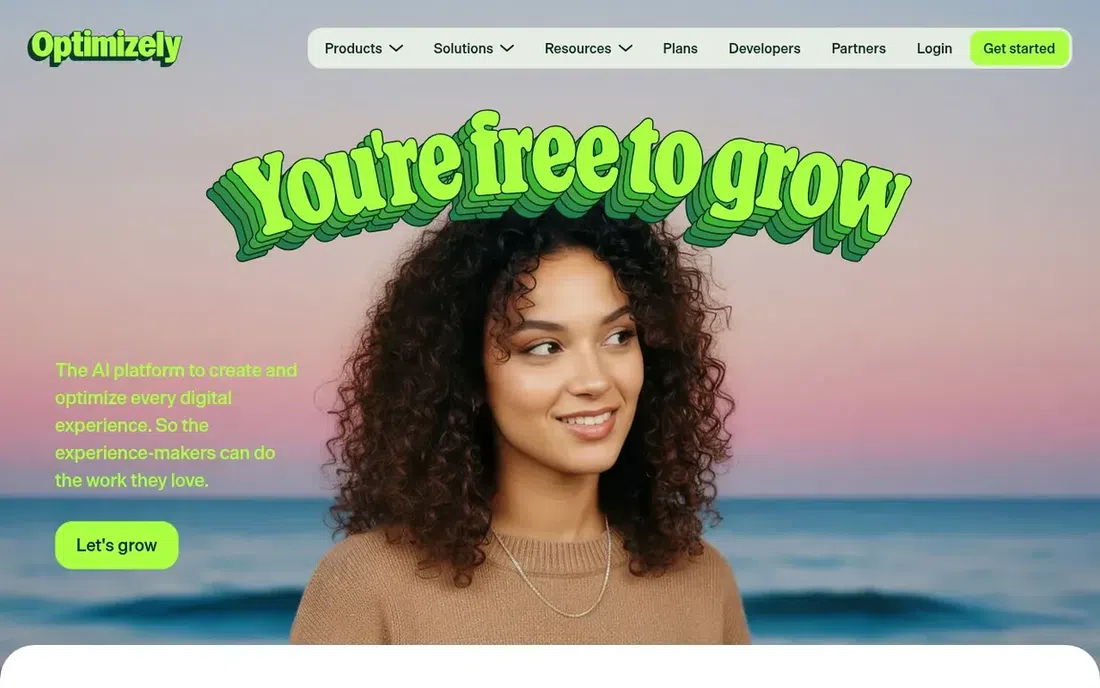
Optimizely Feature Experimentation is aimed squarely at marketing-led testing and personalization. Optimizely Feature Experimentation is part of a system designed for marketing and digital teams that need to build content rapidly, test and personalize experiences, and demonstrate business impact.
Honest limits: Experimentation sits within a wider experience suite.
As for the details, teams that want deep, code-level flag control as the core product may prefer an engineering-first system. Pricing for Optimizely Feature Experimentation is not stated here, so ask the vendor for current figures. As for free access: Not stated.
- Targeted at marketing and digital teams
- Supports quick content creation
- Less engineering-centric than flag products
Split was built for linking flags to impact data. Split positions feature flags as a way to link critical impact data and alert teams whether software changes are making things better or worse.
Buyers wanting a full analytics or session replay suite may need extra tools alongside it. Pricing for Split is not stated here, so ask the vendor for current figures. Split offers a free plan.
Drawbacks to consider: Narrower than full product analytics suites.
- Quicker software change
- Alerts on whether changes help or hurt
- Needs clean measurement setup to be handy
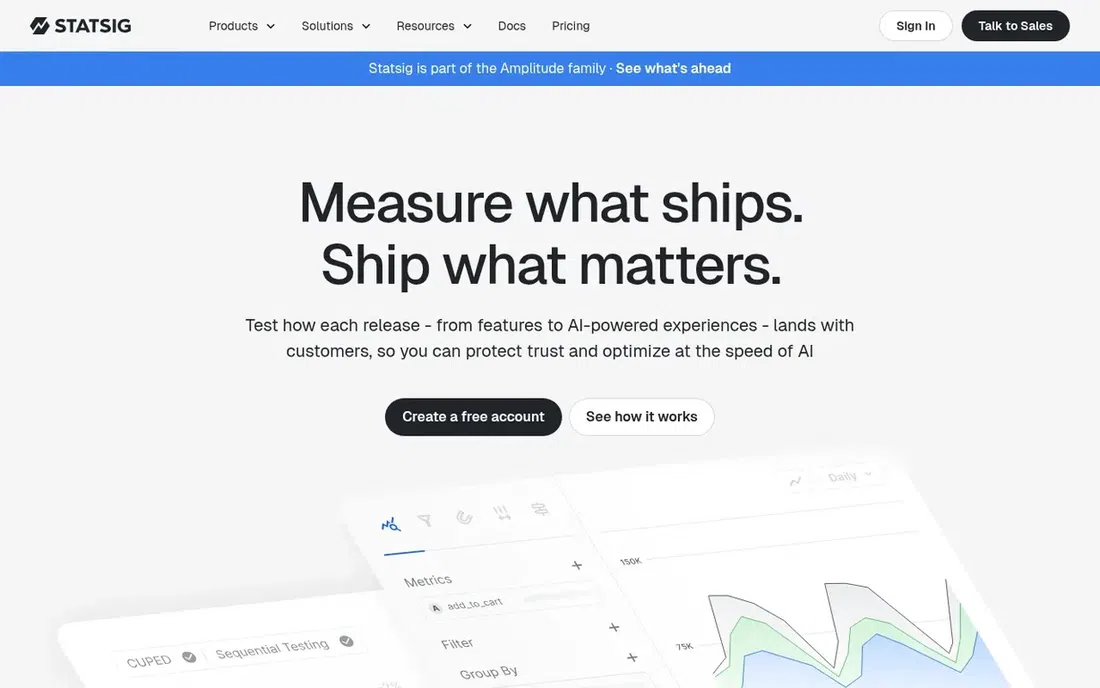
Statsig makes the most sense for integrated experimentation and product analytics. Statsig describes itself as a modern product development product with an integrated toolkit including experimentation, feature management, product analytics, and session replays.
Worth adding: the combined view can help teams link experiment results to broader product behavior. Organizations with established analytics and flag stacks may find overlap instead of replacement. Statsig pricing: $150 per month. A free plan is available with Statsig.
Honest limits: Overlaps with tools you may already use.
- Product analytics and session replays included
- Experimentation and feature management together
- Breadth means a longer setup to learn
Harness Feature Flags makes the most sense for Flags inside a unified delivery product. The full value depends on adopting more of the product, which is a larger commitment.
Teams already using the product can keep feature management close to build and deploy workflows. Buyers should confirm the experimentation workflow they need is covered before standardizing. Pricing for Harness Feature Flags is not stated here, so ask the vendor for current figures. Harness Feature Flags has a free plan.
Points against: Full value relies on wider product adoption.
- AI agents pitched at the delivery lifecycle
- Part of a unified software delivery system
- Feature flags are one module of a bigger suite
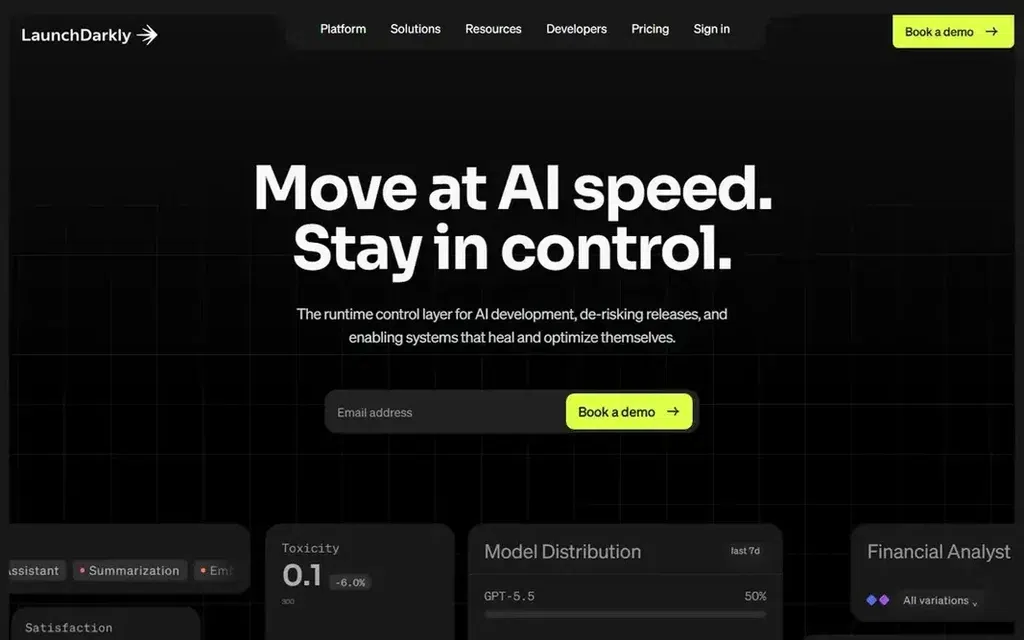
LaunchDarkly is a good fit for flag-driven delivery with runtime control. LaunchDarkly centers on safely managing code and AI agents in production through feature flags, progressive delivery, automatic rollback, and runtime control. Beyond that, since the system leans toward runtime control and delivery safety, teams looking chiefly for marketing-style content testing may find it a partial fit.
It is also a broad system, so smaller teams should confirm the workflow matches their process before committing. In daily use, teams already comfortable with flag-based workflows will find the model familiar, and those running AI features can extend the same control approach to agents. On cost, LaunchDarkly starts like this: $10 each billed yearly. You can start on LaunchDarkly without paying.
Drawbacks to consider: Experimentation is one part of a bigger tool.
- Runtime control in production
- Feature flags for code and AI agents
- Wide system may feel heavy for small teams
Selection criteria
Selection started from tools commonly considered for feature Experimentation software, then narrowed to 6 that have clear pricing information or a clear quote process. Where a vendor does not publish a price, the entry says quote. Where a price depends on seats or billing term, the entry says so. Order on the page follows fit for the typical buyer first, then price transparency and free access. Your own requirements should decide the final pick.
Before you commit
- Get a written quote from Optimizely Feature Experimentation, Split and Harness Feature Flags; the list shows no starting price for them.
- Check what the free option really includes: GrowthBook, Split, Statsig and others offer a free plan, and usage caps differ.
- Before choosing GrowthBook, weigh its main limit: warehouse setup needs data team effort.
- Ask whether Split integrates with your current software, and whether that comes standard or as an add-on.
- Make sure GrowthBook lets you export your data in a format another tool can read.
FAQ
How are the tools for feature Experimentation software ordered?
The order follows typical fit for feature Experimentation software, with GrowthBook first and LaunchDarkly last, then price clarity and free access. It is editorial judgement, not a score, so another team could rank the tools differently.
What is feature experimentation software?
It is a category of tools that combine feature flags with testing so teams can release changes to selected users and measure the outcome. These systems usually handle targeting, rollout control, and result analysis. Some bundle product analytics, whereas others focus on delivery safety.
Is GrowthBook the right pick for everyone comparing feature Experimentation software?
No single tool suits every team. GrowthBook comes first because it fits warehouse-native, open source experimentation, while Optimizely Feature Experimentation suits marketing-led testing and personalization and Split suits linking flags to impact data. Match the tool to your own size, budget and workflow before deciding.
Can I try these options before paying?
Often, yes. GrowthBook, Split, Statsig and others have a free plan. Use your own data and a real task during the test, and check what the free tier or trial limits before you rely on it.
Should I choose a warehouse-native system?
A warehouse-native choice such as GrowthBook can be attractive if your data already lives in a warehouse and your team can support that setup. Teams without that infrastructure may prefer a hosted product that bundles analytics.
Which options for feature Experimentation software have a free plan?
On this list, GrowthBook, Split, Statsig, Harness Feature Flags and LaunchDarkly include a free plan. Caps on seats, usage or features are common, so test the free plan against your real workload.
Sources
- https://www.growthbook.io
- https://www.optimizely.com
- https://www.split.io
- https://statsig.com
- https://www.harness.io
- https://launchdarkly.com