The 6 Best Experimentation Platform for Product Teams in 2026, Ranked
Best experimentation platform for product teams: 6 contenders ranked by fit, with entry costs and free tiers. Short, factual notes on every option. Start here.
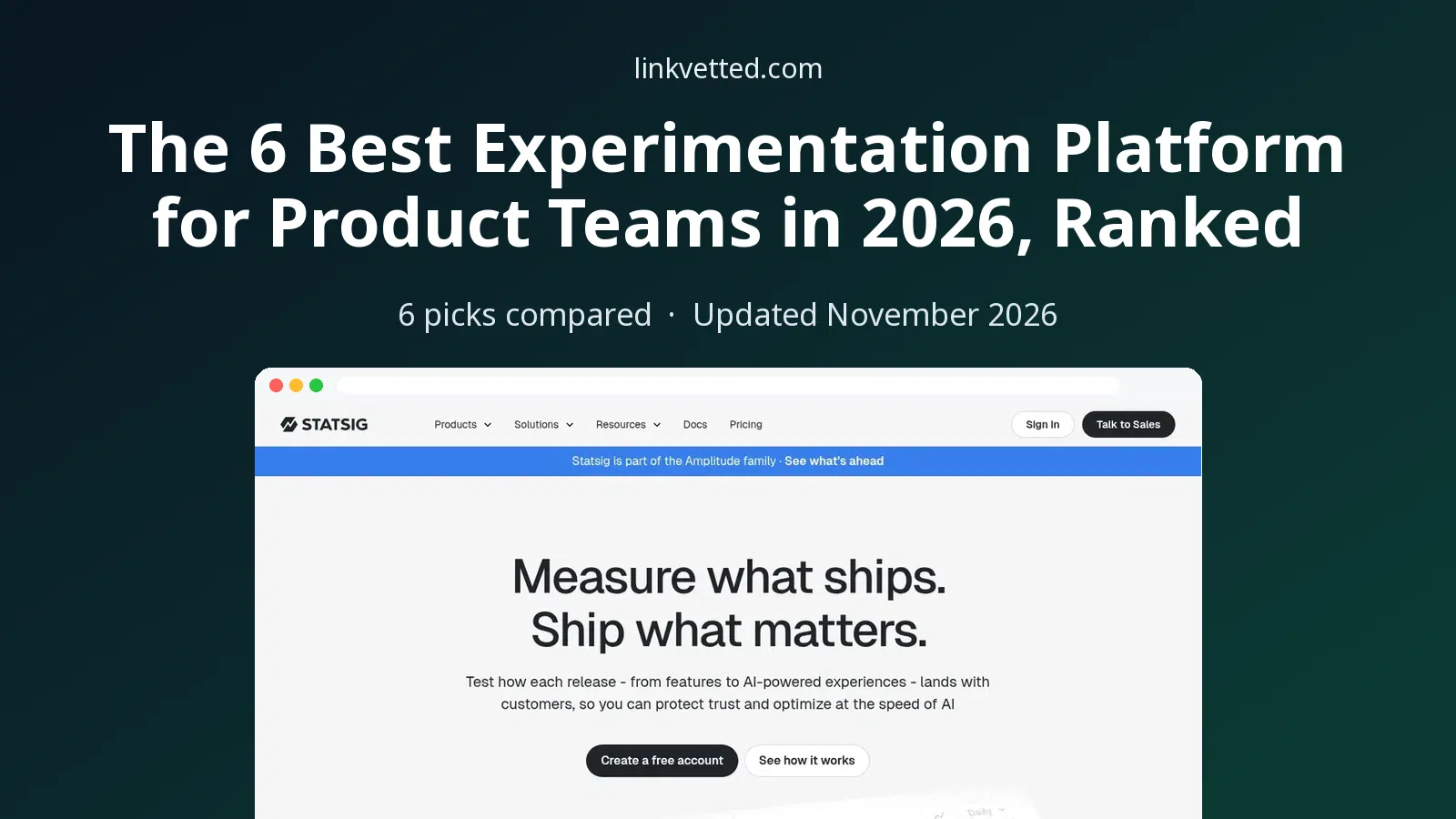
- Editor's choice
 Statsig
Experimentation bundled with product analytics
Starts at$150 a monthVisit statsig.comFull review - Great alternative
 Amplitude Experiment
Teams already grounded in product analytics
Starts atSee websiteVisit amplitude.comFull review - Also consider
 Split
Linking feature changes to impact data
Starts atSee websiteVisit split.ioFull review
Direct answer
Start with Statsig if you need experimentation bundled with product analytics. Listed starting prices: Statsig from $150 a month, GrowthBook from $40 per seat a month and LaunchDarkly from $10 each billed annually. Amplitude Experiment fits teams already grounded in product analytics; Split fits linking feature changes to impact data. The remaining 3 options are covered below with prices and limits.
TL;DR:
- Statsig takes the first slot, best suited to experimentation bundled with product analytics.
- Optimizely suits testing tied to content and personalization.
- For the cheapest start, look at GrowthBook: $40 per seat per month.
- GrowthBook comes with a trade-off: warehouse setup is part of the model.
- A free plan is available from 4 of the 6 tools: Statsig, Split, GrowthBook, LaunchDarkly.
Last checked November 2026. Prices and plan details were read from the vendors' own pages in November 2026; vendors change plans often, so confirm the current price on the vendor site before you buy.
Quick comparison
| Tool | Best for | Starts at | Free plan? | |
|---|---|---|---|---|
| Statsig | Experimentation bundled with product analytics | $150 a month | Yes | Visit |
| Amplitude Experiment | Teams already grounded in product analytics | See website | Not stated | Visit |
| Split | Linking feature changes to impact data | See website | Yes | Visit |
 GrowthBook | Warehouse-native, transparent experimentation | $40 per seat a month | Yes | Visit |
 LaunchDarkly | Safe feature rollout and runtime control | $10 each billed annually | Yes | Visit |
 Optimizely | Testing tied to content and personalization | See website | Not stated | Visit |
Tool-by-tool breakdown
If you are comparing experimentation platform for product teams, this page covers 6 tools in one place: what each is best for, what it costs to start, whether it has a free plan, and the main limit to know about.
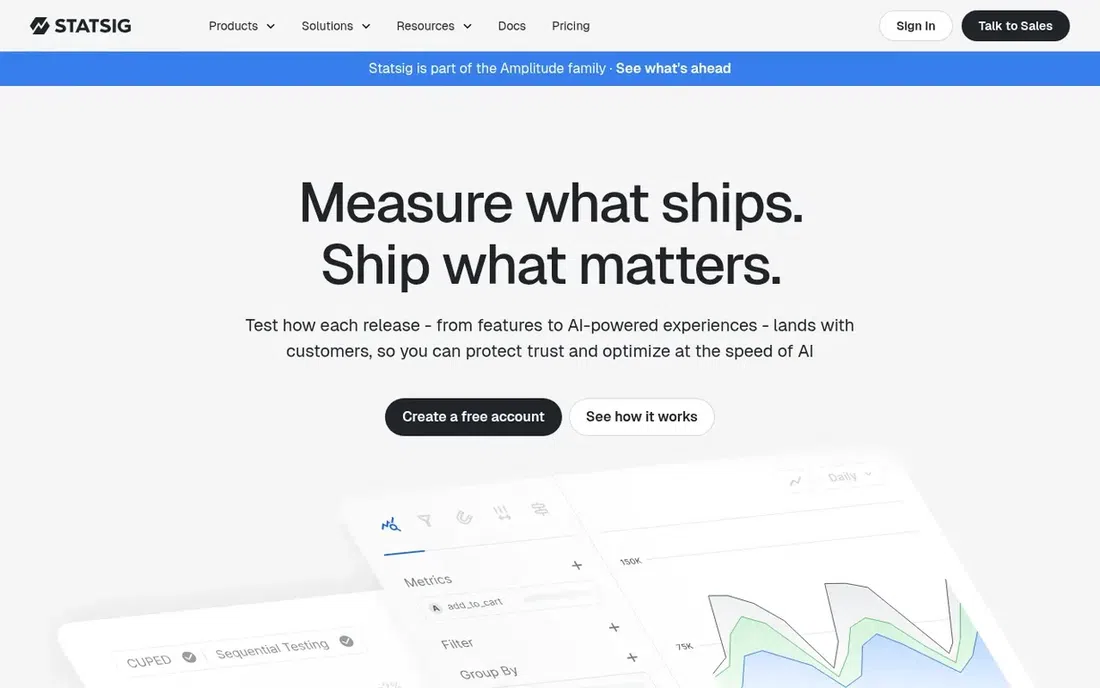
Statsig serves experimentation bundled with product analytics. Statsig markets itself as a modern product development system with an integrated toolkit handling experimentation, feature management, product analytics and session replays.
Drawbacks to consider: Wide toolkit may need setup effort.
More specifically, teams that value an all-in-one workflow for running experiments and reading results may find the combination appealing. Groups wanting only a straightforward flag service or only a content testing tool may prefer something narrower. Price to start with Statsig: $150 per month. You can start on Statsig without paying.
- Integrated experimentation and feature management
- Modern toolkit for product development
- Feature depth varies by module
Amplitude Experiment is built with teams already grounded in product analytics in mind. Amplitude frames its product as a new era for product teams, bringing AI into each step from analytics to feedback to code, with experimentation as part of that flow.
It fits teams that already reason from product data and want experiments tied to the same analytics foundation, supporting a cycle of building, measuring and refining products over time. Pricing for Amplitude Experiment is not stated here, so ask the vendor for current figures. Free access: Not stated.
Limits to weigh: Less centered on content personalization.
- AI applied across the product-building flow
- Focus on self-improving products
- Best value when analytics is already in use
Think of Split for linking feature changes to impact data. Split describes feature flags that link critical impact data and alert you whether software changes are making things better or worse.
Highlights: Feature flags connected to impact data.
For everyday use, since its story centers on flags and impact measurement, teams wanting a wide analytics or content optimization suite may need extra tools. Split does not show a starting price in this comparison, so check the vendor site for current pricing. Split includes a free tier.
What to check first: Narrower than full analytics suites.
- Alerts on whether changes help or hurt
- Focus on safer
- Experimentation tied to flag-driven changes
Think of GrowthBook for warehouse-native, transparent experimentation. GrowthBook presents itself as a warehouse-native product for experimentation, feature flags and product analytics, and it is open source and completely transparent.
In daily use, the warehouse-native design assumes data infrastructure that some teams may not have in place, which can add setup work. Also, pick GrowthBook when data ownership, transparency and warehouse-based analysis matter to your product team. Entry price for GrowthBook: $40 per seat per month. You can start on GrowthBook without paying.
Limits to weigh: Less suited to teams without data infrastructure.
- Open source and completely transparent
- Warehouse-native experimentation and flags
- Warehouse setup is part of the model
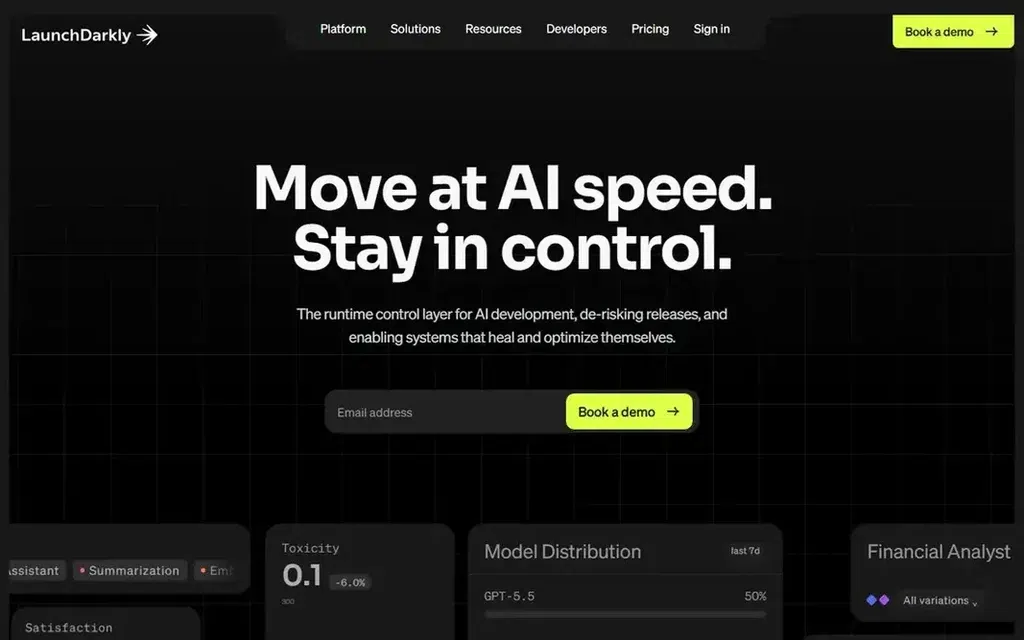
LaunchDarkly is a good fit for safe feature rollout and runtime control. LaunchDarkly describes itself as runtime control for AI-era software, helping teams safely run code and AI agents in production. Its homepage flags feature flags, progressive delivery, automatic rollback and runtime control.
For everyday use, choose LaunchDarkly when controlled rollout and runtime safety are the priority. Product groups wanting experimentation tightly bundled with analytics might look at a combined product instead. Teams whose primary goal is marketing-style A/B testing of pages or campaigns may find LaunchDarkly oriented more toward release safety than content optimization. The starting price for LaunchDarkly: $10 each billed yearly. LaunchDarkly offers a free plan.
Watch-outs: Not positioned as a content testing tool. What users get: Runtime control for code and AI agents.
- Progressive delivery and automatic rollback
- Feature flags for production control
- Experimentation is secondary to release control
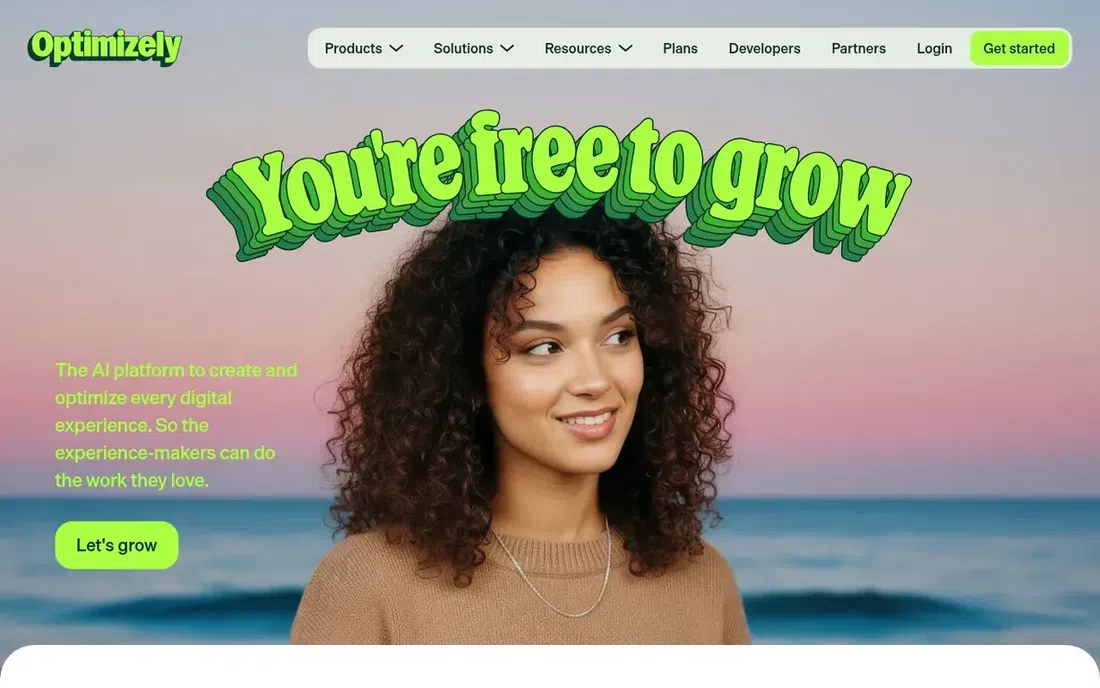
Optimizely targets testing tied to content and personalization. Consider Optimizely when content and personalization are central to your testing program. As for the details, since its scope spans content, testing and personalization, teams seeking only light flag-based experimentation may find it broader than needed.
Optimizely presents itself as a product using AI to build and optimize digital experiences. Its homepage describes tools for marketing and digital teams to build content rapidly, test and personalize experiences, and prove business impact. Optimizely does not show a starting price in this comparison, so check the vendor site for current pricing. Free plan details: Not stated.
Honest limits: Less centred on engineering-centric feature flags.
- Geared toward marketing and digital teams
- Supports personalization and impact measurement
- Wide scope may feel heavy for narrow testing needs
How we compared the tools
Things to verify first
- Ask Amplitude Experiment, Split and Optimizely for a written quote, since no starting price is shown.
- Read the fine print on the free plans from Statsig, Split, GrowthBook and LaunchDarkly; seat, project and feature caps differ.
- Before choosing Statsig, weigh its main limit: wide toolkit may need setup effort.
- Ask Statsig whether prices are locked for the first term and what happens at renewal.
- Verify that exporting from Amplitude Experiment is possible on your plan and covers all your records.
FAQ
What should product teams look for in an experimentation system?
Start with the primary need: safe feature rollout, statistical testing of product changes, content and page optimization, or analytics-driven insight. Then check how the system links to your data and release workflow.
Can I try these tools before paying?
Often, yes. Statsig, Split, GrowthBook and LaunchDarkly have a free plan. Use your own data and a real task during the test, and check what the free tier or trial limits before you rely on it.
Is warehouse-native experimentation worth considering?
Warehouse-native tools like GrowthBook run experiments against data you already keep in your warehouse, which can support transparency and data ownership. It fits teams with data engineering support more than teams without it.
Do these tools publish their prices?
Not all of them. Amplitude Experiment, Split and Optimizely publish no starting price, so expect a quote request for those. The rest, Statsig included, show a starting price, though seats and billing terms still change the final cost.
What is the cheapest option for experimentation platform for product teams in this list?
On published monthly entry prices, GrowthBook is the lowest here at $40 per seat per month. Entry price is only part of the cost, because seats, add-ons and billing terms can change the total. Prices, free plan details and limits for all 6 tools in this Experimentation platform for product teams roundup sit on the individual cards above.
Is Statsig the right pick for everyone comparing experimentation platform for product teams?
No single tool suits every team. Statsig comes first because it fits experimentation bundled with product analytics, while Amplitude Experiment suits teams already grounded in product analytics and Split suits linking feature changes to impact data. Match the tool to your own size, budget and workflow before deciding.
Sources
- https://statsig.com
- https://amplitude.com
- https://www.split.io
- https://www.growthbook.io
- https://launchdarkly.com
- https://www.optimizely.com