Best Ecosystem for Database Software for 2026: Our 6 Vetted Picks
Searching for the best ecosystem for database software? Here are 6 options with prices and free plans. Every pick includes one clear drawback. Choose faster.
- Editor's choice
 Microsoft SQL Server
Enterprise analytics and AI integration
Starts atSee websiteVisit microsoft.comFull review - Great alternative
 MongoDB
Adaptable document-oriented applications
Starts atSee websiteVisit mongodb.comFull review - Also consider
 Google Cloud Spanner
Globally distributed, always-on applications
Starts atSee websiteVisit cloud.google.comFull review
Direct answer
Microsoft SQL Server leads the list, best for enterprise analytics and AI integration. Listed starting prices: Redis from $5 a month. MongoDB fits adaptable document-oriented applications; Google Cloud Spanner fits globally distributed, always-on applications. All 6 tools are compared below on price, free plan and limits.
TL;DR:
- Number one here is Microsoft SQL Server, a fit for enterprise analytics and AI integration.
- Free plans exist at 2 of 6 tools (MongoDB, Redis).
- MySQL fits widely used open-source relational database.
- The lowest published monthly entry price here is $5 per month, from Redis.
Last checked November 2026. Prices and plan details were read from the vendors' own pages in November 2026; vendors change plans often, so confirm the current price on the vendor site before you buy.
Quick comparison
| Tool | Best for | Starts at | Free plan? | |
|---|---|---|---|---|
| Microsoft SQL Server | Enterprise analytics and AI integration | See website | Not stated | Visit |
| MongoDB | Adaptable document-oriented applications | See website | Yes | Visit |
| Google Cloud Spanner | Globally distributed, always-on applications | See website | Not stated | Visit |
 Redis | Live data and caching | $5 a month | Yes | Visit |
 Oracle Database | AI-driven enterprise workloads | See website | Not stated | Visit |
 MySQL | Widely used open-source relational database | See website | Not stated | Visit |
Ecosystem for Database Software profiles
Short on time? The summary and table above give the quick view of 6 tools for ecosystem for database software, and the profiles that follow give the detail behind each entry.
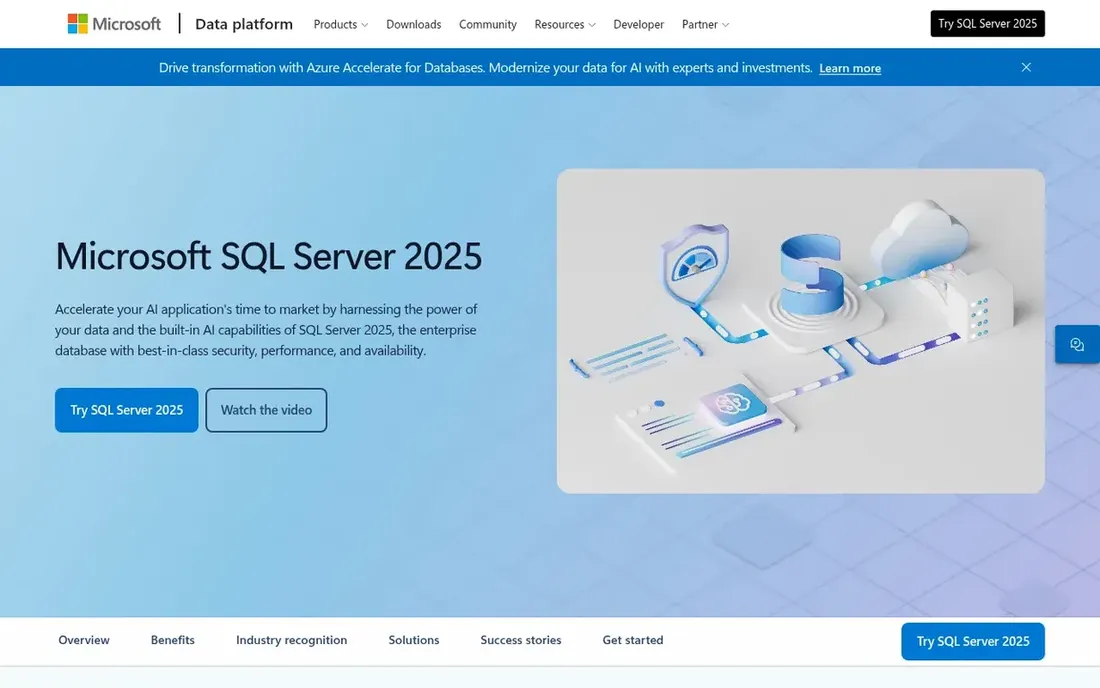
Microsoft SQL Server serves enterprise analytics and AI integration. The system supports a broad set of workloads, from transaction processing to business intelligence. For everyday use, SQL Server commonly includes licensing costs and is most comfortable in Windows environments, though it supports Linux.
What Microsoft SQL Server does well: Capable Microsoft ecosystem.
It may not be the best fit for teams seeking a completely open-source stack. As for the details, Microsoft SQL Server is a relational database management system that emphasizes developer productivity and integration with analytics and AI models. It is well-suited for enterprises already using Microsoft technologies, offering a smooth path to building intelligent applications. Check the vendor site for Microsoft SQL Server pricing; none is listed in this comparison. Free access: Not stated.
The main drawbacks: Primarily Windows-centric.
- Integrated analytics and AI
- Developer-first features
- Licensing costs
For adaptable document-oriented applications, MongoDB is a natural candidate. The product emphasizes live data and is often used for modern applications that need rapid development and horizontal scaling.
For everyday use, MongoDB may not be a strong match for applications requiring complicated multi-document transactions or strict relational integrity. MongoDB shows no starting price here, so confirm the cost on the vendor site. A free plan is available with MongoDB.
Drawbacks to consider: Commercial features need licensing.
- Scalable across clouds
- Live data processing
- Less suited for complicated transactions
Google Cloud Spanner is a good fit for globally distributed, always-on applications. It is made for applications that need high availability and scalability without downtime, thanks to its lack of maintenance windows.
Trade-offs to know: Cloud-only deployment.
Google Cloud Spanner shows no starting price here, so confirm the cost on the vendor site. Free access: Not stated.
- Multi-model support
- No maintenance windows
- Potentially higher cost
Redis is aimed squarely at real-time data and caching. Redis is an in-memory data store known for its speed and versatility, frequently used for caching, live analytics, and message queues.
From a buyer's view, Redis is not usually used as a primary database for durable, complicated transactional workloads because of its in-memory nature and persistence trade-offs. Redis pricing: $5 per month. You can start on Redis without paying.
Where it falls short: Restricted persistence guarantees.
- Versatile data structures
- Capable developer community
- Not a primary database for all use cases
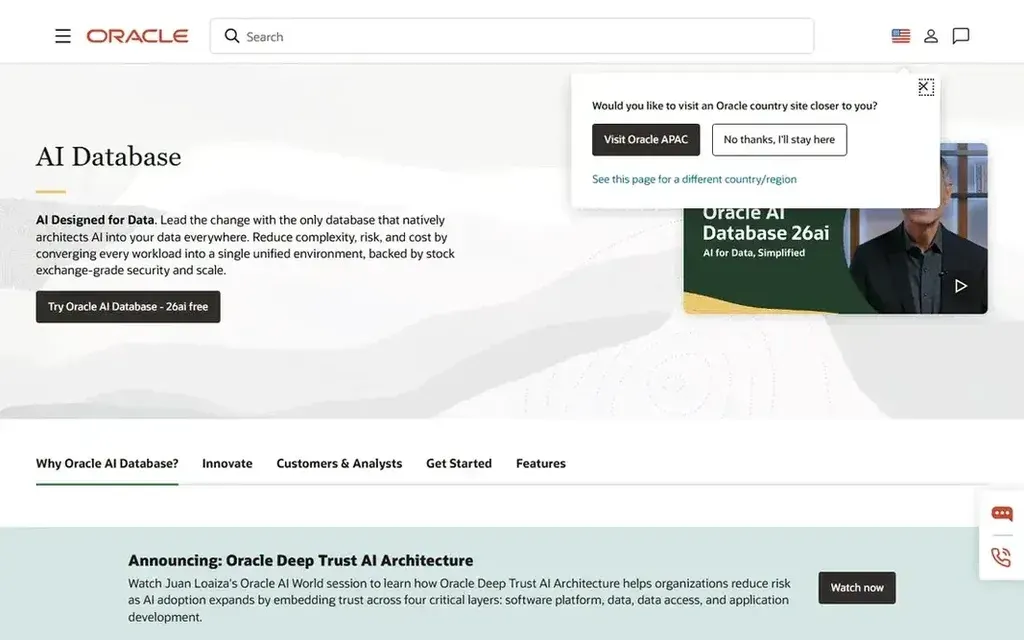
Oracle Database serves AI-driven enterprise workloads. Oracle Database is a flagship relational database system, now with AI features in its latest iteration. It is built for organizations that require a steady, high-performance database to power critical applications and data operations.
Highlights: Solid for critical workloads.
Drawbacks to consider: Complicated to handle. As for the details, Oracle Database can be complicated and expensive to administer, requiring specialized skills. It may be overkill for small teams or simple applications. Worth adding: the ecosystem contains tools for development, management, and AI integration, making it a good match for large enterprises with demanding workloads. Pricing for Oracle Database is not stated here, so ask the vendor for current figures. Free access: Not stated.
- Integrated AI capabilities
- Thorough feature set
- Commercial licensing
MySQL is built with widely used open-source relational database in mind. MySQL is a widely adopted open-source relational database management system, known for its reliability and simplicity.
From a buyer's view, for complicated analytical workloads or enterprise-scale AI, consider SQL Server or Oracle Database. Check the vendor site for MySQL pricing; none is listed in this comparison. Trial and free access: Not stated.
Limits to weigh: Restricted advanced features.
- Widely used and well-supported
- Decent performance for web apps
- Commercial licensing for some use cases
How we built this list
The comparison looks at four things: starting price, free access, how well the feature set matches ecosystem for database software, and the main limit of each tool. Where a vendor does not publish a price, the entry says quote. Where a price depends on seats or billing term, the entry says so. Tools are placed by general fit for ecosystem for database software, with price clarity and free access as tie-breakers. A different team can reasonably rank them differently.
What to check before you buy
- Get a written quote from Microsoft SQL Server, MongoDB, Google Cloud Spanner and others; the list shows no starting price for them.
- Read the fine print on the free plans from MongoDB and Redis; seat, project and feature caps differ.
- Read the limits listed for Microsoft SQL Server first: licensing costs.
- The entry price of Microsoft SQL Server is only the starting point; model the full cost with seats and extras.
- List the apps you already depend on and check that Redis supports each one on the plan you would buy.
FAQ
How are the tools for ecosystem for database software ordered?
Microsoft SQL Server sits first and MySQL last because the order follows typical fit for ecosystem for database software, then price clarity and free access. It is a judgement call, so read each profile for fit and limits.
What is the best database ecosystem for AI applications?
Start with Microsoft SQL Server if you need enterprise analytics and AI integration. MongoDB is the better match for adaptable document-oriented applications, and Google Cloud Spanner for globally distributed, always-on applications. The best choice depends on budget, team size and workflow.
Is Microsoft SQL Server the right pick for everyone comparing ecosystem for database software?
No single tool suits every team. Microsoft SQL Server comes first because it fits enterprise analytics and AI integration, while MongoDB suits flexible document-oriented applications and Google Cloud Spanner suits globally distributed, always-on applications. Match the tool to your own size, budget and workflow before deciding.
Which options for ecosystem for database software have a free plan?
MongoDB and Redis offer a free plan in this list. Free plans usually cap users, projects or features, so check the limits on the vendor page. Prices, free plan details and limits for all 6 tools in this ecosystem for database software roundup sit on the individual cards above.
Can I try these options before paying?
Often, yes. MongoDB and Redis have a free plan. Use your own data and a real task during the test, and check what the free tier or trial limits before you rely on it. Each of the 6 options in this ecosystem for database software guide has its own card above with the price, free plan and limits.
Is a cloud-only database like Google Cloud Spanner a decent choice?
Google Cloud Spanner is very good for globally distributed, always-on applications that need scalability without downtime. Even so, it ties you to Google Cloud, so consider multi-cloud or on-premises needs.
Sources
- https://www.microsoft.com/en-us/sql-server
- https://www.mongodb.com
- https://cloud.google.com/spanner
- https://redis.io
- https://www.oracle.com/database
- https://www.mysql.com