The 5 Best Disaster Recovery Software for Startups in 2026, Ranked
Searching for the best disaster recovery software for startups? Here are 5 options with prices and free plans. Caveats come with every verdict. See which fits.
- Editor's choiceAzure Site Recovery
Startups using Microsoft Azure
Starts atPricing on requestVisit azure.microsoft.comFull review - Great alternative
 Rubrik
Startups prioritizing cyber resilience
Starts atPricing on requestVisit rubrik.comFull review - Also considerAWS Elastic Disaster Recovery
Startups on AWS or with hybrid setups
Starts atPricing on requestVisit aws.amazon.comFull review
Direct answer
Azure Site Recovery leads the list, best for startups using Microsoft Azure. Rubrik is the stronger choice for startups prioritizing cyber resilience, while AWS Elastic Disaster Recovery suits startups on AWS or with hybrid setups. The other 2 tools in the list cover narrower or pricier cases. None of these vendors publish plan prices, so pricing is on request for every option.
TL;DR:
- Azure Site Recovery is the opening pick, best for startups using Microsoft Azure.
- Just one of the 5 tools, AWS Elastic Disaster Recovery, has a free plan.
- Every tool from Azure Site Recovery to Veeam Backup & Replication works by quote, with no list price shown.
- Druva comes with a trade-off: may be less configurable than on-premises options.
Last checked November 2026. Pricing on request: vendors did not publish plan prices when this guide was last checked (November 2026), so ask each vendor for a written quote.
Quick comparison
| Tool | Best for | Starts at | Free plan? | |
|---|---|---|---|---|
| Azure Site Recovery | Startups using Microsoft Azure | Pricing on request | Free trial | Visit |
| Rubrik | Startups prioritizing cyber resilience | Pricing on request | Not stated | Visit |
| AWS Elastic Disaster Recovery | Startups on AWS or with hybrid setups | Pricing on request | Yes | Visit |
 Druva | Startups wanting completely managed SaaS | Pricing on request | Free trial | Visit |
| Veeam Backup & Replication | Startups with mixed IT environments | Pricing on request | Not stated | Visit |
The 5 tools in detail
LinkVetted put together this guide to disaster recovery software for startups for readers who want a clear shortlist without reading every vendor page. It compares 5 tools on starting price, free plans, who each one suits and where each one falls short.
Azure Site Recovery
Best for: Startups using Microsoft Azure
Azure Site Recovery is a good fit for startups using Microsoft Azure. Azure Site Recovery is Microsoft's disaster recovery service that helps minimize business disruption by ensuring application availability.
Also, if your startup is not on Azure, this tool may not be the best fit, as it is optimized for Azure environments. No starting price is listed for Azure Site Recovery here; confirm pricing on the vendor site. Free access: Free trial.
Limits to weigh: A good match for Azure-centric environments.
- Helps ensure application availability
- Simplifies disaster recovery deployment
- Needs Azure expertise to configure and handle
For startups prioritizing cyber resilience, Rubrik is a natural candidate. Rubrik supplies enterprise cyber resilience with a focus on data security and recovery. Its product bundles immutable backups and machine-speed restoration after ransomware attacks, making it a solid choice for startups that manage sensitive data and need solid protection against cyber threats.
Startups with more straightforward needs might prefer Druva's managed SaaS approach or Azure Site Recovery for entry-level disaster recovery within Azure. For everyday use, Rubrik's enterprise orientation means it may be more complicated and expensive than a small startup needs. Pricing for Rubrik is not stated here, so ask the vendor for current figures. On free options: Not stated.
Watch-outs: Complicated deployment compared with more straightforward SaaS choices.
- Immutable backups for ransomware protection
- Fast recovery at machine speed
- Enterprise-focused features may be overkill for small startups
AWS Elastic Disaster Recovery
Best for: Startups on AWS or with hybrid setups
In short, AWS Elastic Disaster Recovery is for startups on AWS or with hybrid setups. AWS Elastic Disaster Recovery (AWS DRS) minimizes downtime and data loss with quick, dependable recovery of on-premises and cloud-based applications. It is well-suited for startups that run workloads on AWS or have a hybrid infrastructure and need a dependable disaster recovery option.
The main drawbacks: May need AWS knowledge to set up and maintain.
Strengths: Quick.
Also, for startups not using AWS, this service may not be the most natural fit, and it needs familiarity with AWS. Those on Azure might prefer Azure Site Recovery, whereas those seeking a managed SaaS choice could look at Druva. No starting price is listed for AWS Elastic Disaster Recovery here; confirm pricing on the vendor site. You can start on AWS Elastic Disaster Recovery without paying.
- Integrated with AWS services
- Steady recovery for on-premises and cloud apps
- Primarily aimed at AWS environments
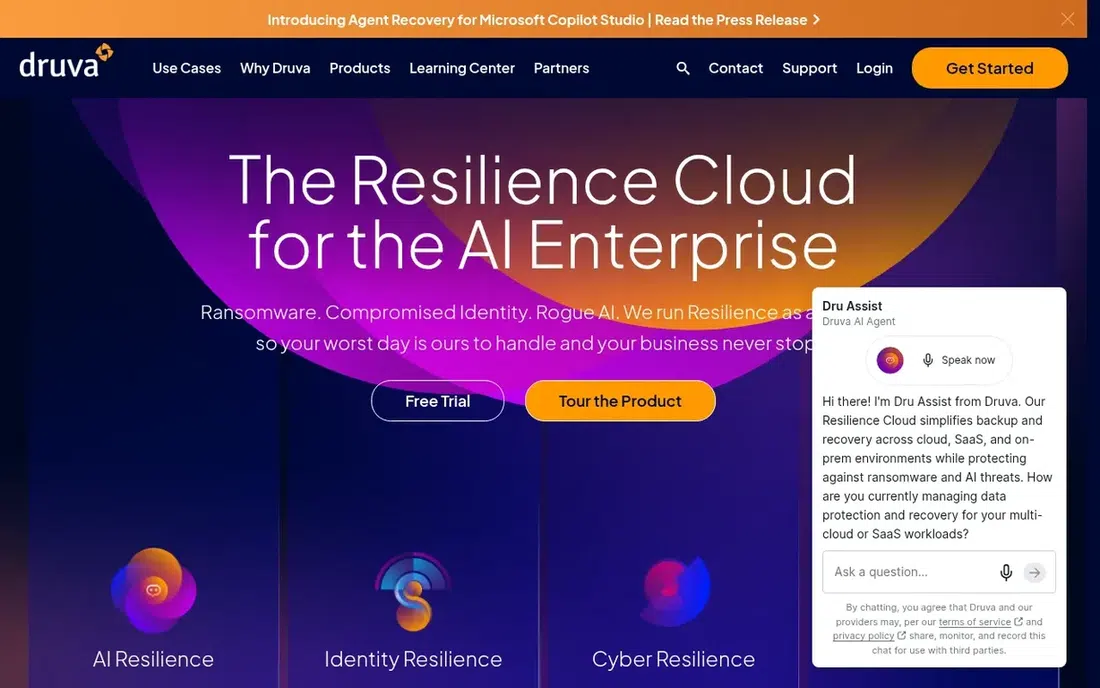
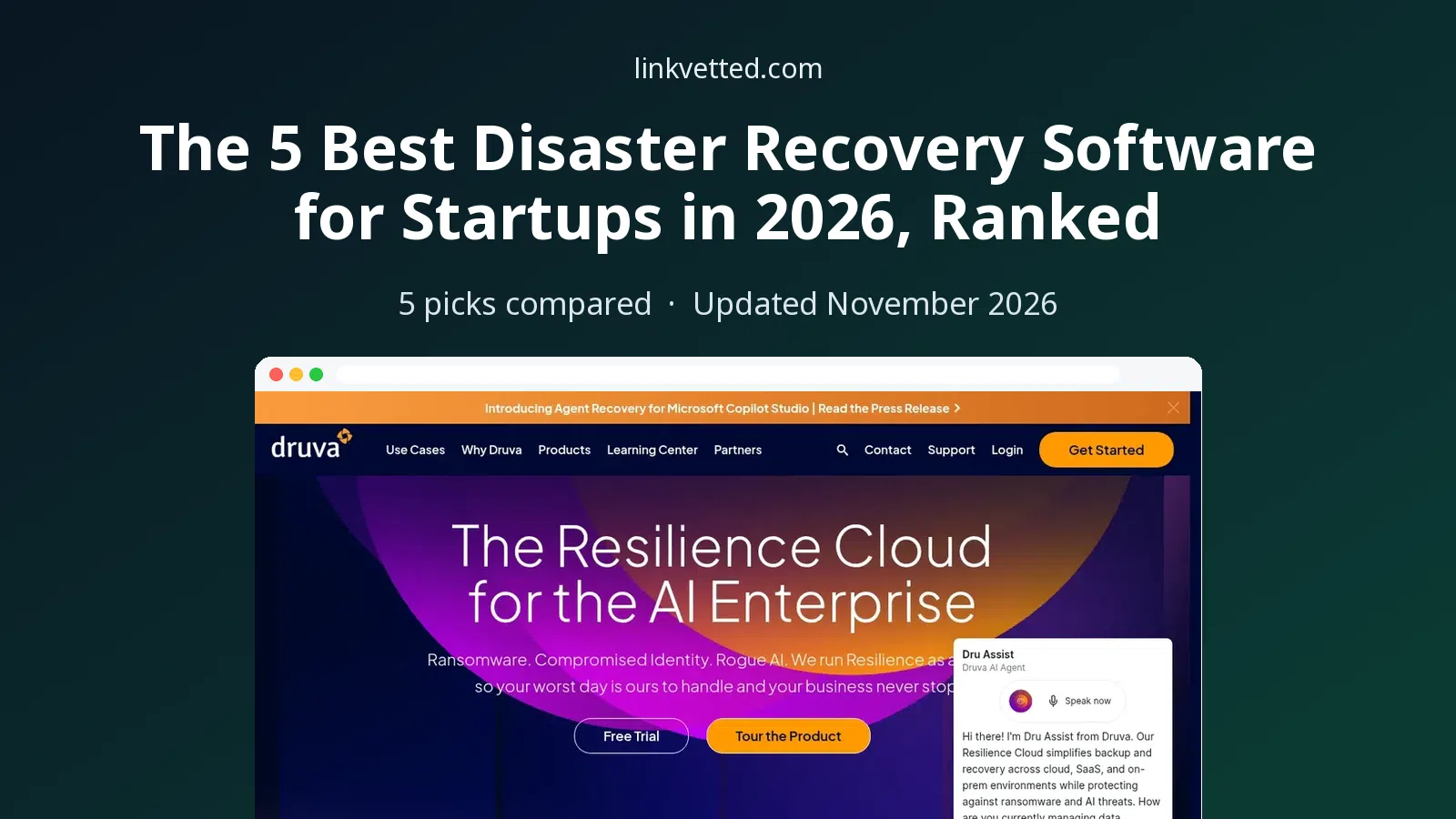
Pick Druva if this describes you: startups wanting completely managed SaaS. Druva gives you a completely managed, cloud-native SaaS system that provides data security, identity resilience, backup protection, and quick ransomware recovery.
Where it is weaker: Continuing subscription cost can add up for expanding data.
Its AI-powered approach means startups can protect data without managing infrastructure, making it well suited to lean teams that want a hands-off, scalable disaster recovery option. No starting price is listed for Druva here; confirm pricing on the vendor site. Free access: Free trial.
Strengths: No infrastructure to maintain.
- Completely managed
- AI-powered data security and ransomware recovery
- May be less configurable than on-premises options
Veeam Backup & Replication
Best for: Startups with mixed IT environments
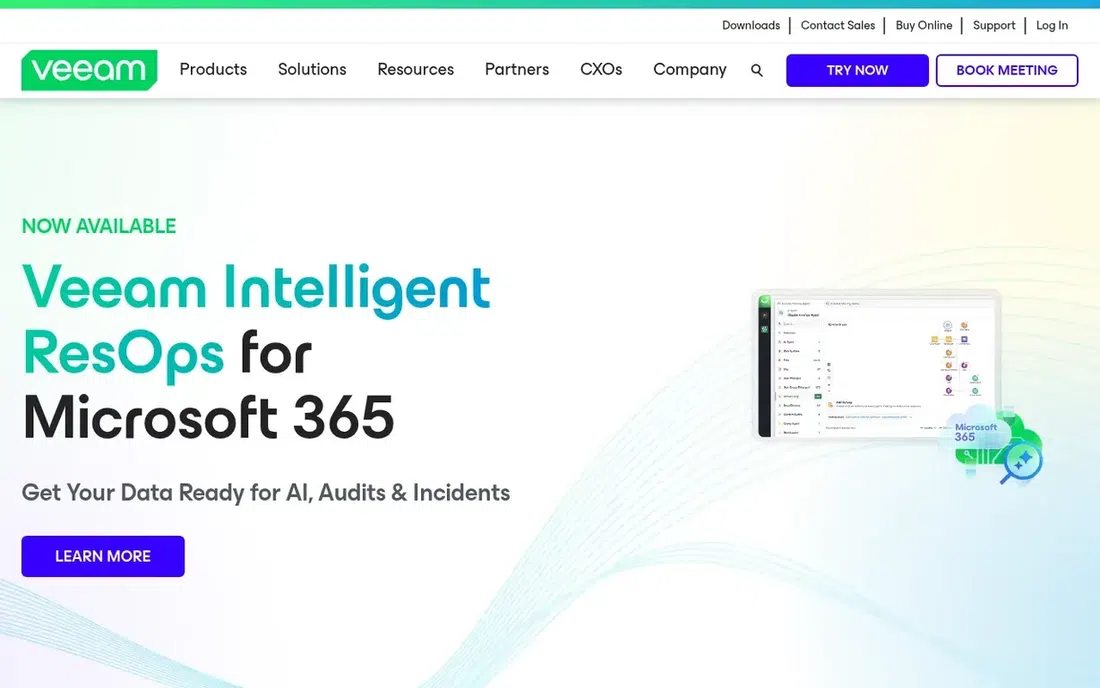
Where Veeam Backup & Replication fits: startups with mixed IT environments. Startups seeking a hands-off, cloud-native experience might prefer Druva or a platform-as-a-service offering like Azure Site Recovery if they are already invested in Microsoft Azure.
Where it is weaker: May need more practical setup and management.
It emphasizes cyber resilience, helping startups protect data against ransomware and other threats whereas supporting compliance needs. Veeam Backup & Replication shows no starting price here, so confirm the cost on the vendor site. As for free access: Not stated.
- Supports a broad set of workloads and products
- Focus on cyber resilience and secure data movement
- Can be complicated for teams with restricted IT staff
Our selection method
Selection started from tools commonly considered for disaster recovery software for startups, then narrowed to 5 that have clear pricing information or a clear quote process. Seat minimums, billing terms and add-ons can move the real cost, so the starting prices here are a guide and not a quote. Position on the page reflects fit for a typical buyer first, with price clarity and free access breaking ties. Treat it as a guide, not a ruling.
What to confirm before you sign up
- Request quotes from Azure Site Recovery, Veeam Backup & Replication and the others; the list shows no fixed prices.
- Look at the free plan from AWS Elastic Disaster Recovery closely: its caps decide whether it is usable for real work.
- Use real work to test the free trial from Azure Site Recovery and Druva, rather than a demo project.
- Before choosing Azure Site Recovery, weigh its main limit: most useful for Azure-centric environments.
- Check whether the features you need in Veeam Backup & Replication sit on the entry plan or only on higher tiers.
- Check the support hours and onboarding help AWS Elastic Disaster Recovery offers; smaller vendors vary a lot here.
FAQ
Can I use multiple disaster recovery tools together?
In some cases, yes, but it can add complexity. Startups should first evaluate if a single option meets their needs. If using several tools, ensure they integrate well and do not build data silos or management challenges.
How are the tools for disaster recovery software for startups ordered?
Azure Site Recovery sits first and Veeam Backup & Replication last because the order follows typical fit for disaster recovery software for startups, then price clarity and free access. It is a judgement call, so read each profile for fit and limits.
Do these tools publish their prices?
No. None of the tools, from Azure Site Recovery to Veeam Backup & Replication, shows a fixed starting price here, so budget time for quotes.
How does Druva differ from Veeam for startups?
Druva is a completely managed SaaS product, which means less operational overhead, whereas Veeam supplies more control and customization but needs more practical management.
Which options for disaster recovery software for startups have a free plan?
AWS Elastic Disaster Recovery is the only tool in this list with a free plan. Free plans usually cap users, projects or features, so check the limits on the vendor page. Several others offer a trial instead. Each of the 5 options in this disaster recovery software for startups guide has its own card above with the price, free plan and limits.
Is Azure Site Recovery the right pick for everyone comparing disaster recovery software for startups?
No single tool suits every team. Azure Site Recovery comes first because it fits startups using Microsoft Azure, while Rubrik suits startups prioritizing cyber resilience and AWS Elastic Disaster Recovery suits startups on AWS or with hybrid setups. Match the tool to your own size, budget and workflow before deciding.
Sources
- https://azure.microsoft.com/en-us/products/site-recovery
- https://www.rubrik.com
- https://aws.amazon.com/disaster-recovery
- https://www.druva.com
- https://www.veeam.com