Top Software for Cyber Threat Intelligence in 2026: 8 Platforms Compared
Compare top software for cyber threat intelligence, from Recorded Future and Mandiant to CrowdStrike, with picks for SOC and CTI teams of every size now.

- Editor's choice
 Recorded Future
Large enterprise CTI teams
Starts atSee websiteVisit recordedfuture.comFull review - Great alternative
 CrowdStrike Falcon Intelligence
Falcon-based SOC teams
Starts atSee websiteVisit crowdstrike.comFull review - Also consider
 Google Threat Intelligence (Mandiant)
Targeted threat research
Starts atSee websiteVisit cloud.google.comFull review
TL;DR:
- Recorded Future suits large CTI teams that need broad collection and correlation.
- Mandiant suits teams facing targeted threats and needing incident-led context.
- CrowdStrike suits Falcon customers who want intel tied to endpoint data.
- Most of these tools are quote-based, so budget time for a formal quote and trial.
Quick comparison
| Tool | Best for | Starts at | Free plan? | |
|---|---|---|---|---|
| Recorded Future | Large enterprise CTI teams | See website | Free trial | Visit |
| CrowdStrike Falcon Intelligence | Falcon-based SOC teams | See website | Free trial | Visit |
| Google Threat Intelligence (Mandiant) | Targeted threat research | See website | Free trial | Visit |
 Flashpoint | Deep and dark web research | See website | Free trial | Visit |
 Anomali ThreatStream | Feed aggregation and enrichment | See website | Free trial | Visit |
 Cyble Vision | Unified CTI and brand protection | See website | Free trial | Visit |
 ThreatConnect | CTI operations and workflows | See website | Free trial | Visit |
 Microsoft Defender Threat Intelligence | Microsoft-based SOC teams | See website | Free trial | Visit |
The best cyber threat intelligence platforms
We favoured platforms with analyst research, indicator enrichment, and integrations that help SOC teams act, not just collect more feeds.
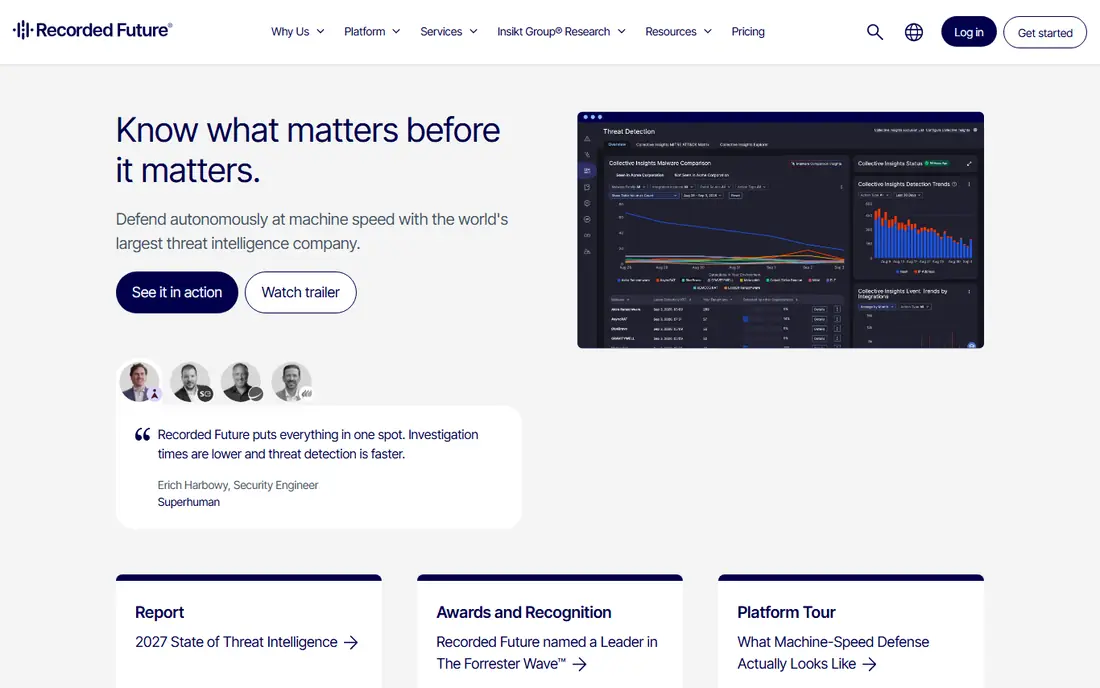
For teams that need large enterprise cti teams, Recorded Future stands out because it links actors, infrastructure, and indicators at large scale. its Intelligence Graph helps analysts see relationships that a flat feed would hide That combination makes it a clear fit for the use case in its best-for line, rather than a general tool that happens to cover the topic in passing. We compared its official feature pages and pricing notes against the other options here, and it held up on the core job, even where some advanced features sit on higher tiers.
The honest catch is that lean teams should plan staffing for triage, since signal volume is high Ask for a trial or a guided demo on your own data before you commit, and check contract terms, support hours, and any usage limits that could change the total cost. If that catch touches a daily workflow for your team, weigh the next option on this list before you decide.
- Broad open and dark web collection
- Intelligence Graph links
- Analyst research
- Enterprise pricing
- Volume can overwhelm small teams

If falcon-based soc teams is your main job to solve, CrowdStrike Falcon Intelligence is worth a close look, since it ties intelligence directly to endpoint telemetry and response. its named adversary profiles help hunters move from an alert to a known actor pattern quickly That combination makes it a clear fit for the use case in its best-for line, rather than a general tool that happens to cover the topic in passing. We compared its official feature pages and pricing notes against the other options here, and it held up on the core job, even where some advanced features sit on higher tiers.
The honest catch is that teams not running Falcon should weigh whether the standalone tier fits their stack Ask for a trial or a guided demo on your own data before you commit, and check contract terms, support hours, and any usage limits that could change the total cost. If that catch touches a daily workflow for your team, weigh the next option on this list before you decide.
- Adversary tracking tied to endpoint data
- Strong eCrime coverage
- Falcon integration
- Most value needs Falcon
- Standalone use is more limited
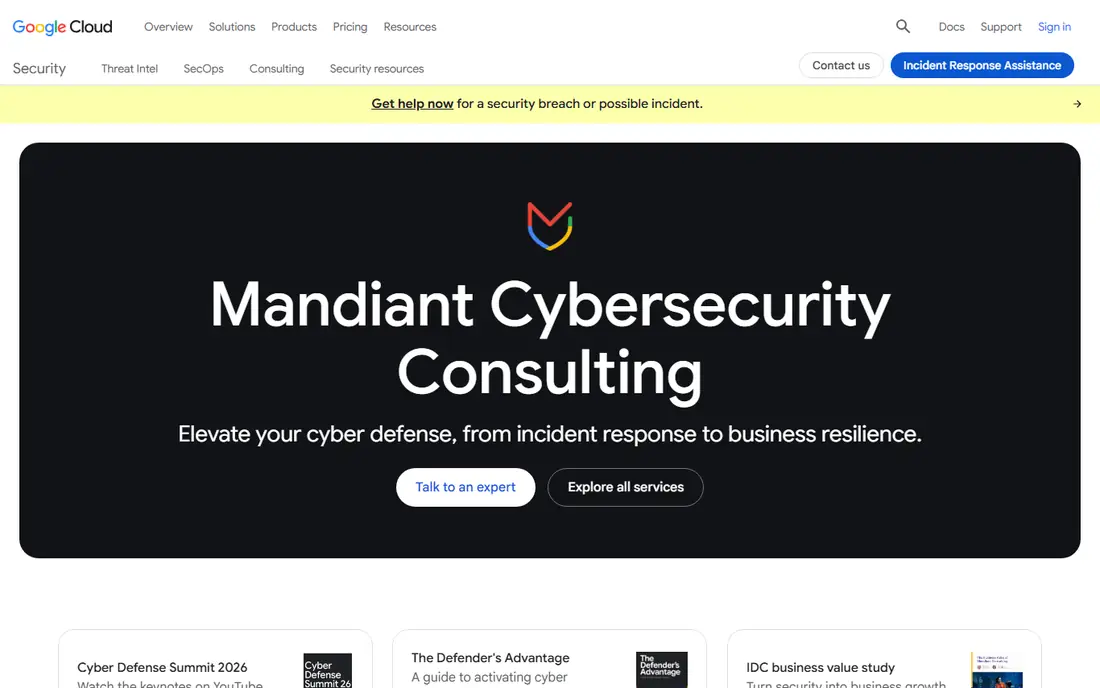
We place Google Threat Intelligence (Mandiant) here for buyers focused on targeted threat research, because it draws on frontline incident response work for attribution. its actor and campaign reports are useful when a team faces advanced or nation-state style threats That combination makes it a clear fit for the use case in its best-for line, rather than a general tool that happens to cover the topic in passing. We compared its official feature pages and pricing notes against the other options here, and it held up on the core job, even where some advanced features sit on higher tiers.
The honest catch is that teams needing broad dark web brand coverage may need a second tool alongside it Ask for a trial or a guided demo on your own data before you commit, and check contract terms, support hours, and any usage limits that could change the total cost. If that catch touches a daily workflow for your team, weigh the next option on this list before you decide.
- Incident-led actor and campaign research
- Deep technical reports
- Google Security Operations fit
- Enterprise pricing
- Less focus on brand monitoring
Flashpoint suits organisations where deep and dark web research matters most, and it adds human collection from closed communities that automated feeds miss. its underground context helps fraud, leak, and threat teams understand actor chatter early That combination makes it a clear fit for the use case in its best-for line, rather than a general tool that happens to cover the topic in passing. We compared its official feature pages and pricing notes against the other options here, and it held up on the core job, even where some advanced features sit on higher tiers.
The honest catch is that smaller teams should confirm which data collections are included in their tier Ask for a trial or a guided demo on your own data before you commit, and check contract terms, support hours, and any usage limits that could change the total cost. If that catch touches a daily workflow for your team, weigh the next option on this list before you decide.
- Analyst-led closed forum coverage
- Fraud and leak context
- Strong investigations
- Pricing is quote-based
- Learning curve for new analysts
When feed aggregation and enrichment is the deciding factor, Anomali ThreatStream deserves a demo, because it is built to ingest many feeds and make them usable in a SOC. its enrichment and API options help teams push context into SIEM alerts That combination makes it a clear fit for the use case in its best-for line, rather than a general tool that happens to cover the topic in passing. We compared its official feature pages and pricing notes against the other options here, and it held up on the core job, even where some advanced features sit on higher tiers.
The honest catch is that teams wanting finished analyst reports as the main product may prefer a research-led platform Ask for a trial or a guided demo on your own data before you commit, and check contract terms, support hours, and any usage limits that could change the total cost. If that catch touches a daily workflow for your team, weigh the next option on this list before you decide.
- High-volume feed ingestion
- Flexible correlation
- SIEM and SOAR links
- Interface and setup need tuning for best results
Buyers who rank unified cti and brand protection first will find a lot to like in Cyble Vision, since it joins CTI, dark web, attack surface, and brand protection in one platform. its unified view helps smaller security teams cover several external risks without many separate tools That combination makes it a clear fit for the use case in its best-for line, rather than a general tool that happens to cover the topic in passing. We compared its official feature pages and pricing notes against the other options here, and it held up on the core job, even where some advanced features sit on higher tiers.
The honest catch is that large CTI teams should test depth of analyst research against specialist leaders Ask for a trial or a guided demo on your own data before you commit, and check contract terms, support hours, and any usage limits that could change the total cost. If that catch touches a daily workflow for your team, weigh the next option on this list before you decide.
- Dark web, attack surface, and brand coverage in one view
- AI-assisted triage
- Newer enterprise footprint than some leaders
- Pricing is quote-based
For a practical shortlist built around cti operations and workflows, ThreatConnect earns its place because it focuses on running CTI as a process, not only storing indicators. its playbooks and case tools help teams turn intelligence into assigned, tracked action That combination makes it a clear fit for the use case in its best-for line, rather than a general tool that happens to cover the topic in passing. We compared its official feature pages and pricing notes against the other options here, and it held up on the core job, even where some advanced features sit on higher tiers.
The honest catch is that teams wanting a simple feed reader may find the workflow depth more than they need Ask for a trial or a guided demo on your own data before you commit, and check contract terms, support hours, and any usage limits that could change the total cost. If that catch touches a daily workflow for your team, weigh the next option on this list before you decide.
- Lifecycle workflows
- Cases and playbooks
- Broad integrations
- Setup needs process design
- Pricing is quote-based
If you are weighing options mainly on microsoft-based soc teams, start with Microsoft Defender Threat Intelligence, because it brings threat context into the Microsoft security tools many teams already run. its links to Defender and Sentinel help analysts enrich alerts without switching consoles That combination makes it a clear fit for the use case in its best-for line, rather than a general tool that happens to cover the topic in passing. We compared its official feature pages and pricing notes against the other options here, and it held up on the core job, even where some advanced features sit on higher tiers.
The honest catch is that teams on a mixed vendor stack should check integration coverage for non-Microsoft tools Ask for a trial or a guided demo on your own data before you commit, and check contract terms, support hours, and any usage limits that could change the total cost. If that catch touches a daily workflow for your team, weigh the next option on this list before you decide.
- Portal-native context for Defender and Sentinel
- Familiar Microsoft admin model
- Depth outside Microsoft data varies
- Some features need higher licences
How we picked these
We compared official product pages, pricing pages, documentation, and public reviews for tools that exist and work in October 2026, and we kept only products that truly fit the topic. We favoured tools with clear documentation, current pricing or a clear quote route, and a track record of serving real teams, and we noted where pricing depends on seats, usage, or contract size. We did not claim hands-on testing we did not do, and we checked that each website below is the product's own official homepage.
How to choose a threat intelligence platform
Start with the job you need done each week, not the longest feature list. For cyber threat intelligence, write down who will use the tool daily, what data it must connect to, and what a good result looks like after 90 days. That short brief will rule out several options at once, because some tools are built for large teams with dedicated admins while others are built for small teams that need a fast start. Next, test the parts that matter most in a trial: setup time, import quality, permission controls, and reporting. Ask how pricing changes as seats, volume, or data grow, and ask what support is included on the plan you would actually buy. Finally, check security and data handling in plain terms, including single sign-on, audit logs, data location, and export options. Check feed quality for your sector, API and SIEM integration, and whether finished analyst reports are included or sold separately. A tool that is easy to leave, with data you can export, is usually a safer long-term choice than a tool that locks your history inside one system.
FAQ
What is the best cyber threat intelligence platform?
The best cyber threat intelligence platform depends on team size and threat profile. Recorded Future suits broad enterprise collection, Mandiant suits targeted threat research, and CrowdStrike suits Falcon-based SOC teams.
What are the best cyber threat intelligence tools for a SOC?
SOC teams often shortlist Recorded Future, Anomali ThreatStream, ThreatConnect, and Microsoft Defender Threat Intelligence, because they enrich alerts and connect to SIEM and SOAR tools.
What are the best cyber threat intelligence platforms for small teams?
Small teams should favour tools with clear starting prices, managed feeds, and simple integrations, and avoid platforms that need a dedicated CTI analyst to get value.
Is threat intelligence software expensive?
Most enterprise CTI platforms in this guide are quote-based, which reflects data volume, users, and modules. Ask what is included, such as analyst reports, dark web coverage, and API limits, before comparing quotes.
How does threat intelligence help day to day?
It adds context to alerts, such as actor, campaign, and infrastructure links, so analysts can prioritise real threats, block indicators, and hunt with better leads.