The 6 Best Disaster Recovery As a Service Solutions for Startups in 2026, Ranked
Need the best disaster recovery as a service solutions for startups? We compare 6 tools on cost, free access and who each suits. Each pick lists its main limit.
- Editor's choice
 Rubrik
Ransomware recovery at scale
Starts atPricing on requestVisit rubrik.comFull review - Great alternativeAzure Site Recovery
Recovery orchestration inside Azure
Starts atPricing on requestVisit azure.microsoft.comFull review - Also consider
 Datto SIRIS
Business continuity for managed IT
Starts atPricing on requestVisit datto.comFull review
Direct answer
Rubrik is the first pick on this list for ransomware recovery at scale. Alternatives: Azure Site Recovery for Recovery orchestration inside Azure, and Datto SIRIS for business continuity for managed IT. The remaining 3 options are covered below with pricing notes and limits. None of these vendors publish plan prices, so pricing is on request for every option.
TL;DR:
- Rubrik is the opening pick, best for ransomware recovery at scale.
- Every tool from Rubrik to AWS Elastic Disaster Recovery works by quote, with no list price shown.
- A fair warning about Datto SIRIS: oriented toward IT service providers.
- AWS Elastic Disaster Recovery is the one to check for quick recovery for AWS workloads.
Last checked November 2026. Pricing on request: vendors did not publish plan prices when this guide was last checked (November 2026), so ask each vendor for a written quote.
Quick comparison
| Tool | Best for | Starts at | Free plan? | |
|---|---|---|---|---|
| Rubrik | Ransomware recovery at scale | Pricing on request | Not stated | Visit |
| Azure Site Recovery | Recovery orchestration inside Azure | Pricing on request | Free trial | Visit |
| Datto SIRIS | Business continuity for managed IT | Pricing on request | Not stated | Visit |
 Cohesity | Data security and management combined | Pricing on request | Not stated | Visit |
| Veeam Backup & Replication | Cyber resilient backup and replication | Pricing on request | Not stated | Visit |
| AWS Elastic Disaster Recovery | Quick recovery for AWS workloads | Pricing on request | Yes | Visit |
The best disaster recovery as a service solutions for startups
If you are comparing disaster recovery as a service solutions for startups, this page covers 6 tools in one place: what each is best for, what it costs to start, whether it has a free plan, and the main limit to know about.
Pick Rubrik if this describes you: ransomware recovery at scale. Rubrik presents an agentic product for enterprise cyber resilience, data security and recovery, with immutable backups and restoration after ransomware and cyberattacks at machine speed.
Watch-outs: Enterprise-oriented positioning.
Its enterprise framing can mean more capability than a very small team needs on day one. In daily use, consider Rubrik when cyber resilience is a board-level concern and you want a product that scales with you. Check the vendor site for Rubrik pricing; none is listed in this comparison. Free options: Not stated.
- Machine-speed recovery messaging
- Focus on identity and data security
- Feature depth may exceed startup needs
Azure Site Recovery
Best for: Recovery orchestration inside Azure
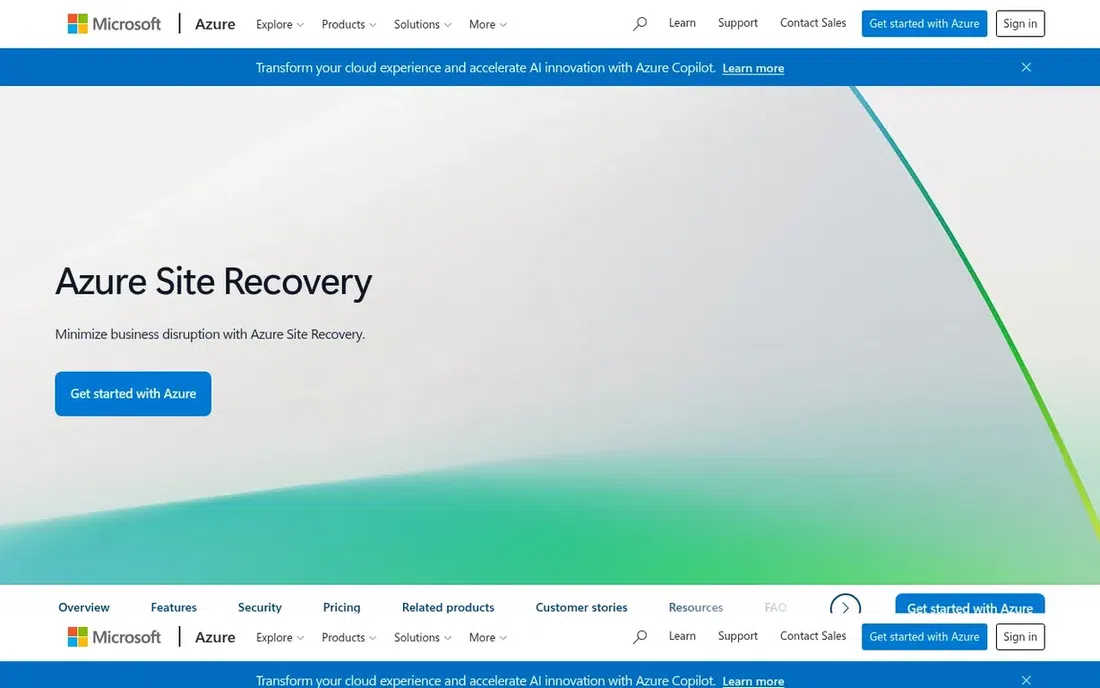
Azure Site Recovery makes the most sense for Recovery orchestration inside Azure. Recovery design still needs planning around your applications. The service makes most sense for teams invested in Azure; those running primarily elsewhere may find another cloud's native choice more natural.
Azure Site Recovery is Microsoft's service for minimizing business disruption and keeping applications available through disaster recovery. Its stated aims are simple deployment of disaster recovery, cost reduction and data protection. This comparison lists no price for Azure Site Recovery; ask the vendor. Free options: Free trial.
Where it falls short: Needs cloud architecture planning.
- Suits Microsoft-centric environments
- Focus on application availability
- Most valuable when committed to Azure
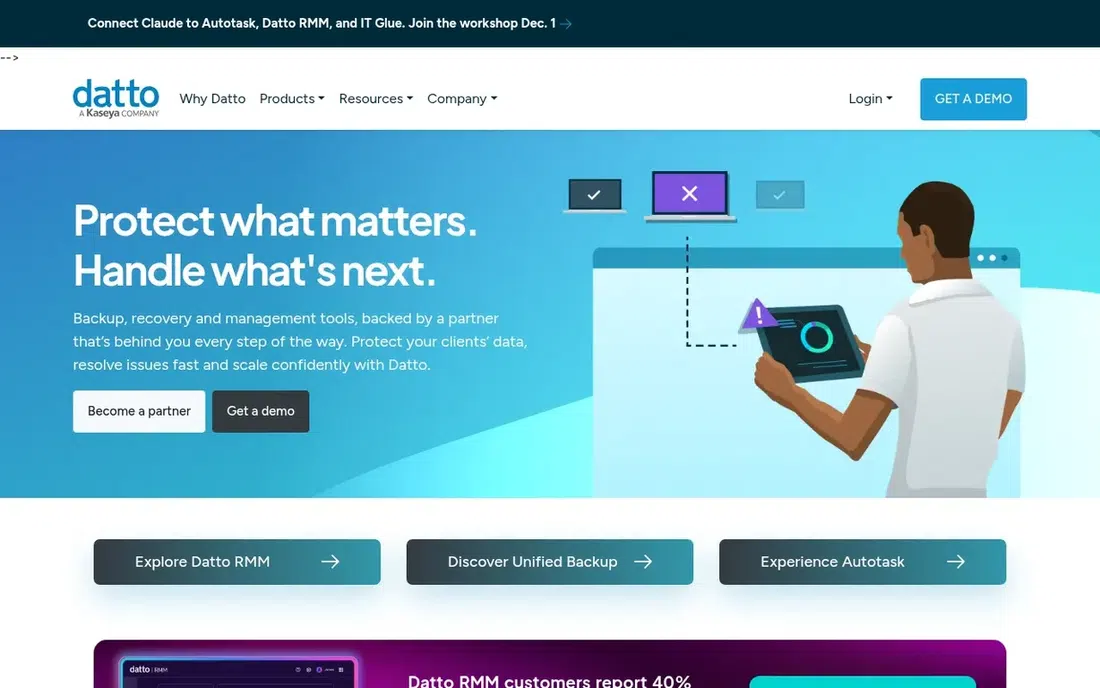
Datto SIRIS is aimed squarely at business continuity for managed IT. Consider Datto when continuity is a core operational requirement.
Since the portfolio spans multiple IT functions, some startups may find it broader than needed for pure disaster recovery. For everyday use, Datto SIRIS is positioned within a portfolio that IT professionals depend on for mission-critical business continuity and disaster recovery, alongside networking, business management and file backup and sync. Check the vendor site for Datto SIRIS pricing; none is listed in this comparison. Free options: Not stated.
The main drawbacks: Oriented toward IT service providers.
- Made for mission-critical continuity
- Merges backup with networking and management
- May overlap with tools you already run
Think of Cohesity for data security and management combined. Cohesity describes itself as AI-powered data security and management, giving teams both protection and management in one place.
On top of that, a combined security and management system asks for clear internal ownership to get full value. Pricing for Cohesity is not stated here, so ask the vendor for current figures. As for free access: Not stated.
The main drawbacks: Broad system scope.
- Rapid data recovery focus
- AI-based early threat detection
- Needs clear ownership internally
Veeam Backup & Replication
Best for: Cyber resilient backup and replication
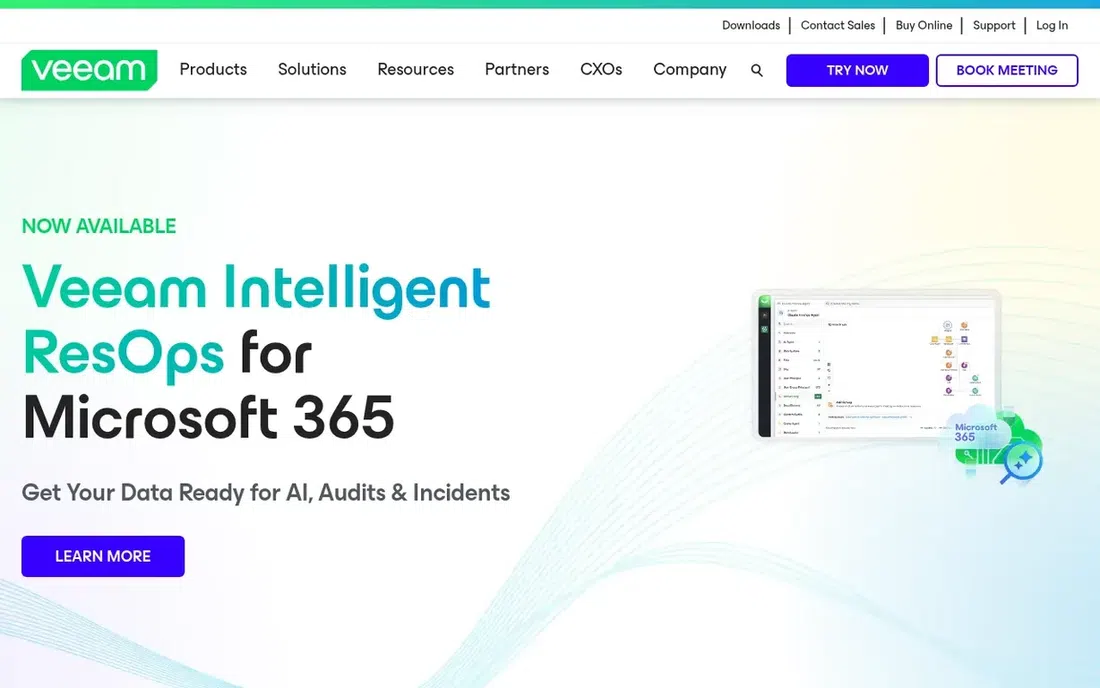
Veeam Backup & Replication is a good fit for cyber resilient backup and replication. Veeam Backup & Replication is a data protection system built around cyber resilient backup, secure data movement and compliance. Its vendor messaging centers on seeing risk everywhere and protecting data across environments, including AI workloads.
Where it falls short: Can be complicated for very small teams.
The system carries a broad feature surface, which can be heavy for a small team without dedicated IT staff. Choose Veeam when control over backup and replication matters more than simplicity. Check the vendor site for Veeam Backup & Replication pricing; none is listed in this comparison. Free plan details: Not stated.
- Wide backup and replication coverage
- Supports secure data movement
- Needs planning around your infrastructure
AWS Elastic Disaster Recovery
Best for: Quick recovery for AWS workloads
For quick recovery for AWS workloads, AWS Elastic Disaster Recovery is a natural candidate. Teams not using AWS may prefer a provider-neutral or completely managed service.
Honest limits: Recovery testing takes continuing effort.
It fits startups running workloads on AWS, or planning to, that want recovery handled by the same cloud provider hosting their systems and want a consistent operational model. This comparison lists no price for AWS Elastic Disaster Recovery; ask the vendor. You can start on AWS Elastic Disaster Recovery without paying.
- Minimizes downtime and data loss
- Steady recovery
- Best fit for AWS-centric teams
How we compared the tools
Things to verify first
- Ask each vendor, from Rubrik to AWS Elastic Disaster Recovery, for a written quote; none of them publishes a starting price.
- Look at the free plan from AWS Elastic Disaster Recovery closely: its caps decide whether it is usable for real work.
- Take the trial from Azure Site Recovery and push a live task through it before you pay.
- Read the limits listed for Rubrik first: enterprise-oriented positioning.
- Check how data leaves Rubrik: formats, limits and whether exports are available on every plan.
- Involve the people who will use Azure Site Recovery daily; a short pilot beats a long feature checklist.
FAQ
What should a startup look for in disaster recovery as a service?
Also check that it suits your existing cloud or on-premises setup and that recovery can be tested on a regular basis without heavy effort.
Is a cloud-native recovery service better than a backup system?
Cloud-native choices for example Azure Site Recovery and AWS Elastic Disaster Recovery fit teams already running in those clouds and want recovery close to production.
Which options for disaster recovery as a service solutions for startups have a free plan?
AWS Elastic Disaster Recovery is the only tool in this list with a free plan. Free plans usually cap users, projects or features, so check the limits on the vendor page. One other tool offers a trial instead.
Do these tools publish their prices?
No. None of the tools, from Rubrik to AWS Elastic Disaster Recovery, shows a fixed starting price here, so budget time for quotes.
Can I try these tools before paying?
Often, yes. AWS Elastic Disaster Recovery has a free plan and Azure Site Recovery offers a free trial. Use your own data and a real task during the test, and check what the free tier or trial limits before you rely on it.
How are the tools for disaster recovery as a service solutions for startups ordered?
Rubrik sits first and AWS Elastic Disaster Recovery last because the order follows typical fit for disaster recovery as a service solutions for startups, then price clarity and free access. It is a judgement call, so read each profile for fit and limits.
Sources
- https://www.rubrik.com
- https://azure.microsoft.com/en-us/products/site-recovery
- https://www.datto.com
- https://www.cohesity.com
- https://www.veeam.com
- https://aws.amazon.com/disaster-recovery