Top 6 Database Software for Smart Devices for 2026 (Prices and Free Plans)
Searching for the best database software for smart devices? Here are 6 options with prices and free plans. Short verdicts, no fluff. Current for November 2026.
- Editor's choiceTimescaleDB
Time-series analytics with PostgreSQL
Starts at$30 per monthVisit timescale.comFull review - Great alternative
 Redis
Live data processing for smart devices
Starts at$5 a monthVisit redis.ioFull review - Also consider
 MongoDB
Adaptable cloud data for AI-driven devices
Starts atSee websiteVisit mongodb.comFull review
Direct answer
TimescaleDB is the first pick on this list for time-series analytics with PostgreSQL. Listed starting prices: TimescaleDB from $30 per month, Redis from $5 a month and InfluxDB from $18,000 per year. Redis fits live data processing for smart devices; MongoDB fits adaptable cloud data for AI-driven devices. All 6 tools are compared below on price, free plan and limits.
TL;DR:
- TimescaleDB sits first on this list: time-series analytics with PostgreSQL.
- What to know about Redis first: data is primarily in-memory.
- 4 of 6 tools offer a free plan: Redis, MongoDB, InfluxDB, Couchbase.
- Couchbase is the one to check for operational data with cloud-to-edge sync.
Last checked November 2026. Prices and plan details were read from the vendors' own pages in November 2026; vendors change plans often, so confirm the current price on the vendor site before you buy.
Quick comparison
| Tool | Best for | Starts at | Free plan? | |
|---|---|---|---|---|
| TimescaleDB | Time-series analytics with PostgreSQL | $30 per month | Free trial | Visit |
| Redis | Live data processing for smart devices | $5 a month | Yes | Visit |
| MongoDB | Adaptable cloud data for AI-driven devices | See website | Yes | Visit |
 SQLite | On-device storage for smart devices | See website | Not stated | Visit |
| InfluxDB | Time-series data from smart devices | $18,000 per year | Yes | Visit |
| Couchbase | Operational data with cloud-to-edge sync | $0.15 per hour per node | Yes | Visit |
The best database software for smart devices
If you are comparing database software for smart devices, this page covers 6 tools in one place: what each is best for, what it costs to start, whether it has a free plan, and the main limit to know about.
TimescaleDB
Best for: Time-series analytics with PostgreSQL
TimescaleDB targets time-series analytics with PostgreSQL. TimescaleDB is a time-series database built on PostgreSQL, offering the familiarity of SQL with optimizations for time-series data. It is built to manage large volumes of metrics and is a good match for smart device analytics where data is aggregated in the cloud.
Where it is weaker: Not for on-device use.
The product is positioned for enterprises processing massive amounts of metrics. For everyday use, TimescaleDB needs PostgreSQL expertise and is not intended for on-device storage. The starting price for TimescaleDB: $30 per month. As for free access: Free trial.
- Trusted for high-volume metrics
- Built on PostgreSQL
- Needs PostgreSQL knowledge
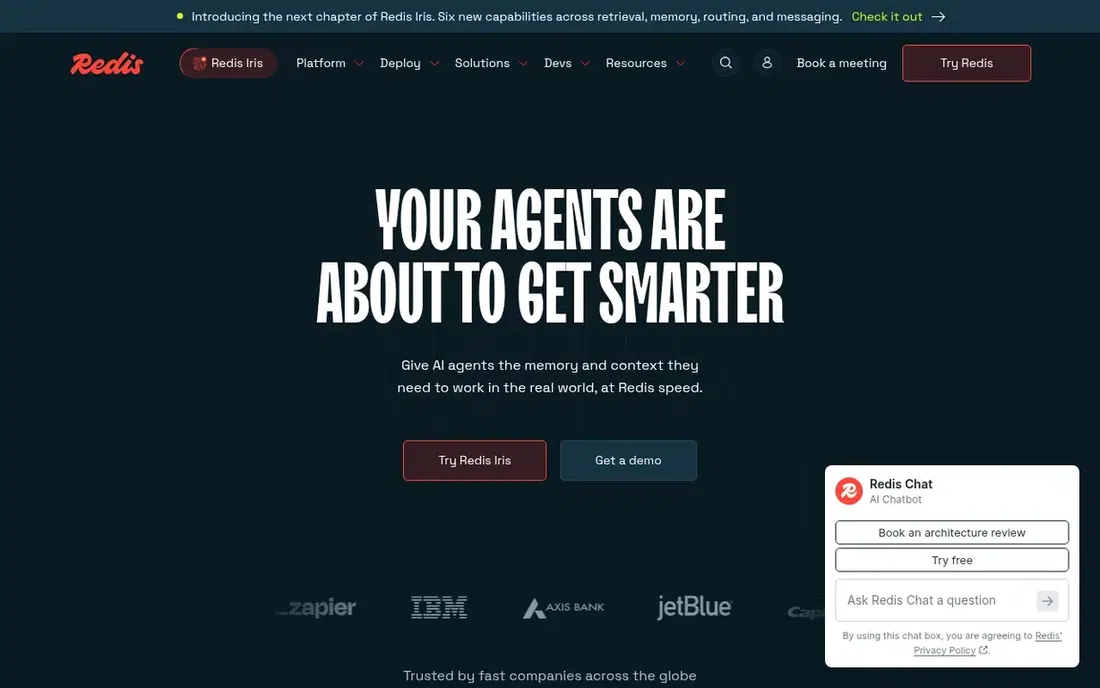
In short, Redis is for real-time data processing for smart devices. Since Redis keeps data in memory, it may not be suitable as a primary persistent store for all smart device data.
It is not intended for on-device use. From a buyer's view, if you need durable local storage or complicated querying, other choices like SQLite or MongoDB may be better. On cost, Redis starts like this: $5 per month. Redis offers a free plan.
Drawbacks to consider: Data is primarily in-memory.
- Widely used among developers
- Supports live workloads
- Not a full-featured on-device database
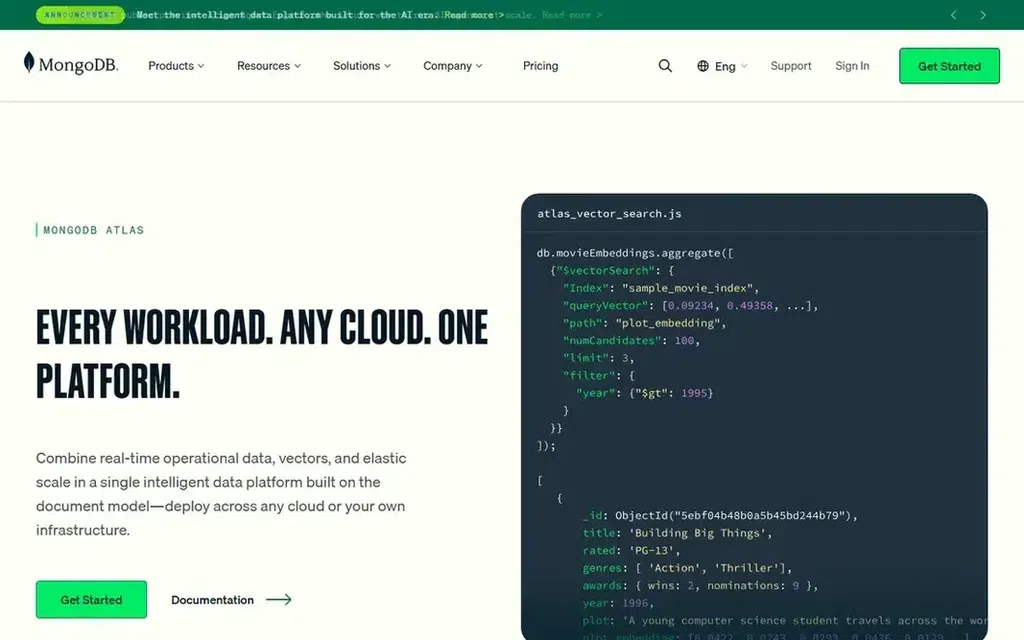
Pick MongoDB if this describes you: adaptable cloud data for AI-driven devices. MongoDB is not built to run on constrained smart devices themselves and usually needs cloud or server infrastructure. From a buyer's view, MongoDB is a document database that positions itself as an intelligent data system for the AI era.
It supplies adaptable schemas and live data capabilities, making it a good match for smart device applications that create varied data and have to scale across cloud environments. It is a solid fit for the cloud side of smart device architectures, where data from plenty of devices is aggregated and analyzed. MongoDB shows no starting price here, so confirm the cost on the vendor site. MongoDB offers a free plan.
Where it is weaker: Not well suited to on-device storage.
- Scales across any cloud
- Live data processing
- Needs cloud infrastructure
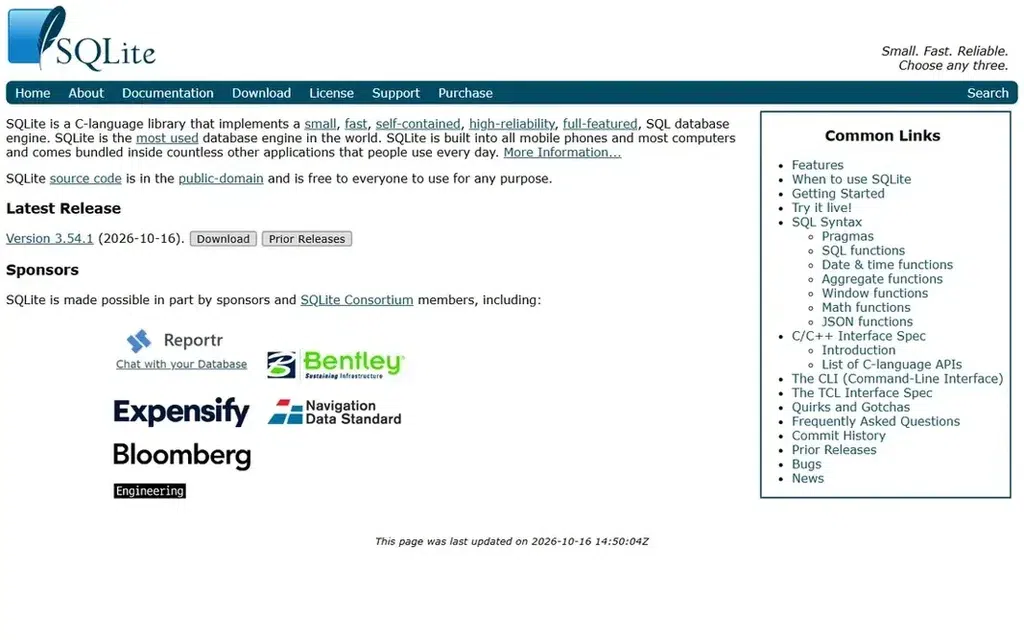
SQLite serves on-device storage for smart devices. SQLite is a light, file-based database engine that runs straight on the device without a separate server. It is widely used in embedded systems and mobile apps since it needs minimal resources and supports standard SQL.
What to check first: Restricted concurrent write scalability.
In daily use, if your smart device system needs live synchronization across plenty of nodes or cloud-scale analytics, you may need a different option. For smart devices that require local data storage, SQLite is a natural fit, particularly when connectivity is intermittent or data must be processed on-device. Even so, SQLite is not made for high-concurrency or distributed environments. No starting price is listed for SQLite here; confirm pricing on the vendor site. As for free access: Not stated.
- Widely supported on embedded systems
- Zero-configuration
- Not made for distributed cloud workloads
InfluxDB
Best for: Time-series data from smart devices
InfluxDB is aimed squarely at time-series data from smart devices. InfluxDB is a time-series database aimed at handling high volumes of timestamped data, for example sensor readings from smart devices. It is well-suited for monitoring and analytics use cases where devices emit continuous streams of metrics.
Downsides: Restricted on-device support.
The product is built to ingest and query time-series data efficiently. It also is not usually run on smart devices themselves. If your smart device data is primarily time-series and you need scalable ingestion, InfluxDB is a capable choice; otherwise, look at more general choices. InfluxDB starts at: $18,000 per year. InfluxDB includes a free tier.
- Optimized for time-series data
- Takes care of high write loads
- Not a general-purpose database
Couchbase
Best for: Operational data with cloud-to-edge sync
Choose Couchbase for operational data with cloud-to-edge sync. It supplies sub-millisecond performance and cloud-to-edge sync, which can be valuable for smart device deployments that require to keep data consistent between the cloud and edge devices. It is positioned for production AI agents and operational workloads.
Downsides: Needs operational infrastructure.
For everyday use, Couchbase may be overkill for straightforward on-device storage and usually needs more infrastructure than SQLite. If your smart device project is small-scale or purely local, a lighter choice might suffice. Entry price for Couchbase: $0.15 per hour per node. A free plan is available with Couchbase.
- Cloud-to-edge synchronization
- Sub-millisecond performance
- May be complex for straightforward device storage
What went into this list
For each of the 6 tools we noted price, free plan or trial, fit for database software for smart devices and the main limit, using vendor pages and documentation. Treat prices as a snapshot: vendors change plans often, so check the vendor site for the figure that applies today. The ranking is editorial: typical fit first, then clear pricing, then free access. If your needs are unusual, read the profiles rather than relying on position.
Before you commit
- Confirm the entry price on the vendor page. For MongoDB and SQLite that means a quote rather than a fixed price.
- Read the fine print on the free plans from Redis, MongoDB, InfluxDB and Couchbase; seat, project and feature caps differ.
- Take the trial from TimescaleDB and push a live task through it before you pay.
- Read the limits listed for TimescaleDB first: needs PostgreSQL knowledge.
- Verify that exporting from MongoDB is possible on your plan and covers all your records.
- Look at which plan of TimescaleDB unlocks the features you need; entry tiers are often cut down.
FAQ
Which options for database software for smart devices have a free plan?
Redis, MongoDB, InfluxDB and Couchbase offer a free plan in this list. Free plans usually cap users, projects or features, so check the limits on the vendor page. One other tool offers a trial instead.
Do these tools publish their prices?
Not all of them. MongoDB and SQLite publish no starting price, so expect a quote request for those. The rest, TimescaleDB included, show a starting price, though seats and billing terms still change the final cost.
How do time-series databases like InfluxDB and TimescaleDB fit into smart device projects?
InfluxDB and TimescaleDB are optimized for time-series data, like sensor readings from smart devices. If your smart devices create continuous timestamped data and you need efficient ingestion and querying, these databases are capable candidates.
How are the tools for database software for smart devices ordered?
TimescaleDB sits first and Couchbase last because the order follows typical fit for database software for smart devices, then price clarity and free access. It is a judgement call, so read each profile for fit and limits.
Is TimescaleDB the right pick for everyone comparing database software for smart devices?
No single tool suits every team. TimescaleDB comes first because it fits time-series analytics with PostgreSQL, while Redis suits real-time data processing for smart devices and MongoDB suits flexible cloud data for AI-driven devices. Match the tool to your own size, budget and workflow before deciding.
Sources
- https://www.timescale.com
- https://redis.io
- https://www.mongodb.com
- https://sqlite.org
- https://www.influxdata.com
- https://www.couchbase.com