5 Database Management Systems for Small Business Worth Shortlisting in 2026
5 products for the best database management systems for small business, ranked by fit, with starting costs and free tiers. Each tool gets a one-line verdict.
- Editor's choice
 MariaDB
Enterprise open source with scalability
Starts atPricing on requestVisit mariadb.comFull review - Great alternative
 MongoDB
Adaptable, live data across clouds
Starts atPricing on requestVisit mongodb.comFull review - Also consider
 Amazon RDS
Completely managed cloud relational database
Starts atPricing on requestVisit aws.amazon.comFull review
Direct answer
For enterprise open source with scalability, MariaDB is where this list starts. For a different need, MongoDB covers adaptable, live data across clouds and Amazon RDS covers completely managed cloud relational database. All 5 tools are compared below on fit, free plan and limits. None of these vendors publish plan prices, so pricing is on request for every option.
TL;DR:
- The list opens with MariaDB, aimed at enterprise open source with scalability.
- Microsoft SQL Server fits businesses needing integrated analytics and AI.
- MongoDB, Amazon RDS: these are the 2 tools out of 5 that offer a free plan.
- Before buying MongoDB, weigh this: NoSQL may not suit all use cases.
Last checked November 2026. Pricing on request: vendors did not publish plan prices when this guide was last checked (November 2026), so ask each vendor for a written quote.
Quick comparison
| Tool | Best for | Starts at | Free plan? | |
|---|---|---|---|---|
| MariaDB | Enterprise open source with scalability | Pricing on request | Not stated | Visit |
| MongoDB | Adaptable, live data across clouds | Pricing on request | Yes | Visit |
| Amazon RDS | Completely managed cloud relational database | Pricing on request | Yes | Visit |
 MySQL | Steady open source relational database | Pricing on request | Not stated | Visit |
 Microsoft SQL Server | Companies needing integrated analytics and AI | Pricing on request | Not stated | Visit |
Database Management Systems for Small Business compared in detail
If you are comparing database management systems for small business, this page covers 5 tools in one place: what each is best for, what it costs to start, whether it has a free plan, and the main limit to know about.
For enterprise open source with scalability, MariaDB is a natural candidate. Whereas MariaDB is compatible with MySQL, it may not have the same level of third-party tooling or hosting support. It is a drop-in replacement for MySQL, making it a good fit for small companies seeking open source reliability with extra enterprise support options.
Honest limits: May lack some advanced features.
Also, for firms that require the broadest ecosystem, MySQL might be preferable. That said, MariaDB is a solid choice for those prioritizing open source scalability. Check the vendor site for MariaDB pricing; none is listed in this comparison. Trial and free access: Not stated.
- Compatible with MySQL
- Scalable for mission-critical deployments
- Less widespread than MySQL
Choose MongoDB for flexible, live data across clouds. As a NoSQL database, MongoDB may not be the best choice for applications requiring complicated transactions or strict relational integrity. It can also demand more memory and storage.
MongoDB is a document-oriented NoSQL database that provides adaptable, live data handling and scales across cloud environments. It is a strong match for small companies that require to iterate rapidly and manage unstructured data, like in modern app development. MongoDB shows no starting price here, so confirm the cost on the vendor site. A free plan is available with MongoDB.
Limits to weigh: NoSQL may not suit all use cases.
Best features of MongoDB: Live data processing.
- Scales across any cloud
- Adaptable schema
- Can need more memory
Pick Amazon RDS if this describes you: fully managed cloud relational database. Using Amazon RDS ties you to the AWS cloud and incurs continuing costs based on usage.
Where it is weaker: Continuing operational costs.
It eases database operations like provisioning, patching, and backups, making it a good match for small firms that want to offload administrative tasks and focus on their applications. Pricing for Amazon RDS is not stated here, so ask the vendor for current figures. Amazon RDS offers a free plan.
- Completely managed service
- Simple to operate and scale
- Cloud dependency
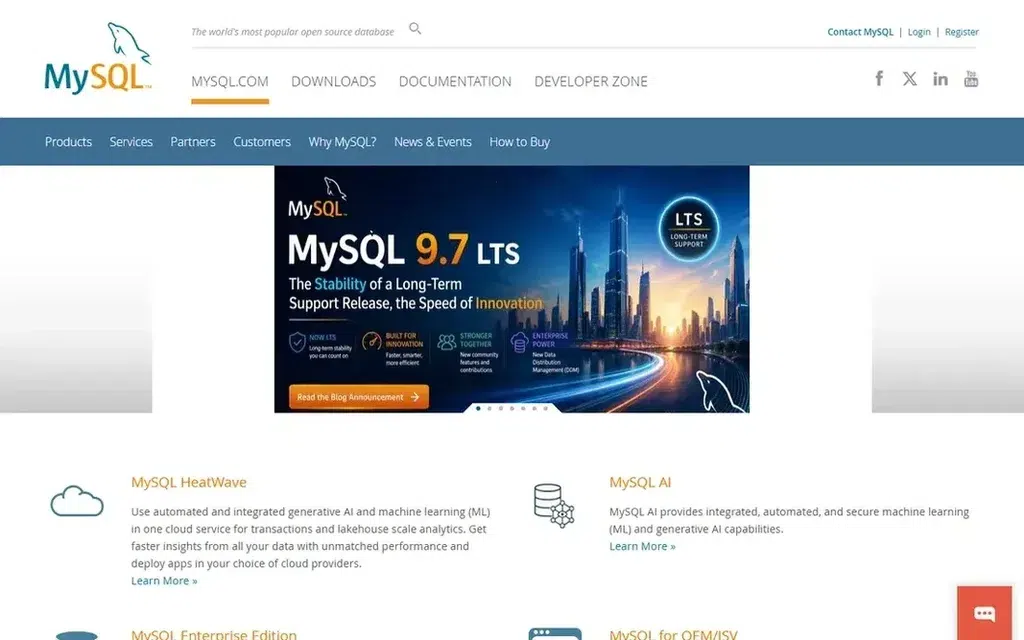
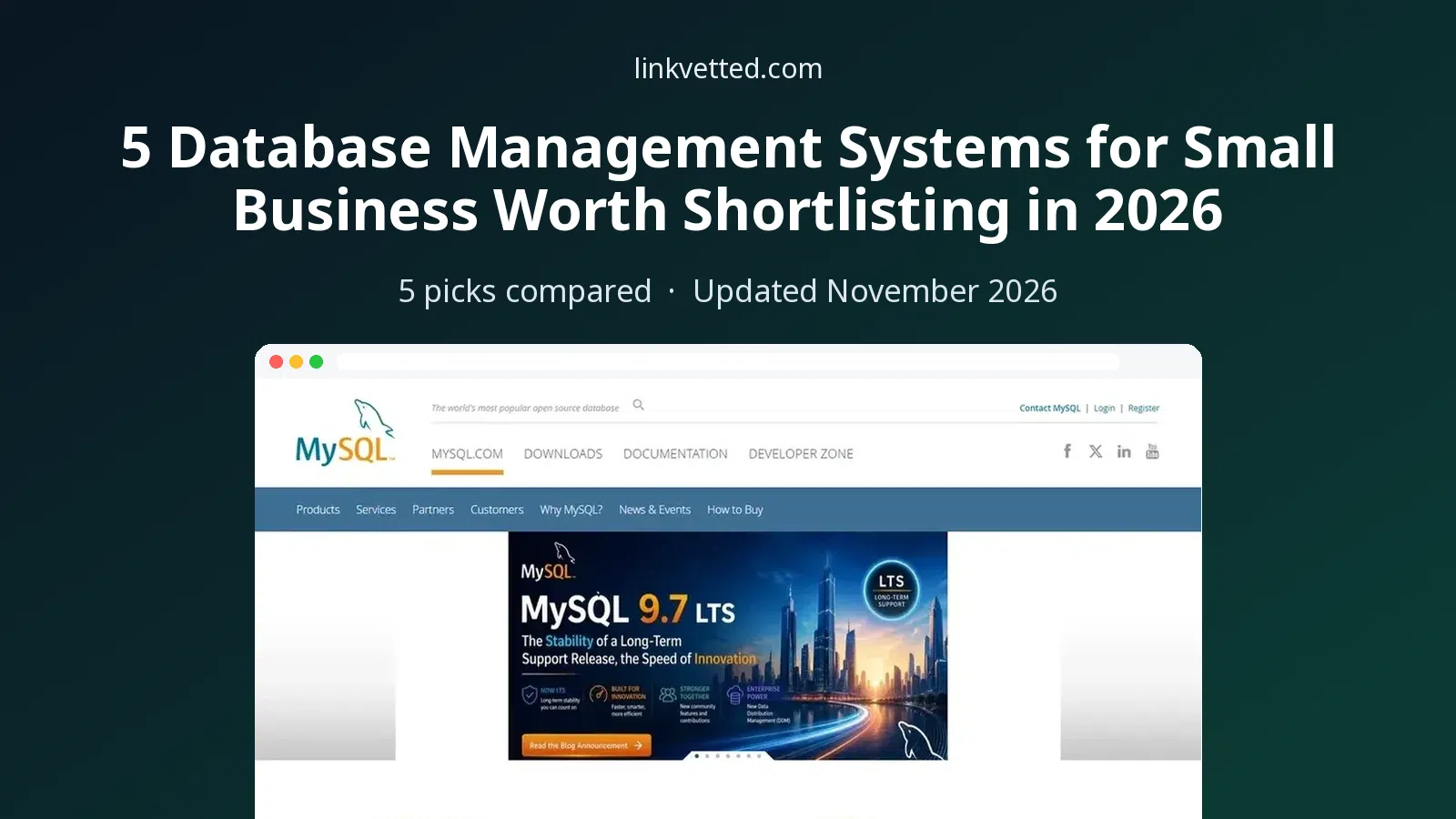
Pick MySQL if this describes you: steady open source relational database. MySQL is a widely used open source relational database management system known for its reliability and simplicity. It is often used in web applications and is a solid choice for small firms seeking a free, community-supported database with wide hosting support.
Points against: May need extras for scaling.
From a buyer's view, for complicated analytics or AI workloads, consider SQL Server or Oracle. Whereas MySQL is solid, it may lack some advanced features found in commercial databases. Check the vendor site for MySQL pricing; none is listed in this comparison. Free options: Not stated.
- Widely used and well-documented
- Open source
- Restricted advanced features
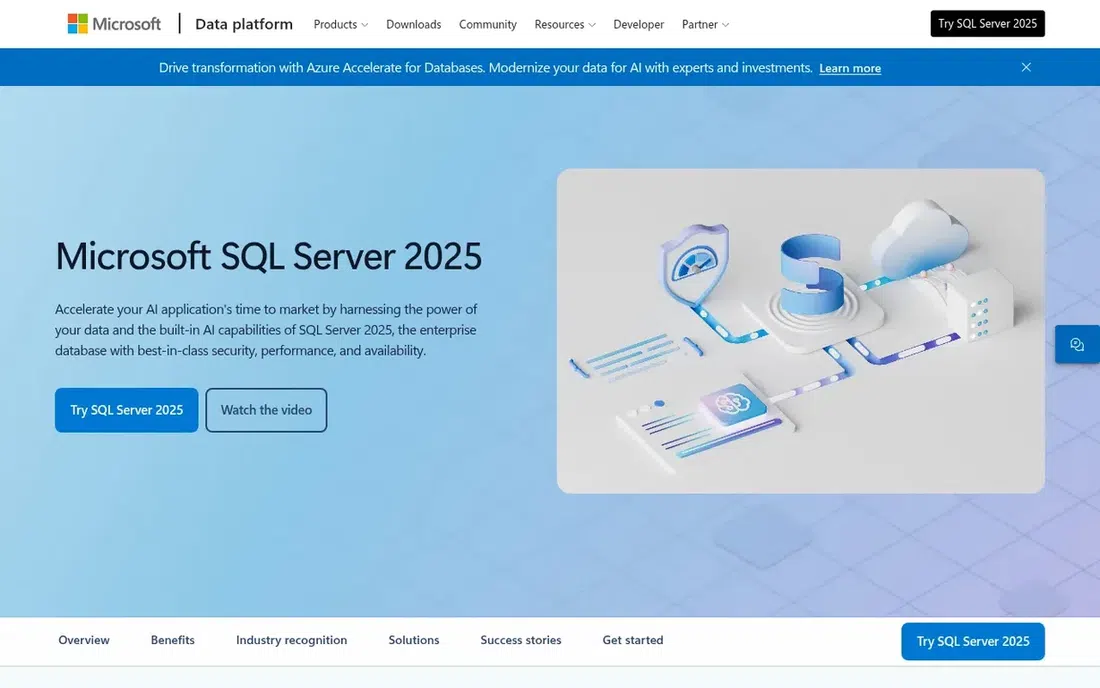
Where Microsoft SQL Server fits: companies needing integrated analytics and AI. It is built to help organizations accelerate AI innovation using existing data. On top of that, small firms that already use Microsoft tools and want a database that supports advanced analytics may find it a solid fit.
That said, SQL Server can be complicated to set up and handle without dedicated IT staff. Also, licensing costs may be higher than open source alternatives. Microsoft SQL Server does not show a starting price in this comparison, so check the vendor site for current pricing. Free plan details: Not stated.
The main drawbacks: Primarily Windows-centric.
- Integration with analytics and AI models
- Accelerates AI innovation
- May need specialized skills
How we built this list
We compared the tools on published pricing, free plan or trial availability, feature coverage for database management systems for small business, and the limits each vendor documents. Treat prices as a snapshot: vendors change plans often, so check the vendor site for the figure that applies today. The ranking is editorial: typical fit first, then clear pricing, then free access. If your needs are unusual, read the profiles rather than relying on position.
Questions to settle before buying
- Request quotes from MariaDB, Microsoft SQL Server and the others; the list shows no fixed prices.
- Check what the free option really includes: MongoDB and Amazon RDS offer a free plan, and usage caps differ.
- Before choosing MariaDB, weigh its main limit: less widespread than MySQL.
- Check whether Amazon RDS bills monthly or annually, and what cancelling early costs.
- Check whether the features you need in MySQL sit on the entry plan or only on higher tiers.
FAQ
How are the tools for database management systems for small business ordered?
MariaDB sits first and Microsoft SQL Server last because the order follows typical fit for database management systems for small business, then price clarity and free access. It is a judgement call, so read each profile for fit and limits.
Can I migrate from one database to another later?
Migration is possible but can be complicated. Compatibility varies; for instance, MariaDB is compatible with MySQL. Plan carefully and consider tools and expertise required.
Is MariaDB the right pick for everyone comparing database management systems for small business?
No single tool suits every team. MariaDB comes first because it fits enterprise open source with scalability, while MongoDB suits flexible, real-time data across clouds and Amazon RDS suits fully managed cloud relational database. Match the tool to your own size, budget and workflow before deciding.
What is the best database management system for a small business with limited IT staff?
Start with MariaDB if you need enterprise open source with scalability. MongoDB is the better match for adaptable, live data across clouds, and Amazon RDS for fully managed cloud relational database. The best choice depends on budget, team size and workflow.
Which options for database management systems for small business have a free plan?
MongoDB and Amazon RDS offer a free plan in this list. Free plans usually cap users, projects or features, so check the limits on the vendor page.
Can I try these tools before paying?
Often, yes. MongoDB and Amazon RDS have a free plan. Use your own data and a real task during the test, and check what the free tier or trial limits before you rely on it.
Sources
- https://mariadb.com
- https://www.mongodb.com
- https://aws.amazon.com/rds
- https://www.mysql.com
- https://www.microsoft.com/en-us/sql-server