Choosing Data Observability Software for Startups in 2026: 5 Options Compared
Compare 5 best data observability software for startups, with prices, free plans and who each fits. Hidden costs and gaps are flagged. Reviewed this month.
- Editor's choiceAnomalo
Automatic data quality monitoring
Starts atSee websiteVisit anomalo.comFull review - Great alternative
 Soda
Automatic quality checks from table to record
Starts at$750 a monthVisit soda.ioFull review - Also consider
 Monte Carlo
Automatic anomaly detection at scale
Starts atSee websiteVisit montecarlodata.comFull review
Direct answer
For automatic data quality monitoring, Anomalo is where this list starts. Listed starting prices: Soda from $750 a month. Look at Soda for automatic quality checks from table to record, and at Monte Carlo for automatic anomaly detection at scale. The other 2 tools in the list cover narrower or pricier cases.
TL;DR:
- Anomalo takes the first slot, best suited to automatic data quality monitoring.
- A fair warning about Soda: automation still needs configuration.
- A free plan is available from 2 of the 5 tools: Soda, Metaplane.
- Soda is the lowest-priced starter here at $750 per month.
Last checked November 2026. Prices and plan details were read from the vendors' own pages in November 2026; vendors change plans often, so confirm the current price on the vendor site before you buy.
Quick comparison
| Tool | Best for | Starts at | Free plan? | |
|---|---|---|---|---|
| Anomalo | Automatic data quality monitoring | See website | Not stated | Visit |
| Soda | Automatic quality checks from table to record | $750 a month | Yes | Visit |
| Monte Carlo | Automatic anomaly detection at scale | See website | Not stated | Visit |
 Sifflet | Tracing issues to root cause | See website | Not stated | Visit |
 Metaplane | Modern data teams wanting clear alerts | See website | Yes | Visit |
The best data observability software for startups
LinkVetted compared 5 data observability software for startups. The goal is a practical shortlist: published prices, free plan facts, best-fit use cases and honest limits for every entry.
Anomalo
Best for: Automatic data quality monitoring
Anomalo works best for automatic data quality monitoring. Consider Anomalo once data quality issues start affecting customers or reporting. More specifically, for startups, that can mean fewer hand-written checks and quicker visibility into unexpected changes in key datasets.
It tends to fit teams with a central warehouse and dashboards that business users rely on daily. A startup with a single small dataset may not need this level of monitoring yet. Pricing for Anomalo is not stated here, so ask the vendor for current figures. Free access: Not stated.
Where it is weaker: Evaluate fit against your warehouse.
- Centred on data quality monitoring
- Automatic detection approach
- Less suited to very straightforward stacks
In short, Soda is for automatic quality checks from table to record. Soda describes itself as an AI-native, completely automatic data quality product that helps teams find, understand, and fix data quality issues rapidly, from table to record level. Even automatic systems need some configuration and tuning to match your data, so expect an onboarding period.
In daily use, very small startups may find a lighter approach sufficient until data volumes grow. For everyday use, consider Soda when quick, in-depth quality checks across key datasets are the goal. Starting cost for Soda: $750 per month. A free plan is available with Soda.
Where it is weaker: Automation still needs configuration.
- AI-native automatic checks
- Table to record-level coverage
- Confirm fit for your data stack
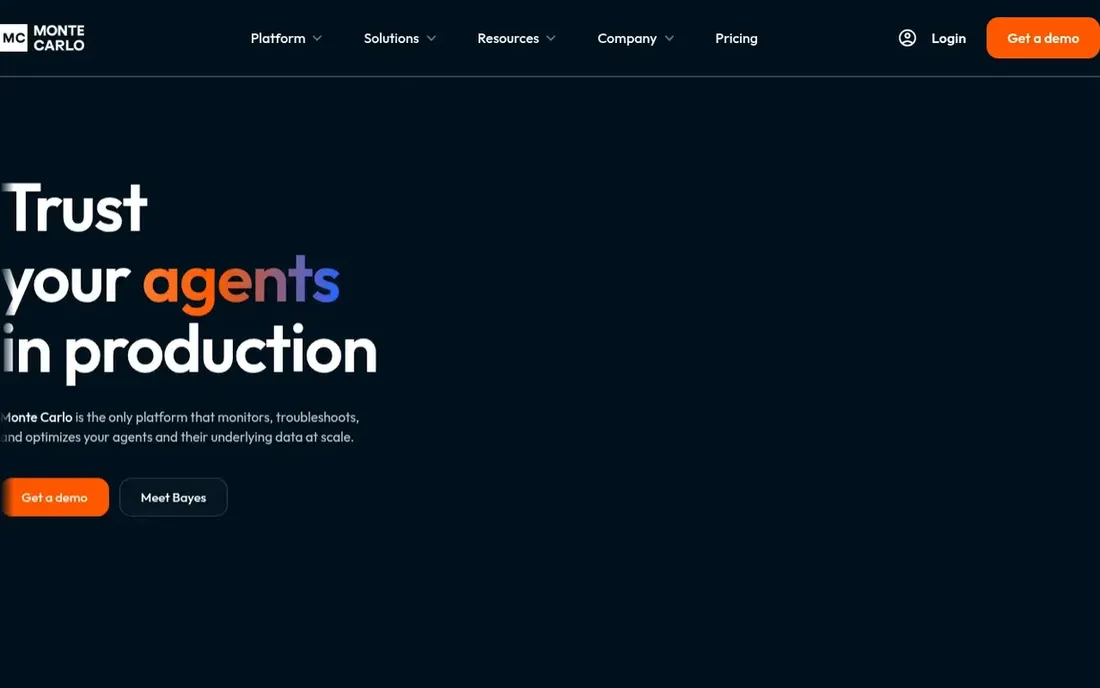
For automatic anomaly detection at scale, Monte Carlo is a natural candidate. Teams with very straightforward stacks or tight engineering budgets might prefer a lighter or open source choice first. Monte Carlo is one of the better known names in data observability, usually associated with automatic, machine-learning-driven monitoring of data pipelines.
Points against: Can be more than small teams need.
It tends to fit organizations with multiple data sources and an expanding volume of pipelines where silent data issues carry real business risk. Since the system leans toward broad automatic coverage, smaller startups may find parts of it beyond their current needs. Pricing for Monte Carlo is not stated here, so ask the vendor for current figures. On free options: Not stated.
- Wide pipeline coverage
- Known for automatic anomaly detection
- Setup effort varies by stack
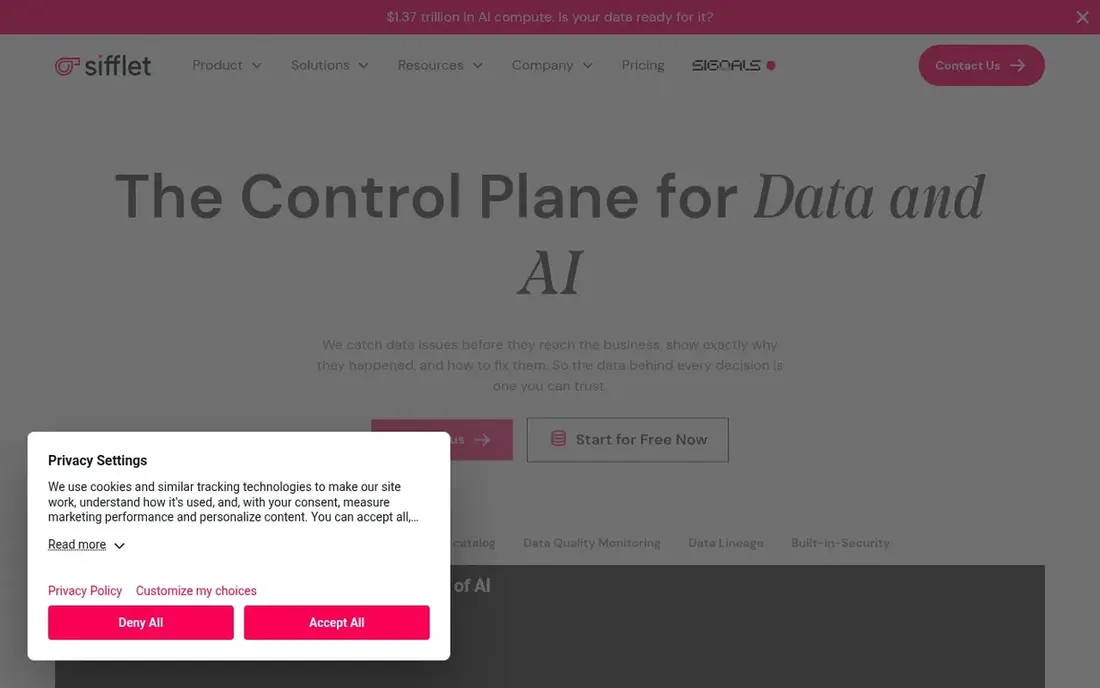
Sifflet works best for tracing issues to root cause. Sifflet describes itself as a control plane for data and AI, pitched at catching data issues before they reach the business, tracing them to root cause, and fixing them rapidly. That emphasis on root cause matters for startups where one engineer may own numerous pipelines and needs quick answers.
In practice, the system's positioning leans toward bigger, more complicated data environments, so a very early startup may not use its full depth. Choose Sifflet when quick root cause analysis across data and AI assets is the primary goal. Sifflet shows no starting price here, so confirm the cost on the vendor site. Free access: Not stated.
Downsides: Enterprise-oriented messaging.
- Focus on catching issues early
- Root cause tracing
- Feature depth may exceed small teams
Where Metaplane fits: modern data teams wanting clear alerts. Startups with minimal infrastructure may find more straightforward monitoring sufficient at first.
In daily use, since it sits within a broader vendor portfolio, teams should confirm how it suits their existing tooling. Choose Metaplane when clear breakage alerts and fix guidance are the priority. Metaplane does not show a starting price in this comparison, so check the vendor site for current pricing. Metaplane includes a free tier.
Trade-offs to know: Fit relies on your warehouse setup.
- Clear focus on knowing when things break
- Guidance on what went wrong
- Part of a bigger vendor portfolio
How we chose
We compared the tools on published pricing, free plan or trial availability, feature coverage for data observability software for startups, and the limits each vendor documents. Seat minimums, billing terms and add-ons can move the real cost, so the starting prices here are a guide and not a quote. The order reflects how well each tool fits the most common buying scenario for data observability software for startups, then price clarity, then free plan access. It is a starting point, not a verdict.
Things to verify first
- Ask Anomalo, Monte Carlo, Sifflet and Metaplane for a written quote, since no starting price is shown.
- Look at free plan limits closely: Soda and Metaplane have one, and the caps decide whether it is usable for real work.
- Before choosing Anomalo, weigh its main limit: less suited to very straightforward stacks.
- Check whether Monte Carlo bills monthly or annually, and what cancelling early costs.
- Involve the people who will use Anomalo daily; a short pilot beats a long feature checklist.
FAQ
Is Anomalo the right pick for everyone comparing data observability software for startups?
No single tool suits every team. Anomalo comes first because it fits automated data quality monitoring, while Soda suits automated quality checks from table to record and Monte Carlo suits automated anomaly detection at scale. Match the tool to your own size, budget and workflow before deciding.
What is the cheapest option for data observability software for startups in this list?
On published monthly entry prices, Soda is the lowest here at $750 per month. Entry price is only part of the cost, because seats, add-ons and billing terms can change the total. All 5 picks in this data observability software for startups comparison list a starting price, free plan details and the main limits on their cards above.
Can I try these tools before paying?
Often, yes. Soda and Metaplane have a free plan. Use your own data and a real task during the test, and check what the free tier or trial limits before you rely on it.
Do these tools publish their prices?
Not all of them. Anomalo, Monte Carlo, Sifflet and Metaplane publish no starting price, so expect a quote request for those. The rest, Soda included, show a starting price, though seats and billing terms still change the final cost.
When should a startup adopt data observability?
A common trigger is when data issues start reaching dashboards, reports or customers. Before that point, more straightforward monitoring may be enough.
Sources
- https://www.anomalo.com
- https://www.soda.io
- https://www.montecarlodata.com
- https://www.siffletdata.com
- https://www.metaplane.dev