Best Data Observability Software for Pipelines for 2026: Our 6 Vetted Picks
Best data observability software for pipelines, compared. 6 tools with published prices, free plans and limits. Short verdicts, no fluff. Jump to the table.
- Editor's choice
 Informatica
Wide data management with observability
Starts atSee websiteVisit informatica.comFull review - Great alternative
 Collibra
Enterprise governance and AI control
Starts atSee websiteVisit collibra.comFull review - Also consider
 Soda
Automatic, code-friendly data quality checks
Starts at$750 per monthVisit soda.ioFull review
Direct answer
If you need wide data management with observability, Informatica is the first tool to look at here. Listed starting prices: Soda from $750 per month. Collibra fits enterprise governance and AI control; Soda fits automated, code-friendly data quality checks. The remaining 3 options are covered below with prices and limits.
TL;DR:
- This list starts with Informatica, which is built for wide data management with observability.
- Anomalo is the one to check for automatic anomaly detection on data tables.
- Soda stands alone as the one tool in this list with a free plan.
- Starting prices begin at $750 per month with Soda.
- Before buying Collibra, weigh this: governance-first instead of monitoring-first.
Last checked November 2026. Prices and plan details were read from the vendors' own pages in November 2026; vendors change plans often, so confirm the current price on the vendor site before you buy.
Quick comparison
| Tool | Best for | Starts at | Free plan? | |
|---|---|---|---|---|
| Informatica | Wide data management with observability | See website | Not stated | Visit |
| Collibra | Enterprise governance and AI control | See website | Not stated | Visit |
| Soda | Automatic, code-friendly data quality checks | $750 per month | Yes | Visit |
 Monte Carlo | Dedicated pipeline anomaly monitoring | See website | Not stated | Visit |
 Bigeye | Large enterprises needing lineage and AI governance | See website | Not stated | Visit |
| Anomalo | Automatic anomaly detection on data tables | See website | Not stated | Visit |
Data Observability Software for Pipelines, one by one
Choosing data observability software for pipelines usually comes down to price, fit and limits. This LinkVetted guide sets 6 tools side by side on those three points, with the facts kept short and checkable.
Pick Informatica if this describes you: wide data management with observability. The breadth means more modules to evaluate and configure, and observability is not the sole focus.
Downsides: Large system with numerous modules.
Informatica, now presented from Salesforce, supplies enterprise cloud data management options intended to power agents with AI-ready data. Pricing for Informatica is not stated here, so ask the vendor for current figures. Free access: Not stated.
- Suits organizations already standardized on it
- Broad enterprise data management portfolio
- Observability is one part of the stack
Collibra makes the most sense for enterprise governance and AI control. Collibra describes itself as an enterprise AI control plane, governing context and control across data, models and agents for organizations that require certainty as AI adoption grows.
Also, plan for implementation effort and confirm how it links to your monitoring and catalog tooling. Collibra is governance-led, so teams looking primarily for pipeline anomaly alerts may find a dedicated observability tool more direct. This comparison lists no price for Collibra; ask the vendor. Free plan details: Not stated.
Where it falls short: Implementation can be substantial.
- Wide governance across data and models
- Ontology-driven approach
- Governance-first instead of monitoring-first
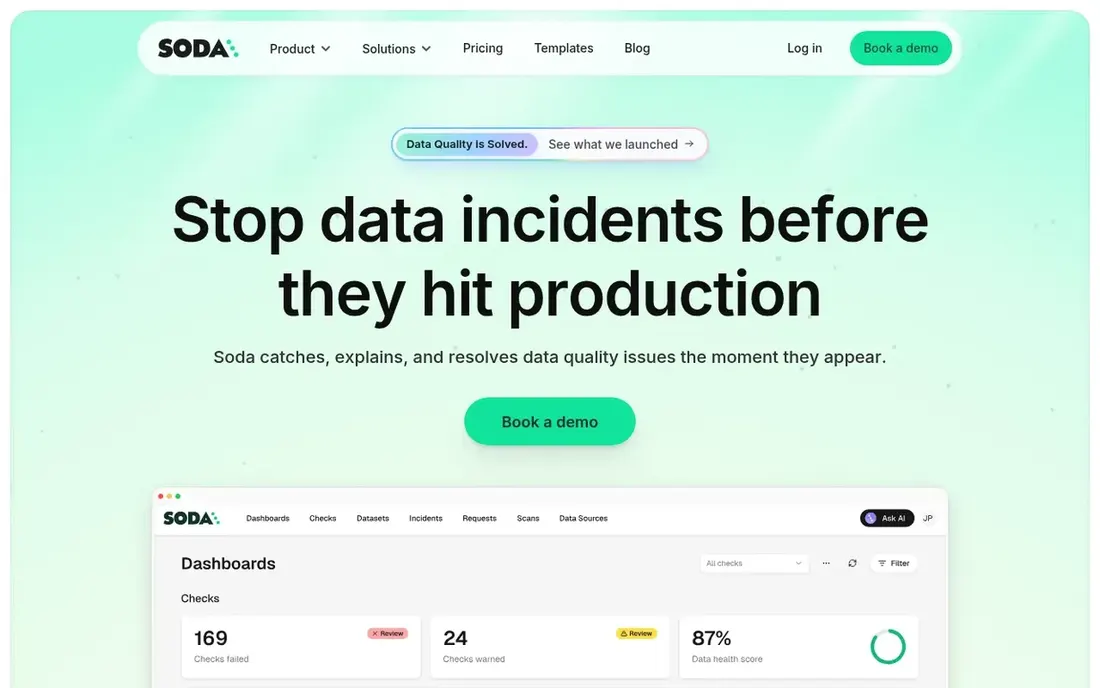
Think of Soda for automatic, code-friendly data quality checks. It tends to fit analytics and data engineering teams that are comfortable defining checks and want automation to deal with the rest of the quality workflow.
Where it falls short: Observability is centered on quality checks.
Soda pricing: $750 per month. A free plan is available with Soda.
- Aims to find and fix issues rapidly
- Completely automatic positioning
- Deeper lineage may need another tool
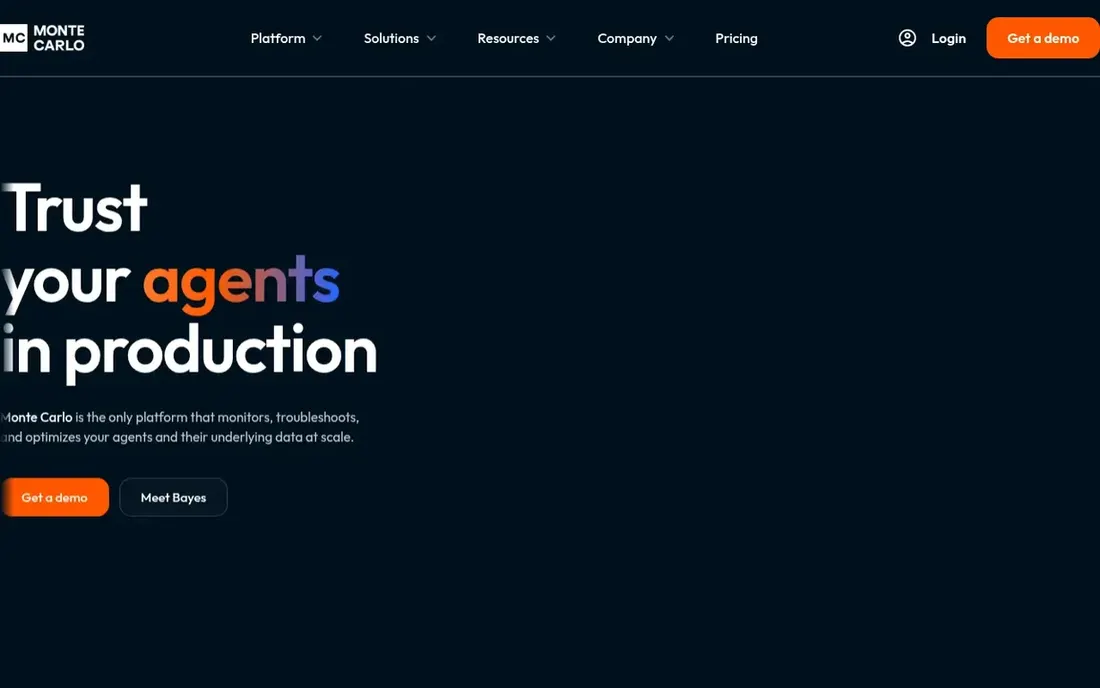
In short, Monte Carlo is for dedicated pipeline anomaly monitoring. Monte Carlo is one of the best known names in data observability, built around automatic monitoring that watches tables and pipelines for anomalies in freshness, volume, schema and distribution.
Watch-outs: Restricted public detail on the homepage.
It usually suits data system and analytics engineering teams that want a dedicated reliability layer sitting between their pipelines and the people who consume the data. No starting price is listed for Monte Carlo here; confirm pricing on the vendor site. Free access: Not stated.
- Aims to catch issues before consumers do
- Well known in the data observability category
- Pricing and fit need vendor confirmation
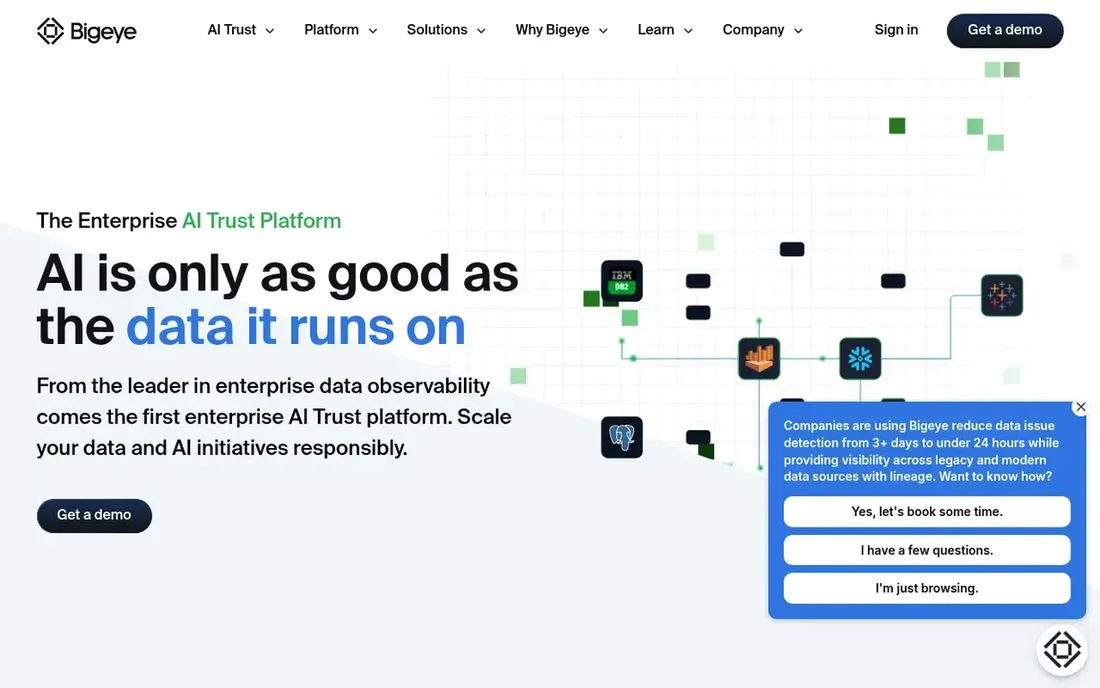
Pick Bigeye if this describes you: large enterprises needing lineage and AI governance. If your priority is quick automatic quality checks at table and record level, Soda is a more straightforward place to start. A catalog-first tool may handle lineage needs.
Watch-outs: Breadth can mean more setup effort.
On top of that, the enterprise orientation means more moving parts to configure, so lean teams may find it more than they need. In daily use, Bigeye describes itself as a data and AI trust system for large enterprises, combining thorough data observability, end-to-end lineage and agentic AI governance. Bigeye shows no starting price here, so confirm the cost on the vendor site. As for free access: Not stated.
- Merges observability with end-to-end lineage
- Layers on agentic AI governance
- Enterprise focus may be heavy for small teams
Anomalo
Best for: Automatic anomaly detection on data tables
Anomalo serves automatic anomaly detection on data tables. Anomalo is usually known as a data quality and observability system that automatically spots anomalies in tables, reducing the have to hand-write rules for every dataset.
Drawbacks to consider: Integration specifics need confirmation.
From a buyer's view, public detail on the homepage is restricted, so verify supported warehouses, deployment models and alerting behavior with the vendor. This comparison lists no price for Anomalo; ask the vendor. Free plan details: Not stated.
- Suits teams watching numerous tables
- Aims to cut manual quality rules
- Homepage provides restricted public detail
How we compared the tools
LinkVetted looked at what each vendor publishes: pricing, plan limits, feature coverage for data observability software for pipelines and stated drawbacks. No hands-on testing is claimed. Where a vendor does not publish a price, the entry says quote. Where a price depends on seats or billing term, the entry says so. The sequence is a judgement call: typical use case first, then pricing transparency, then free access. Use the profiles to check fit.
What to confirm before you sign up
- Get a written quote from Informatica, Collibra, Monte Carlo and others; the list shows no starting price for them.
- Look at the free plan from Soda closely: its caps decide whether it is usable for real work.
- Read the limits listed for Informatica first: large product with plenty of modules.
- Confirm the exact Monte Carlo plan that includes your must-have features.
- Before rolling out Bigeye, verify the integrations your workflow depends on.
FAQ
Can I try these tools before paying?
Often, yes. Soda has a free plan. Use your own data and a real task during the test, and check what the free tier or trial limits before you rely on it. For the full picture, the cards above cover all 6 entries of this data observability software for pipelines list, including price, free plan and limits.
How do these tools fit large enterprises with AI initiatives?
Bigeye, Collibra and Informatica position themselves around enterprise trust, governance and AI readiness alongside observability. That fits organizations that require oversight of models and agents along with pipeline data, though setup effort is typically higher.
Do these tools publish their prices?
Not all of them. Informatica, Collibra, Monte Carlo and others publish no starting price, so expect a quote request for those. The rest, Soda included, show a starting price, though seats and billing terms still change the final cost.
How are the tools for data observability software for pipelines ordered?
Informatica sits first and Anomalo last because the order follows typical fit for data observability software for pipelines, then price clarity and free access. It is a judgement call, so read each profile for fit and limits.
What is the cheapest option for data observability software for pipelines in this list?
On published monthly entry prices, Soda is the lowest here at $750 per month. Entry price is only part of the cost, because seats, add-ons and billing terms can change the total. Prices, free plan details and limits for all 6 tools in this data observability software for pipelines roundup sit on the individual cards above.
Sources
- https://www.informatica.com
- https://www.collibra.com
- https://www.soda.io
- https://www.montecarlodata.com
- https://www.bigeye.com
- https://www.anomalo.com