Best Cluster Autoscaling Platforms (2026): 5 Picks Checked on Vendor Pages
Best cluster autoscaling platforms, compared. 5 tools with published prices, free plans and limits. Each profile ends with a plain caveat. Refreshed for 2026.
- Editor's choice
 Google Kubernetes Engine
Completely managed Kubernetes with four-way autoscaling
Starts atPricing on requestVisit cloud.google.comFull review - Great alternative
 Karpenter
Just-in-time node provisioning for Kubernetes
Starts atPricing on requestVisit karpenter.shFull review - Also consider
 Azure Kubernetes Service
Secure, scalable containerized apps on Azure
Starts atPricing on requestVisit azure.microsoft.comFull review
Direct answer
This list puts Google Kubernetes Engine first for completely managed Kubernetes with four-way autoscaling. If your case is different, Karpenter suits just-in-time node provisioning for Kubernetes and Azure Kubernetes Service suits secure, scalable containerized apps on Azure. The remaining 2 options are covered below with pricing notes and limits. None of these vendors publish plan prices, so pricing is on request for every option.
TL;DR:
- The list opens with Google Kubernetes Engine, aimed at completely managed Kubernetes with four-way autoscaling.
- None of the 5 tools, from Google Kubernetes Engine to Amazon EKS, has a free plan, so budget for a subscription or use a trial.
- No starting price is shown for any of the 5 tools, Google Kubernetes Engine and Amazon EKS included, so plan time for sales calls.
- Amazon EKS fits managed Kubernetes on AWS and on-premises.
Last checked November 2026. Pricing on request: vendors did not publish plan prices when this guide was last checked (November 2026), so ask each vendor for a written quote.
Quick comparison
| Tool | Best for | Starts at | Free plan? | |
|---|---|---|---|---|
| Google Kubernetes Engine | Completely managed Kubernetes with four-way autoscaling | Pricing on request | Not stated | Visit |
| Karpenter | Just-in-time node provisioning for Kubernetes | Pricing on request | Not stated | Visit |
| Azure Kubernetes Service | Secure, scalable containerized apps on Azure | Pricing on request | Not stated | Visit |
| Spot Ocean | Hybrid IT management and cloud cost control | Pricing on request | Not stated | Visit |
 Amazon EKS | Managed Kubernetes on AWS and on-premises | Pricing on request | Not stated | Visit |
Our 5 cluster autoscaling platforms
Short on time? The summary and table above give the quick view of 5 cluster autoscaling platforms, and the profiles that follow give the detail behind each entry.
Google Kubernetes Engine
Best for: Completely managed Kubernetes with four-way autoscaling
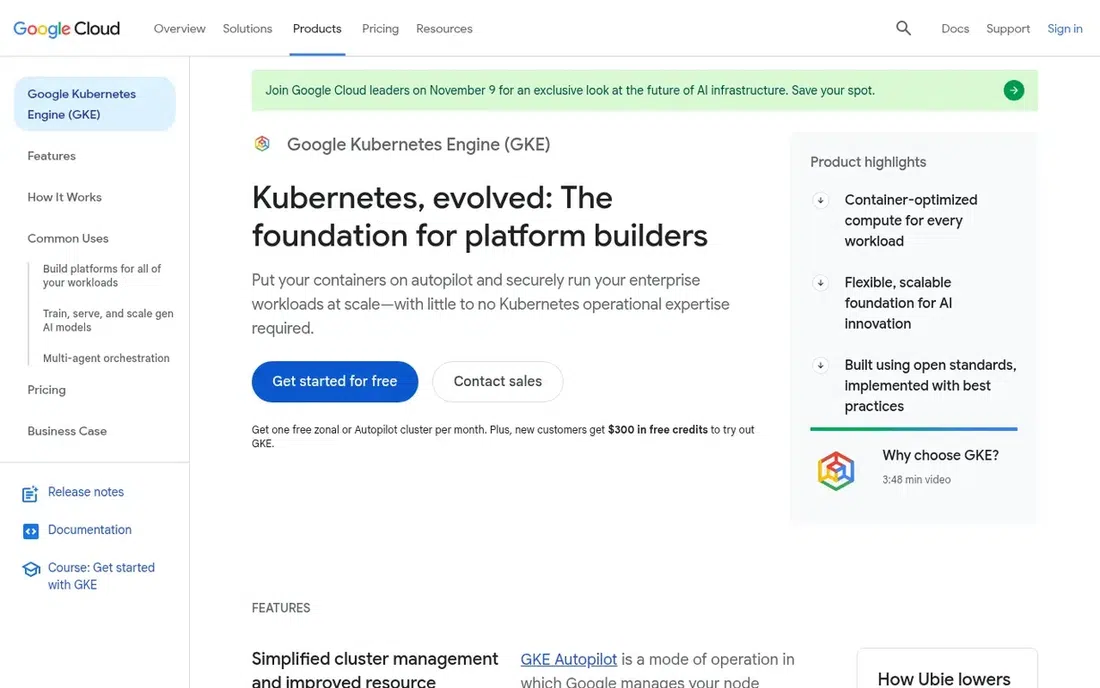
Where Google Kubernetes Engine fits: completely managed Kubernetes with four-way autoscaling. Google Kubernetes Engine (GKE) is a completely managed Kubernetes service that gives you a complete Kubernetes API, four-way autoscaling (including horizontal pod autoscaling, vertical pod autoscaling, cluster autoscaling, and node auto-provisioning), release channels, and multi-cluster support. On top of that, if you need a simpler autoscaling setup or are standardized on another cloud, evaluate alternatives.
GKE is deeply integrated with Google Cloud, which can limit adaptability for multi-cloud or hybrid deployments. Its pricing and configuration choices may be complicated for small teams. Pricing for Google Kubernetes Engine is not stated here, so ask the vendor for current figures. Free plan details: Not stated.
Drawbacks to consider: Google Cloud dependence.
- Multi-cluster support
- Release channels
- Complicated pricing structure
For just-in-time node provisioning for Kubernetes, Karpenter is a natural candidate. Karpenter is an open-source node provisioning project that gives you just-in-time nodes for any Kubernetes cluster. It dynamically provisions compute resources based on workload requirements, helping to cut waste and boost efficiency.
Karpenter is not a complete system; it centres on node provisioning and needs configuration and operational knowledge. It may not suit organizations seeking a completely managed autoscaling option. Karpenter shows no starting price here, so confirm the cost on the vendor site. Free plan details: Not stated.
Trade-offs to know: Not a full product.
- Quick node provisioning
- Boosts resource efficiency
- Needs Kubernetes expertise
Azure Kubernetes Service
Best for: Secure, scalable containerized apps on Azure
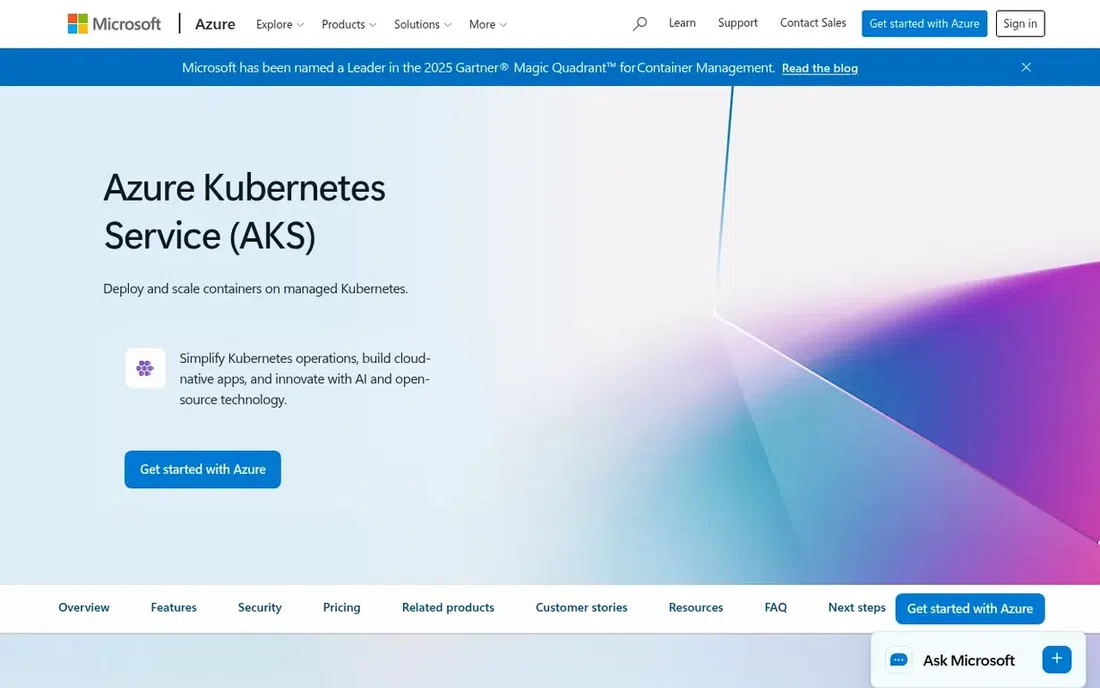
Azure Kubernetes Service is a good fit for secure, scalable containerized apps on Azure. Consider other systems if you want a more specialized autoscaling option. AKS ties you to the Azure ecosystem, and autoscaling setup may need careful configuration to balance cost and performance.
Where it is weaker: Azure ecosystem lock-in.
Azure Kubernetes Service (AKS) is a managed Kubernetes offering for deploying and managing containerized applications on Azure. It emphasizes secure, scalable deployments with quick delivery on managed clusters. Check the vendor site for Azure Kubernetes Service pricing; none is listed in this comparison. Free plan details: Not stated.
- Managed Kubernetes clusters
- Integrated with Azure services
- Autoscaling configuration can be intricate
Spot Ocean
Best for: Hybrid IT management and cloud cost control
Spot Ocean works best for hybrid IT management and cloud cost control. While not exclusively a Kubernetes autoscaler, it can be part of a broader cloud optimization strategy.
Downsides: Wide focus may lack depth.
It fits organizations looking for full IT management that comes with container cost control. Spot Ocean does not show a starting price in this comparison, so check the vendor site for current pricing. Free plan details: Not stated.
- Links up with Flexera
- Supports security risk management
- Not Kubernetes-specific
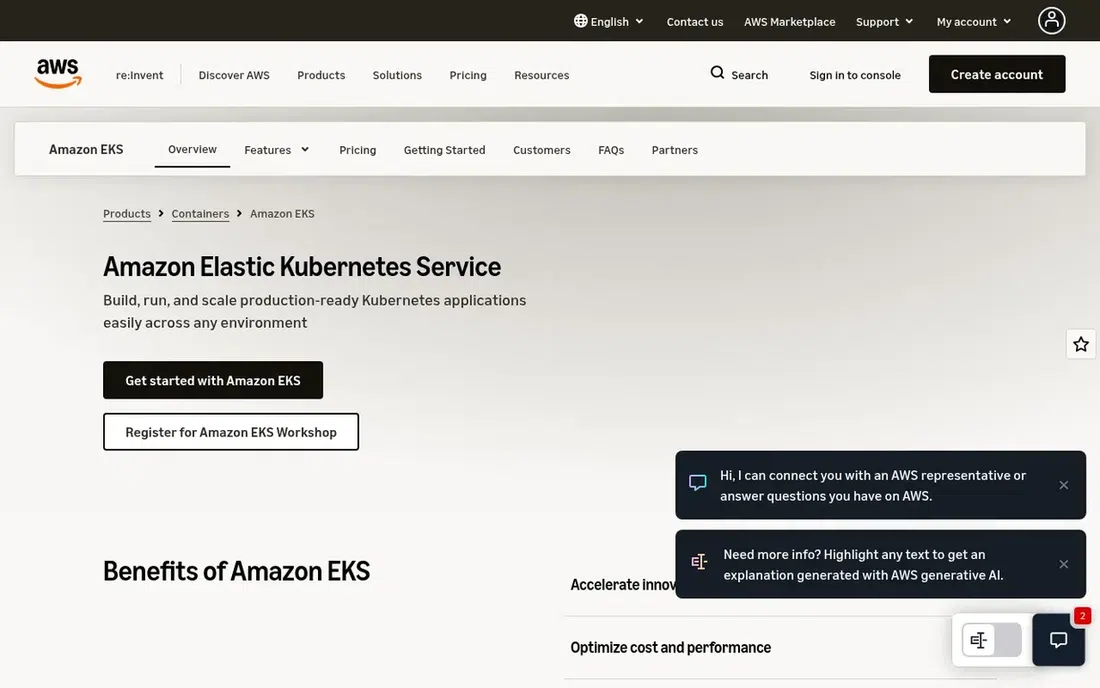
Pick Amazon EKS if this describes you: managed Kubernetes on AWS and on-premises. For everyday use, EKS does not bundle built-in autoscaling beyond the control plane. You must configure and run extras for node and pod scaling.
The main drawbacks: AWS-centric ecosystem.
It is also tightly coupled with AWS services, which may not suit multi-cloud strategies. It offers a certified Kubernetes-conformant control plane, reducing the operational burden of cluster management. This comparison lists no price for Amazon EKS; ask the vendor. As for free access: Not stated.
- Certified Kubernetes conformant
- Runs on AWS and on-premises
- Autoscaling needs extras
Selection criteria
Selection started from tools commonly considered for cluster autoscaling platforms, then narrowed to 5 that have clear pricing information or a clear quote process. Treat prices as a snapshot: vendors change plans often, so check the vendor site for the figure that applies today. Position on the page reflects fit for a typical buyer first, with price clarity and free access breaking ties. Treat it as a guide, not a ruling.
What to confirm before you sign up
- Confirm the entry price with every vendor: no tool from Google Kubernetes Engine to Amazon EKS shows a fixed starting price.
- Before choosing Google Kubernetes Engine, weigh its main limit: Google Cloud dependence.
- Ask Karpenter which support channels and response times come with the plan you would buy.
- Compare total cost, not headline price: for Azure Kubernetes Service, add extra seats, add-ons and any usage-based charges.
- Before rolling out Spot Ocean, verify the integrations your workflow depends on.
FAQ
How do managed services like EKS, GKE, and AKS manage autoscaling?
For instance, GKE supplies four-way autoscaling, whereas EKS and AKS need you to configure the cluster autoscaler or other tools. The choice relies on how much autoscaling you want built-in versus customized.
How are the tools for cluster autoscaling platforms ordered?
The order follows typical fit for cluster autoscaling platforms, with Google Kubernetes Engine first and Amazon EKS last, then price clarity and free access. It is editorial judgement, not a score, so another team could rank the tools differently.
What is cluster autoscaling in Kubernetes?
Cluster autoscaling automatically adjusts the number of nodes in a Kubernetes cluster based on workload demands. Different systems offer varying autoscaling features, from entry-level node scaling to advanced just-in-time provisioning.
Can I try these options before paying?
Not by default. None of the tools, from Google Kubernetes Engine to Amazon EKS, lists a free plan or a free trial here, so ask each vendor for a demo before committing.
Does any tool for cluster autoscaling platforms here have a free plan?
A permanent free plan is not offered by Google Kubernetes Engine, Amazon EKS or the other tools here. Plan a short evaluation period instead.
Do these tools publish their prices?
No. None of the tools, from Google Kubernetes Engine to Amazon EKS, shows a fixed starting price here, so budget time for quotes.
Sources
- https://cloud.google.com/kubernetes-engine
- https://karpenter.sh
- https://azure.microsoft.com/en-us/products/kubernetes-service
- https://spot.io/products/ocean
- https://aws.amazon.com/eks